HS50_advance_level 2.pdf - 第301页
Stud ent Gu ide HS-5 0 Adva nced II 07/2 002 Ed ition 9 Z-Axis 41 Examine the tacho signal in the regio n of the fall ing edge of the end signa l, and mak e the followi ng settings on the oscill osco pe: T acho sig nal: …
07/2002 Edition Student Guide HS-50 Advanced II
9 Z-Axis
40
'\QDPLFDGMXVWPHQW=D[LVIRUSODFHPHQWFRQWDFWOHVVSLFNXS
&KHFNLQJWKHG\QDPLFSHUIRUPDQFHRIWKH=D[LV
– Use the SITEST program to check the Z axis dynamic performance.
– Select a traversing path of 685 digits and continuous operation.
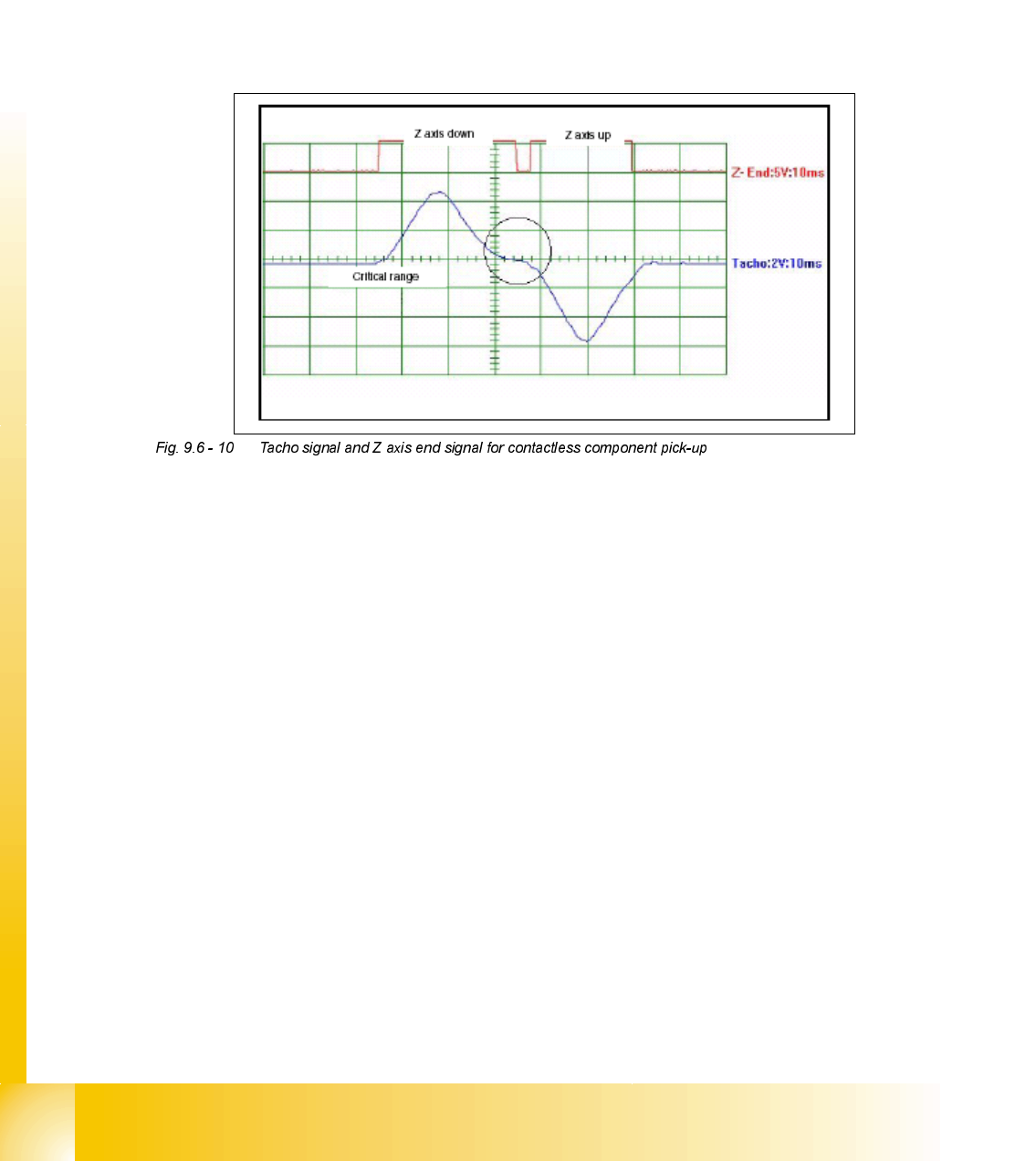
– Check the positioning times with the oscilloscope against the oscillogram in Fig. 9.6 - 10 and
the setting instructions for the Z axis.
6HWWLQJWKHG\QDPLFSHUIRUPDQFHRIWKH=D[LV
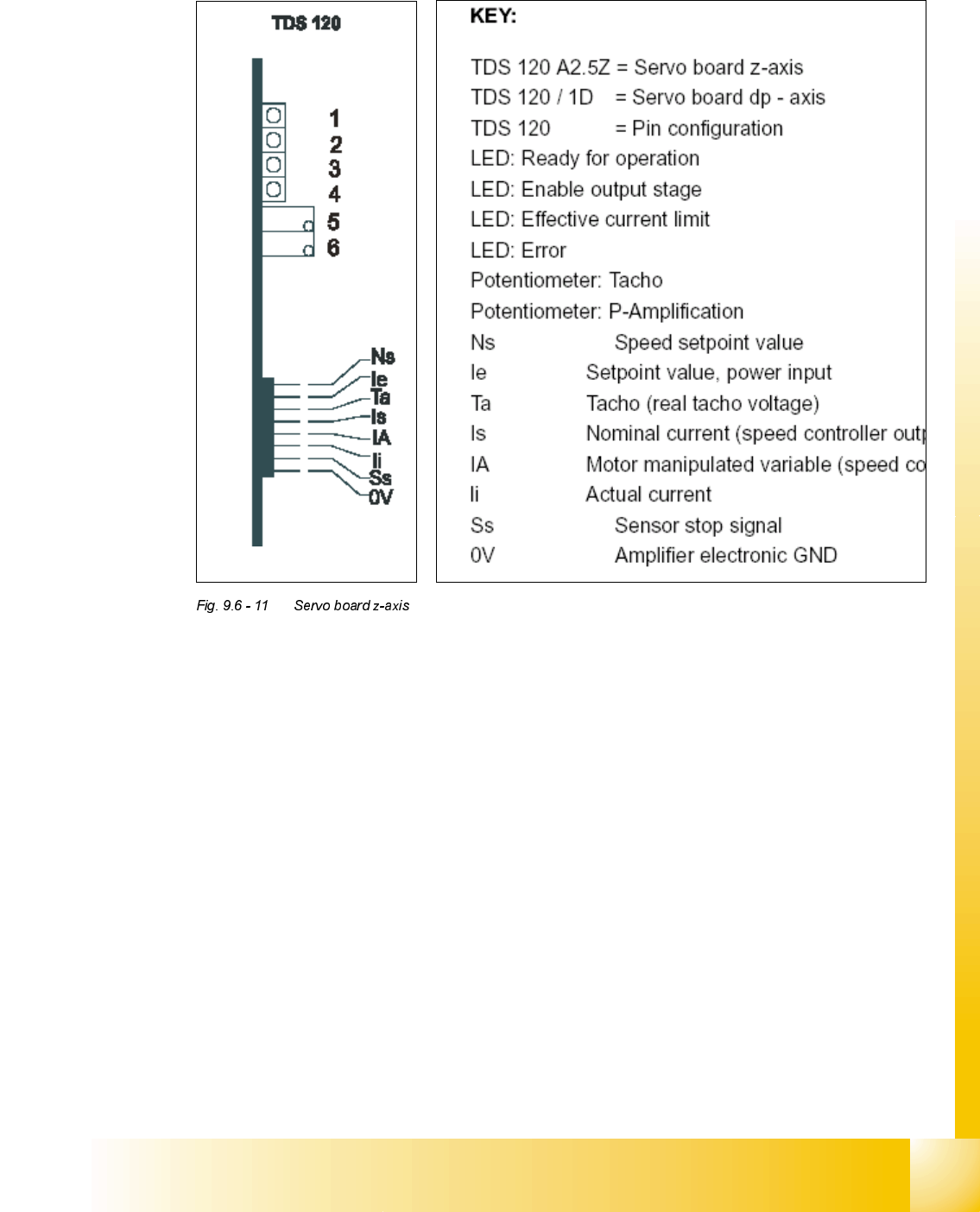
– Connect the 2-channel oscilloscope to the tacho signal measuring point on the servo-
amplifierboard and to the end signal measuring point on the axis control board (see setting
instructions).
– Place the components intended for contactless pick-up.
– Use the potentiometer to set the P gain on the servo-amplifier board so that the tacho signal
follows the curve shown in the oscillograms in Fig. 9.6 - 10 and Fig. 9.6 - 11.
– Make the following settings on the oscilloscope:
Tacho signal:
Voltage 2 V/Div
Time base 10 msec
End signal:
Voltage 5 V/Div
Time base 10 msec
If you select a finer voltage resolution or time base, you can then investigate the curve more
closely for a tendency to vibrate.
Student Guide HS-50 Advanced II 07/2002 Edition
9 Z-Axis
41
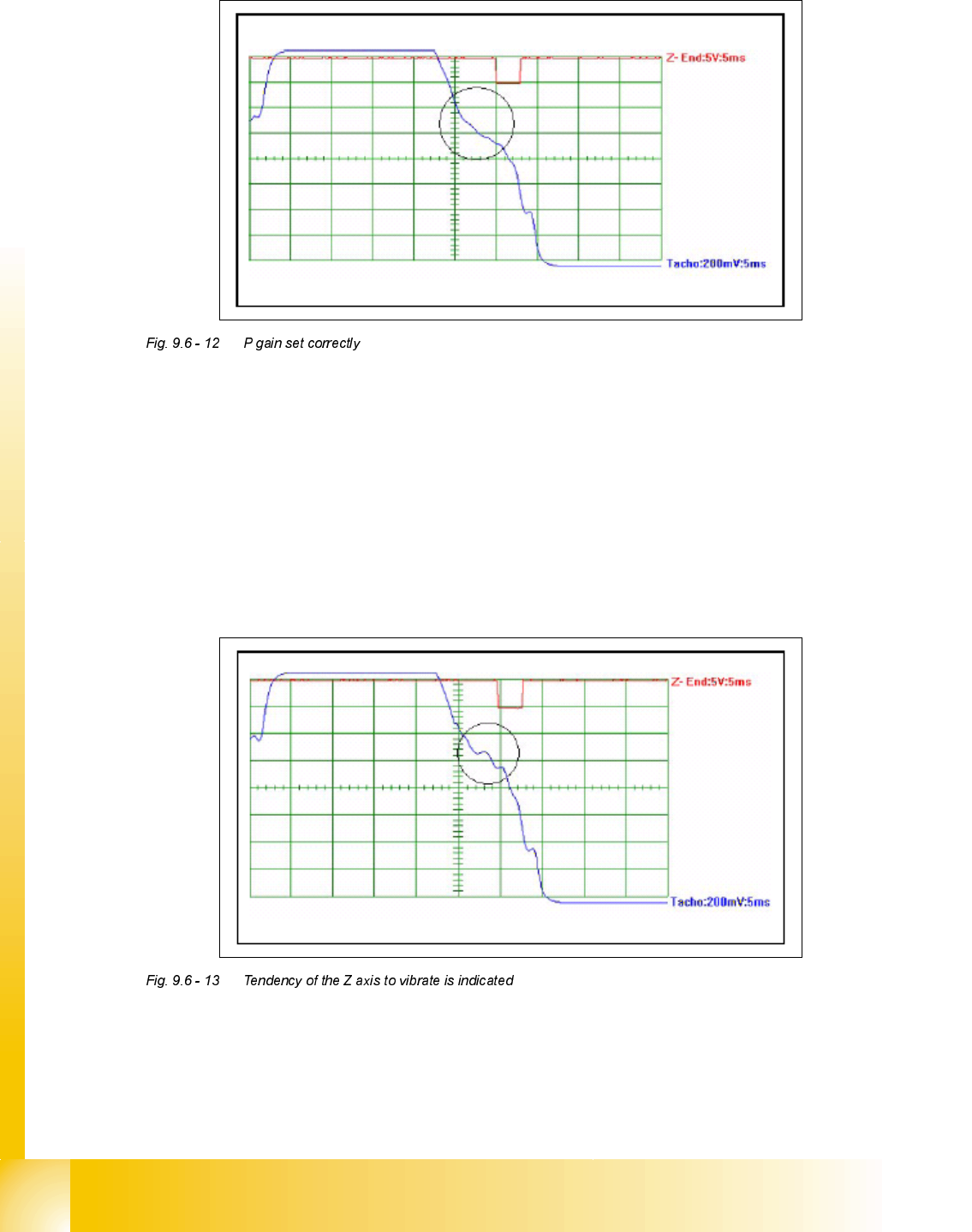
Examine the tacho signal in the region of the falling edge of the end signal, and make the following
settings on the oscilloscope:
Tacho signal:
Voltage 200 mV/Div
Time base 5 msec
End signal:
Voltage 5 V/Div
Time base 5 msec
Fig. 7.6 - 4 shows an oscillogram with the P-gain set correctly. The tacho signal curve drops
continuously in the region of the falling edge of the end signal.
07/2002 Edition Student Guide HS-50 Advanced II
9 Z-Axis
42
A tendency for the axis to vibrate is illustrated in Figure Fig. 9.6 - 13.
The oscilloscope settings are the same as in Fig. Fig. 9.6 - 12.
– Slowly increase the P gain by turning the potentiometer on the servo-amplifier board. With the
tacho signal, a dip or peak starts in the vicinity of the falling edge of the end signal
(see Fig. 9.6 - 13). The axis speed rises again shortly before the final position is reached. This
is an indicator that the axis has a tendency to vibrate. The axis no longer reaches its desired
position with the required repeat accuracy. The pick-up error rate rises.
– If the P gain is increased further, more dips and peaks occur (see Fig.7.6 - 6). The pick-up error
rate rises sharply. Finally, the axis vibrates to such an extent that a humming sound can be
heard.