HS50_advance_level 2.pdf - 第406页
07/2002 Editio n Student G uide HS -50 Advanc ed II 14 Conveyor System 32 ➠ Remove the 3 DU st rips (see F ig. 14.3.4 -> 9) a nd the tw o guide s for the hold-do wn dev ices (cassette s: se e -> 10 and 1 1) on th e…
Student Guide HS-50 Advanced II 07/2002 Edition
14 Conveyor System
31
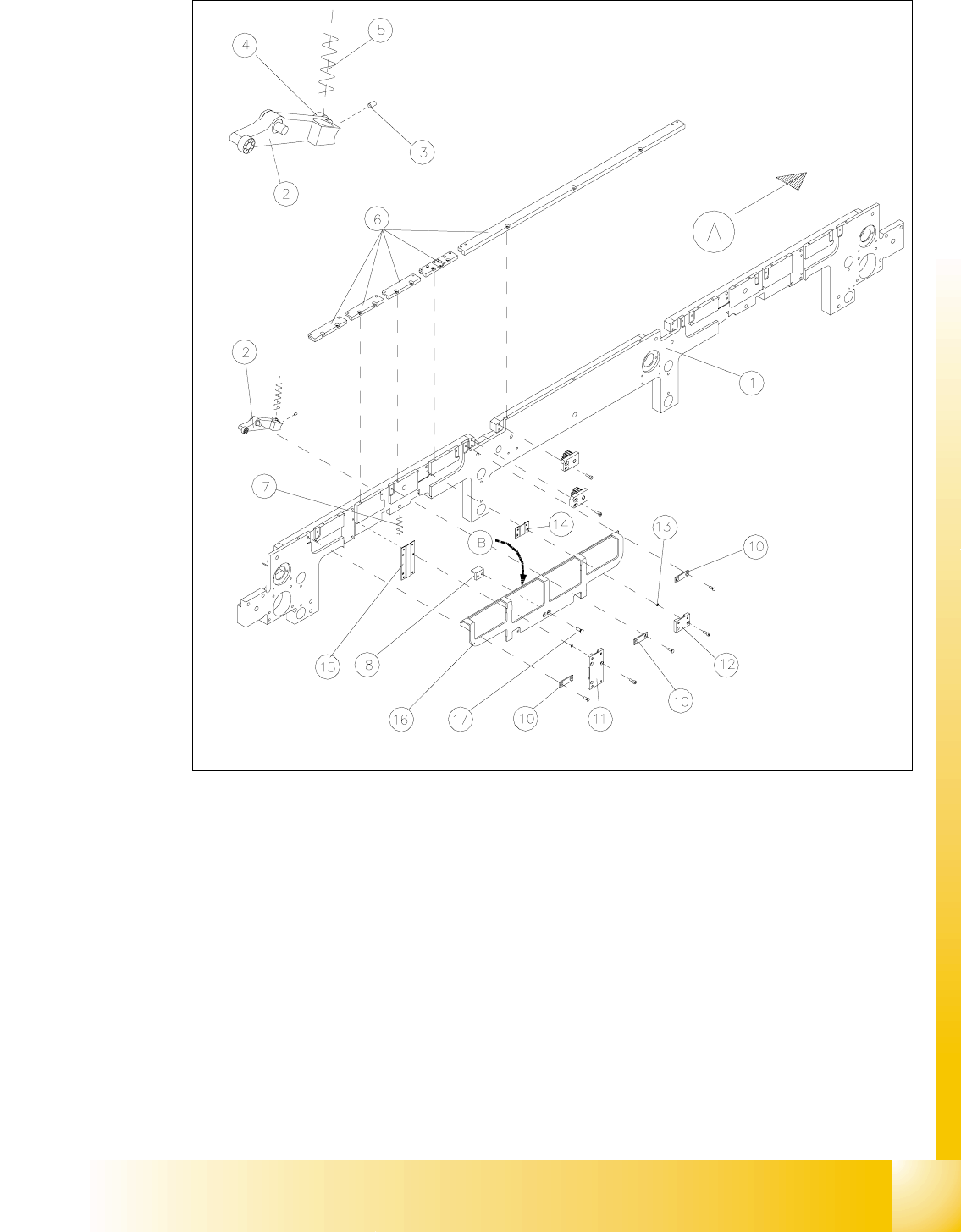
Fig. 14.3.4 Removing Hold-Down Devices and Compression Springs for Hold-Down Devices
Key to Fig. 14.3.4
A) PCB transport direction B) Direction of movement for removal of the
hold-down device
1) Fixed conveyor side (placement area 1,
intermediate conveyor, placement area 2)
2) Rocking lever assembly, right-hand (fixed
side) or
Rocking lever assembly, left-hand (mov-
able side)
WILL NOT BE REMOVED
3) Set screw M3 x 5 4) Ball bearing (remove to dismantle the lifting
table plate)
5) Compression spring on rocking lever 6) PCB guide rails
7) Compression spring for hold-down device 8) Retainer

07/2002 Edition Student Guide HS-50 Advanced II
14 Conveyor System
32
➠ Remove the 3 DU strips (see Fig. 14.3.4 -> 9) and the two guides for the hold-down devices
(cassettes: see -> 10 and 11) on the exterior. To do so, undo and remove the M3 cross-slotted
and hexagonal socket head cap screws.
➠ Remove the pertinent guide rails (see section Fig. 14.3.4 -> 6).
➠ Fold the hold-down device to the outside (direction of movement: see Fig. 14.3.4 -> B) and take
it off.
➠ During the process, remove the compression spring from the retaining bracket: see Fig.
14.3.4 -> 7 and 8).
,QVWDOOLQJ+ROG'RZQ'HYLFHDQG&RPSUHVVLRQ6SULQJ
➠ For the installation of the new hold-down device and the (possibly new) compression spring,
carry out all of the steps in the reverse order to that described for the removal (see section
14.3.6.1).
➠ Install the lifting table as described in section 14.3.8.2.
➠ $OLJQthe re-installed JXLGHUDLOV as described in the following section 14.3.7 .
$GMXVWLQJWKH*XLGH5DLOV
➠ The conveyor must be completely assembled, however the guide rails of the side with cor-
rected faults should not yet be bolted tight.
➠ Remove all tools, etc., from the working area of the machine.
➠ Connect the machine to the mains, turn on the compressed air and turn on the machine.
➠ After the reference run, adjust the width of the PCB conveyor to the width of the adjustment
plate.
➠ Place DGMXVWPHQWSODWHRIDGHTXDWHOHQJWK in the PCB conveyor such that one-half of the
plate is in the adjusted area, the other in the area to be adjusted.
➠ Push the guide rail to be adjusted against the adjustment plate such that a clearance of 0.2 mm
exists and IDVWHQthe guide rail in this position.
➠ Manually push the adjustment plate through the entire PCB conveyor and make certain that it
moves easily during this process.
➠ Furthermore, make certain that the adjustment plate moves without resistance to the next con-
veyor (preceding/following machine).
9) DU strips (3 units) 10) Guide for hold-down device: cassette 1 or
2 (depending on placement area)
11) Guide for hold-down device: cassette 3 12) Adjusting shim 3 x 4.5 x 0.1
13) Sliding strips 2 for hold-down device 14) Sliding strips for hold-down device
15) Hold-down device 16) Screws fastening the retainer
2 slotted screws M4 x 6

Student Guide HS-50 Advanced II 07/2002 Edition
14 Conveyor System
33
➠ If necessary, align the guide rails appropriately.
➠ Remove all tools from the working area of the machine.
➠ Place a PC board in the preceding station or in the PCB input and transport the PCB through
all 5 conveyor areas with the pertinent transport function until it reaches the following station
or the PCB output.
5HPRYLQJDQG,QVWDOOLQJWKH/LIWLQJ7DEOH
CAUTION O
The customer must not loosen screws secured with loctite (e.g., on the screws fastening the guide
pillars of the lifting table). 14
NOTE
The lifting table plate must be removed, for example, in order to exchange hold-down device and
compression spring (see section 14.3.6.1) or to work in the area under the lifting table plate. For
the layout of the lifting table and the lifting table motors, refer to . 14
5HPRYLQJWKH/LIWLQJ7DEOH
➠ Move the conveyor to PD[LPXP width.
➠ Move the Y-gantries into the area outside the PCB conveyor.
➠ Turn off the machine at the main switch and disconnect the machine from the mains.
➠ Conscientiously secure the machine against reactivation during servicing work.
➠ In the pertinent conveyor area, on the fixed DQGthe movable conveyor side, slightly loosen the
M3 set screw on the ball bearing of each rocking lever (see Fig. 14.3.4).
➠ Being careful not to lose the set screw, remove the two ball bearings.
WARNING OO
During the subsequent lifting of the lifting table plate there is a risk of body members being
pinched, crushed or cut off, e.g., between the outer edges of the lifting table plate and the con-
veyor assemblies. 14
➠ Holding the lifting table plate with both hands, lift it up YHUWLFDOO\(see ).
➠ Make certain the lifting table is not tilted while being lifted, otherwise the guide pillars could be
bent in the process.
CAUTION O
Do not place the lifting table plate on its side and do not support it on the guide pillars. 14