PS288_OwnersMnl_PriorTo2009 - 第200页
Maintenance • (Optional) Tape Output System PS288 Owner’s Manual 5—65 application roller pressure by screwing out on th e roller mounting screw and spring pressure assembly . The cleaning procedure for the pressure seali…
Maintenance • (Optional) Tape Output System
5—64 PS288 Owner’s Manual
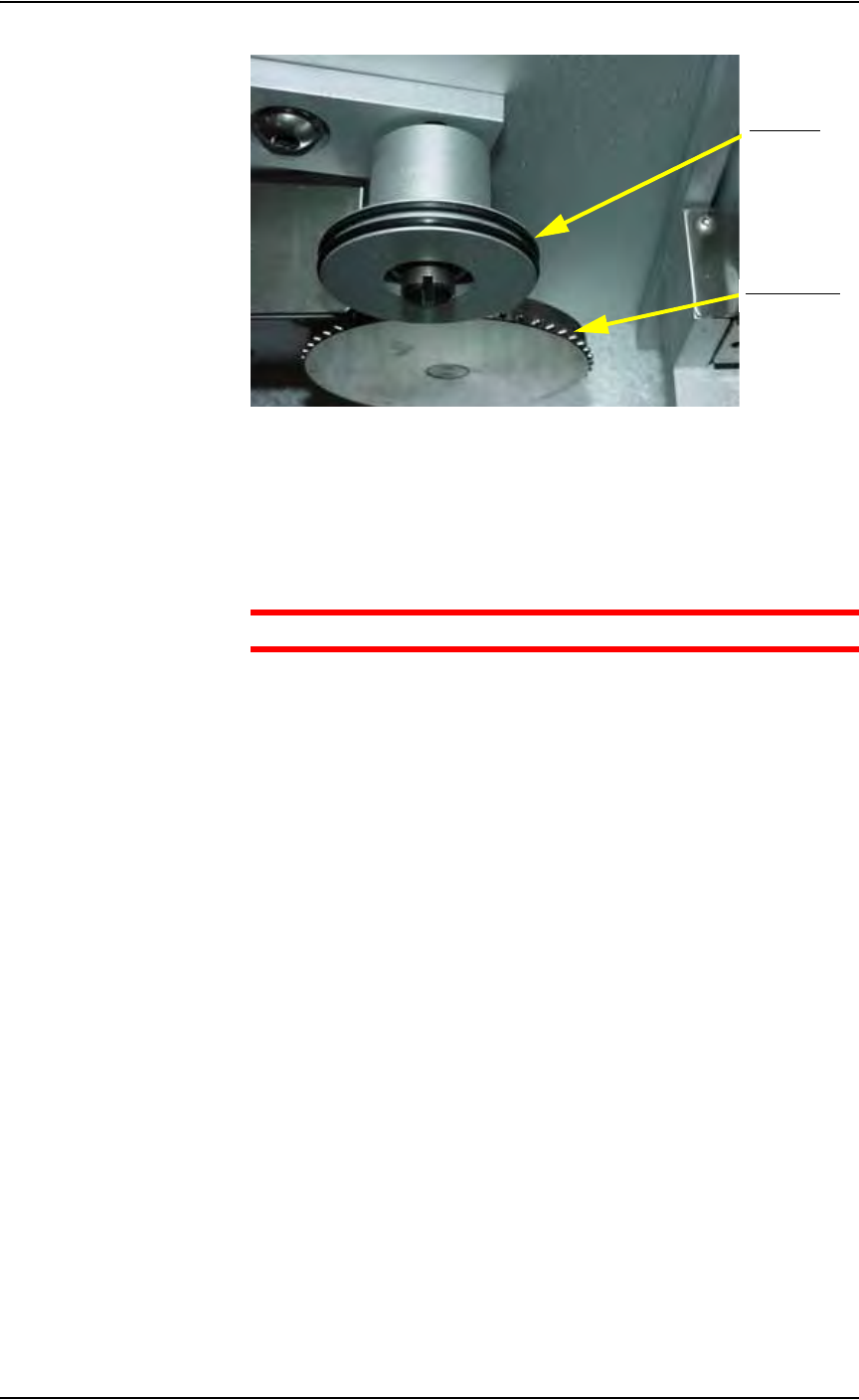
Figure 5-77—Idler pressure wheel and O-rings
5. Remove adhesive build up from drive sprocket idler and O-rings—
5a) Gently remove the O-rings from the drive sprocket idler. Avoid damage
to the O-rings.
5b) Using a shop towel damp with alcohol or a commercial alcohol wipe,
remove all adhesive from O-rings.
CAUTION: Wipe gently to avoid breaking the O-rings.
5c) With the O-rings removed from the idler, clean the top idler using the
shop towel and alcohol or alcohol wipes.
5d) Once all adhesive has been removed from the O-rings and idler wheel
and the alcohol has dried, reinstall the O-rings on the top idler wheel.
6. Remove adhesive build up from the cover tape application roll-
ers—
6a) Using a shop towel and alcohol or alcohol wipes, clean the adhesive
build up from the cover tape application rollers. Hold the alcohol towel
or wipe on the roller and spin the roller until the entire roller has been
cleaned.
6b) Repeat procedure for the other application roller.
7. Check pressure of cover tape application roller—
7a) Advance the carrier tape with the cover tape through the application
rollers using the manual advance pedal. Advance enough pockets to
correctly align the cover tape on the carrier tape.
7b) Perform a "peel back" test by peeling the cover tape from the carrier
tape. Note how well the cover tape adhered to the carrier tape. Perform
a "twist" test by giving the tape a slight twist. Note if the cover tape
detaches from the carrier tape.
7c) If either test produces loose cover tape, increase the application roller
pressure by screwing in on the roller mounting screw and spring
assembly.
7d) If both tests look acceptable, visually inspect the sealed carrier tape for
adhesive that may have been squeezed out during application. If adhe-
sive is visible, the application roller pressure is too high. Decrease the
Drive sprocket
O-rings (2)
Maintenance • (Optional) Tape Output System
PS288 Owner’s Manual 5—65
application roller pressure by screwing out on the roller mounting
screw and spring pressure assembly.
The cleaning procedure for the pressure sealing tape output system is now
complete.
Troubleshooting and Adjusting Sensors in the Tape
Output System
The tape output system contains sensors that detect these fault conditions:
• A device is jammed in the carrier tape (Device Jam Sensor)
• No cover tape is on the reel (Cover Tape Sensor)
• Carrier tape is not properly inserted in the Carrie Tape Input Guide
(Carrier Tape Sensor)
• A pocket in the carrier tape is empty (Pocket Empty Sensor)
When the AH500 software displays the error message “Tape Out Unit,” one
of the tape output system sensors has been triggered. The most likely sensors
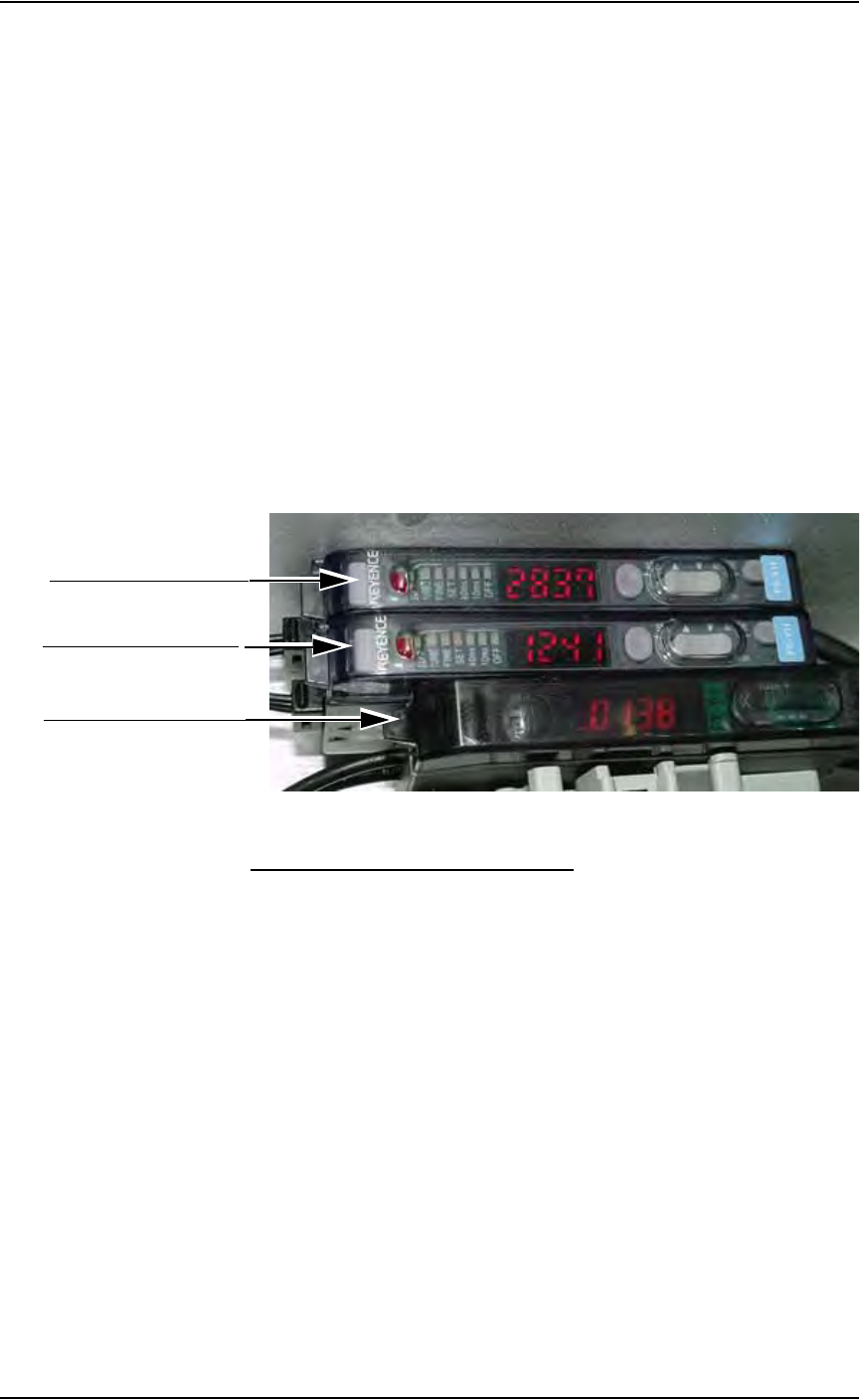
to trigger are the Device Jam and Carrier Tape sensors. See Figure 5-78.
Figure 5-78—Sensor controllers
Device Jam Sensor and Controller
The Device Jam sensor detects when a device is not properly seated in the
pocket. This sensor is located on the Adjustable Loading Track immediately
before the carrier tape enters the Carrier Tape Guide.
When the Device Jam sensor is triggered, an orange LED is illuminated in
the Device Jam Sensor Controller (1 in Figure 5-78).
Problem:
• Error message "Tape Out Unit" displays and an orange LED is illumi-
nated in the Device Jam Sensor Controller.
Check this:
) Use a vacuum tool to seat the device in the carrier tape pocket.
) Re-seat the carrier tape in the Adjustable Loading Track.
) Use air to blow any debris out of the Device Jam sensor path.
) Adjust the Device Jam Sensor Controller. See below.
1. Device jam sensor controller
2. Cover tape sensor controller
3. Carrier tape sensor controller

Maintenance • (Optional) Tape Output System
5—66 PS288 Owner’s Manual
Adjusting the Device Jam Sensor Controller
1. Fiber optic cables—
Set the fiber optic cables by unscrewing the hex screw and rotating the
cable until the light shines through and the LED value reads as high as
possible (typically around 200).
2. Output Mode 1—
2a) There are two output modes: Output Mode 1 and Output Mode 2. Set to
Output Mode 1 by turning the jog switch to the (+) or (-) side. The
blinking cursor bar alternates between Output 1 and Output 2.
2b) Press the jog switch to Output Mode 1. Change it from "Lnon" to
"Dnon" by turning the jog switch to either (+) or (-) side.
NOTE: Lnon = Light ON and Dnon = Dark ON
2c) Turn the mode selection switch to "SET." The current threshold value
is displayed. Re-set the current threshold value to 90 by turning the jog
switch to either (+) or (-) side to obtain the desired threshold value.
2d) Repeat Step 2a through Step 2c for Output Mode 2.
3. RUN—
When both Output Mode 1 and Output Mode 2 are set, set MODE
switch to "RUN." For normal operation, both fault LEDs should be off.
Cover Tape Sensor and Controller
The Cover Tape sensor detects when there is no cover tape on the reel. When
the Cover Tape sensor is triggered, a red LED is illuminated in the Cover
Tape Sensor Controller (2 in Figure 5-78).
Problem:
• Error message "Tape Out Unit" displays and red LED is illuminated in
the Cover Tape Sensor Controller.
Check this:
) Replace empty cover tape reel.
) Adjust the Cover Tape Sensor Controller if the reel still contains cover
tape. See below.
Adjusting the Cover Tape Sensor Controller
1. Ensure that the Output Selector Switch is set to D.ON.
2. Install a roll of cover tape on the unit.
3. Press and release the "SET" button. The Calibration Indicator, [SET]
LED bar, will light up.
4. Remove the cover tape.
5. Press and release the "SET" button.
NOTE: If an error occurs or the sensor fails to detect the cover
tape after switching from a different type of cover tape, then the
Cover Tape sensor may need to be re-taught to sense that particular
type of cover tape.