PS288_OwnersMnl_PriorTo2009 - 第30页
Introduction • Laser Safety 1—20 PS288 Owner’s Manual Laser Safety Labels The laser safety label shown in Figur e 1-14 warns of laser danger . Figur e 1-14—Laser safety label Laser safety labels are located on the left a…
Introduction • Laser Safety
PS288 Owner’s Manual 1—19
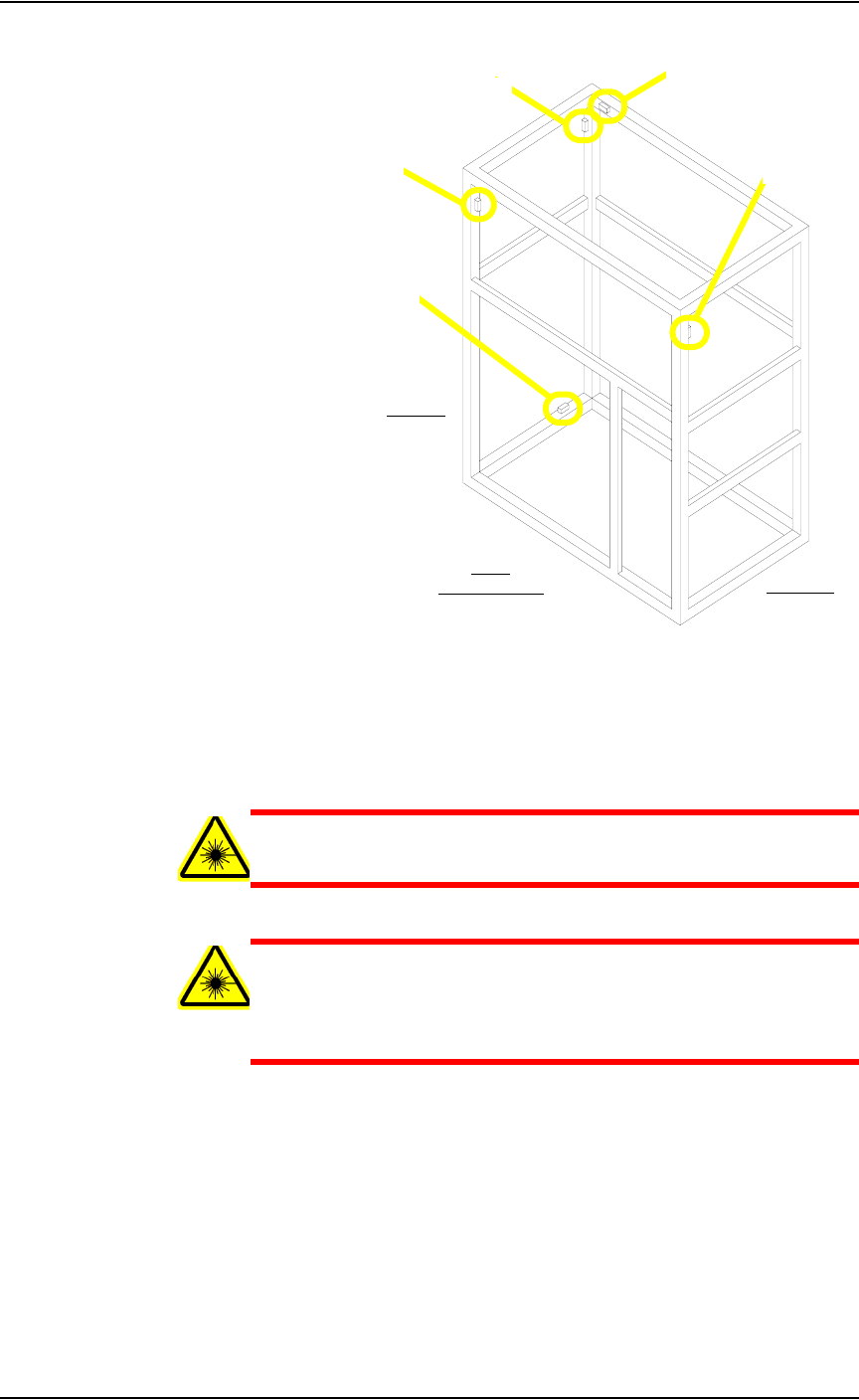
Figure 1-13—Location of five safety interlocks
The laser safety interlocks can be overridden for service. To override a laser
safety interlock, pull out on the switch. The laser can now fire with the safety
shield removed.
WARNING: The laser safety interlocks should be overridden only
by qualified and trained service personnel.
WARNING: Never leave system unattended with safety shield
removed and safety interlocks overridden. Serious burn hazard!
Direct or diffuse laser radiation can cause serious burns. Blind-
ness hazard! Direct or diffuse laser radiation can damage eyes.
3
2
1
4
Front
(toward PS288)
Right side
Left side
5
Introduction • Laser Safety
1—20 PS288 Owner’s Manual
Laser Safety Labels
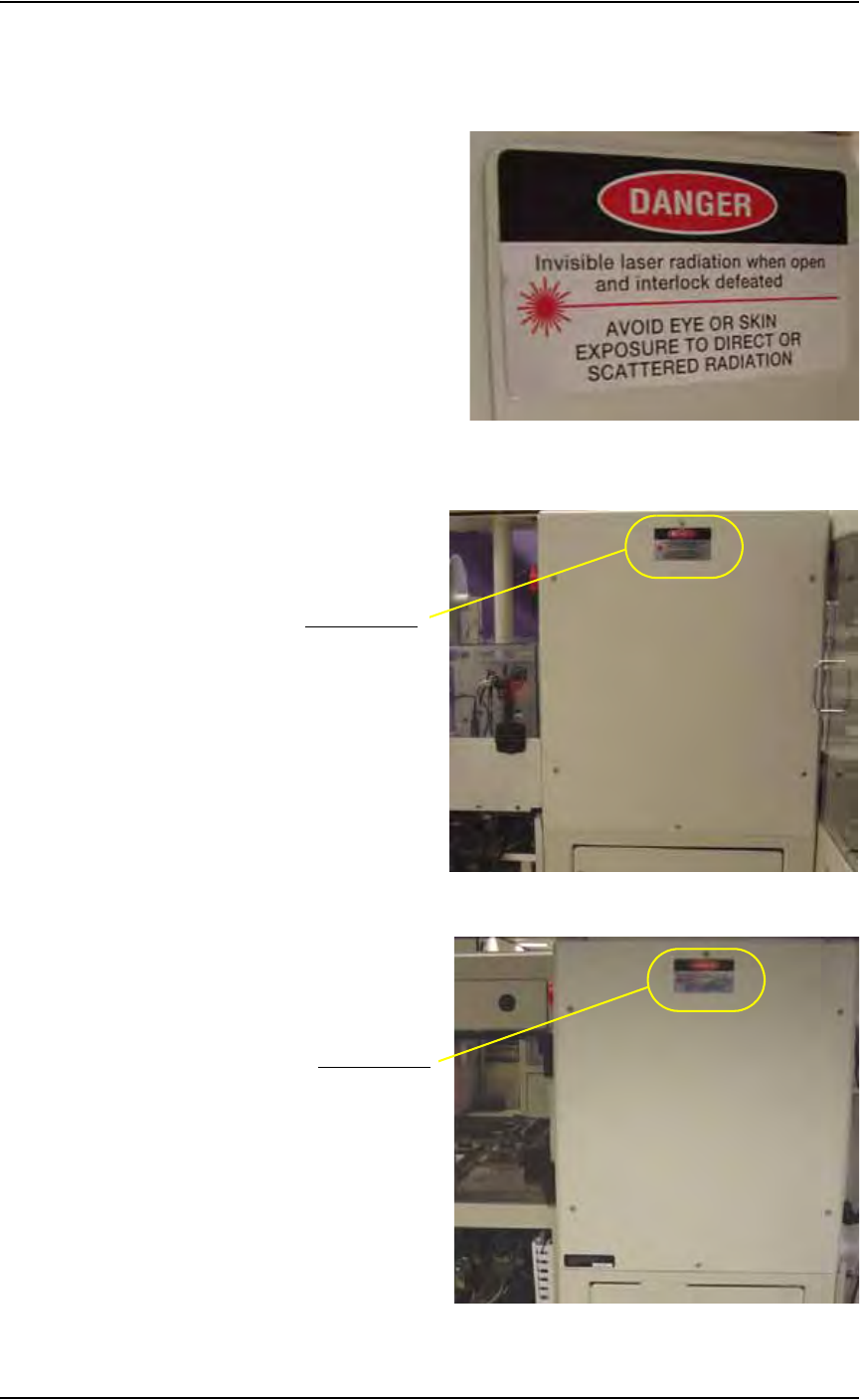
The laser safety label shown in Figure 1-14 warns of laser danger.
Figure 1-14—Laser safety label
Laser safety labels are located on the left and right sides of the Option Bay:
Figure 1-15—Label location on left side of Option Bay
Figure 1-16—Label location on right side of Option Bay
Laser safety label
Laser safety label
Introduction • Laser Safety
PS288 Owner’s Manual 1—21
Disposal of Laser Vacuum Filters
The laser system uses a vacuum to remove the smoke and other by-products
of the laser marking process. The smoke fumes pass through a series of fil-
ters designed to remove airborne particles from the operating environment.
Material Safety Data Sheets (MSDS) for materials being processed should
be thoroughly evaluated and the adequacy of provisions for fume extraction,
filtering, and venting should be carefully considered.
The exact composition of the materials trapped by the filters depends upon
the materials used by the semiconductor manufacturer to create the device
package. Analysis of filter contents obtained after marking a representative
variety of devices has revealed a sufficient level of potentially hazardous
material, such as antimony and other heavy metals, to require that you han-
dle and dispose of the filters with other hazardous waste within the facility.
Dispose of the filters in accordance with the facility’s hazardous waste pol-
icy and in a manner that meets all applicable government (local, state, and
federal—or equivalent) regulations.
Review the following references for further information regarding exposure
criteria:
• ANSI Z136.1-1993, Standards for the Safe Use of Lasers, section 7.3.
• U.S. Government’s Code of Federal Registers: 29 CFR 1910, subpart
Z.
• Threshold Limit Values (TLVs) published by the American Conference
of Environmental Industrial Hygienists (ACEIH).
Laser Vacuum Filter Replacement Intervals
Replace the filters in the fume extractor according to information in the
“Interval Table” on page 5-2. If the filters are not replaced as required, the
laser vacuum system will not be able to prevent fumes and marking by-prod-
ucts from escaping into the work environment.
WARNING: Do not clean the laser vacuum filters by blowing with
compressed air, shaking, or using any method that allows the par-
ticulate trapped by the filters to be released into the work environ-
ment. Dispose of the filters as directed in your fume extractor
manual.
WARNING: Failure to replace the laser vacuum filters at the
required intervals could create a hazardous operating environ-
ment.
Determining Filter Contents
The company contracted to dispose of the facility’s hazardous waste may be
required to perform a profile of the filter contents to determine the specific
composition of the particulate matter. The manufacturer of the semiconduc-
tor devices being marked may be able to provide a profile sheet describing
the composition of their packaging material.