N7201A617E00_0317.pdf - 第66页
NPM-W 2 EJM7DE-SF-01N-0 0 R epair s on or disposal of linear motor s 1-8 -1 1-8 Y ou are prohibited to remove or disassemble the linear motor on your own Using a special jig, trained personnel have to disassemble or disp…
NPM-W2 EJM7DE-SF-01N-00
1-7
Confirmation
Handling the used
battery
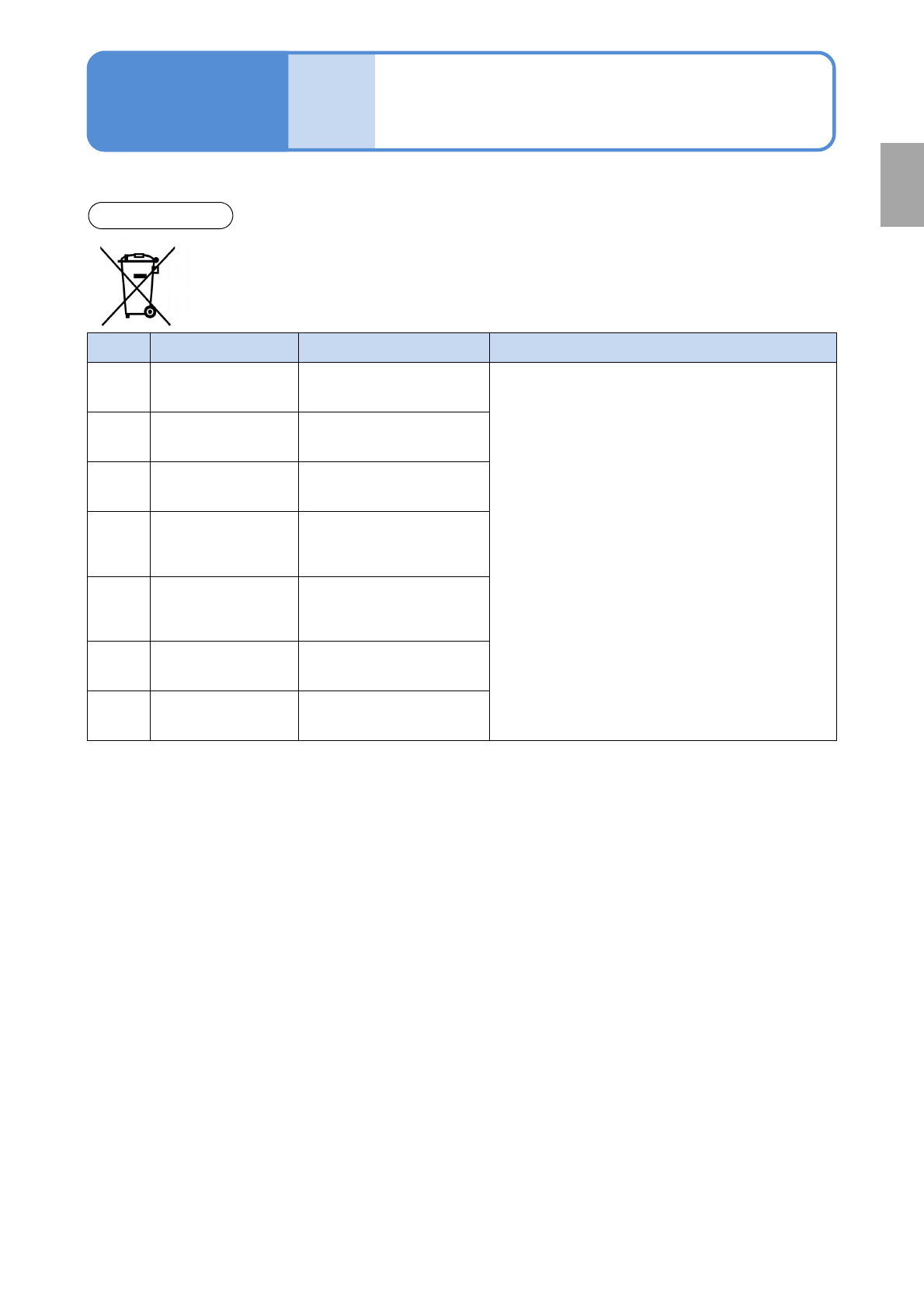
This product has a battery used for controlling PCBs. Disposal may be regulated in your
community due to environmental considerations. Please dispose of or recycle it in conformity
with the laws or regulations of your country, or contact your local authorities for more
information.
ATTENTION
No. Mount location Battery type Reference page
1. CPU board Lithium battery
[Replacing the batteries]
(→P.12-3) in Maintenance
2. NCIO board Lithium battery
3. Jig station Alkaline battery
4.
FA PC:Calendar
battery(inspection
BOX)
Lithium battery
5.
FA PC:UPS
battery(inspection
BOX)
Nickel hydride
6.
FA PC:Calendar
battery(LNB)
Lithium battery
7.
FA PC:UPS
battery(LNB)
Nickel hydride
●Lithium batteries are primary batteries that cannot be recharged.
●Although manganese dioxide batteries are acceptable, alkaline batteries are recommended.
●Batteries are not included with Jig station. Please have your batteries ready.
●FA PC:Please consult us for replacing calendar battery.
EU
1-7
NPM-W2 EJM7DE-SF-01N-00
Repairs on or disposal of
linear motors
1-8-1
1-8
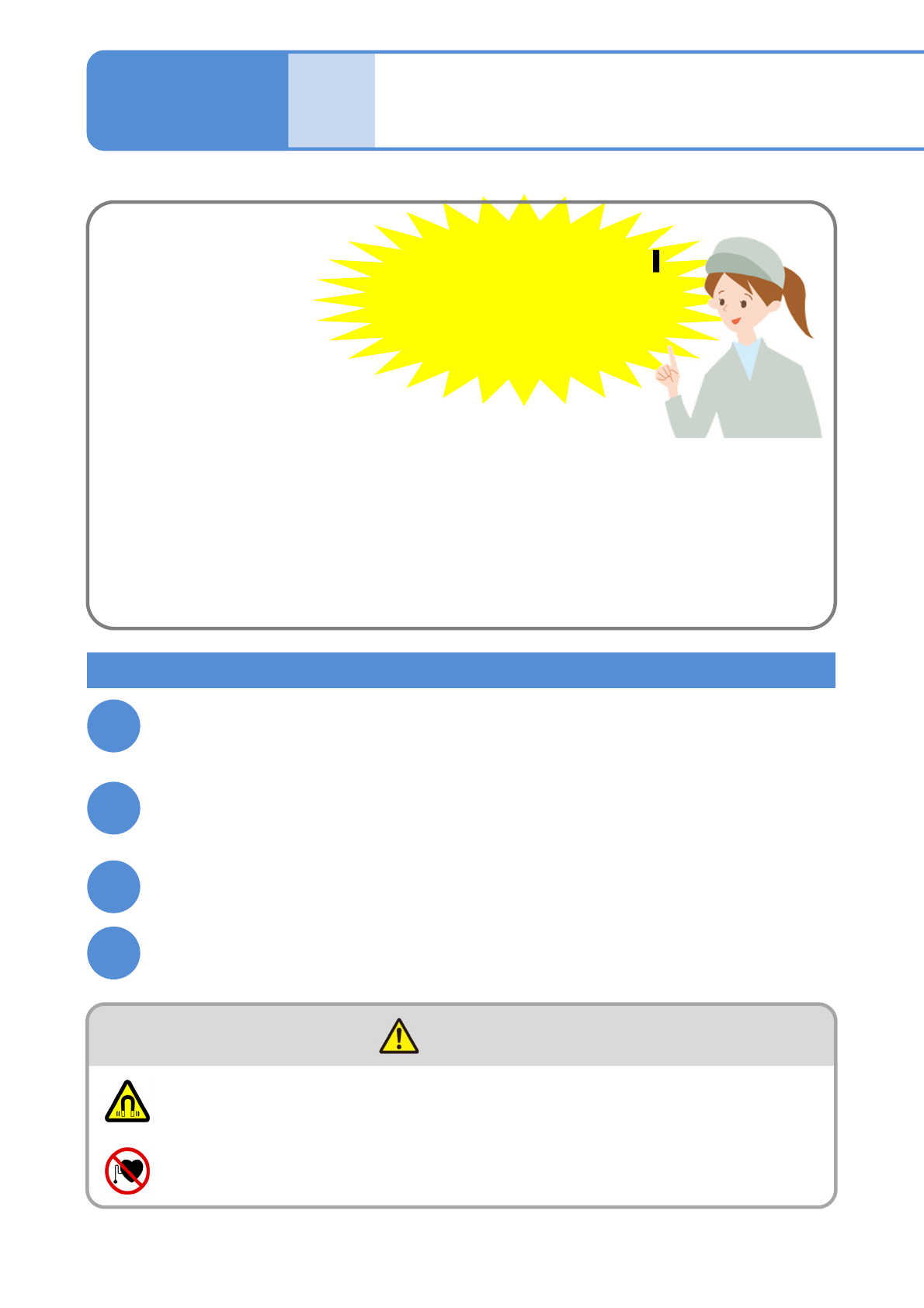
You are prohibited to remove or disassemble
the linear motor on your own
Using a special jig, trained personnel have to disassemble or dispose of the linear motor.
Please entrust to a waste disposal expert or contact us.
Submit this page and the next page to a waste disposal
expert when disposing
When disposing of the linear motor, the waste disposal expert has to be informed of the disposal
procedures to prevent a waste disposal accident.
■TO THE CUSTOMER・・・
Removal and disposal
Demagnetize the linear motor
●Evenly apply heat to the surface of the linear motor’s stator (permanent magnet) with an acetylene
gas burner for more than five minutes, with the surface temperature kept at approximately
1,000°C.
1
Remove combustible materials (resin parts or wirings
near the linear motor)
(Prevents from fire)
Dispose of it as industrial waste
Confirm that the magnetic force is reduced
●Confirm that the magnetic force is 10 mT or less, or check to see whether the steel scale is not
strongly attracted.
2
3
4
Entrust to a
waste disposal
expert for
removal or
disassemble!
Danger
Do not wear or close to any metal during work (Risk of injury when your hands are
pinched or pulled in due to the strong magnetic force of the linear motor)
●Pierced earrings, necklaces, watches and tools
Individuals with Pacemakers should keep away from the linear motor
(Risk of injury)
NPM-W2 EJM7DE-SF-01N-00
1-8-2
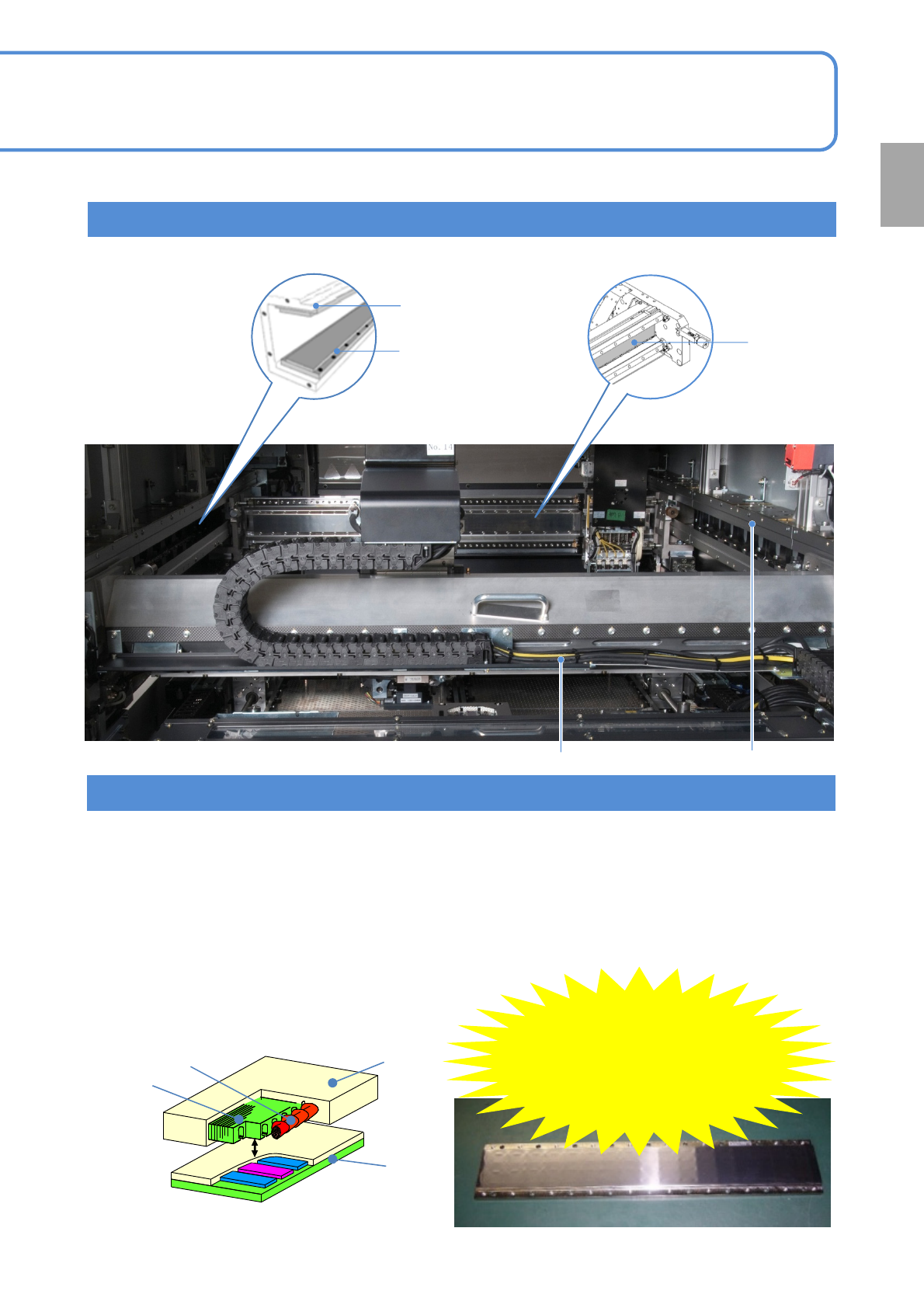
Position of a liner motor
■Structure of the linear motor (reference)
●The structure may differ slightly from one model to
another, but basically it is the same in each model.
Stator
Mover
Iron core
●The attractive force generated by the stator (permanent magnet) is very strong. (it varies depending on the
axis and it is 10 000 at the maximum). Once one stator is stuck to another or a thick steel sheet, they cannot
be detached from each other easily.
●A magnetic body (e.g. tool, jig, or bolt), such as iron, or a device, including a watch, cellular phone, or
magnetic card, should be kept 40 mm away from the linear motor. (It results in serious injury when the stator
attracts the magnetic body and then your finger or hand is caught between them/The strong magnetic force
may damage the watch or the cellular phone and destroy the data on the magnetic card)
●Only the stator has an attractive force. (The mover does not have an attractive force)
Precautions in use
Be careful
of magnetic
force!
(Maximum force
of 10 000 N)
Coil
Confirmation
X-axis liner motor
Y-axis upper stator
(magnet)
Y-axis lower stator
(magnet)
Y-axis liner motor X-axis liner motor
X-axis stator
(magnet)