00193368-02.pdf - 第52页
SIPLACE GEM for S25HM, S27HM, HS50 , HS60 SW Version GEM 503.02 HOST Inter fac e Manual Page 52 of 243 ©Siemens AG, all rights reser ved Purge Spool The SIPLACE is purging its s pool, erasing all spooled m essages . Tran…
SIPLACE GEM for S25HM, S27HM, HS50, HS60 SW Version GEM 503.02
HOST Interface Manual
©Siemens AG, all rights reserved page 51 of 243
# From Trigger To Description
this variable will be
sent.
9 No Spool
Output
The Host requests
the SIPLACE to
purge its spool.
Purge Spool SIPLACE will delete its
spool.
10 Spool
Output
Entire spool has
either been read or
purged by the Host.
Spool
Inactive
SIPLACE will continue
normal SECS
communicating.
Spool States
Power Off
The SIPLACE is completely shut down.
Power On
The SIPLACE is "on" and in a stable state.
Spool Inactive
Spooling is not activated. This is either because CONFIGSPOOL
(VID 1002045) is "0" (disabled) in which case, spooling will never
be active, or because while GemConfigSpool is enabled ("1"), a
RTY error has not occurred. In this state, no messages are sent to
the spool. The Host may define or un-define messages eligible for
spooling should the link go down.
Spool Active
While CONFIGSPOOL (VID 1002045) is "enabled" ("1"), the
SIPLACE has experienced a transmission failure (RTY error).
Upon entry into this state, the first message sent to the spool is the
GemSpoolingActivated event (CEID 1000007), assuming that this
event is enabled and that spooling for the particular stream and
function have been enabled. This message will enter the spool
even before the message which originally caused the RTY error.
Spool Not Full
The file containing the spooled messages has not
reached its capacity.
Spool Full
The file containing the spooled messages has reached
its capacity.
No Spool Output
In this state, the Host is not reading or purging the
SIPLACE's spool.
Spool Output
This super-state contains the two sub-states in which
the Equipment's spool is either being read or purged by
the Host.
SIPLACE GEM for S25HM, S27HM, HS50 , HS60 SW Version GEM 503.02
HOST Interface Manual
Page 52 of 243 ©Siemens AG, all rights reserved
Purge Spool
The SIPLACE is purging its spool, erasing all
spooled messages.
Transmit Spool
The SIPLACE is transmitting spooled messages
to the Host.
3.10.4 Related Variables
The following table lists the variables (SV's, EC's, or DVVALS) which are relevant to
spooling. For a more complete description of these variables, see "Appendix A --
Variables".
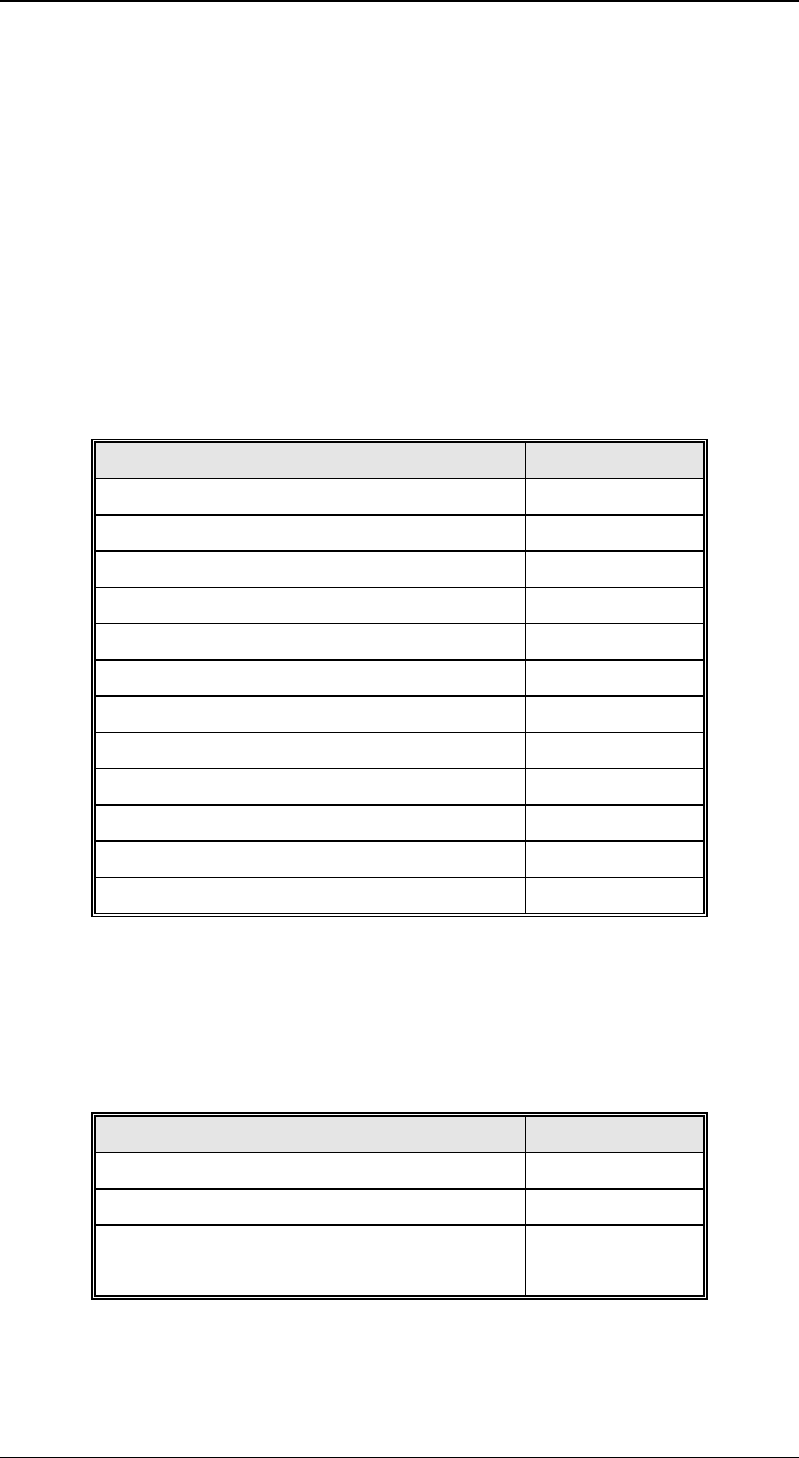
Variable Name VID
MAXSPOOLTRANSMIT 1002037
CONFIGSPOOL 1002045
SPOOLCOUNTACTUAL 1002038
SPOOLCOUNTTOTAL 1002039
OVERWRITESPOOL 1002046
SPOOLFULLTIME 1002040
SPOOLLOADSUBSTATE 1002041
SPOOLSTARTTIME 1002042
SPOOLSTATE 1002043
SPOOLUNLOADSUBSTATE 1002044
MAX_TIME_TO_STOP 1002942
SAFE_SPOOL_MODE 1002943
3.10.5 Related Events
The following lists the collection events (CEIDs) which are relevant to spooling. For a
more complete description of these events, see "Appendix B -- Collection Events" or the
description in this chapter.
Collection Event CEID
GemSpoolingActivated 1000007
GemSpoolingDeactivated 1000008
GemSpoolTransmitFailure 1000009
FM_GEM_SPOOL_FULL 2211039

SIPLACE GEM for S25HM, S27HM, HS50, HS60 SW Version GEM 503.02
HOST Interface Manual
©Siemens AG, all rights reserved page 53 of 243
3.11 Remote Commands
Setup and processing on the SIPLACE machines can be driven by either a local operator
or by a Host computer. This section describes the remote commands available at the
Host.
Much of the behavior of SIPLACE and its acceptance of remote commands is directed by
requirements of the Control State. For a complete description of the Control State, please
see section 3.2, "Control States".
The SIPLACE will accept remote commands only when the Control State is Remote.
While in the Local state, the Host can not put the Equipment into Remote, this must be
done by an operator at the Equipment.
The Host has the ability to configure whether the Equipment will enter the Remote or local
state as a default upon entering the On-Line state from Off-Line. This is done by setting
The ONLINESUBSTATE Equipment Constant (VID 1002009) to 4 (Local) or 5 (Remote).
Once in the Remote state, the Host has the authority to issue any of these remote
commands and they will not be rejected because of an invalid control state. Commands
may be rejected for other reasons (trying to start a process with no material loaded, etc.).
While in Remote state, the Operator still has the ability to issue commands and change
the control state. If the operator issues a command while in Remote state, the SIPLACE
will send the OPERATORCMDINREMOTESTATE collection event if enabled (CEID
1002056). When the Operator "grabs" control away from the Host by changing the
Control State to local, the SIPLACE will send either the GemControlStateLOCAL (CEID
1000003) or GemEquipmentOFFLINE (CEID 1000005) event to the Host.
3.11.1 S2F41 Commands
The general format for remote commands using the S2F41 message is:
S2F41 [W] * H->E
<L [2]
<A RCMD> * Remote command string
<L
<L [2]
<A CPNAME> * Command Parameter Name
<CPVAL> * Command Parameter Value
>
...
>
> .
The following commands may be sent by the Host to the SIPLACE.
3.11.1.1 START
This command starts processing on the SIPLACE assuming all proper initialization has
taken place and material is present.
A Remote Start could conflict with a Safe_Spool_Stop until spooldata ist purged or
transmitted, , see "chapter 3.10 Spooling".