00195193-02 SG D4 FSE en (1).pdf - 第262页
Component handling Empty tape duct Pneumatic tape cutter Student Guide SIPLACE D4 (FSE) EN 09/2006 Component handling 247 10.3.4 Empty tape duct The empty tape duct receives empty tapes from the feed ers at the inlet gap…
Component handling
Pneumatic tape cutter Jumper setting on the control unit at the tape cutter
Student Guide SIPLACE D4 (FSE)
Component handling EN 09/2006
246
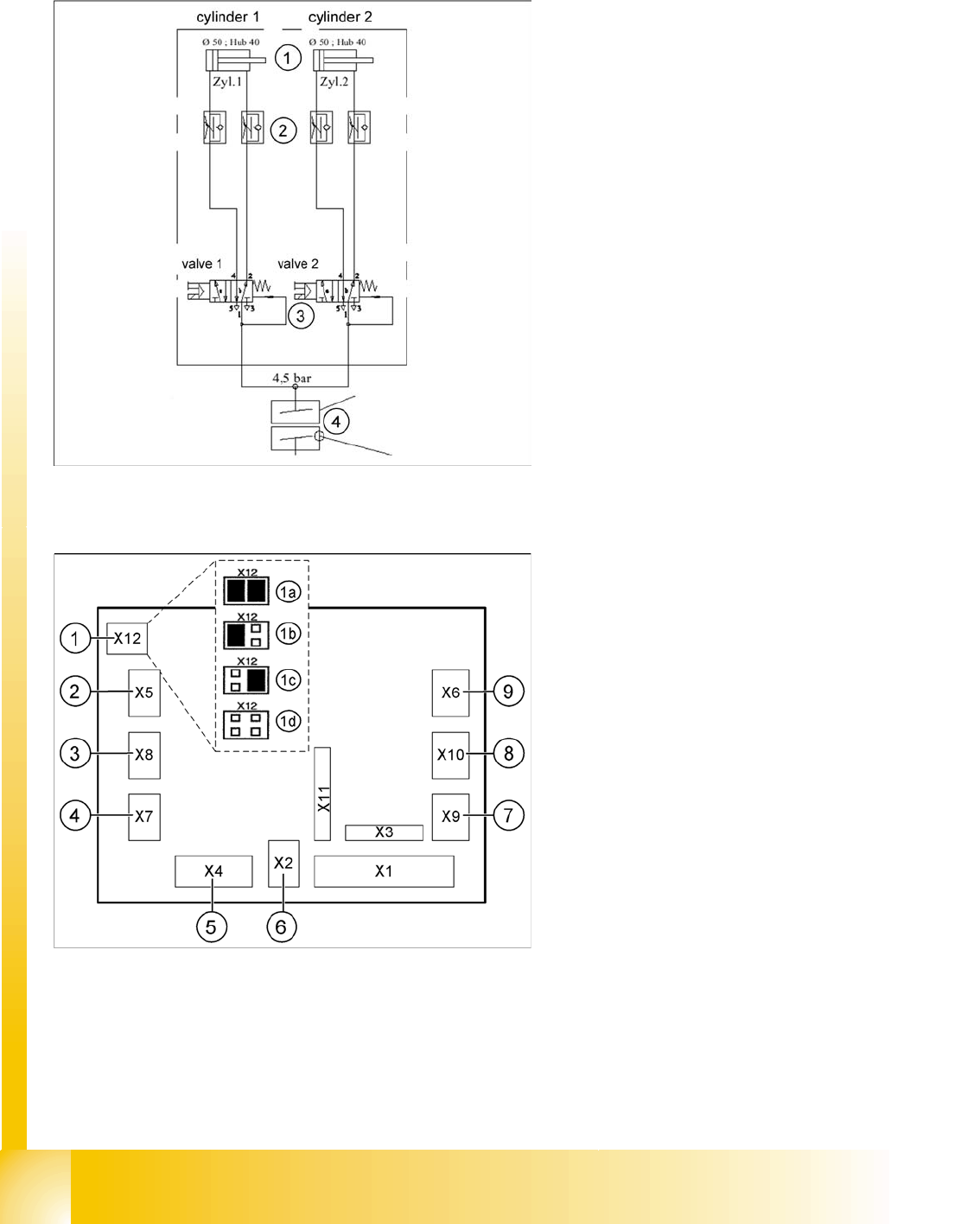
10.3.2.2 Pneumatic scheme Tape cutter
10.3.3 Jumper setting on the control unit at the tape cutter
The jumper for the CAN bus addressing must be set according to the corresponding location in the
machine.
Legend:
1. Drive cylinder for cutter blade movement
40 mm stroke
2. Adjustable throttle valve on the pneumatic
cylinder
3. 5/2 way magnetic valve
4. 4.5 bar compressed air supply and 24 V
voltage supply via the PCC safety relay
Cutter only active when protective hoods are
closed
Legend - SIPLACE D4 Jumpers
1. X12 – Jumper for location code of cutter:
1a: Gantry 1
1b: Gantry 2
1c: Gantry 3
1d: Gantry 4
2. X5 – Voltage supply to valve (left)
3. X8 – Proximity switch for stroke cylinder out
(left)
4. X7 – Proximity switch for stroke cylinder in
(left)
5. X4 – CAN bus connection
6. X2 – Voltage supply for cutter +24 V and +5 V
7. X9 – Proximity switch for stroke cylinder in
(left)
8. X10 – Proximity switch for stroke cylinder out
(right)
9. X6 – Voltage supply to valve (right)
Component handling
Empty tape duct Pneumatic tape cutter
Student Guide SIPLACE D4 (FSE)
EN 09/2006 Component handling
247
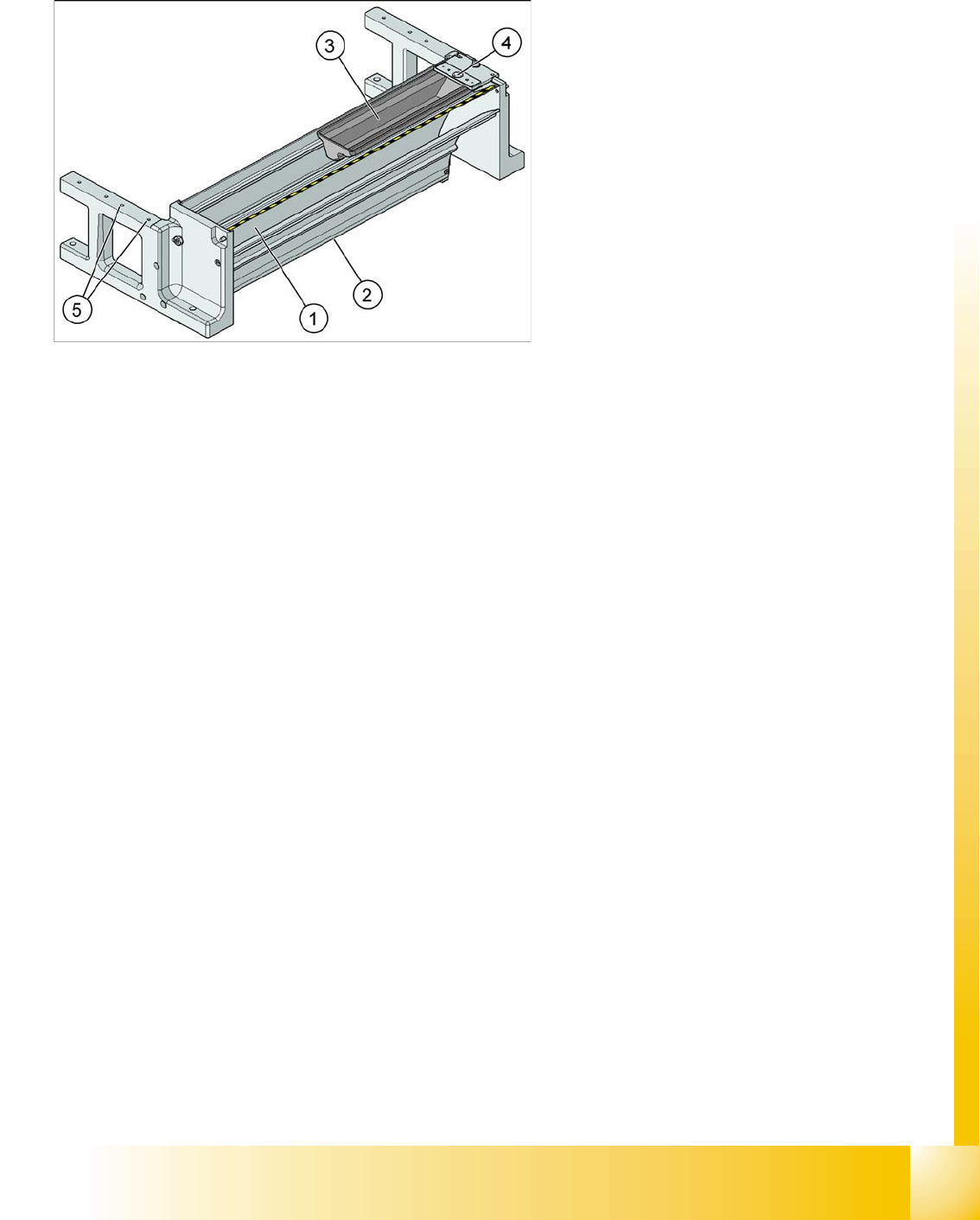
10.3.4 Empty tape duct
The empty tape duct receives empty tapes from the feeders at the inlet gap (1) and guides these to the
outlet gap (2), to the cutting position of the pneumatic cutter. This is where the tape is cut up and falls
down the waste tape chute, into the CO trolley waste tape container.
The empty tape duct is fixed to the pneumatic tape cutter with four screws.
The empty tape duct acts as a base for further modules:
The removable nozzle reject container (3)
Installation surface(5) for C&P nozzle changer
Nozzle stripping unit (4)
Legend:
1. Inlet slot for empty tape
2. Outlet slot for the empty tape above the
pneumatic tape cutter
3. Nozzle reject container
4. Nozzle reject station
5. assembly surface for the nozzle changer
Component handling
S Feeders Carrying out a walk-through inspection
Student Guide SIPLACE D4 (FSE)
Component handling EN 09/2006
248
10.4 S Feeders
10.4.1 Carrying out a walk-through inspection
10.4.1.1 Checking the S feeder modules
X Check to ensure that the pick-up window on combination feeder modules (24/32 mm) is the right size
for the component.
X Check to see whether tape guides are inserted on combination feeder modules (24 mm / 32 mm).
10.4.1.2 Splicing the tape in good time
10.4.1.3 Checking the PCB supports
X Check the position of the magnetic PCB supports on the lifting table:
X Make sure that the PCB supports do not collide with components on the underside of the PCBs.
X In addition, make sure that the PCB supports do not collide with the PCB conveyor panels.
10.4.1.4 Inserting separating plates in the tape container
X Insert the separating plates as shown and remember that the smallest division of the tape container
is a 2x division. This will help avoid placement errors.
X Check that the separating plates engage in the same positions on both guide rails. Otherwise the
X Make sure that the tape is correctly placed in
the springs of the S feeder module.
X Check to see whether the tape foil removal
container for the S feeder module is full.
If it is full, then pull out the foil and cut it off with
scissors.
NOTE:
Tearing the foil instead of cutting it can lead to problems with the tape removal
mechanism.
For this reason the 3 x 8 mm feeder modules are fitted with an integral cutter.
This is in the tape foil removal container at the end of the feeder module under
the flaps.
NOTE:
Splice the tapes early enough so that the feeder modules do not run out of
components. Otherwise you will experience prolonged down times.
However, do not splice the tapes too early because if you wind the end of the
old tape onto the new reel after splicing, the reel holding the new tape may
become overfilled and the tape will slip off the reel and become tangled up. This
will again result in pick-up errors and prolonged down times.