00195193-02 SG D4 FSE en (1).pdf - 第288页
Modular conveyor Conveyor Settings Control of PCB clamping S tudent Guide SIPLACE D4 (FSE) Modular conveyor EN 09/2006 272 1 1.3.10 Control of PCB clamping Function description: The PCB moves into the place ment area, …
Modular conveyor
Light Barrier Functions in Input, Intermediate and Output Conveyors Conveyor Settings
Student Guide SIPLACE D4 (FSE)
EN 09/2006 Modular conveyor
271
11.3.8 Light Barrier Functions in Input, Intermediate and Output Conveyors
Recognizing and stopping the PCB boards.
Monitoring the boards in the input conveyor i.e.
If a board is recognized in the input conveyor, it will appear on the operating interface and the
machine will lock the conveyor interface to the previous station. When using boards with outbreaks,
the board may stop although the signal of the light barrier is disabled and the interface to the previous
station is opened again. Then the next PCB would move into the input conveyer with the PCB still
lying in the input conveyer. The board monitoring function moves the board backwards and then
transports it forwards again, until the light barrier switches.
11.3.9 Setting the Clamping Actuator
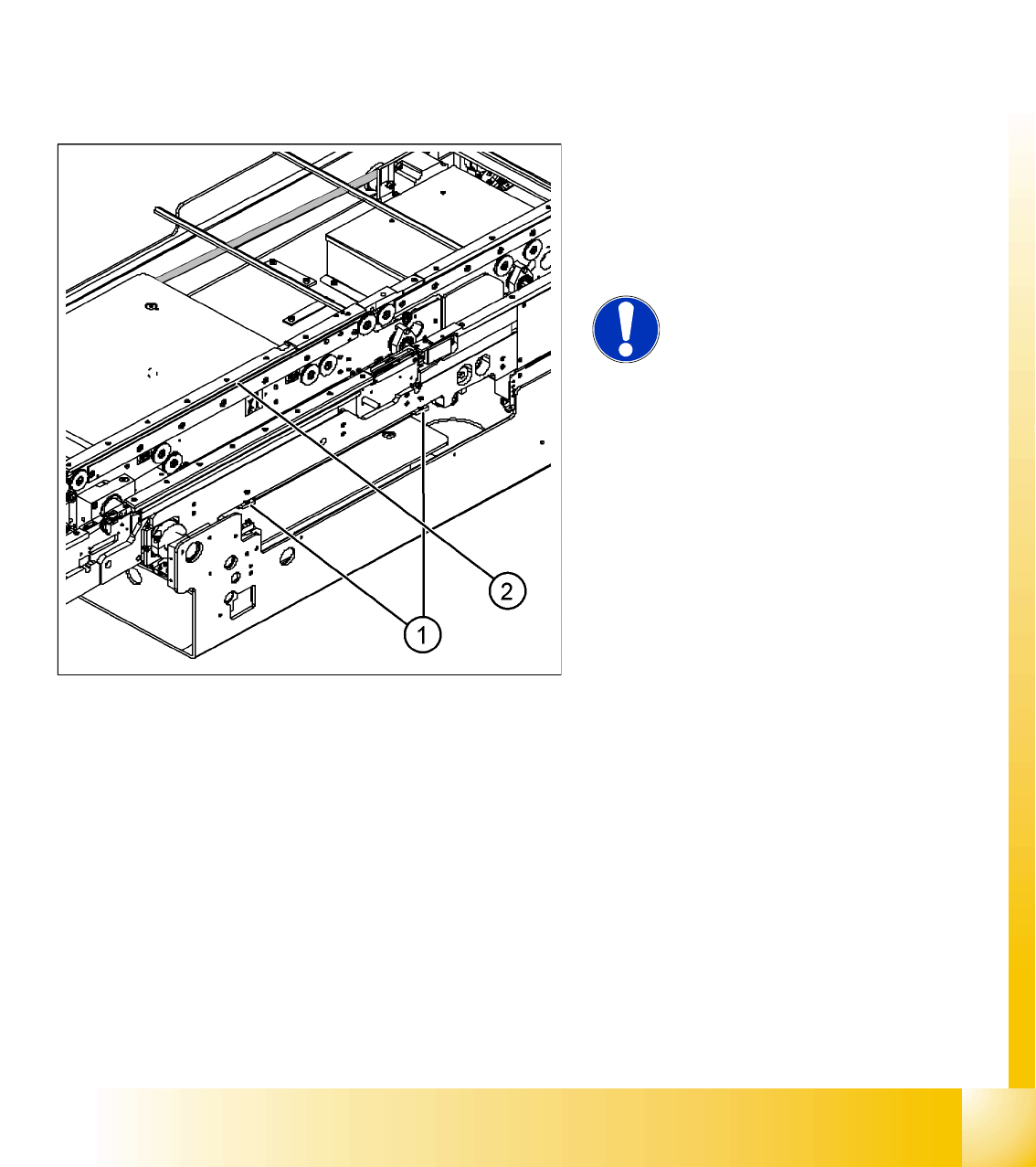
Legend:
1. Actuator
2. Top edge of conveyor belt
X Set the distance between the actuator and the
top edge of the conveyor belt to 94 mm.
NOTE:
The distance between the clamping
actuator (lifting table) and the top
edge of the belt must be checked at all
four contact points.
Modular conveyor
Conveyor Settings Control of PCB clamping
Student Guide SIPLACE D4 (FSE)
Modular conveyor EN 09/2006
272
11.3.10 Control of PCB clamping
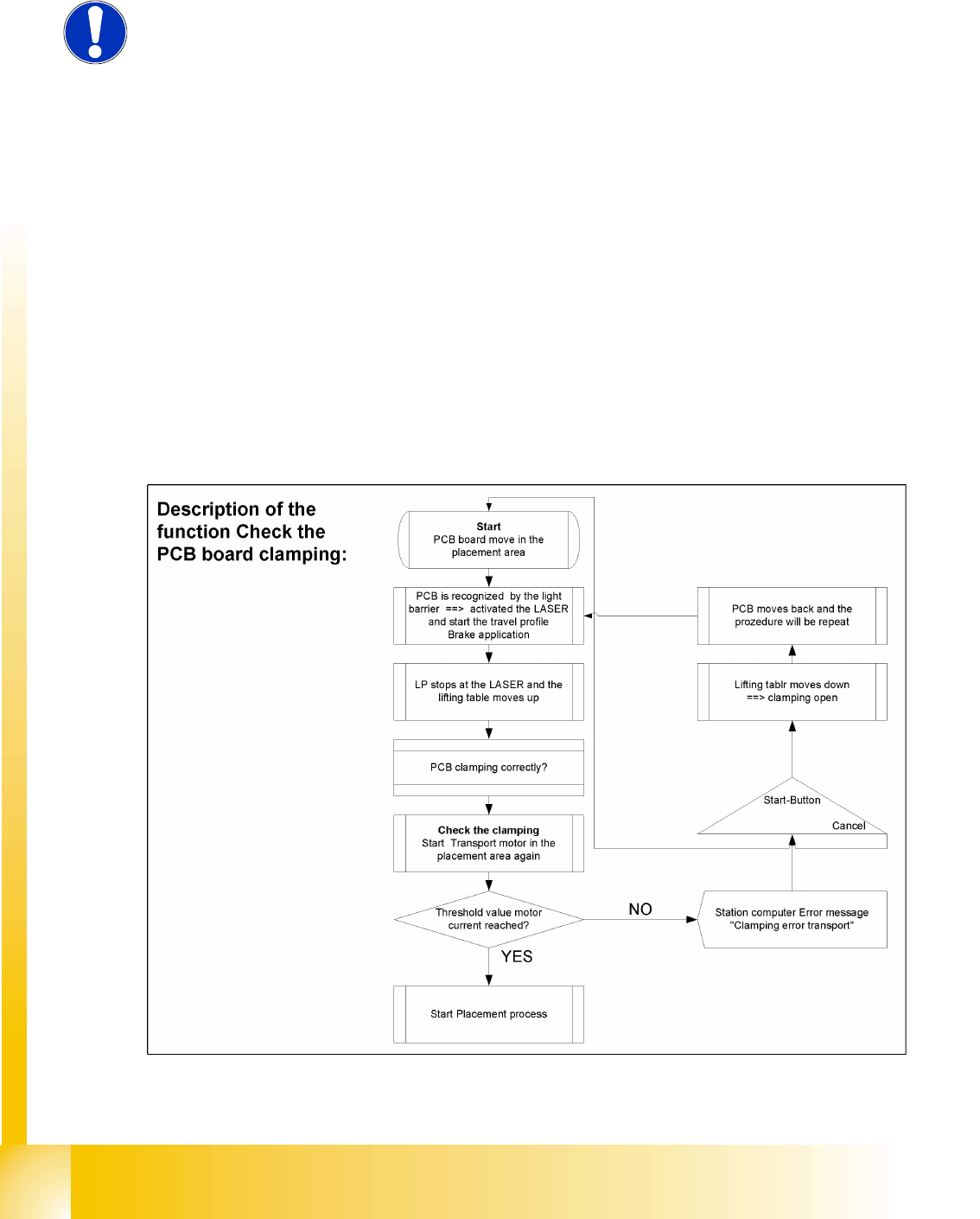
Function description:
The PCB moves into the placement area, it is recognized by the light barrier, stops at the laser and
the lifting table moves up.
Check PCB clamping: The transport motor in the placement area start again. Is the PCB clamped
correctly the motor current rise up and reach an defined threshold value. Once the board has been
correctly clamped into place, the placement process will begin.
If this threshold is not reached, the system assumes that the board is on its way to the intermediate
or output conveyor and has therefore not been correctly clamped into place.
The station computer will issue the message "PCB not correctly clamped PA1 (PA2)". The process
can be repeated by pressing the "start button".
The lifting table will move downwards, the board will be transported back and the stopper position
will be approached again.
NOTE:
The check whether a PCB is clamping correctly, is controlled with a motor
current check of the transport motor if the PCB board is clamped (Lifting table
up). To check the function you could put a distance plate under the conveyor
side, so that the lifting table can not move to the upper position.
The check is not performed if the option "Vacuum Tooling" is installed.
Modular conveyor
Lifting table functions Conveyor Settings
Student Guide SIPLACE D4 (FSE)
EN 09/2006 Modular conveyor
273
11.3.11 Lifting table functions
Lifting table up function
Requirements for detecting that the lifting table is up:
7-8 increments on the incremental encoder
Check performed by software (see Section 11.4.10 Control of PCB clamping [J 276]).
Dynamic response of approx. 500 ms
Lifting table down function
Requirements for detecting that the lifting table is down:
7-8 increments on the incremental encoder
BERO on the lifting table cylinder
Dynamic response of approx. 480 ms
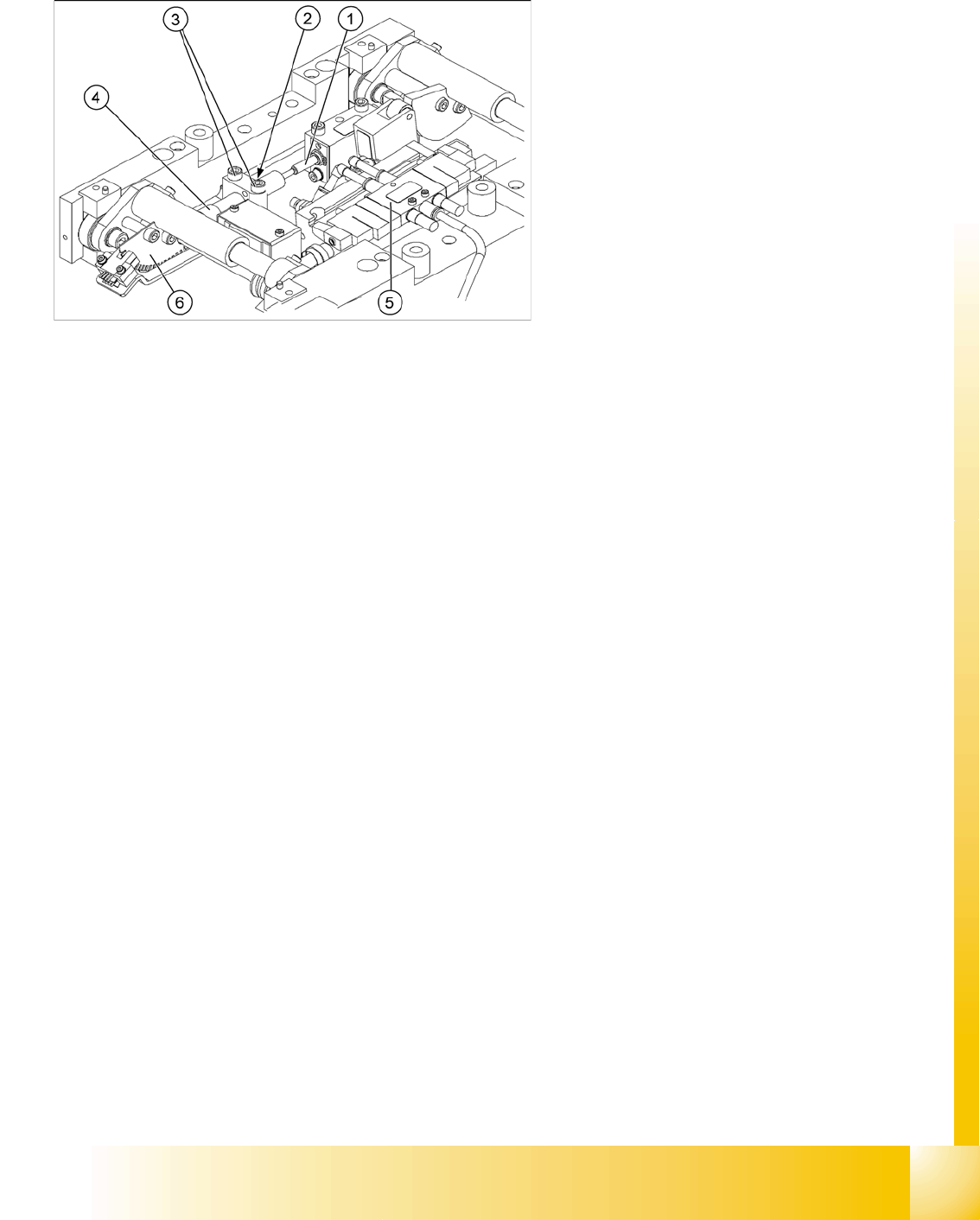
Legend:
1. Actuator
2. Lock nut damper
3. Fastening screws for mounting block
4. Damping unit
5. 3/5 way solenoid valve mounted on lifting table
drive cylinder
6. Fork-type light barriers / incremental disk