What is New in IPC-7351C.pdf - 第24页
PC B L ibr ar i es Pr e s ents : Wh at is N ew i n IPC- 7351C As se m bly R e f er enc e D e signat or s • Th e de f ault ass e mb l y R e f De s he i ght is 2 . 00 m m • Fo r miniat u re co mp on e nts the te x t he i g…

PCB Libraries Presents:
What is New in IPC-7351C
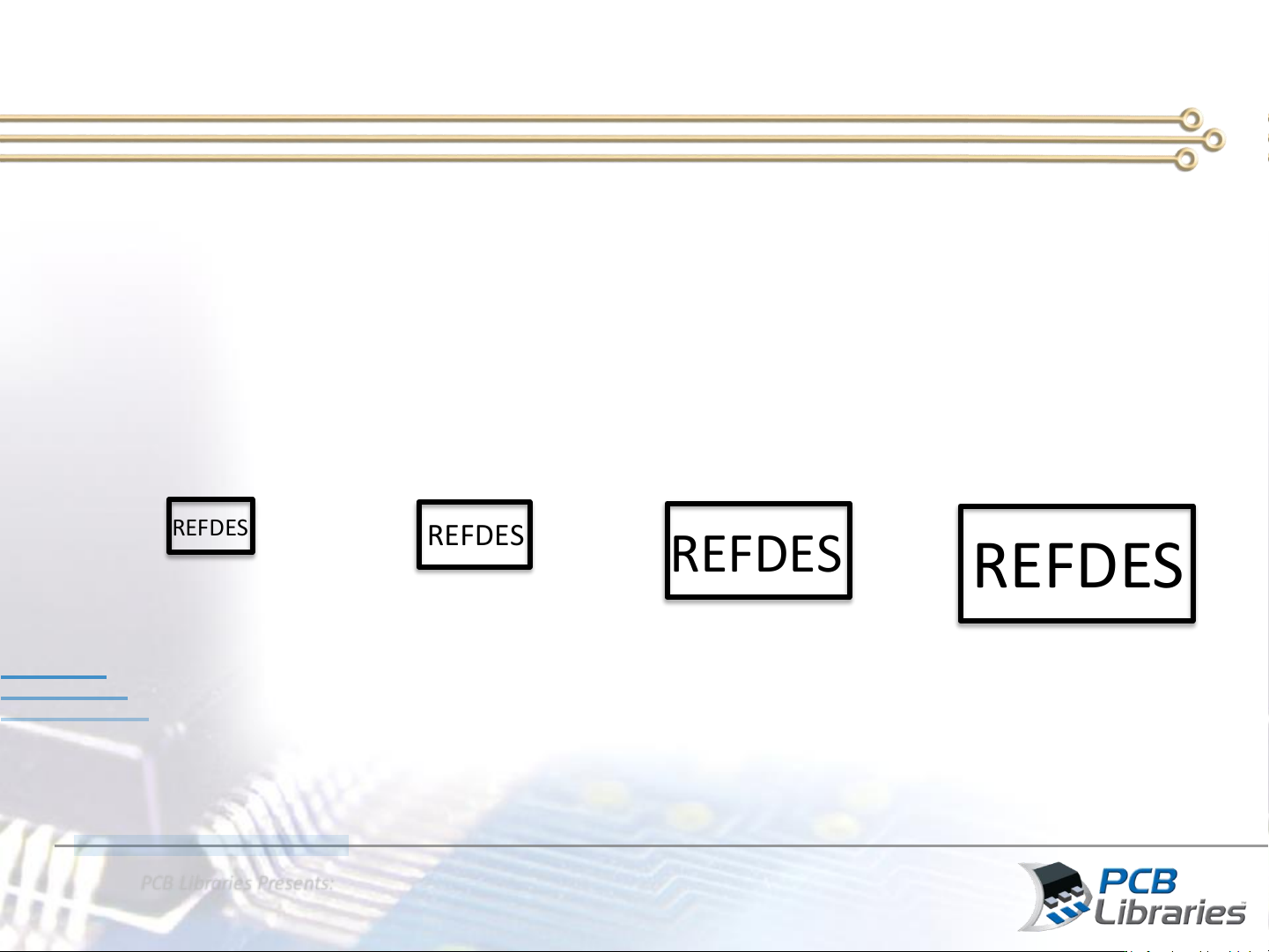
3-Tier Silkscreen Reference Designators
• Silkscreen reference designators are normally placed inside the
courtyard during library construction and typically located on the
land pattern origin. After part placement has been approved, the
silkscreen ref des are relocated outside the component body so
they are visible after assembly.
• The ref des line width is normally 10% of the text height
• In the past, we made all silkscreen reference designators 1.50 mm
height. Fabrication technology has improved it’s time to support a
3-Tier reference designator option
• New recommendations for the 3-Tier ref des
– Least Density Level: 1.00 mm Height
– Nominal Density Level: 1.20 mm Height
– Most Density Level: 1.50 mm Height
REFDES
PCB Libraries Presents:
What is New in IPC-7351C
Assembly Reference Designators
• The default assembly Ref Des height is 2.00 mm
• For miniature components the text height must be scalable to fit
• The default rotation of the assembly reference designator is
associated with the component body length
REFDES
0.6 x 0.3
0201
1.0 x 0.5
0402
REFDES
1.6 x 0.8
0603
2.0 x 1.2
0805
Ref Des Height
1.00 mm
Ref Des Height
0.70 mm
Ref Des Height
0.50 mm
REFDES
Ref Des Height
0.12 mm
REFDES
These Chip assembly Ref Des are scaled down to fit inside assembly outlines
PCB Libraries Presents:
What is New in IPC-7351C
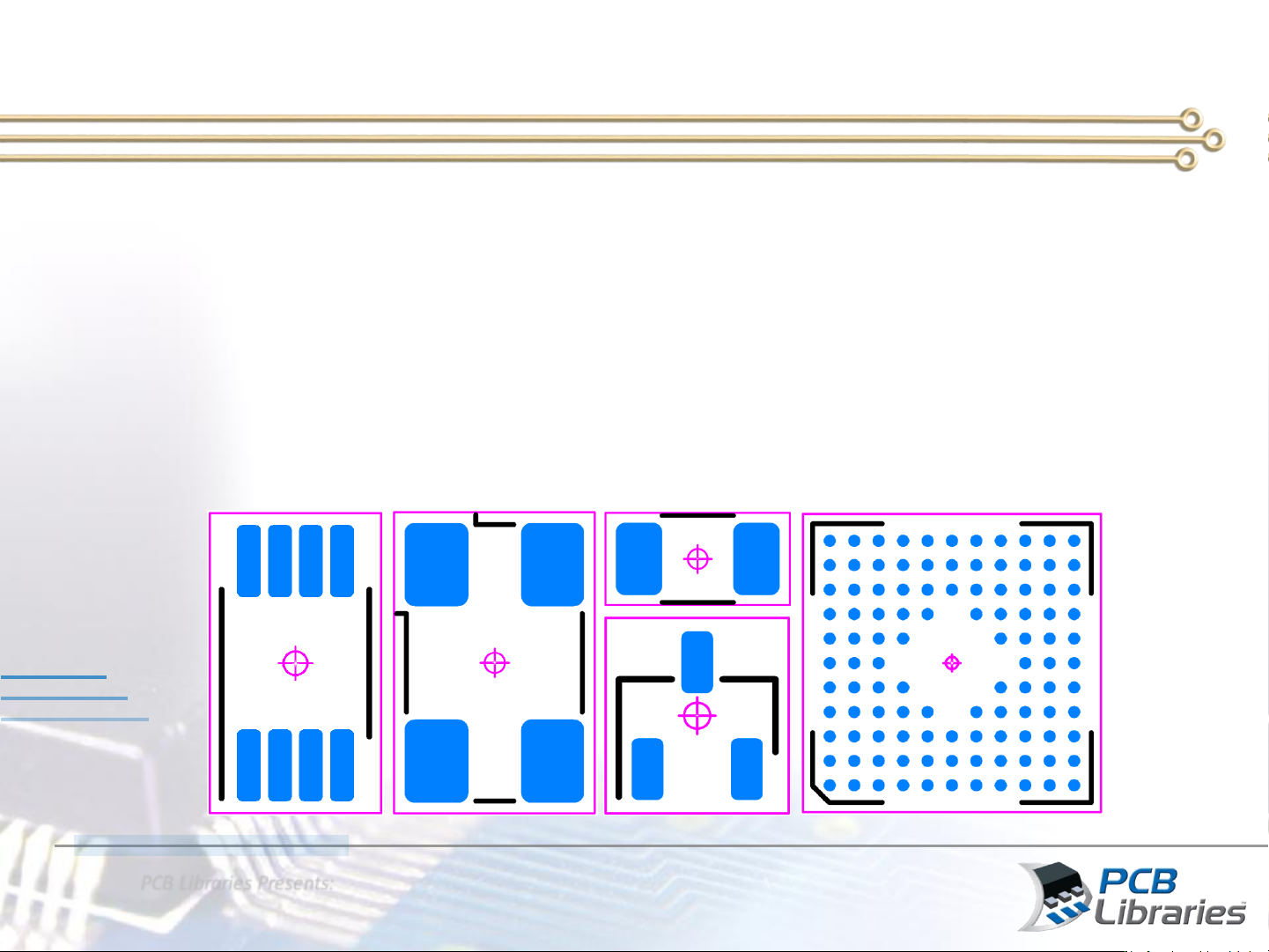
• The land pattern origin is typically located at the center of gravity of the
component, but sometimes this is difficult to calculate with irregular
shaped components, so Pin 1 is used in these cases. Also Pin 1 in most
through-hole connectors.
• The centroid origin marking in the picture below is an unfilled 0.50 mm
diameter circle with a 0.05 line width with a 0.70 crosshair for cursor
alignment.
Land Pattern Origin Guidelines