00197787-02_SI_SIPLACE_HeadVerification_EN.pdf - 第71页
6 Description of the test results 6.18 Nozzle spring Software Manual SIPLACE Head Verification 03/2018 71 6.18.3 Interpretation of the results obtained ‘Nozzle spring’ / ‘Signal threshold’ error for all segments Cause So…
6 Description of the test results
6.18 Nozzle spring
70 Software Manual SIPLACE Head Verification 03/2018
6.18 Nozzle spring
6.18.1 Measurement principle
The Nozzle spring measurement checks the state of the spring with respect to its deflection, brit-
tleness and the switching (signal) threshold at the Z-axis down light barrier.
Before the measurement starts, a head reference run is carried out during which all nozzles are
pressed onto the DP at the nozzle station to ensure a firm fitting. During the measurement itself,
every segment is moved down and back up again using different travel profiles to measure the pos-
itions at which the end signal is triggered.
●
The nozzle spring is verified by comparing the positions at which the end signal is triggered,
moving the segment down first with low force and the current sensor mode (Z-Low Force), fol-
lowed by high force and light barrier mode (Z-High Force).
●
The threshold value is verified by comparing the position at which the end signal is triggered,
moving the segment down with standard force and light barrier mode (Z-Light Barrier), with
the position determined for the low force movement (Z-Low Force).
6.18.2 Measurement result
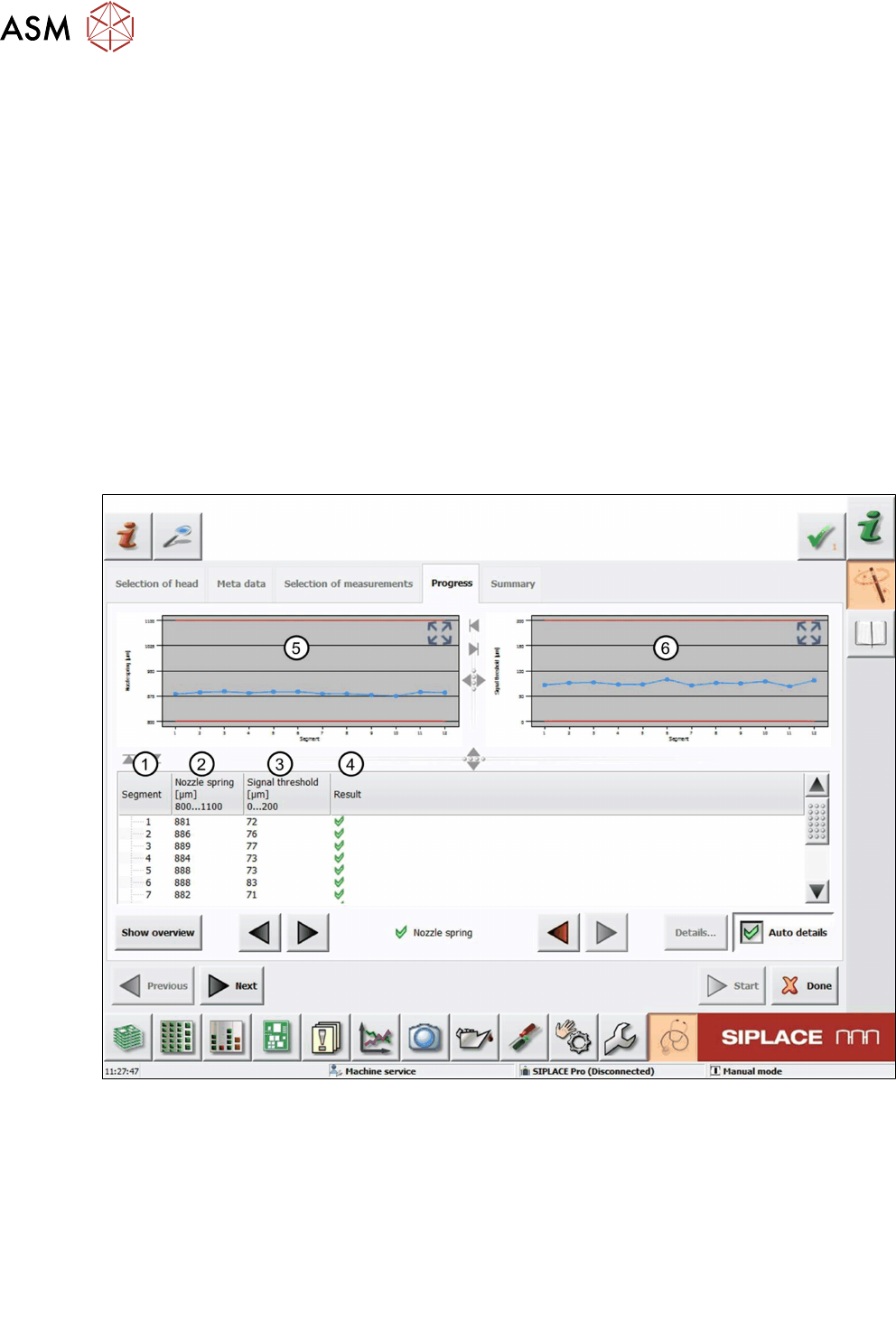
Fig.52: Result view – Nozzle spring measurement
1 Measured Segment
2 Calculated value for the spring that has been compressed completely:
Nozzlespring = Z-HighForce – Z-LowForce
3 Calculated value for the distance until the Z-axis down light barrier is triggered.
Signal threshold = Z-Light Barrier - Z-Low Force
4 Result view indicating if the values are within (green tick) or outside (red cross) the limits.
5 Graph showing the Nozzle spring values for each segment.
6 Graph showing the Signal threshold values for each segment.

6 Description of the test results
6.18 Nozzle spring
Software Manual SIPLACE Head Verification 03/2018 71
6.18.3 Interpretation of the results obtained
‘Nozzle spring’ / ‘Signal threshold’ error for all segments
Cause Solution
Light barrier Z-down defective ► Check the Z-axis down light barrier and re-
place it if necessary.
‘Nozzle spring’ / ‘Signal threshold’ error for individual segments
Cause Solution
Segment spring is bent or mechanically dam-
aged.
► Replace the DP.
The position, fixture or state of the cover switch-
ing ring is faulty.
► Check the fixture and, if necessary, re-
place the cover switching ring.
Spring pin at back of DP lock damaged. ► Replace the head.
6 Description of the test results
6.19 Segment offset up & down (fast)
72 Software Manual SIPLACE Head Verification 03/2018
6.19 Segment offset up & down (fast)
6.19.1 Measurement principle
Segment offset up & down (fast) is a quick measurement to determine the eccentricity of a seg-
ment to the center of the component camera.
●
Segment offset up is the offset of the segment center in the up position to the center of the
component camera.
●
Segment offset down is the offset of the segment center in the bottom position to the center
of the component camera, either for the pick-up or placement of components. It is also known
as the offset between the PCB camera center and the center of the component camera.
During the measurement, the PCB camera measures the initial position of the calibration tool (CT)
in the calibration tool pocket. The CT is picked up by each segment which is turned to 0° and
moved to the component camera, where the CT is measured (optically centered) again. The de-
termined offset values are then used to calculate the CT position. Afterwards, the CT is placed
back into the calibration tool pocket where it is measured another time by the PCB camera. The de-
termined offset values are then used to calculate the CT position.
NOTICE
Termination of test sequence
If a measurement shows a segment outside the allowed limits, all subsequent measure-
ments will be terminated. It is assumed that the segment is seriously deformed and that the
head is no longer able to perform.
► Replace the segment immediately before performing other measurements.