4M184002w_F8S.pdf - 第301页
4OM-1840 5-1-2 1604-001 Classication of Failures Contents of Failures Symptom of Failures Failure before Component Placement Component Pickup Error Componen…
4OM-1840
5-1-11604-001
1. Classication of Failure Symptoms and Helpful Hints
on Countermeasures against Failure
1.1 Classication of Failure Symptoms
shown below.
Reference
Refer to "4. Surface Mounting Mechanism" in "Chapter 1 (Vol. 1: Guide)" for
the outline of actions.
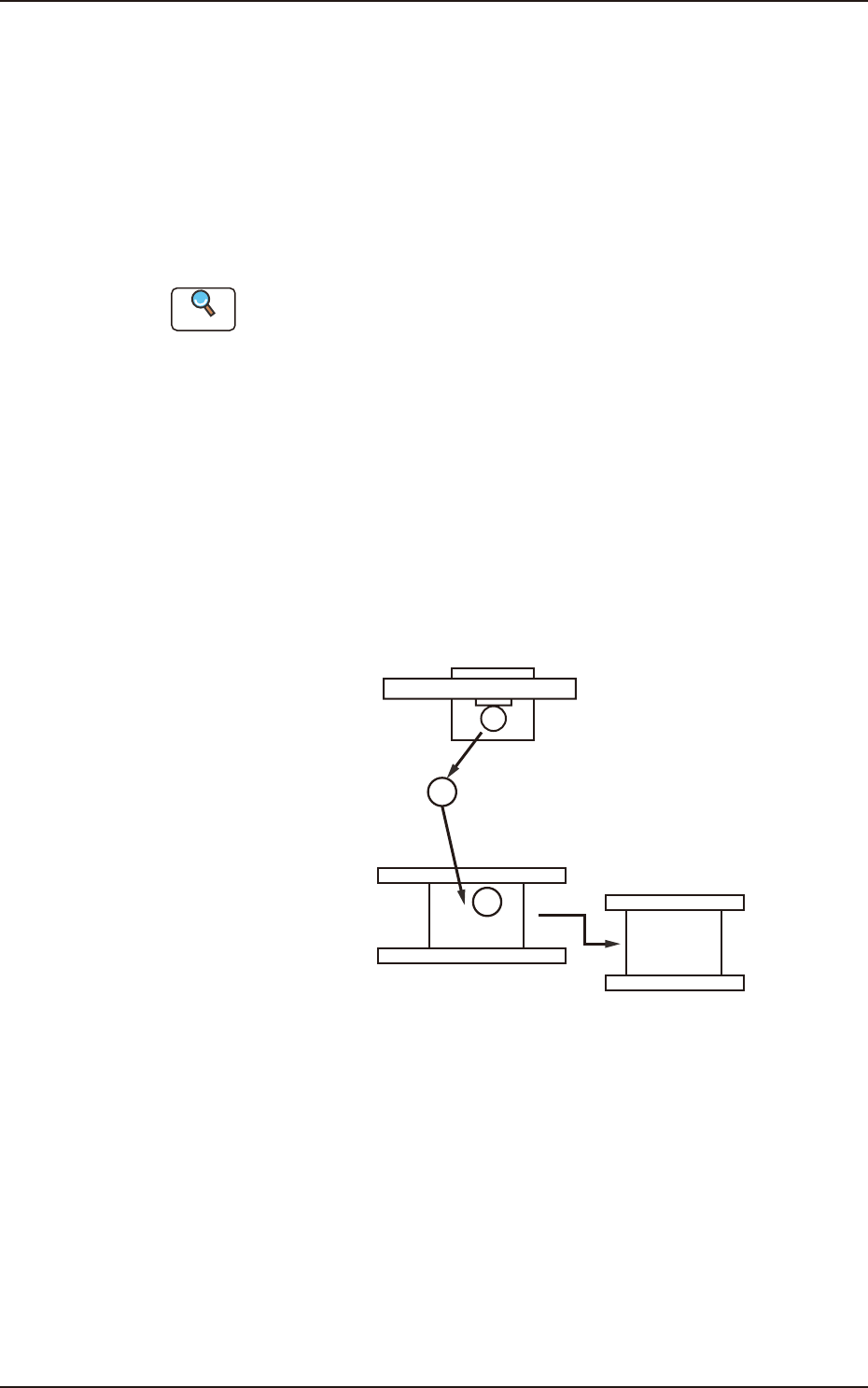
Process A : The placement head moves to the feeder base and picks up a
component.
Process B : The head moves to the area where the component recognition
camera is installed and a component recognition process is
taken there.
Process C : The placement angle is corrected while the head is moving to
the PCB positioning section.
Process D : The component is placed on the PCB.
Process E : The component-placed PCB is discharged.
1
2
3
Feeder Base Section
Component Recognition Camera
PCB Positioning Section
Process A
Process B
Process C
Process D
Process E
F4E1
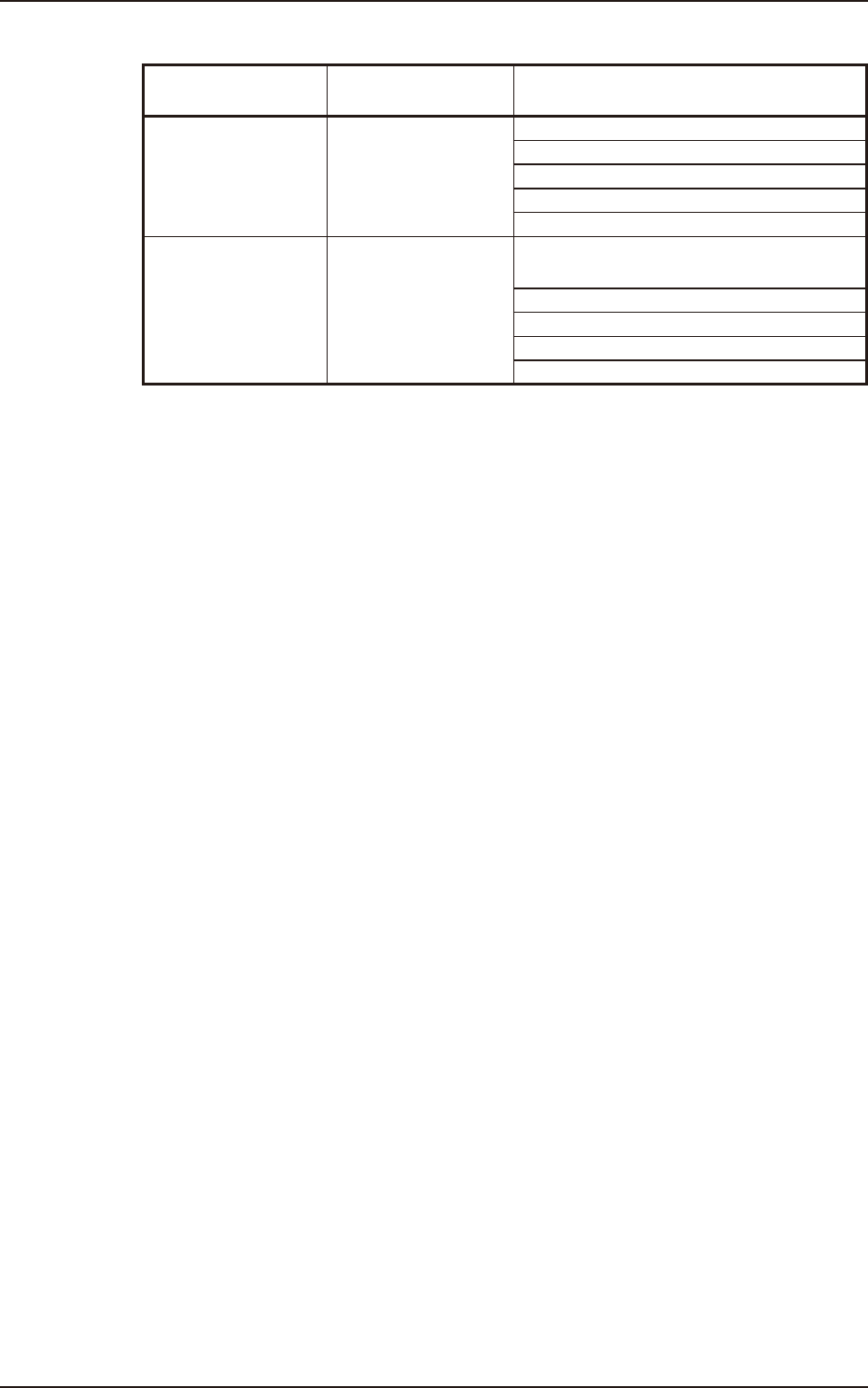
Based on these processes, failures can be divided roughly into the following two
types.
Failure before Component Placement : This type of failure occurs mainly in
Processes A, B, and C.
Failure after Component Placement : This type of failure occurs mainly at
Processes D and E.
1. Classication of Failure Symptoms and Helpful Hints on Countermeasures against Failure
4OM-1840
5-1-21604-001
Classication of
Failures
Contents of
Failures
Symptom of Failures
Failure before
Component
Placement
Component Pickup
Error
Components cannot be picked up.
Components are turned vertically.
A recognition error occurs.
Components fall down.
Others
Failure after
Component
Placement
Component
Placement Error
The positional and angular deviation of
component occurs.
Components are turned over and placed.
Some components are missing.
Some components are cracked or nicked.
Others
T4E1
1.2 Helpful Hints on Countermeasures against Failure
•
what kind of symptom is produced and how frequently the symptom appears.
•
The second helpful hint is to grasp the tendency (environment and condition) of
a failure.
Shown below are the concrete items to be checked.
(4) Check if the failure occurs at a limited stage.
•
inspection process. In such a case, it is required to track the failure by checking
all processes and specify the process in which the failure has occurred.
It is very important to grasp a failure symptom precisely on these helpful hints.
Precise capture of a failure symptom makes it possible to track the factor and
make a plan to take countermeasures against the failure.
In the case that the present status is not grasped correctly, the countermeasure
In particular, for the errors with low occurrence rate, it is required to collect the
data accurately, estimate the factors based on the data collection results, and
take the countermeasure.
1.1 Classication of Failure Symptoms
4OM-1840
5-1-31604-001
2. Troubleshooting on Pickup Errors
2.1 Cause and Remedy of Pickup Errors
(1) Component-Based Factors
Shown below are the cases of failures whose factors lie in components.
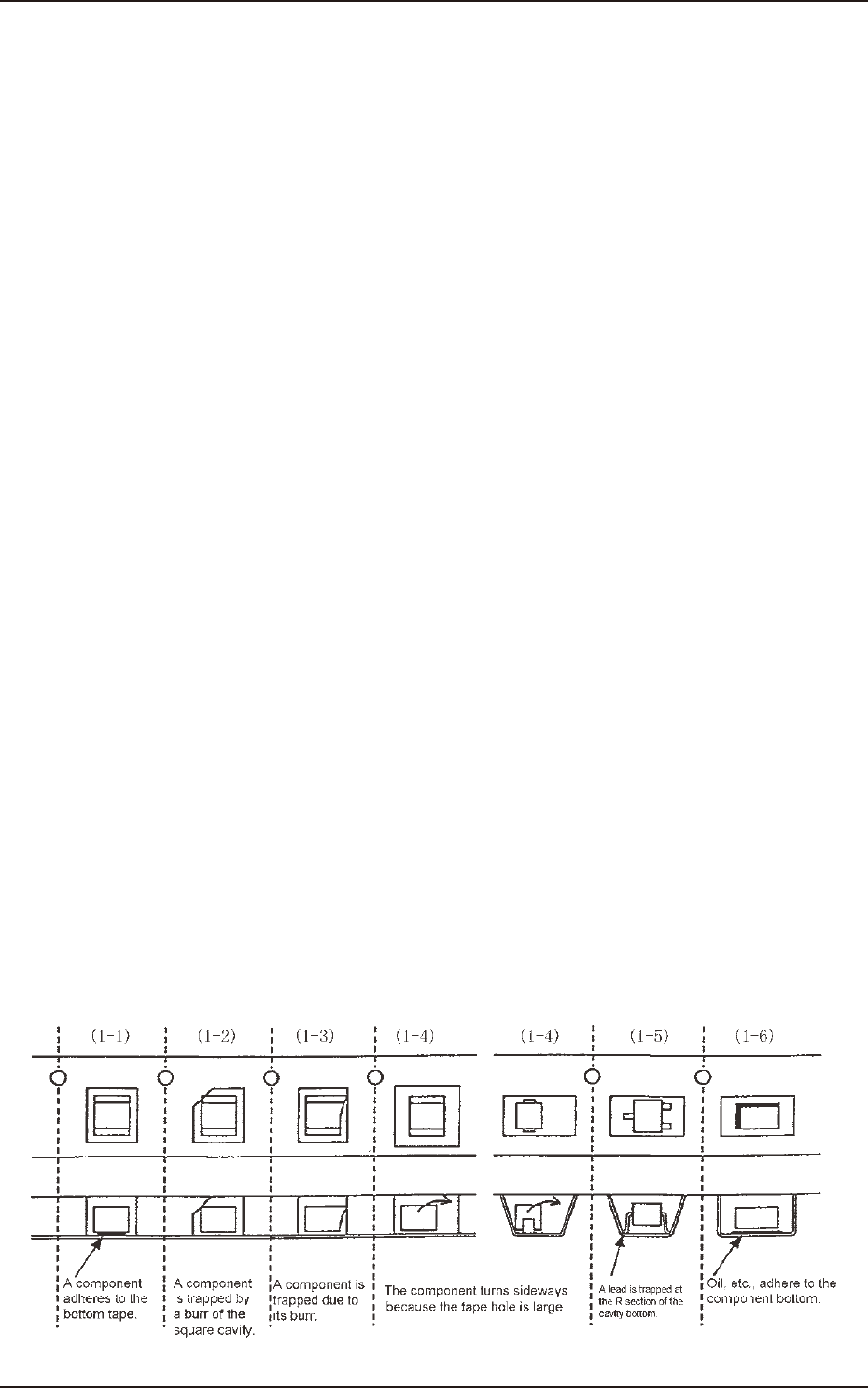
[Factors of Pickup Errors on Component Side]
(1-1) A component adheres to the bottom tape.
(1-2) The shape of a cavity is defective.
(1-3) The shape of a component is defective.
(1-4) A component turns sideways because the tape cavity is too large.
(1-6) Oil or mold lubricant adheres to the bottom of a component.
The failures described in (1-1) through (1-4) have a tendency to occur easily
due to the components packaged in a paper tape and the failures described in
(1-4) through (1-6) due to the components packaged in an embossed tape.
Special caution should be paid to minute components such as 0603 and
packaged in the tape.
To determine whether or not the taped components are packaged in good
condition, turn the tape upside down and check to see how the components
fall down from the cavities. If the components fall down freely, it means that
they were packaged in good condition.
detailed regulations are not provided as for the failures described in (1-1)
through (1-6), it is required to ask the component maker about the details
when the components are purchased.
Exemplication of Troubled Taped Components F4E2
2. Troubleshooting on Pickup Errors