SIPLACE Station Software 7xx to 714 介绍.pdf - 第197页
Station Software 7xx to 714.0 (R20-2) / Feature Description 11/2020 Edition 197 ● Not using/enabling segme nts Figure 10 - 22 : Not using/enabling s egments Lamps The green light of the lamp t owers has the following mea…
Station Software 7xx to 714.0 (R20-2) / Feature Description 11/2020 Edition
196
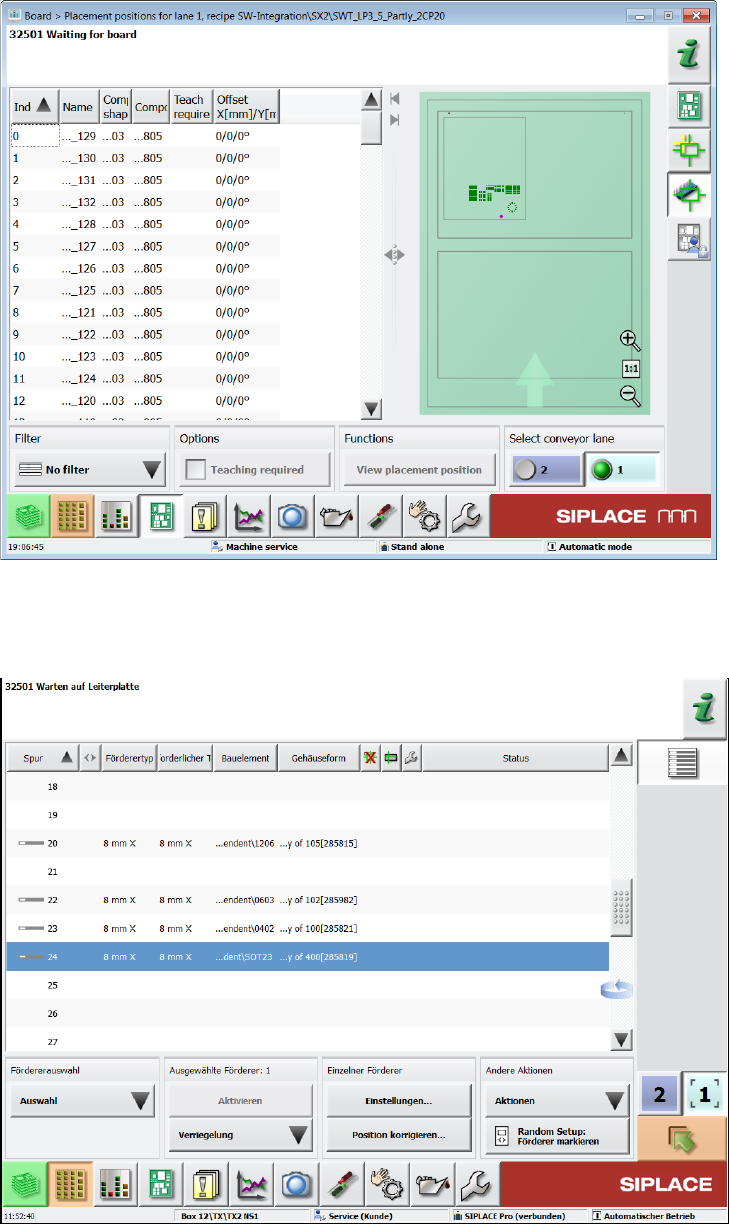
● Teaching placement positions
Figure 10-20:Teaching placement positions
● Teaching tray (like teaching component shapes)
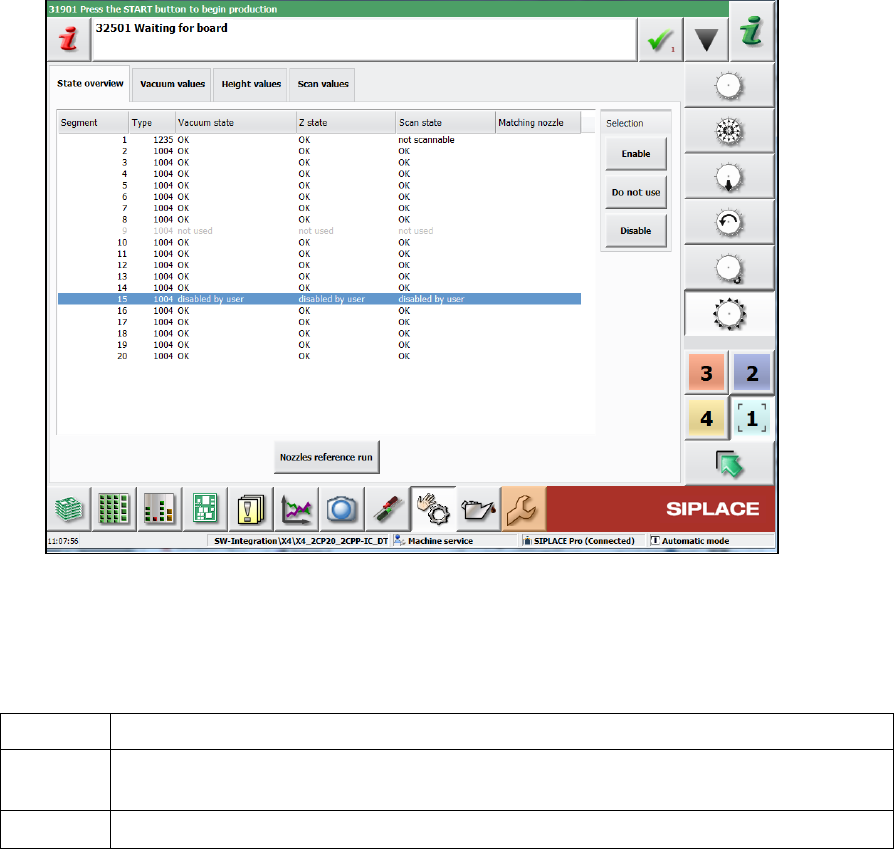
● Correcting pickup position
Figure 10-21: Correcting pickup position
Station Software 7xx to 714.0 (R20-2) / Feature Description 11/2020 Edition
197
● Not using/enabling segments
Figure 10-22: Not using/enabling segments
Lamps
The green light of the lamp towers has the following meaning in 2-in-1-mode:
off
Job stopped on this conveyor lane.
blinking
Job is ready for production (conveyor lane unblocked) or a manual function is active
for the conveyor lane/gantries associated with this job.
on
Job on this conveyor lane is actively producing.
Error handling in 2-in-1-mode
Detailed errors only lead to a stop of the affected conveyor lane. The conveyor lane will be stopped
in the following cases:
– Fiducial error or fiducial requires teaching
– Component requires teaching
– Placement position requires teaching
– Check whether a component was placed or not
Several of the detailed errors can accumulate in the error bar without interrupting the current
workflow: The operator can finish the current workflow (e.g. use-initiated teaching) on one conveyor
lane, while a detailed error is pending for the other conveyor lane. Alternatively, the operator could
cancel the current workflow, navigate to the detailed error, solve it, restart the conveyor lane and
start the user-requested workflow again.
Restrictions
Not applicable for single conveyor, synchronous mode, alternating placement or machines
equipped with Smart Pin Support.
Station Software 7xx to 714.0 (R20-2) / Feature Description 11/2020 Edition
198
10.13 Maintenance GUI – Enhancements
Compatible mode: Complete
The Maintenance GUI has been enhanced by the new functions, views and dialogs as described
in the following sections
The user and activity levels can be set individually. The default settings are:
Preventive Maintenance:
Operator
Predictive Maintenance:
Advanced Production
Verification:
Machine service
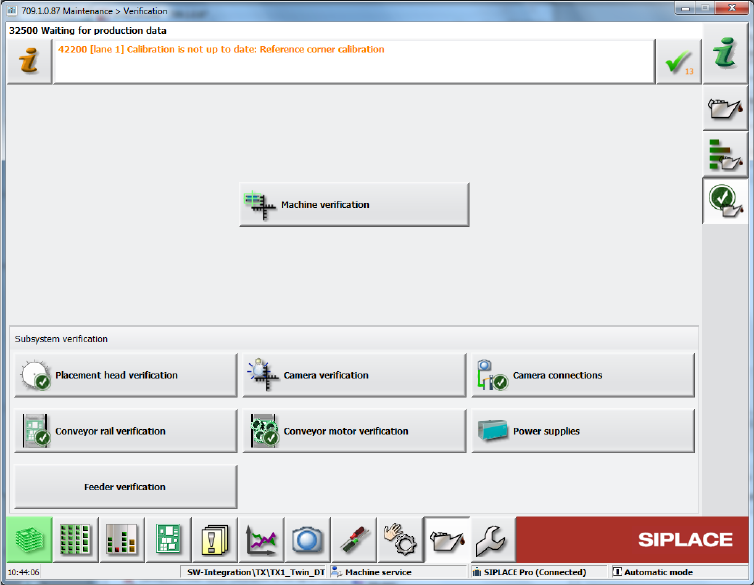
10.13.1 Verification View
The maintenance verifications have been bundled into the new Verification view from which they
can be started.
Figure 10-23: Verification view
10.13.2 Machine Verification – New Term
Compatible mode: Complete
Machine verification has been introduced as a new term. The machine verification is performed
with the ACT (Accuracy Check Tool).
The entry point for the machine verification has been moved from the Service tool to the
Verification view and can be accessed at the Machine service activity level. The button is also
visible for lower activity levels.