Specification_SIPLACE_F5_eng.pdf - 第32页
31 Description The optional cop lanarity check fur- ther enhances placeme nt reliabil- ity. Thi s check is al ways co n- ducted right after the devi ation of position is a scertained with the Fine Pitch vision modu le of…

30
Description
The Flip Chip component vision
module extends the capability of
processing Fine Pitch and Flip Chip
components with extreme fine
lead pitches. This add-on module
for the Fine Pitch component vi-
sion module offers a far higher
resolution. The lighting layout is
fundamentally changed in the pro-
cess. At optimal illumination, the
imaging of the bumps is as large
as possible and the orthogonal dis-
ruptive structures (e.g., chip
printed conductor tracks) are sup-
pressed. In the event of less pro-
nounced disruptive structures, the
intensity can be increased by
combined lighting. This results in a
high recognition reliability even
with usually square surfaces of
bumped Flip Chips in the conduc-
tive adhesive technology.
Special search algorithms are used
to recognize the bumps (balls) in
surroundings where fault condi-
tions usually prevail.
Vision Sensor Technology:
Flip Chip Component Vision Module for the Pick & Place Head
(Option)
Technical Data
Flip Chip size
with single measurement
with multiple measurement
1 x 1 mm
up to max. 7 x 9 mm
max. 20 x 20 mm
Dimensions < 3 x 6 mm
Special nozzle,
feeding tolerance < 0.2 mm edge length
Min. bump diameter 80 µm
Placement cycle
min. 2 s
(depending on number of bumps)
IC-pitch:
Lead pitch
Bump pitch
0.25 mm
0.14 mm
Camera’s field of view 9 x 11.5 mm
Illumination
Front light
(3 freely programmable planes)
31
Description
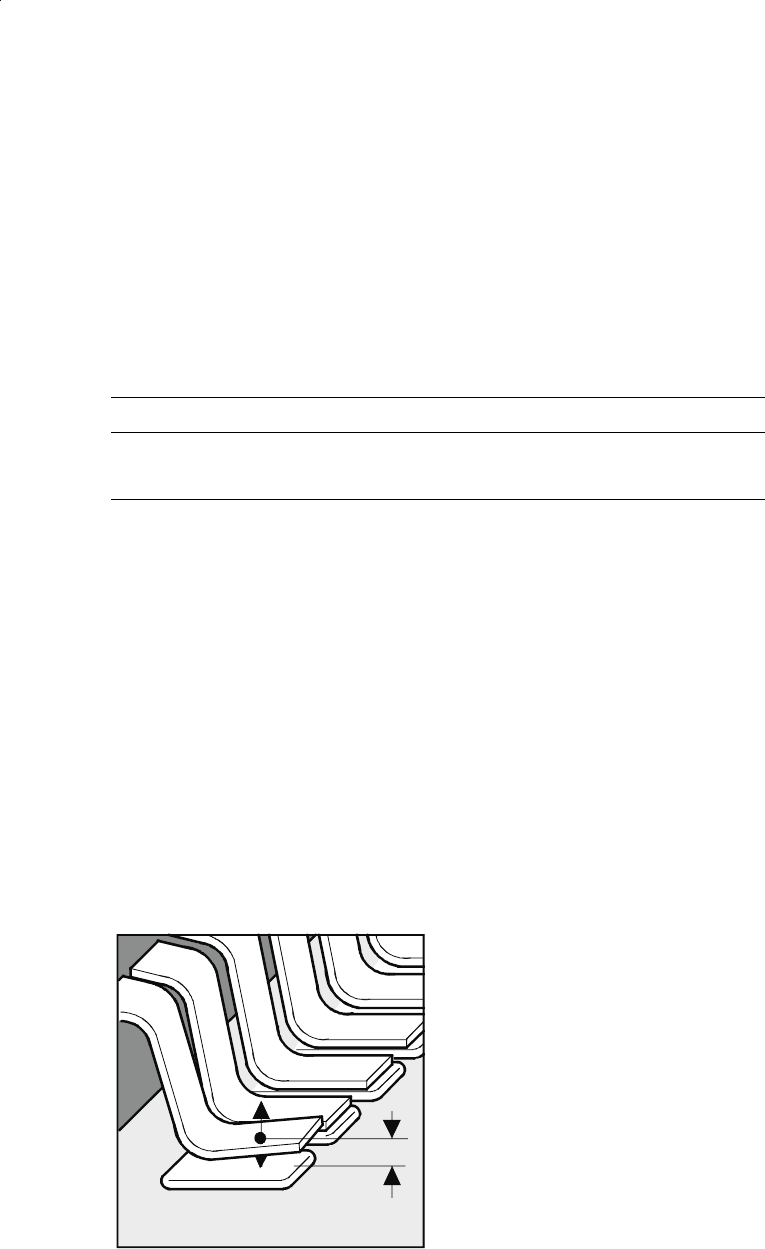
The optional coplanarity check fur-
ther enhances placement reliabil-
ity. This check is always con-
ducted right after the deviation of
position is ascertained with the
Fine Pitch vision module of the
Pick & Place head.
The coplanarity module is installed
next to the PCB conveyor along
with the Fine Pitch vision module
of the Pick & Place head.
One of the biggest problems in
Fine Pitch technology, the copla-
narity of leads, can be largely
eliminated by taking one additional
step during inspection. The copla-
narity module is employed to con-
duct a contactless, sequential ver-
tical scanning of the IC lead
structure on the basis of the laser
triangulation principle. The height
profile thus obtained for all of the
rows of leads is used to calculate
placement plane of the IC. The
programmed tolerance band based
on this placement plane then be-
comes effective.
If even one lead is outside this
placement area, the component is
excluded from the placement pro-
cess. It is gently placed back in the
Waffle Pack, entered on the repair
list and automatically repaired.
The component picked up by the
placement head may be crooked,
e.g., because one surface of the
package is not parallel to the row
of leads. The calculation of the
placement eliminates any influ-
ence this might have on
placement however.
As the result of extensive security
measures, the laser can only be
operated in the closed machine. It
then conforms to Safety Class 1
(not dangerous for eyes and skin).
Barring manipulation of the protec-
tive devices, the laser will not op-
erate outside the machine. Fol-
lowing impermissible tampering,
the laser complies with Class B.
On SIPLACE placement systems
the component which is picked up
is placed on the PCB immediately
after the coplanarity check. This
procedure ensures that no change
can occur after the check as the
result of any subsequent mechani-
cal influence. Unlike other designs,
with SIPLACE machines it is not
necessary to pick up the compo-
nent again or to transport it in a
special pick-up movement.
Vision Sensor Technology:
Coplanarity Module for the Pick & Place Head (Option)
Z
Effects of coplanarity (lateral
bending of leads) of a populated
component
Accuracy of the coplanarity module
Uncertainty of checking in case of real components
Dimensions
U
99.73
[µm]*
32 x 32 mm
55 x 55 mm
21.5
22.7
* Checking uncertainty of a single measurement with a confidence interval of 99.73%
(corresponds to 3
σ
)
32
Description
Various factors contribute to the
placement accuracy of the
SIPLACE F
5
machine, e.g., the sta-
tionary PCB during the placement
process. As no accelerations are
acting on the placed components,
their position continues un-
changed. The PCB moves in and
out at a coordinated speed which
is automatically reduced just be-
fore the nominal position is
reached.
A further guarantee for long-term
high placement accuracy is the
position recognition of the axes of
the gantry and placement head by
means of optical scanning by in-
cremental encoders. Revolving
star and segments of the revolver
head are positioned by means of
high-resolution glass incremental
panels. The X- and Y-axes are posi-
tioned with the help of the metal
scales on each gantry axis.
To determine the placement accu-
racy on SIPLACE machines, highly
precision glass components with
mounted structures are placed on
a dimensionally accurate glass
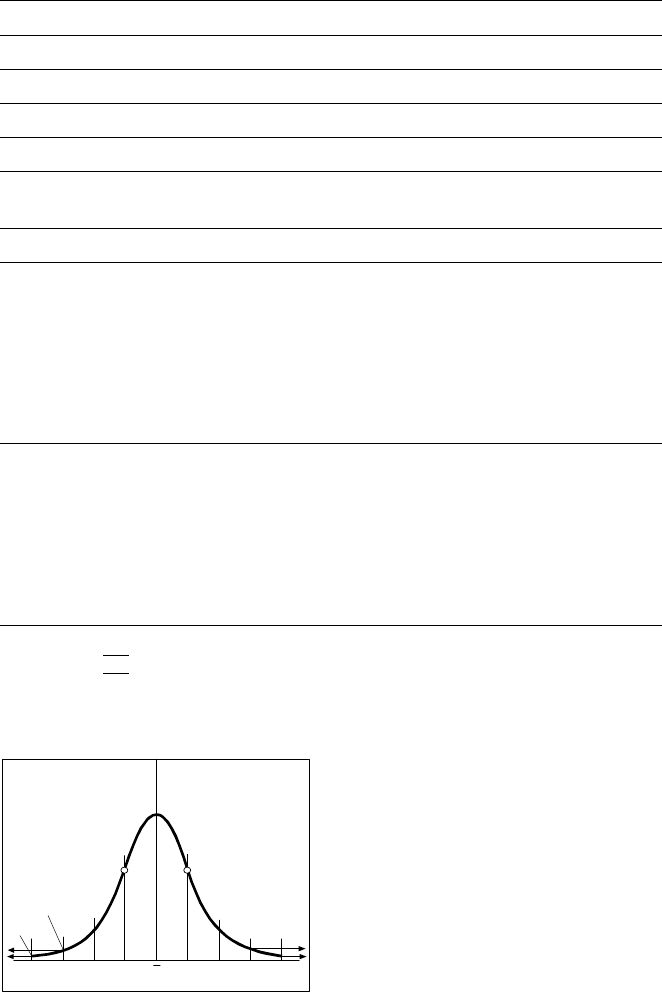
mapping plate. The results are sta-
tistically evaluated and presented
as a Gaussian standard distribu-
tion. In the case of the 12-nozzle-
revolver head the placement accu-
racy is ± 70 µm at a statistical reli-
ability of 4 sigma. In other words,
of one million placed components,
60 are outside the specified toler-
ance (= 60 dpm). If the accuracy
value ± 70 µm is divided by the
sigma value 4, the result is the
standard deviation S of 1 sigma =
± 17.5 µm.
A machine capability analysis is
conducted for each machine ac-
ceptance test.
Machine Criteria:
Placement Accuracy
Technical Data Gantry
Drive DC servomotors
Position measuring system (X/Y) Linear scales
Resolution of X-/Y-axis 2.5 µm
Speed of X-axis max. 2 m/s
Speed of Y-axis max. 2.5 m/s
Accuracy
X-/Y- and D-axis offset in optical component and PCB centering
6-nozzle revolver head
Angle accuracy
Placement accuracy
± 0.525° / 3 σ
± 0.70° / 4 σ
± 1.05° / 6 σ
± 67.5 µm/ 3 σ ( ± 45 µm/ 3 σ )*
± 90 µm/ 4 σ ( ± 60 µm/ 4 σ )*
± 135 µm/ 6 σ ( ± 90 µm/ 6 σ )*
Pick & Place-head
Angle accuracy
Placement accuracy
± 0.052° / 3 σ
± 0.07° / 4 σ
± 0.105° / 6 σ
± 37.5 µm/ 3 σ ( ± 30 µm/ 3 σ )**
± 50 µm/ 4 σ ( ± 40 µm/ 4 σ )**
± 75 µm/ 6 σ ( ± 60 µm/ 6 σ )**
* SIPLACE F
5
with DCA-package
** SIPLACE F
5
with Flip-Chip-vision module
Standard Deviation - dpm
-4
σ
-3
σ
-2
σσ
x
σ
2
σ
3
σ
4
σ
2700 dpm
60 dpm
P Point of Inflection