CP7 training(6.0) (1).pdf - 第90页
FK-9F98-27 CP-7 Series T raining T ext for Service Engineers Edition 6.0 Chapter 5. Loader and Con veyor Adjustment [22/28] <<OUT Carrier Sensor Adjustment>> Adjust the sensors for the OUT carrier as follows:…
FK-9F98-27 CP-7 Series Training Text for Service Engineers
Edition 6.0 Chapter 5. Loader and Conveyor Adjustment [21/28]
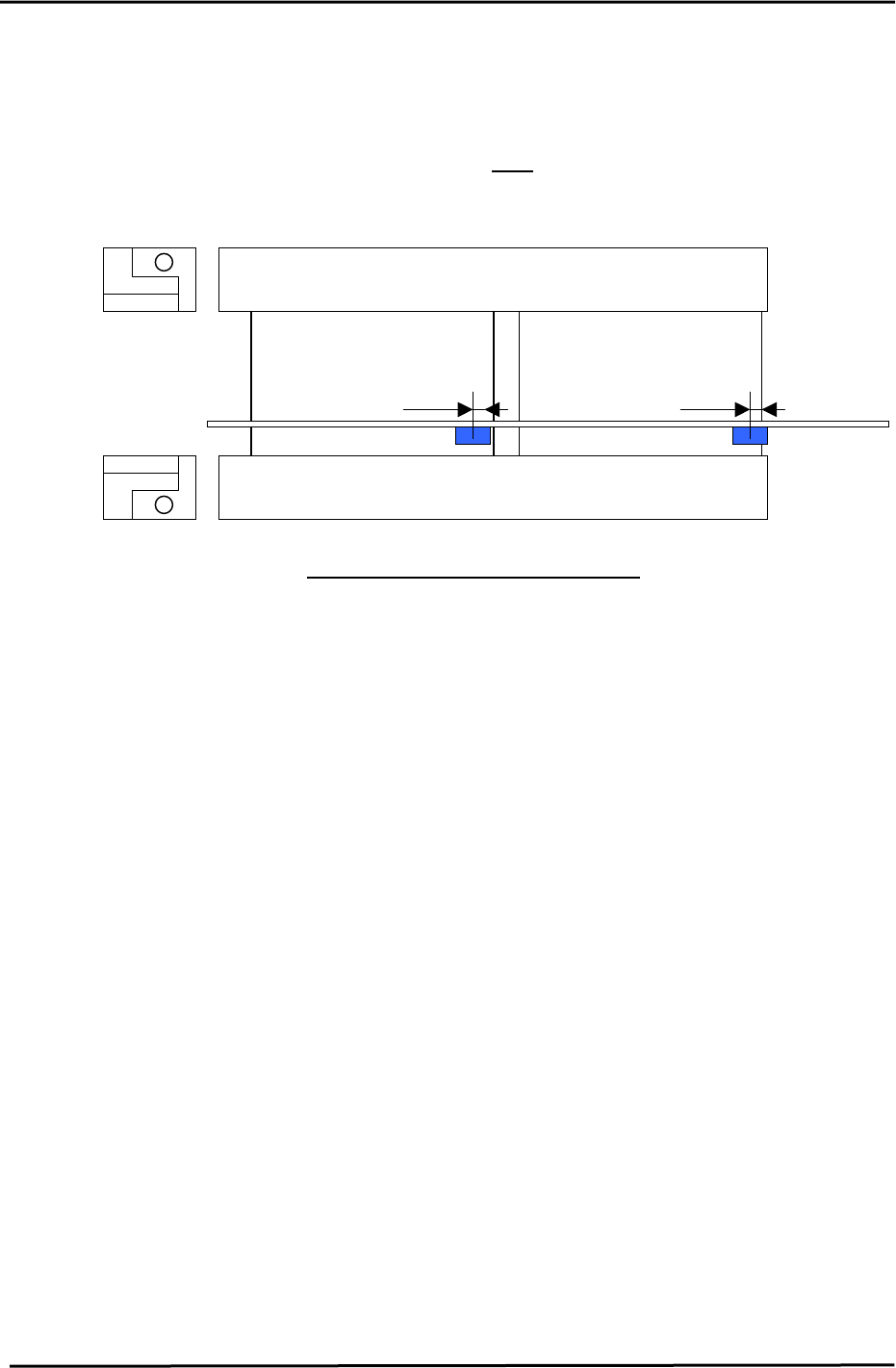
<<IN Carrier Sensor Adjustment>>
1. Load two PCBs on the IN carrier. “X0B1” (In carrier 1 detection check), “X0B2” (IN carrier 2
detection check) shall come ON when “Y074”, (In carrier advance) is ON. Adjust the sensor
position 5mm from the leading edge of each board. Ensure that the sensor switch is set to
“L_ON”. And make sure that the volume is at
MAX position.
(1
st
PCB)
5mm
(2
nd
PCB)
5mm
Figure 43
IN Carrier
Sensor Positioning for the IN Carrier
Fuji Machine Mfg. Co., Ltd. (Okazaki)
SMT Equipment Quality Assurance Dept.
CS Section
5-21
FK-9F98-27 CP-7 Series Training Text for Service Engineers
Edition 6.0 Chapter 5. Loader and Conveyor Adjustment [22/28]
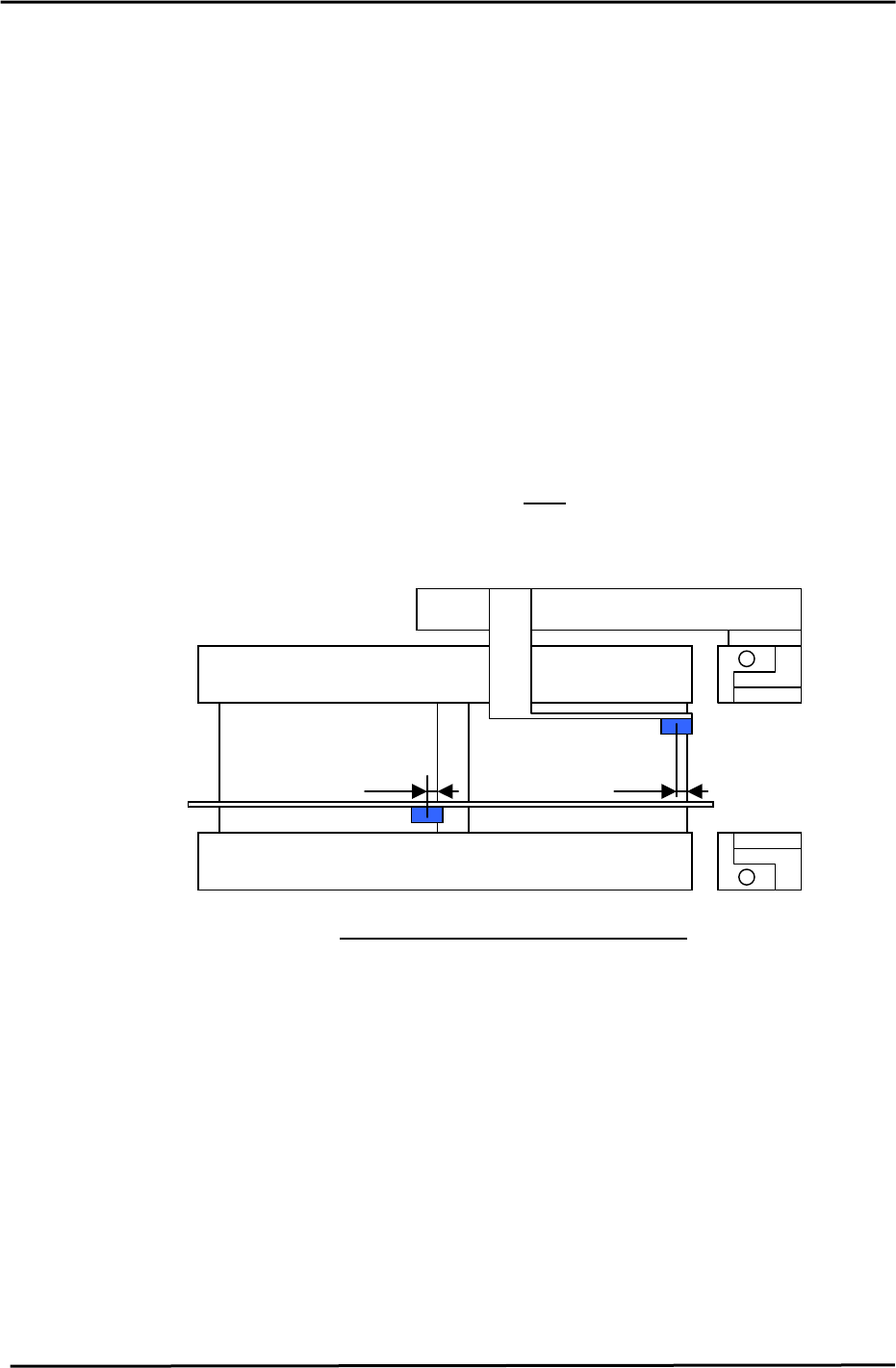
<<OUT Carrier Sensor Adjustment>>
Adjust the sensors for the OUT carrier as follows:
1. Load 2 PCBs on the IN carrier. Advance the carrier to the forward end position. (Continued from
the IN carrier adjustment.). Move the XY table to the IN loading position. (Do NOT raise the Z-
axis.)
2. Turn ON I/O, “Y044” (Main clamp open). Raise Z to the IN loading position.
3. Turn ON “Y043” (Main clamp close) and “Y073”,(IN carrier open). Lower the Z-axis to the “Z0”
position to load 2 PCBs onto the XY table. Then, move the main table to the unloading position.
4. Turn ON “Y082” (Out carrier close), “Y084” (Out carrier advance), and “Y083”(Out carrier open)
and raise the Z-axis raise to the ZL out position.
5. Turn ON “Y082”(Out carrier close) and “Y082” (Main clamp open). Lower Z to set to the same
condition as when the 2 PCBs were loaded on the IN carrier.
6. Adjust the sensor position so that “X0CC” (Out carrier 1 detection check), and “X0CD” (Out
carrier 2 detection check) are set 5mm from the leading edge of each Pcb. Set the sensor switch
to “L_ON”. And make sure that the volume is at
MAX position.
(1
st
PCB)
5mm
(2
nd
PCB)
5mm
OUT Carrier
Sensor Positioning for the Out Carrier
Figure 44
Fuji Machine Mfg. Co., Ltd. (Okazaki)
SMT Equipment Quality Assurance Dept.
CS Section
5-22
FK-9F98-27 CP-7 Series Training Text for Service Engineers
Edition 6.0 Chapter 5. Loader and Conveyor Adjustment [23/28]
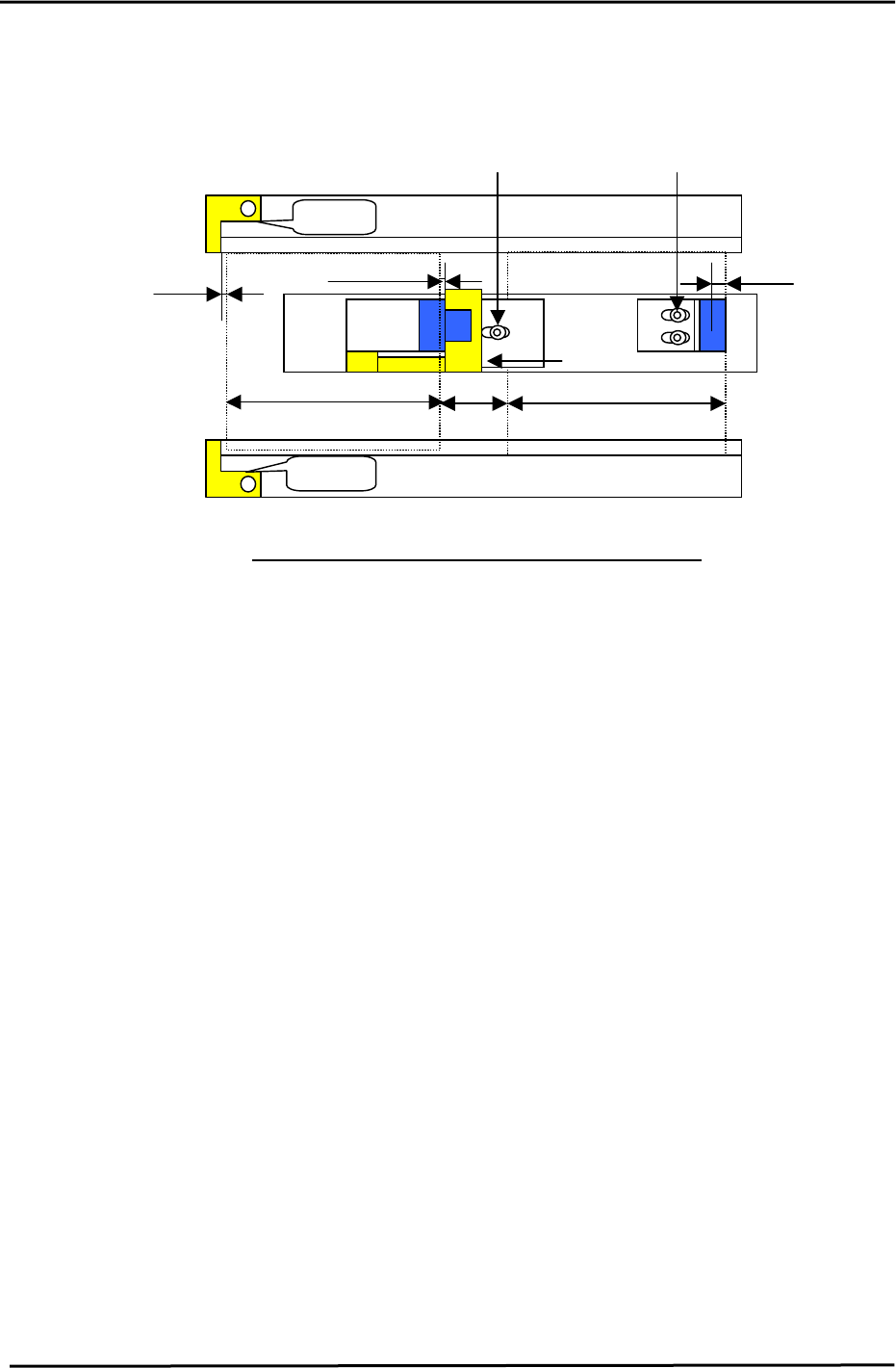
<<OUT Conveyor>>
Refer to the Fig. 45 for PCB stopper and sensor positioning.
Sensor positioning bolt for the 1
st
PCB
Sensor positioning bolt for the 2nd PCB
1
st
PCB
Reverse flow
stopper
No Gap
Reverse flow
stopper
170mm (220mm)
5mm
15mm
2
n
d
PCB
stopper
No Gap
0.2 to 0.3mm
170mm (220mm)
3mm
Figure 45
Stopper and Sensor Positioning for the Out conveyor
1. Remove the stoppers on the out conveyor. Load 2 PCBs on the OUT carrier. (Continued from
the OUT carrier adjustment.) Turn ON “Y085” (Out carrier retract), “Y086” (Out lifter up),
“Y083”, (Out carrier open), “Y087” (Out lifter down), “Y082”(Out carrier close), and “Y084”,
(Out carrier advance), to load the PCB on the OUT conveyor.
2. Loosen the sensor positioning bolt for the 1
st
PCB and set the sensor beam 5mm from the
leading edge of the first PCB.
3. Check that the PCB stopper is positioned 3mm from the trailing edge of the second PCB.
4. Set the switch for the OUT PCB clearance check sensor to “D_ON”, and both the arrival and
speed reduction sensors to “L_ON”.
Fuji Machine Mfg. Co., Ltd. (Okazaki)
SMT Equipment Quality Assurance Dept.
CS Section
5-23