CP43维护手册.pdf.pdf - 第80页
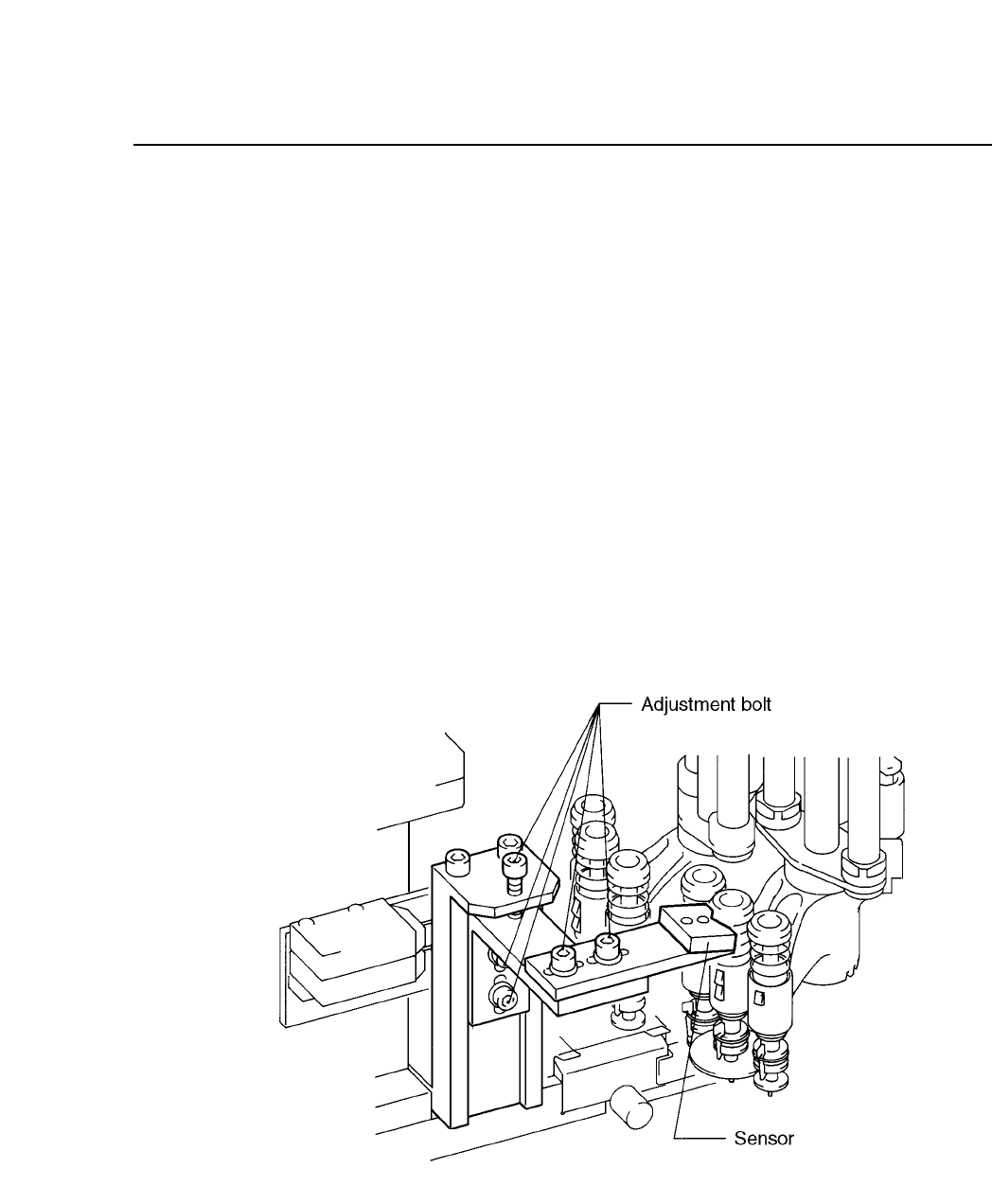
Chapter 5 The T welve Stations Follow the procedur e below to adjust the str oke of the nozzle. (1) W ith the cam angle set to 0°, adjust the securing bracket so that the sensor will touch the nozzle clutch’s tapered sur…
5 – 37
Version 6.0
Chapter 5 The Twelve Stations
5.8 Station 8
Station 8 has no function.
5.9 Station 9
Station 9 performs a nozzle vertical position check to confirm the position
of the nozzle after part placement. In addition, nozzle holder A is
checked and the information obtained is used as production data.
5.9.1 Nozzle Vertical Position Check
After the station 7 nozzle drops, sensors check whether or not it
returns to its original position. The check made by these sensors is
called the nozzle vertical position check. If the nozzle does not
return, the machine stops immediately to prevent damage from
occurring at the next stage.
Fig. 5-40 Nozzle Vertical Position Check Mechanism at Station 9
CP IV-3 Maintenance
Chapter 5 The Twelve Stations
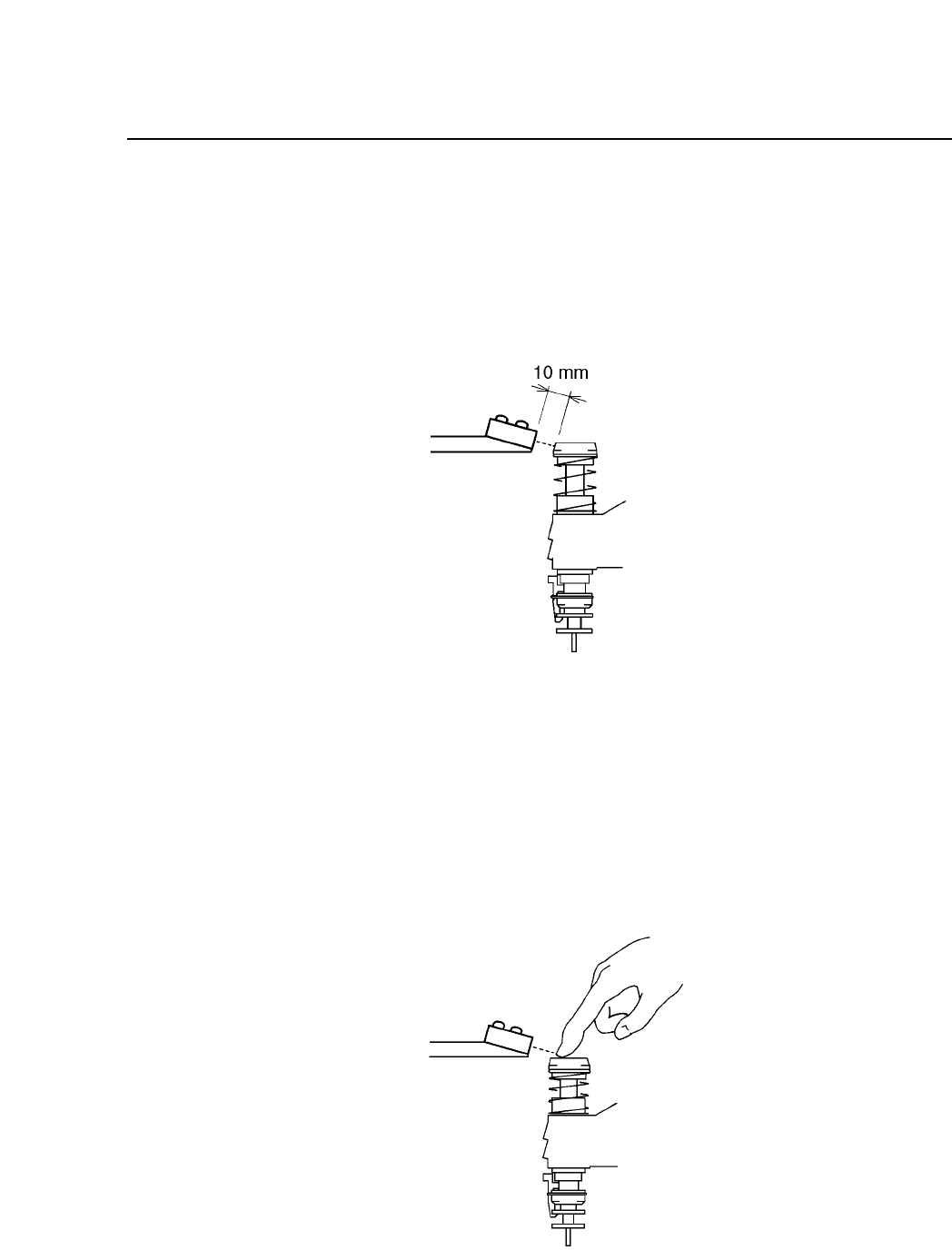
Follow the procedure below to adjust the stroke of the nozzle.
(1) With the cam angle set to 0°, adjust the securing bracket so that
the sensor will touch the nozzle clutch’s tapered surface. The
distance between the sensor and the nozzle clutch’s tapered
surface is 10 mm.
Fig. 5-41 Sensor and the Nozzle Clutch at Station 9
(2) Set the amplifier volume to MAX. The amplifier is on the left
side of station 9 (as seen from the front).
(3) Attach the cam handle on the cam shaft, and turn the handle
until the cam indicator reads 235°.
(4) With the cam angle set at 235°, push the nozzle down 1 to 1.5
mm and confirm that the pilot lamp goes off.
Fig. 5-42 Pushing Nozzle Down
5 – 38
Version 6.0
CP IV-3 Maintenance
5 – 39
Version 6.0
Chapter 5 The Twelve Stations
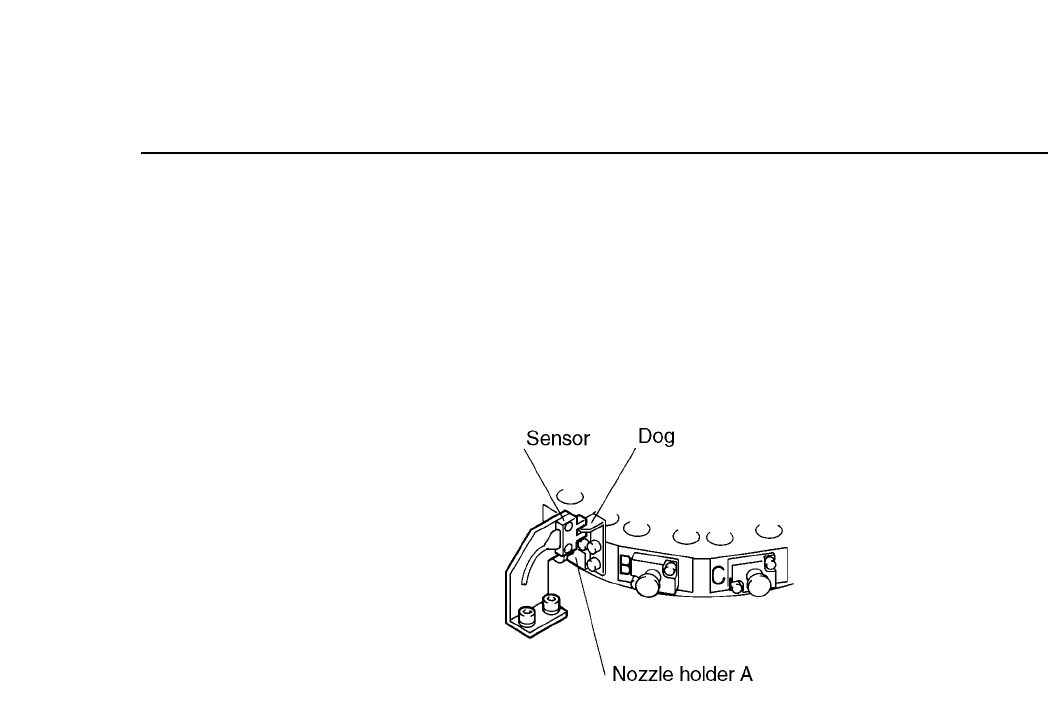
5.9.2 Holder A Check
The holder A check consists of simply noting the position of nozzle
holder A. The nozzle holder A position data is used as production
information.
Adjustment is unnecessary.
Fig. 5-43 Holder A Check at Station 9
CP IV-3 Maintenance