80S-2080F480F5.pdf - 第102页
2 Introduction and Ba sic Concepts SIPLACE 80S-20/F4/F5 User Manual 2.2 Principles and Structure of the User Interface 05/99 Issue from Software Version SR.405.xx 2 - 18 2.2.3. 3 Control Box es Control boxes di splay s t…
SIPLACE 80S-20/F4/F5 User Manual 2 Introduction and Basic Concepts
05/99 Issue from Software Version SR.405.xx 2.2 Principles and Structure of the User Interface
2 - 17
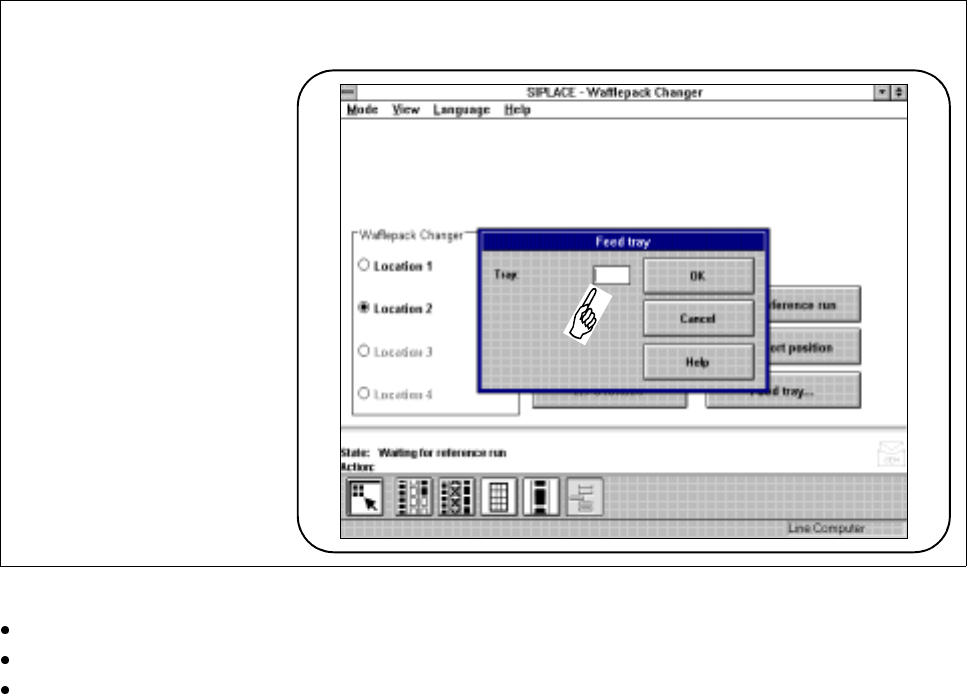
2.2.3.2 Input Boxes
Input boxes require of the operator that he make an entry in the input field.
Fig. 2.2.7 Example of input box
Position the cursor within the input field.
Type into the input field the input which is required.
Confirm your input by clicking on
OK
. You can break off your input by clicking on the
Cancel
button or you
can call up on-line help on the corresponding topic by clicking on the
Help
button (see also Chapter 8).
2 Introduction and Basic Concepts SIPLACE 80S-20/F4/F5 User Manual
2.2 Principles and Structure of the User Interface 05/99 Issue from Software Version SR.405.xx
2 - 18
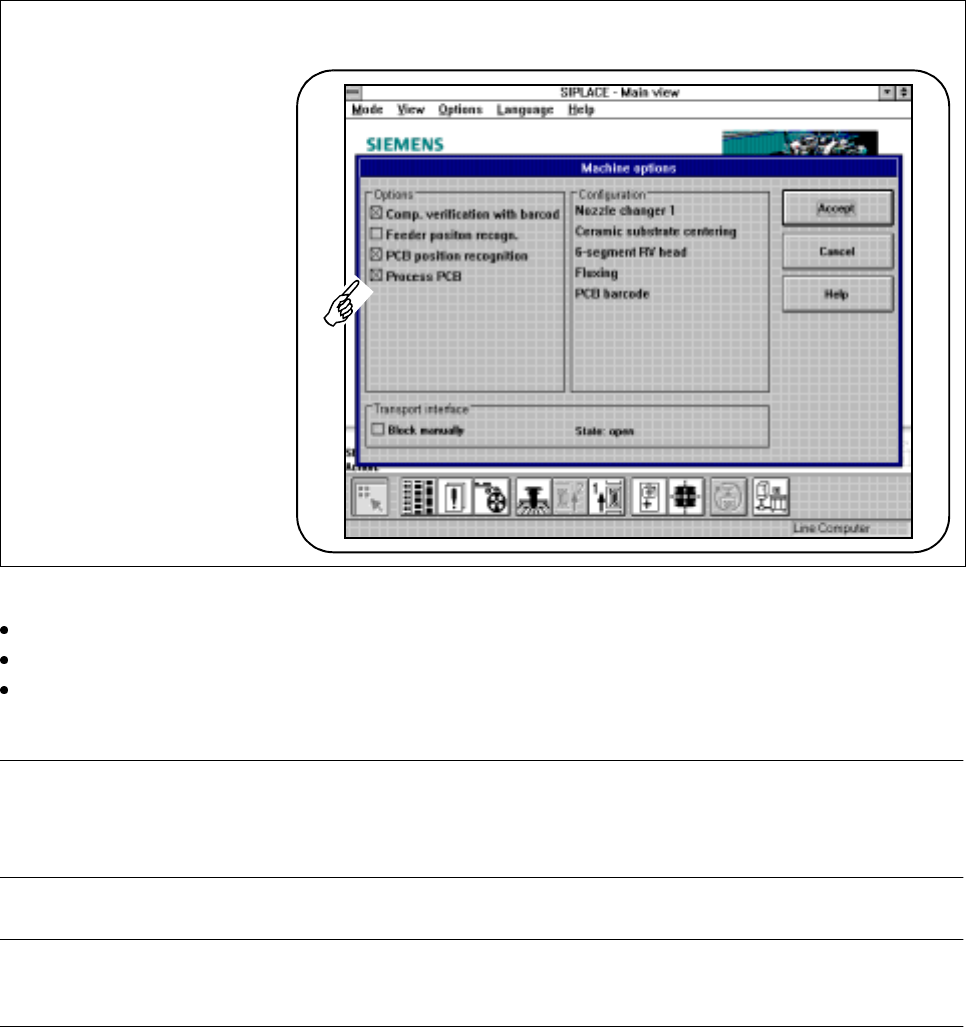
2.2.3.3 Control Boxes
Control boxes display states and settings which can be activated or deactivated.
Fig. 2.2.8 Example of a control box
Click on a control button in the control box in order to activate or deactivate a displayed state or setting.
Click on the
Accept
button in order to activate the processed states or settings.
You can break off your input by clicking on the
Cancel
button (the old settings will be used) or you can call
up on-line help on the corresponding topic by clicking on the
Help
button (see also Chapter 8).
NOTE
A cross on a control button indicates an activated state.
An empty control button indicates a deactivated state.
PLEASE NOTE
Some operations (e.g. machine options for line engineers) can only be accessed from a higher operator level.
SIPLACE 80S-20/F4/F5 User Manual 2 Introduction and Basic Concepts
05/99 Issue from Software Version SR.405.xx 2.2 Principles and Structure of the User Interface
2 - 19
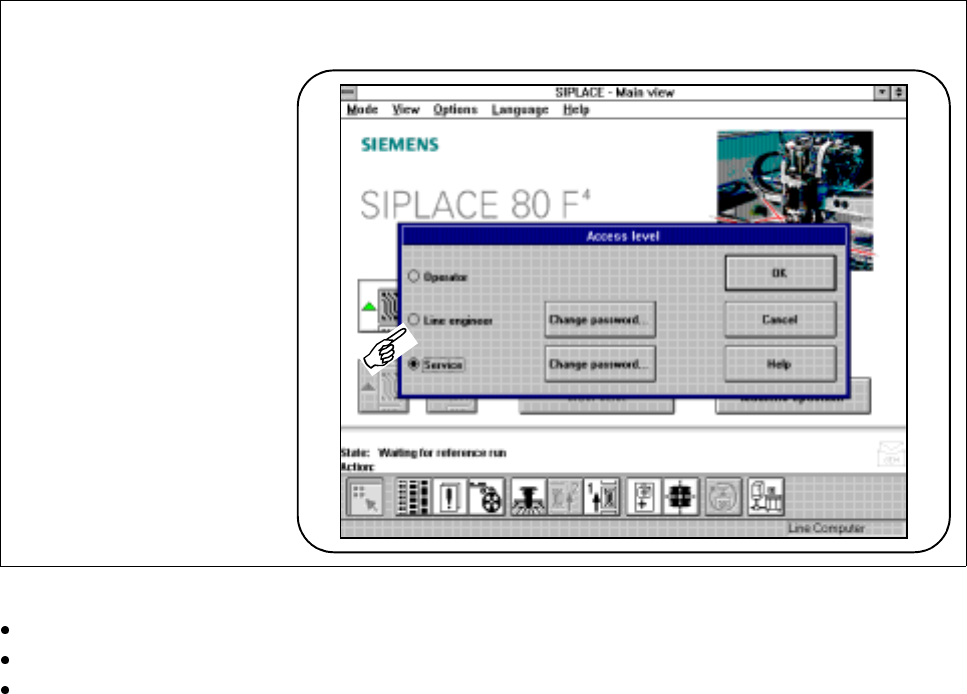
2.2.3.4 Option Boxes
In an option box a choice is presented between different settings. In each case one option can be selected.
Fig. 2.2.9 Example of an option box
Click on a button in the option box in order to select a displayed setting.
Click in the
OK
button to activate the new settings.
You can break off your input by clicking on the
Cancel
button (the old settings will be used) or you can call
up on-line help on the corresponding topic by clicking on the
Help
button (see also Chapter 8).