SIPLACE Vision Customer_en.pdf - 第86页
Component Shapes Specific Component Shapes Components With Round Leads S tudent Guide SIPLACE V ision (Customer) Component Shapes Edition 12/2008 EN 86 5.3.9.2 CCGA Component Shape (Ceramic Co lumn Grid Array) JEDEC desc…
Component Shapes
Components With Round Leads Specific Component Shapes
Student Guide SIPLACE Vision (Customer)
Edition 12/2008 EN Component Shapes
85
5.3.9 Components With Round Leads
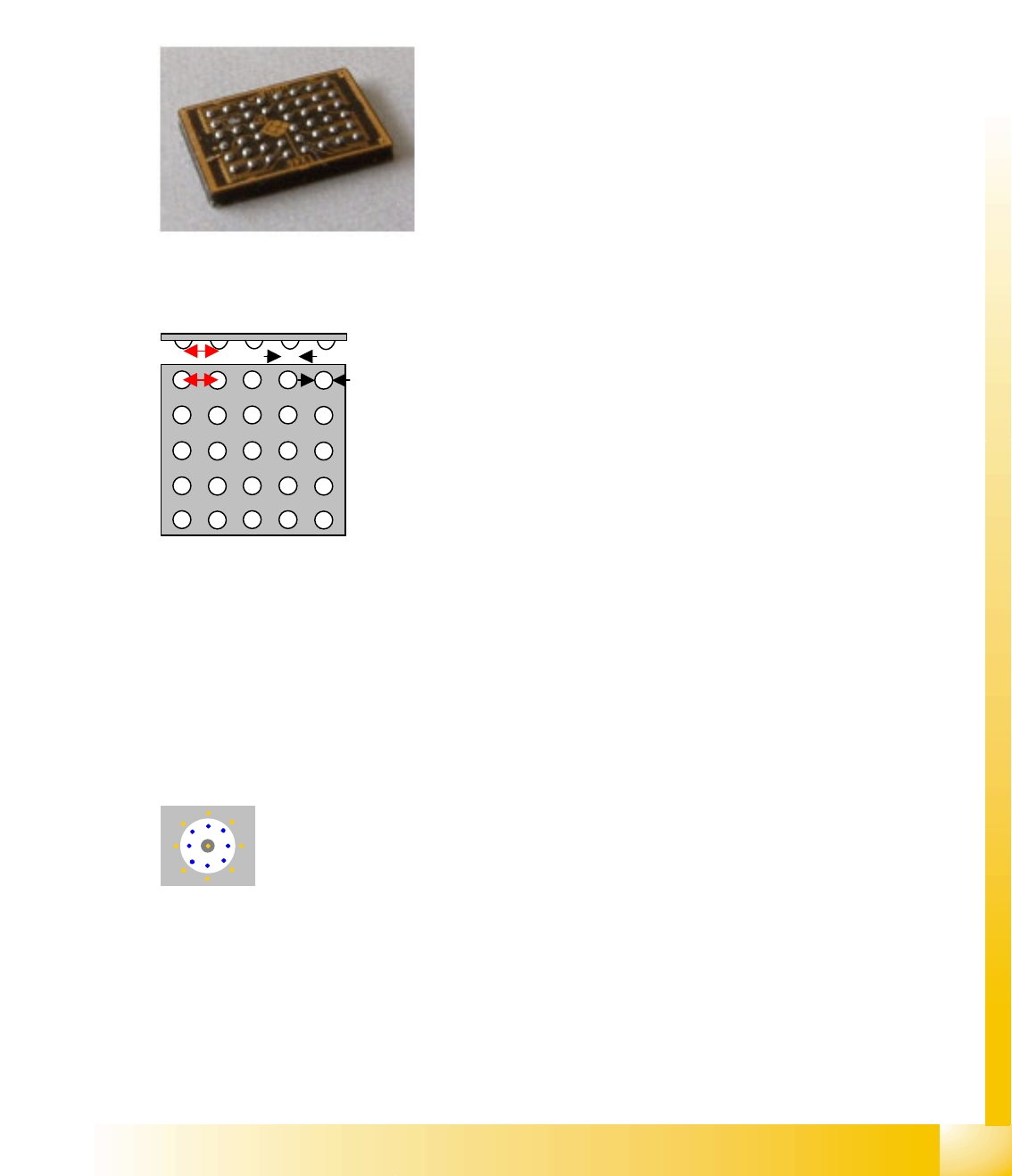
Ball Grid Arrays or Ceramic Column Grid Arrays have various round connection points under the body
surface. In the initial step, up to 20 features are applied in the CO corners, to determine the coarse and
fine positions (including the angle). The recognized CO position and angle are then checked to ensure
that all leads are present and in the correct position on the grid.
5.3.9.1 BGA Component Shape (Ball Grid Array / FlipChip)
JEDEC description
JEDEC description
Lead description
The leads are distributed throughout the CO surface, as hemispherical contacts which are arranged
in a matrix . This component shape has so-called Ball leads.
The ball diameter and ball tolerance must be identical for all groups.
Special features
The ball quality is set to only 66%, due to the ceramic BGAs. For a reliable ball check on normal BGAs,
we recommend raising this value to 70-80% in the algorithm menu.
Joint datasets with ICOS data possible –
(see MS-034)
Body description: rectangular.
The Z height of the body determines the CO height for the
Z positioning profile.
The X/Y body dimensions determine the field of vision, the
Region of Interest.
The body size should be adjusted to reflect the real body
size and not just cover the size indicated by the ball leads.
This component shape has hemispherical leads arranged
in columns and rows. It can contain one or more groups.
Leads may be missing in the rows or columns.
The (pitch) and pitch tolerance for the ball arrangement
must be identical in all groups.
The pitch is greater than the ball diameter, even with
individual balls.
The contrast between the body and the Ball lead can be set
as required. Normally, the Ball lead is brighter than the
body.
The standard flat illumination for BGAs only illuminates the
hemispherical Ball leads and not the flat connection circles
on the body. A special filter has been programmed for this
purpose.
You can also select an option for inspection of ball
presence and arrangement.
Component Shapes
Specific Component Shapes Components With Round Leads
Student Guide SIPLACE Vision (Customer)
Component Shapes Edition 12/2008 EN
86
5.3.9.2 CCGA Component Shape (Ceramic Column Grid Array)
JEDEC description
Group description
Lead description
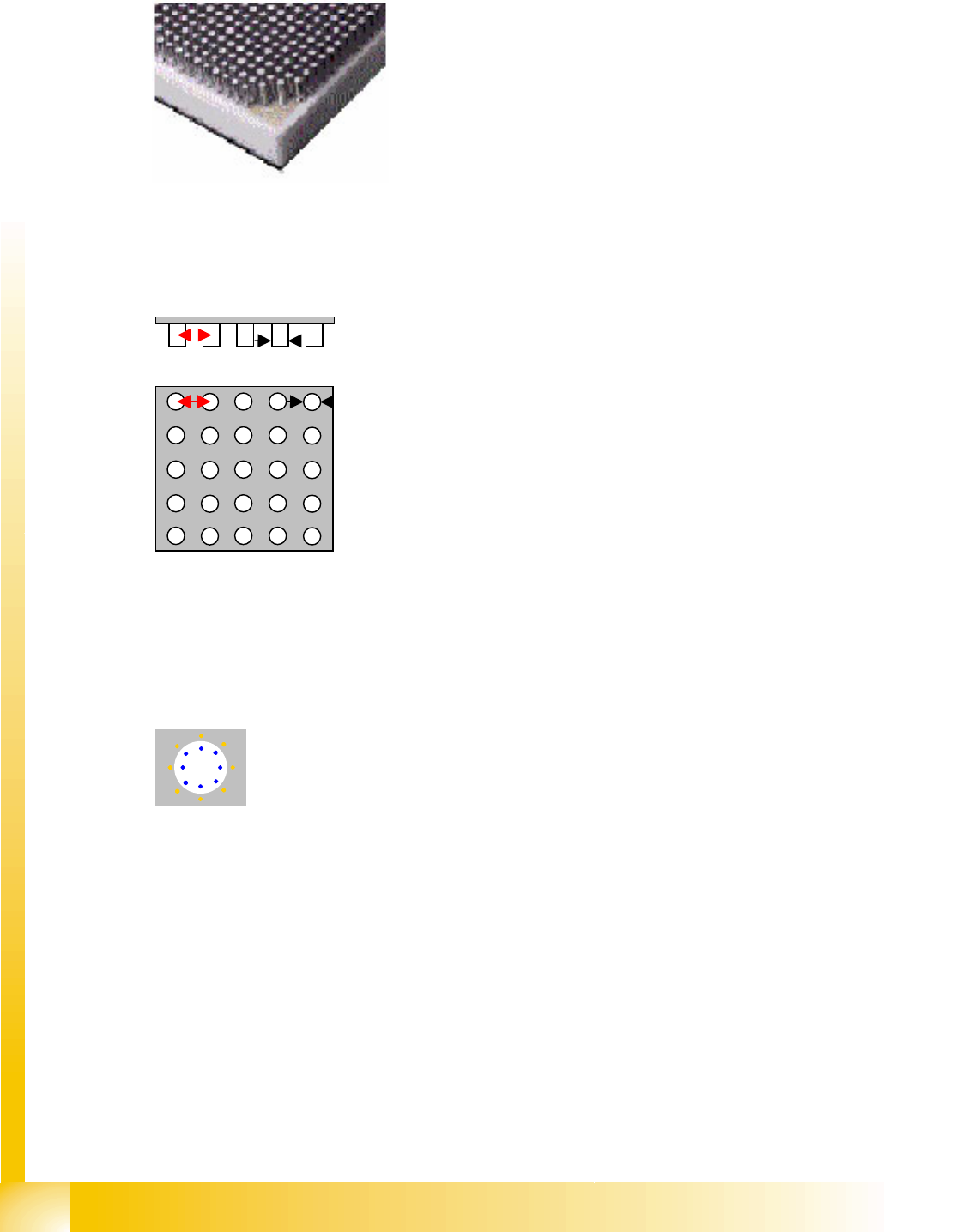
This component shape has so-called Column leads. The column diameter and column tolerance must
be identical for all groups.
Special features
Joint datasets with ICOS data NOT possible
Component Shapes with Through Hole Pins
Components originating from board production using through-hole technology, are becoming
increasingly popular in SMD production processes. This method is often known as PIN-in-Paste
technology.
No JEDEC description, as defined by IBM.
Body description: rectangular.
The Z height of the body determines the CO height for the
Z positioning profile.
The X/Y body dimensions determine the field of vision, the
Region of Interest.
The body size should be adjusted to reflect the real body
size and not just cover the size indicated by the column
leads.
The leads are distributed throughout the CO surface, as
column-shaped contacts which are arranged in a matrix .
This shape can contain one or more groups. Leads may be
missing in the rows or columns.
The (pitch) and pitch tolerance for the column arrangement
must be identical in all groups.
The pitch is greater than the column diameter, even with
individual round leads.
The contrast between the body and the Ball lead can be set
as required. The lead is similar to BGA, although the
Column type requires different illumination and filtering of
the optical presentation.
Missing columns will not be recognized, since the
illumination selected recognizes the columns and the round
surfaces below as the same shapes.
You can also select an option for inspection of column
presence and arrangement.
Component Shapes
Components With Round Leads Specific Component Shapes
Student Guide SIPLACE Vision (Customer)
Edition 12/2008 EN Component Shapes
87
Description
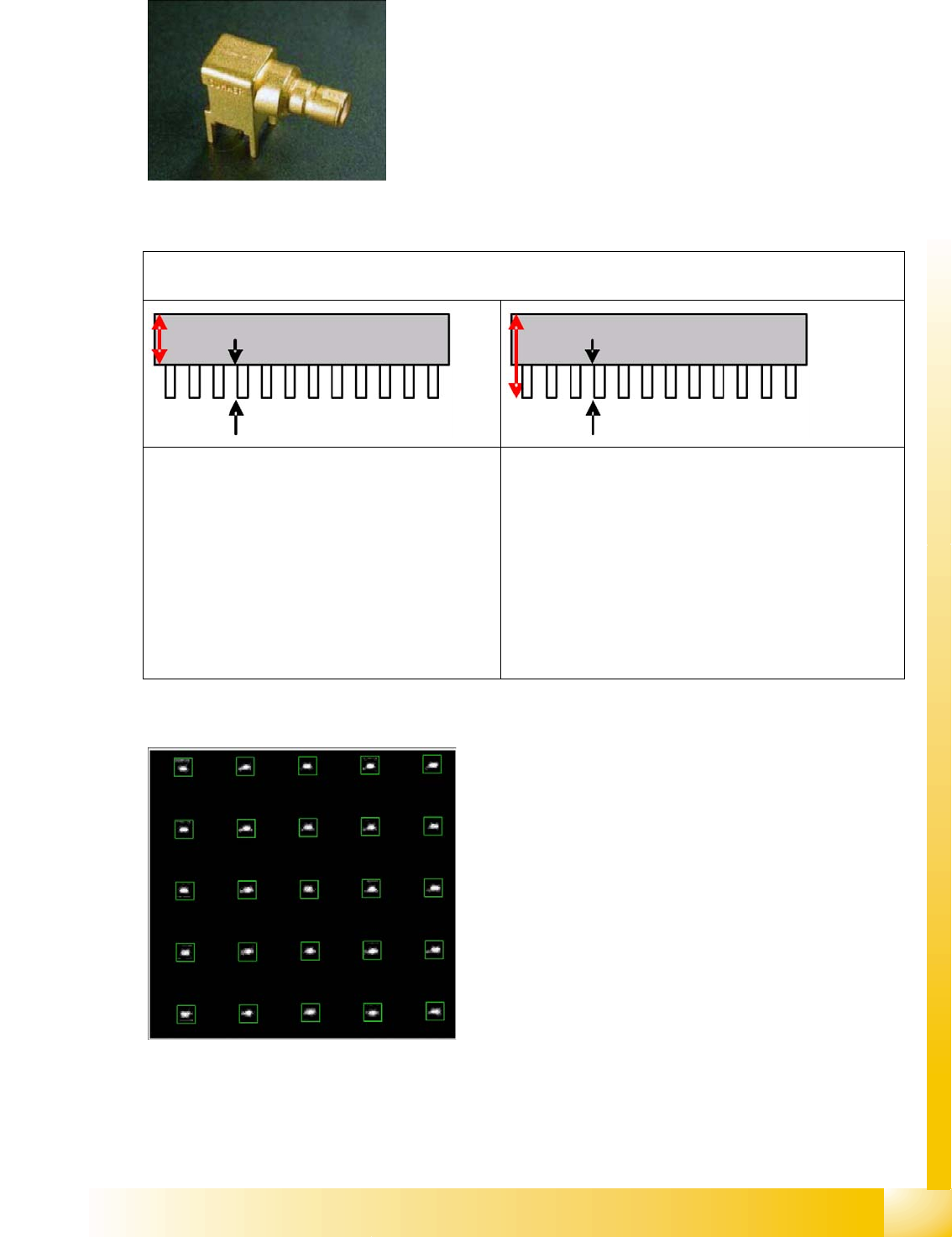
CO Height
JEDEC description
Lead description
This component shape has so-called Column leads. The column diameter and column tolerance must
be identical for all groups.
Body description: usually rectangular.
The X/Y body dimensions determine the field of vision, the
Region of Interest.
The body size should be adjusted to reflect the real body
size and not just cover the size indicated by the column
leads.
An individual inspection step, based on exact knowledge of the detailed dimensions and the required placement
process, determines the CO height.
The programming of the CO height, from the
nozzle contact level to the required contact height
on the board, achieves such a low (deep) target
position for the Z-axis travel profile, that the pins
are pressed through the board .
Very high pins may therefore be outside the focal
area of the IC camera, meaning that very small
structures will be recognized with measurements
variance. Furthermore, collisions may occur with
previously placed, unusually high COs.
The programming of the CO height, from the nozzle
contact level to the tip of the through-hole contacts,
achieves a Z-axis travel profile in which the Z-axis inserts
the pins through the relatively wide holes, at low speed,
while learning the deeper placement levels. Placement
with snap-in pins is hardly possible, since higher forces
cause the Z-axis to recognize the end of the placement
procedure before it should.
The pin tips to be recognized are located in the IC
camera region of focus or, in other words, the lower edge
of the pin is well above the theoretically highest (25 mm)
previously placed CO.
The leads are distributed throughout the CO
surface, as column-shaped contacts which are
arranged in a matrix . Refer also to the relevant
explanations for CCGA component shapes.