CP-6-series Mechanical Reference.pdf - 第199页
3.4 Station 10 Fine-theta Station 10 refers to the vision processing data and rotates a part the remaining angle for placement. 3.4.1 Clutch Meshing Check W ARNING • Turn off the 200 V servo power before carrying out thi…
3.3 Station 3
Pre-theta
Station 3 rotates the nozzles with parts picked up at station 1 approximately -90°, 0° or
+90° depending on the settings in the placement program.
3.3.1 Clutch Meshing Check
WARNING
• Turn off the 200 V servo power before carrying out this work.
• Exercise extreme caution when working on the machine if the cam is
not at its origin (0 deg.). Recoil of the cam axis can endanger the
operator.
Perform this check on the low-pressure nozzle.
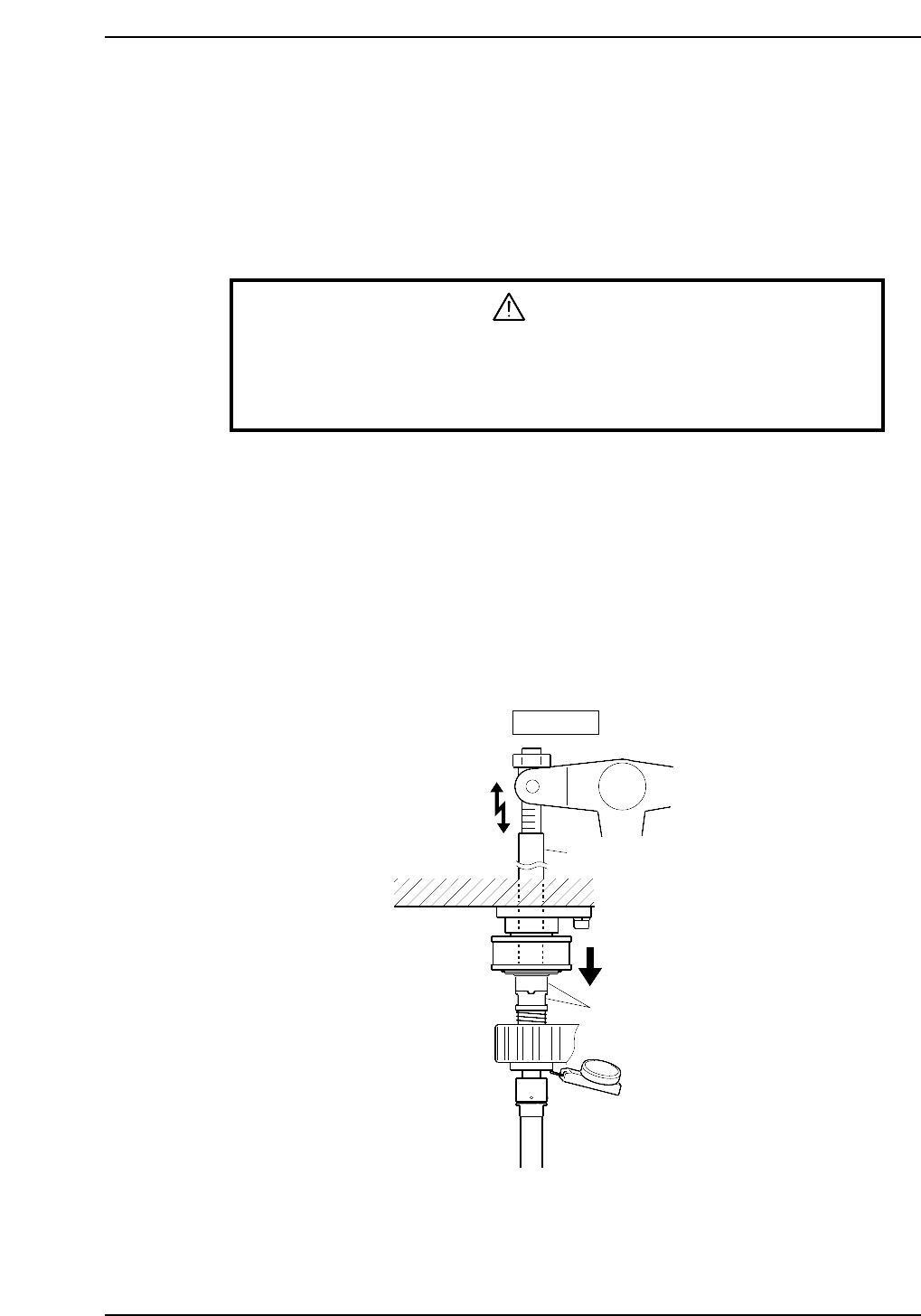
1. Rotate the cam to 0°, turn on the pre-rotation solenoid (Y022 PQ ROT SOL ON) for
station 3 to operate the lever.
2. Set the dial gauge to the bottom of the nozzle shaft brake.
3. Use the cam handle to rotate the cam to 200°.
4. Ensure that the clutches mesh properly and the nozzle shaft assembly deflects the
dial gauge 0.3 ~ 0.35 mm as illustrated below.
Note: The low-pressure nozzle refers to the nozzle axis (out of the 20) that receives the weakest
pushing pressure. Use the low-pressure nozzle for meshing checks at stations 3, 5, 10, 12
and 13.
Station 3
Rod
Clutches
0.30 ~ 0.35 mm
CP6M5041
Part 5 Chapter 3 Station Adjustments
Edition 1.0 5-3-23 CP-6-series Mechanical Reference
3.4 Station 10
Fine-theta
Station 10 refers to the vision processing data and rotates a part the remaining angle for
placement.
3.4.1 Clutch Meshing Check
WARNING
• Turn off the 200 V servo power before carrying out this work.
• Exercise extreme caution when working on the machine if the cam is
not at its origin (0 deg.). Recoil of the cam axis can endanger the
operator.
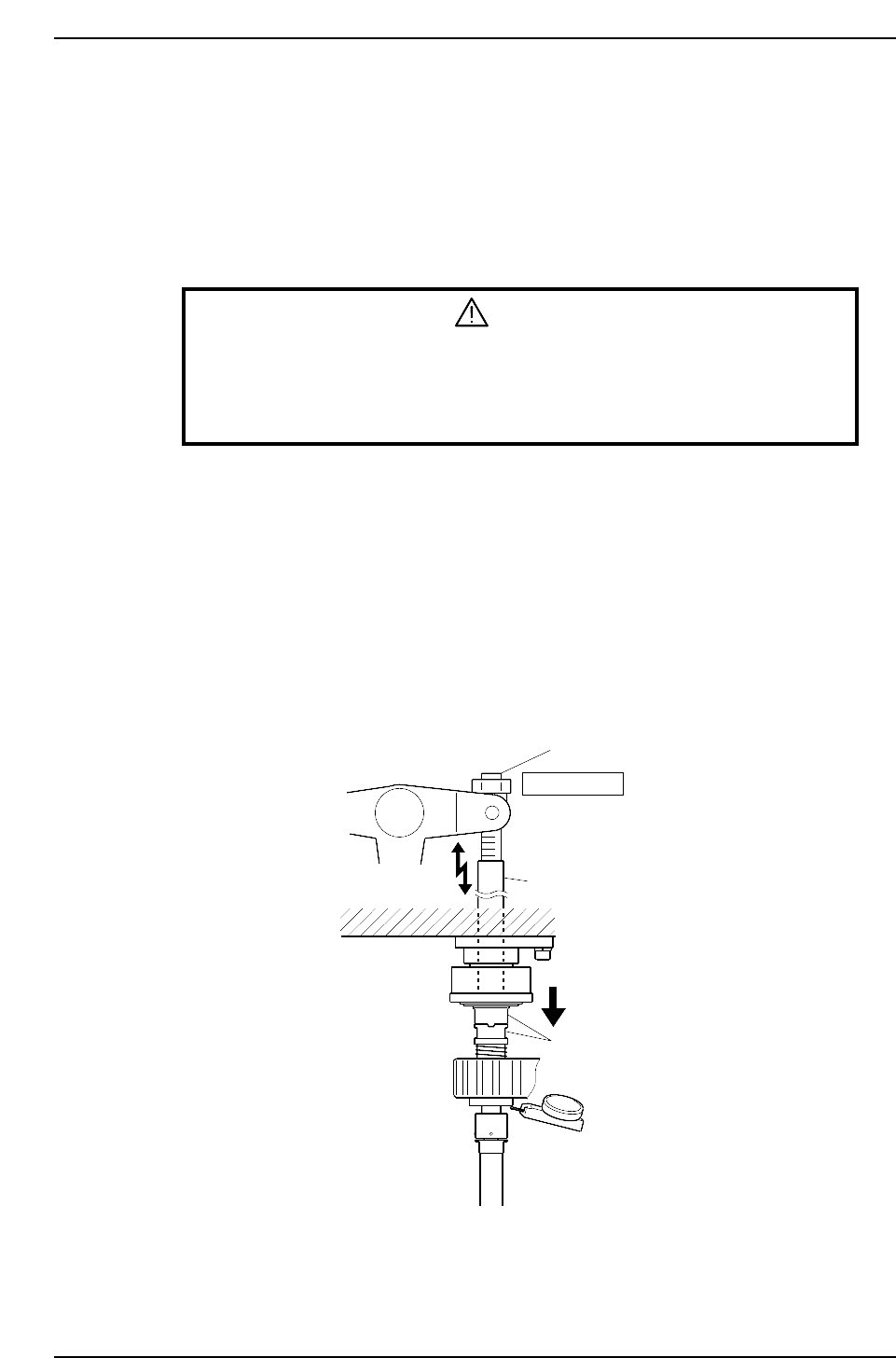
1. Rotate the cam to 0°, turn on the fine-rotation solenoid (Y030 Fθ SOL ON) for
station 10 to operate the lever.
2. Set the dial gauge to the bottom of the nozzle shaft brake.
3. Use the cam handle to rotate the cam to 200°.
4. Ensure that the clutches mesh properly and the pressure applied to the low nozzle
is 0.3 ~ 0.35 mm.
5. Perform this check for all of the nozzle axes.
Note: The low-pressure nozzle refers to the nozzle axis (out of the 20) that receives the weakest
pushing pressure. Use the low-pressure nozzle for meshing checks at stations 3, 5, 10, 12
and 13.
Adjustment bolt
Station 10
Rod
Clutches
0.30 ~ 0.35 mm
CP6M5042
Part 5 Chapter 3 Station Adjustments
Edition 1.0 5-3-24 CP-6-series Mechanical Reference
3.5 Station 11
Part Placement
Ensure that a nozzle with a part lowers to the placement height.
The movement of the mechanical valve releases the vacuum for part placement on the
production boards.
WARNING
Exercise extreme caution when working on the machine if the cam is
not at its origin (0 deg.). Recoil of the cam axis can endanger the
operator.
3.5.1 Slider Adjustment
1. Adjust the height of the slider to ensure that the cam follower can travel smoothly
through the slider and along the cam groove.
Select [SET] - [MANUAL] - [I/O] and then press the EMERGENCY STOP button
to take the 200 V down to 100 V.
WARNING
Turn off the 200 V servo power before carrying out this work.
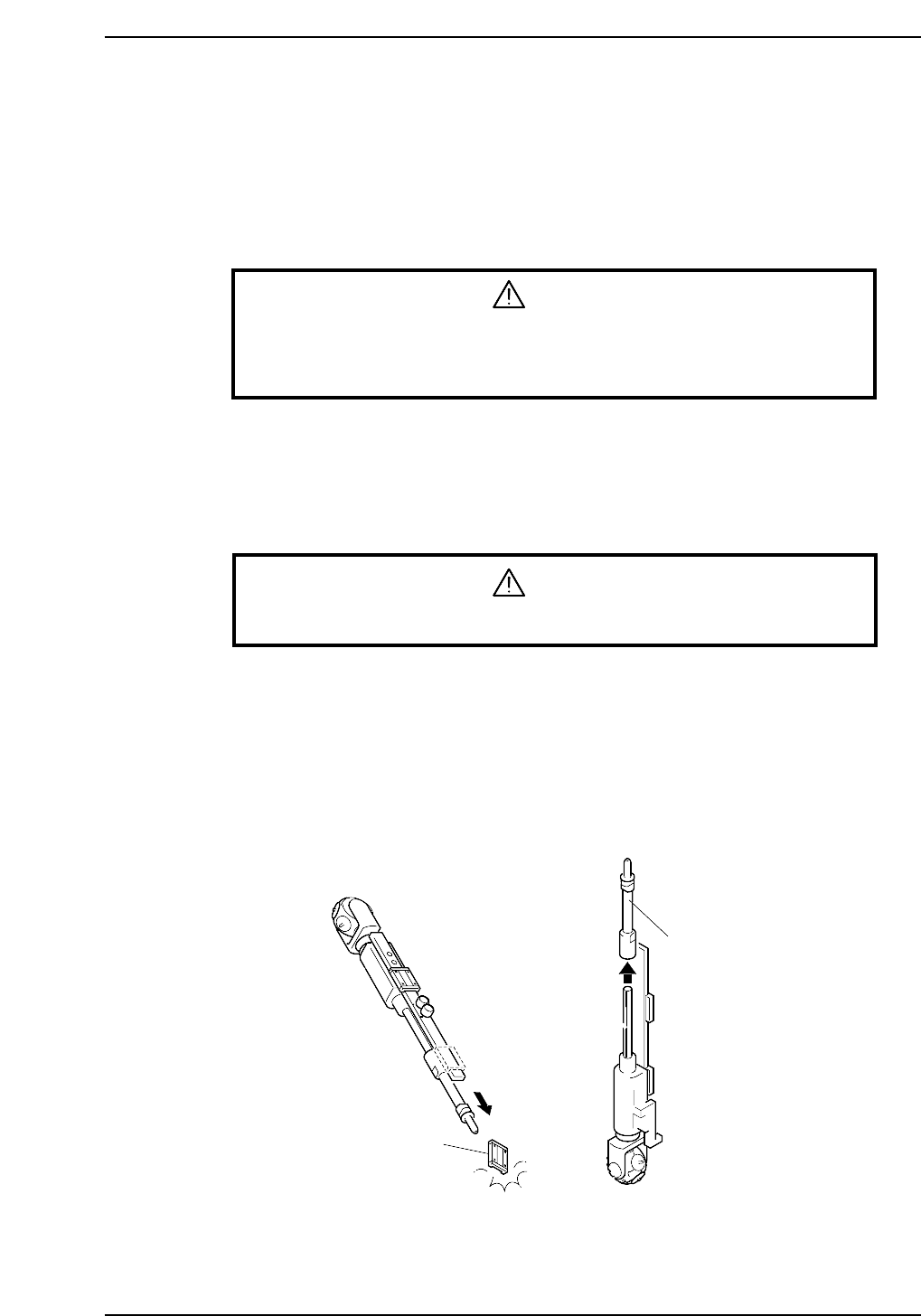
2. Rotate the cam to 0°, then use a spanner and a wrench to remove the clutch from
the nozzle shaft near station 11 (see the illustration on the next page).
3. Remove the nozzle axis brackets and the vacuum hose, then remove the nozzle
shaft assembly (see the illustration on the next page).
Caution: When removing the nozzle shaft assembly, take care not to dislodge the bearings.
There are no stoppers to prevent the bearings from sliding off. Do not remove the
outer shaft.
Bearing
Outer shaft
CP6M5043
NG
NG
Part 5 Chapter 3 Station Adjustments
Edition 1.0 5-3-25 CP-6-series Mechanical Reference