00194563_03_E.pdf - 第11页
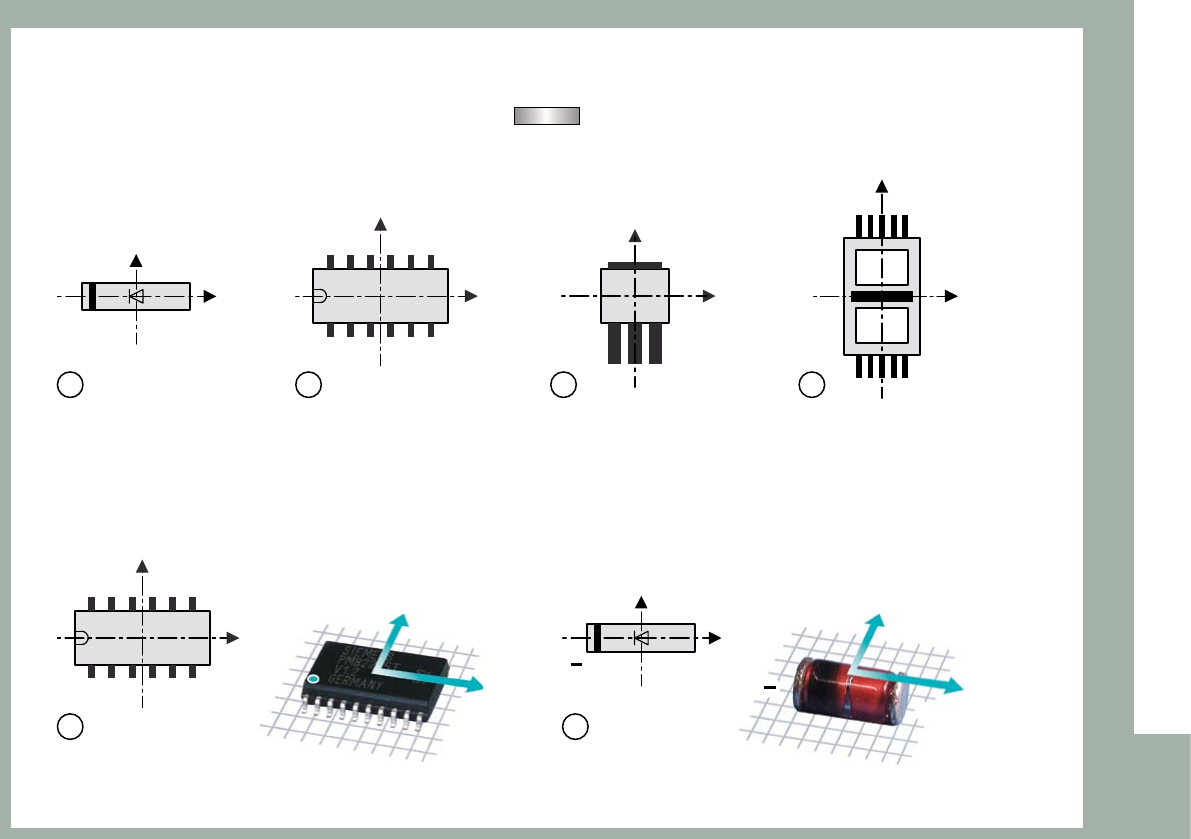
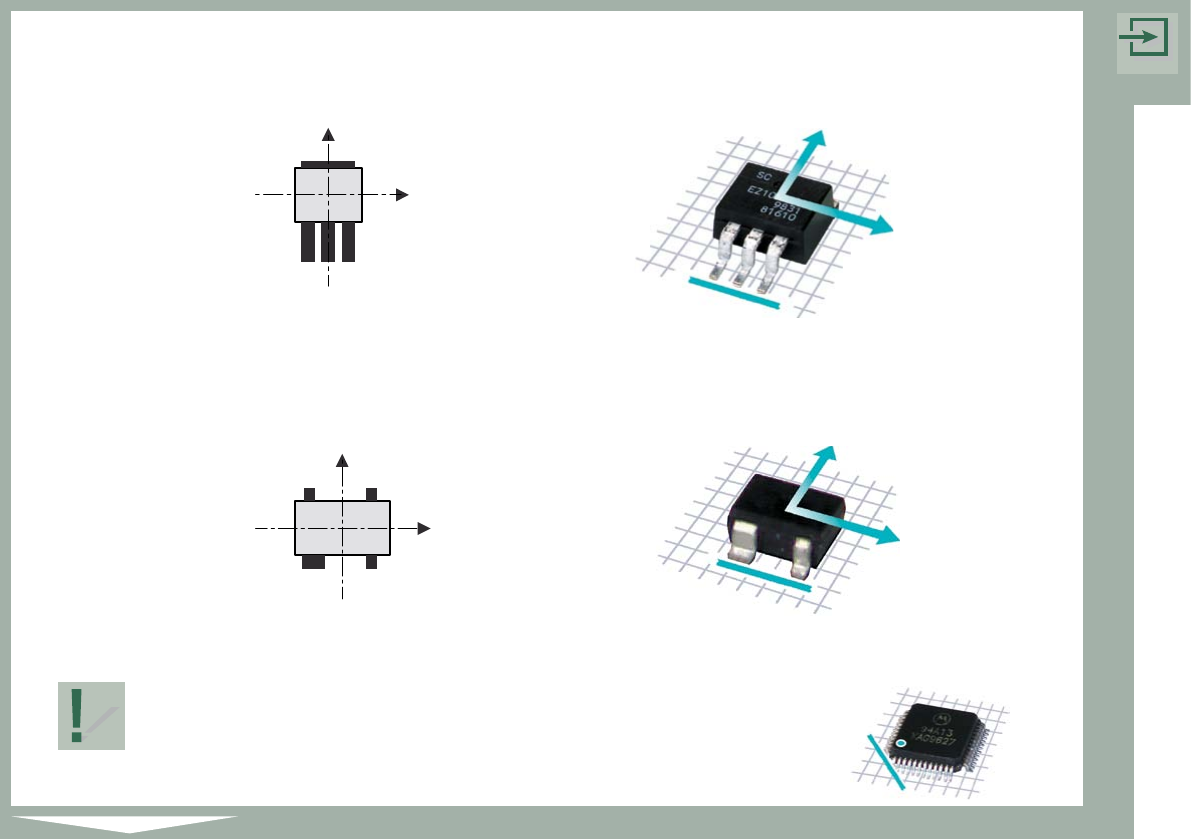
1 – 1 1 Y X Y X Y X Y X Introduction Rule 3: The si de wit h the mo st pins i s at the b otto m. Rule 4: If t he com ponen t has any unusu al feat ures, suc h as a wid er pin, thi s featu re is at t he bot tom. Rule 1 ha…
1 – 10
Y
X
Y
X
Y
X
X
21
Y
X
Y
X
Y
X
Y
X
+
+
1 2 3 4
Y
The x-axis of the component does not necessarily have to be its long side. This may be the case,
for example, when the nozzle has to be at 90° to the component‘s long side because of holes
through the component (see figure: no. f nozzle = ).
Rule 2: Pin 1 is in the lower left corner or in the center of the component‘s left side.
In the case of diodes, the anode (+) must point in the positive x-direction.
1 – 11
Y
X
Y
X
Y
X
Y
X
Introduction
Rule 3: The side with the most pins is at the bottom.
Rule 4: If the component has any unusual features, such as a wider pin,
this feature is at the bottom.
Rule 1 has the highest priority, followed by rules 2, 3 and 4 in that order.
The sample components at the beginning of each chapter are
shown in accordance with the four rules.
The marking on the example (shown beside) indicates the
lower left corner of the component.
1 – 12
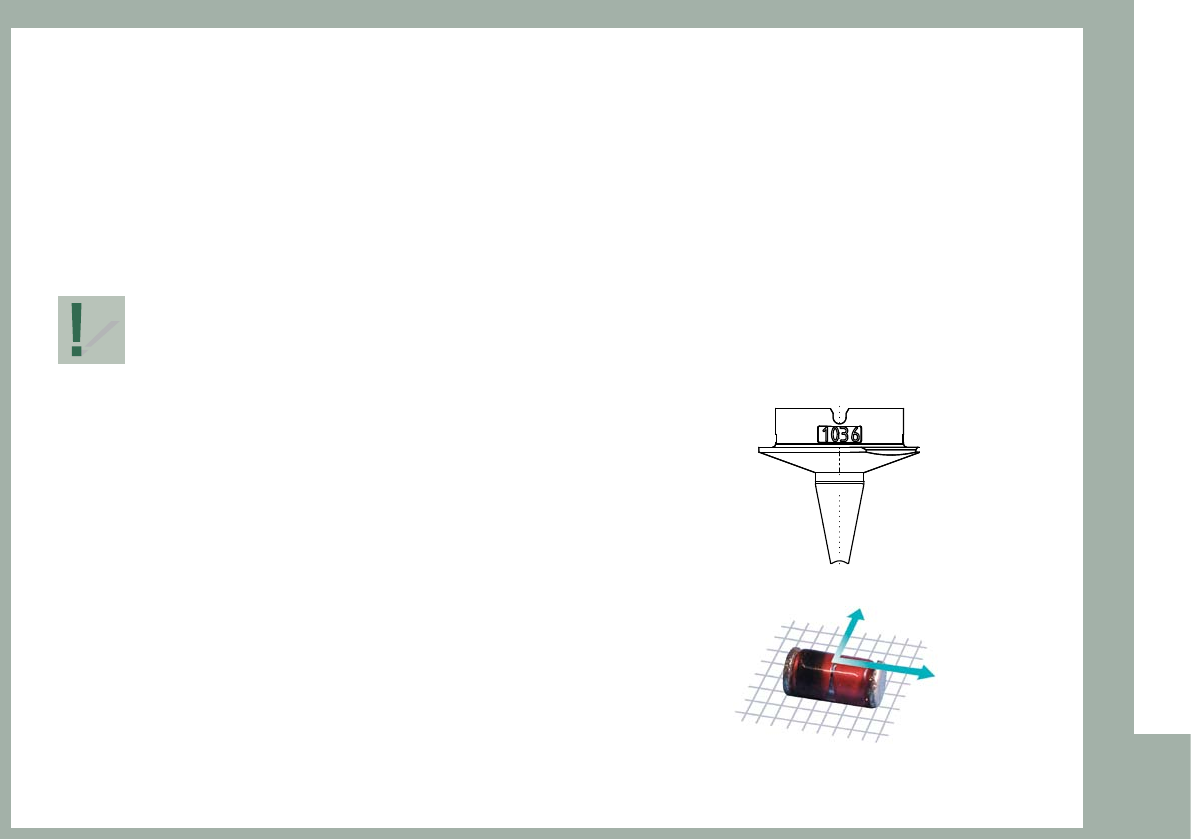
Right Allocation Nozzle – Component at C&P Placement Heads
To avoid recognition problems at small structures the component
must be in the focus range of the camera.
The focus range of the C&P-20 camera is between 9.4 und 11.4 mm (10.4 +/– 1 mm).
The focus range of the C&P-6 / C&P-12 camera is between 13.0 und 17.0 mm (15 +/– 2 mm).
Selecting the right nozzle for a component
it has to be checked if the sum of nozzle length
and component height is inside this interval.
Example:
Nozzle length L = 9.4 mm
Component height H = 1.2 mm
Sum = 10.6 mm