VALID-LINE-WEB - 第2页
Choosing a functional test solution means that it must satisfy (at least) three fundamental requirements: - The solution should meet present and future performance needs - The solution should retain the ability to adequa…
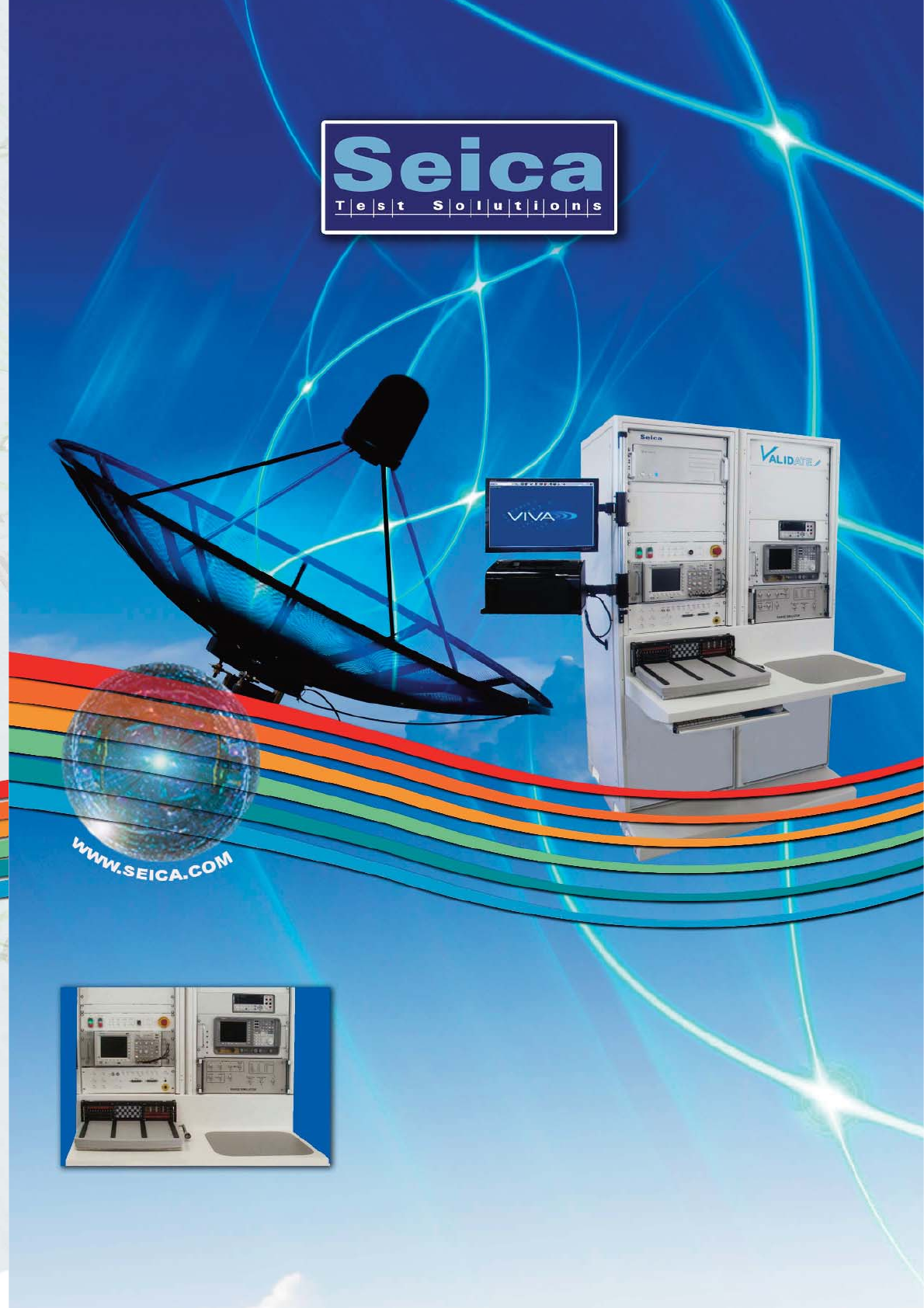
VALID LINE
Functional test platform
Choosing a functional test solution means that it must satisfy (at least) three fundamental requirements:
- The solution should meet present and future performance needs
- The solution should retain the ability to adequately mimic features of old, to-be-replaced equipment.
- The solution should include comprehensive hardware and software tools and yet be fully open to COTS (Commercial
Off-The-Shelf) hardware and software.
The
Valid Line
is the ultimate integrated functional test
solution, capable of meeting and exceeding these
requirements for analog, digital and mixed-signal testing, both
at board level (SRA/SRU) and box level (LRA/LRU), in the
factory and in the field.
The
Valid Line
benefits from Seica’s unrivalled experience in
testing complex types of electronic boards and assemblies,
featuring advanced DSP and FPGA-driven digital technology
and a comprehensive set of test generation, debug and
diagnostic proven solutions.
The
Valid Line
has a proven track record of successfully
replacing obsolete functional test equipment, from GR179X to
GR275X, from L200 to L300, from S720 to S790 and custom
STE for box level test and validation.
Offering the best test-oriented stimulus and measurement
dedicated hardware, the Valid Line can readily be extended to
incorporate GPIB, LXI and VXI COTS
solutions. Operating under a powerful
test-oriented environment (VIVA), the
system can also be fully directed by
other test sequencers, like N.I.
TestStand or Agilent VeePRO, and/or
combine use of a variety of
programming languages like C++,
VBS, and programming environments
like LabWindows/CVI, LabView, and
others.
HIGH-PERFORMANCE
Valid line
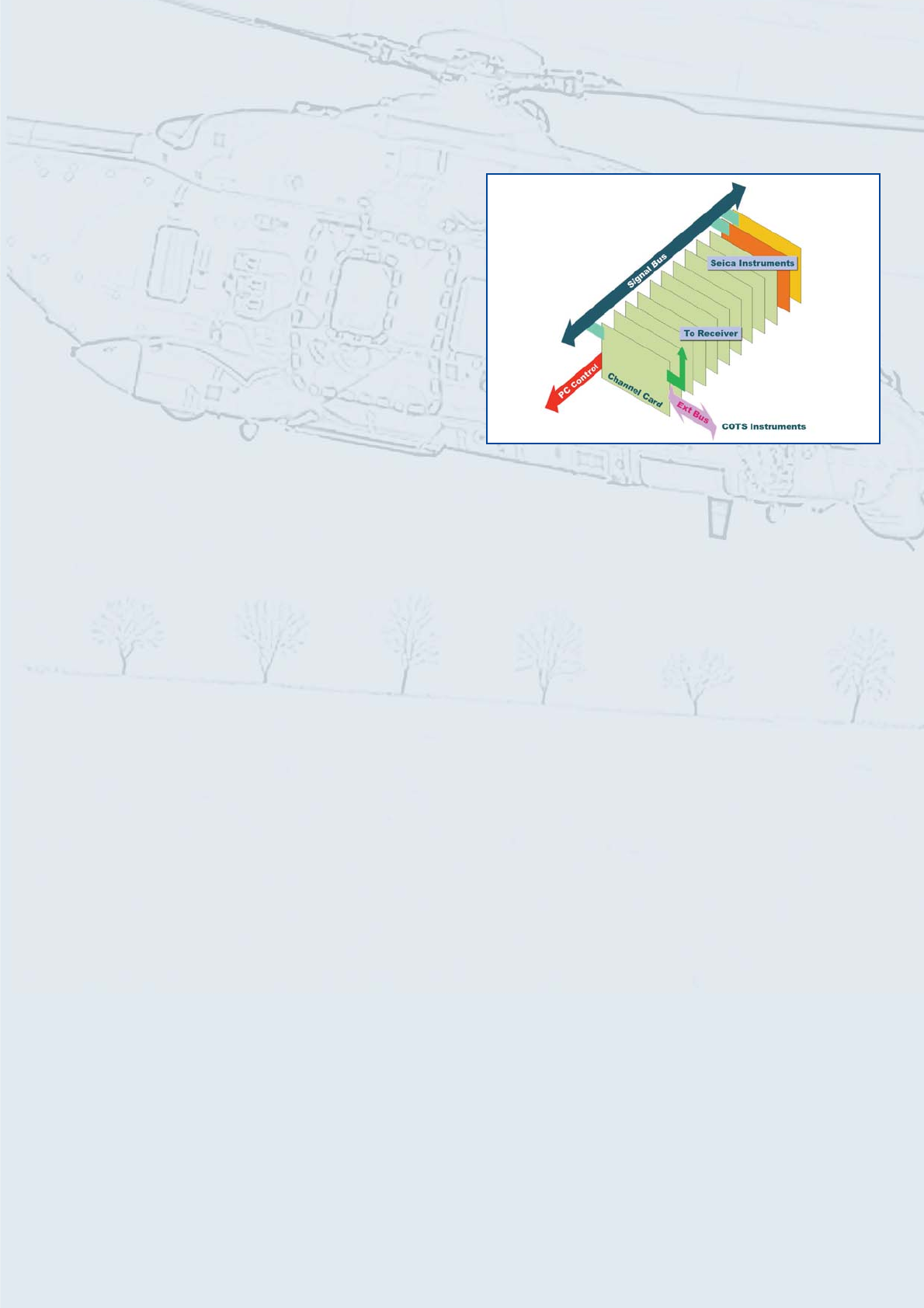
At the heart of the system is the VIP test backplane.
Controlled by the system PC through the high-speed fiber-
optic bus, the VIP test backplane hosts channel cards,
routing cards and internal instrumentation. The VIP test
backplane offers unrivalled flexibility, with full connection to
the test receiver, ample room for expansion, built-in signal
and power buses to accommodate all requirements of
stimuli and measurement distribution to the UUT (Unit
Under Test).
The Valid Line can be provided with a traditional SEICA,
Mac-ODU or Virginia Panel VP12 Receivers. Custom
solutions using other technologies (i.e. to retain existing
fixtures) are also available. All solutions offer a system
capacity of up to 1,024 channels, which can be doubled by
adding a second test backplane.
Latest generation of F50 digital channel cards offer each 32
channels with 25MHz dynamic performance, local timing
phases and windows, local multiple level references, parallel
and serial operating mode. Each channel provides
dynamically high speed stimuli and responses, with large
backing memory and algorithmic capabilities. Other
channels’ features include CRC, pulse generation control,
POD functionalities for 1149.2 applications, direct time and
frequency measurement. Flexible control assures Legacy
Replacement of obsolete equipment as well as easy and
direct coping with bus-testing, serial-mode testing, IEEE
1149.2 and other protocols.
F50 cards include analog switching on each channel to be
mated, at fixture level or in the system, with analog channel
cards, thus offering full hybrid digital/analog capability.
Analog channel cards offer a unique 3D architecture which
allows COTS instruments to be directly connected through
eight external bnc I/Os. Routing can then be local with
independent clusters of 32 channels, or system-wide
through the 8-line analog bus of the VIP test backplane. This
unique architecture can easily cope with test scenarios
requiring a large number of analog stimuli to be applied
simultaneously to the UUT.
If high current stimuli need to be switched, other channel
cards are available, with dual connection to the analog bus
or to the separate power bus.
VERSATILE TEST ARCHITECTURE
The main analog test resource is based around the ACL
subset, which provides multiple, DSP-driven AC/DC
stimuli and measurement automatically routed to all
channels, to reproduce the required test scenario and to
provide fast and accurate results.
Automotive, aerospace and industrial applications often
require providing parallel test of to the UUT, with several
different analog stimuli applied and synchronized
measurements taken. An example of this is the case of
SRU or LRU interfacing sensors or driving tools. Such
situations are impossible to reproduce on conventional
ATE without the addition of complex active electronics on
the fixture. Not so with the iFUN parallel test solution
offered in the Valid Line. The iFUN hosts 16 independent,
DC-programmable analog channels; if required, the iFUN
can mount up to eight additional resources, in any
combination out of the currently available AWG and
Digitizer modules. Multiple iFUN modules can be installed
in the system, thus responding to the most exotic
SRU/LRU test needs.
Whenever needed, the system offers ample capacity to
add external GPIB, VXI or LXI instruments to meet RF, HV
or load specifications,
For high performance digital, to best serve military
contractual requirements, the Valid Line can also be
configured with the Talon T964 Digital Resource Modules.
Fully integrated in the test generation, run-time and
diagnostic environment of the Valid Line, the Talon T964
cards provide ultimate digital test performance at 50MHz
with 1nsec edge placement resolution and tester per pin
architecture.
FLEXIBLE TEST-ORIENTED
INSTRUMENTATION
FACTORY AND DEPOT SRU/LRU FUNCTIONAL ATE