VALID-LINE-WEB - 第4页
As are all Seica systems, the V alid Line is based on the powerful VIVA software environment. CAD data can be directly imported to create a comprehensive data base for test generation, validation and diagnostics. The boa…
Valid line
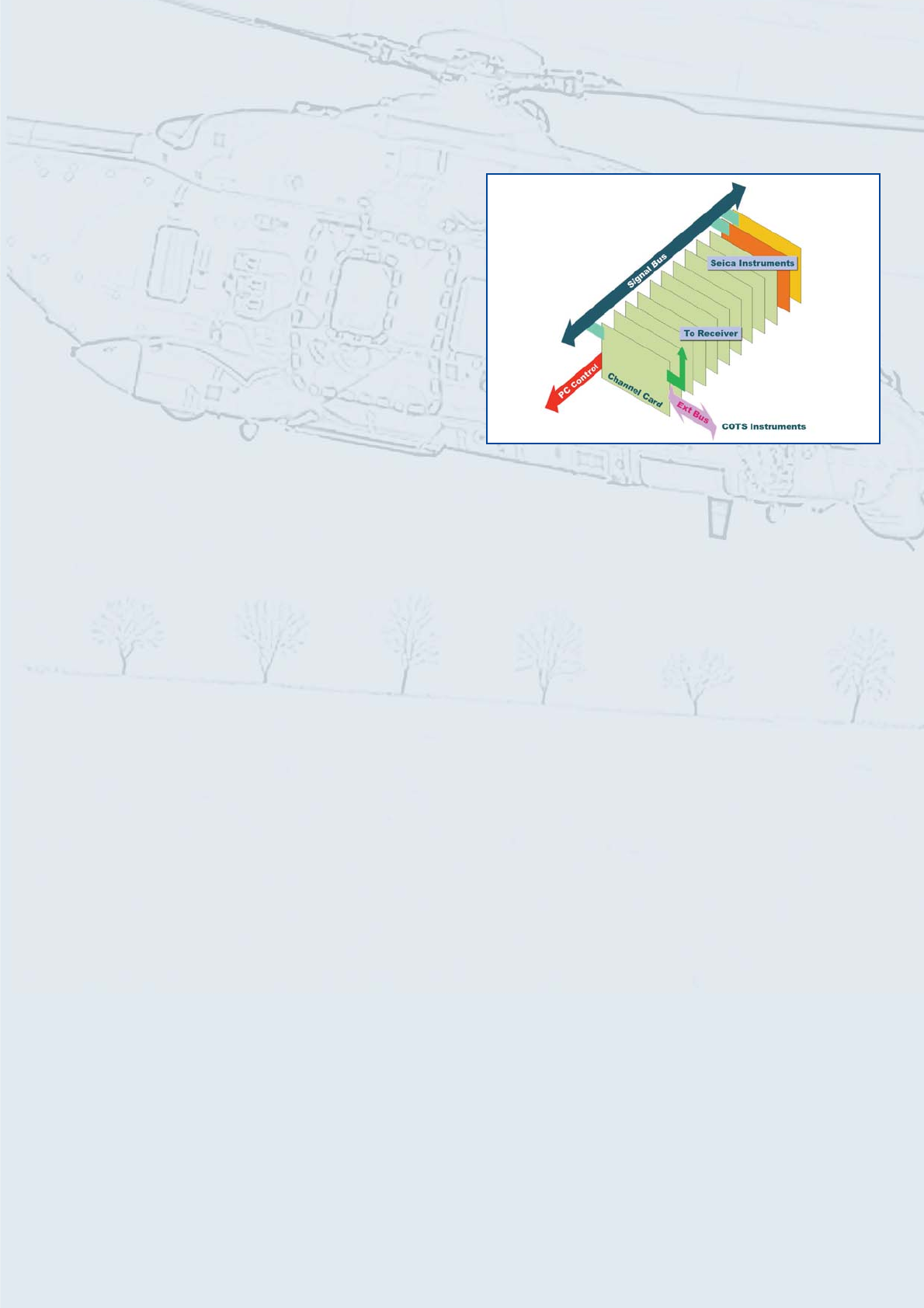
At the heart of the system is the VIP test backplane.
Controlled by the system PC through the high-speed fiber-
optic bus, the VIP test backplane hosts channel cards,
routing cards and internal instrumentation. The VIP test
backplane offers unrivalled flexibility, with full connection to
the test receiver, ample room for expansion, built-in signal
and power buses to accommodate all requirements of
stimuli and measurement distribution to the UUT (Unit
Under Test).
The Valid Line can be provided with a traditional SEICA,
Mac-ODU or Virginia Panel VP12 Receivers. Custom
solutions using other technologies (i.e. to retain existing
fixtures) are also available. All solutions offer a system
capacity of up to 1,024 channels, which can be doubled by
adding a second test backplane.
Latest generation of F50 digital channel cards offer each 32
channels with 25MHz dynamic performance, local timing
phases and windows, local multiple level references, parallel
and serial operating mode. Each channel provides
dynamically high speed stimuli and responses, with large
backing memory and algorithmic capabilities. Other
channels’ features include CRC, pulse generation control,
POD functionalities for 1149.2 applications, direct time and
frequency measurement. Flexible control assures Legacy
Replacement of obsolete equipment as well as easy and
direct coping with bus-testing, serial-mode testing, IEEE
1149.2 and other protocols.
F50 cards include analog switching on each channel to be
mated, at fixture level or in the system, with analog channel
cards, thus offering full hybrid digital/analog capability.
Analog channel cards offer a unique 3D architecture which
allows COTS instruments to be directly connected through
eight external bnc I/Os. Routing can then be local with
independent clusters of 32 channels, or system-wide
through the 8-line analog bus of the VIP test backplane. This
unique architecture can easily cope with test scenarios
requiring a large number of analog stimuli to be applied
simultaneously to the UUT.
If high current stimuli need to be switched, other channel
cards are available, with dual connection to the analog bus
or to the separate power bus.
VERSATILE TEST ARCHITECTURE
The main analog test resource is based around the ACL
subset, which provides multiple, DSP-driven AC/DC
stimuli and measurement automatically routed to all
channels, to reproduce the required test scenario and to
provide fast and accurate results.
Automotive, aerospace and industrial applications often
require providing parallel test of to the UUT, with several
different analog stimuli applied and synchronized
measurements taken. An example of this is the case of
SRU or LRU interfacing sensors or driving tools. Such
situations are impossible to reproduce on conventional
ATE without the addition of complex active electronics on
the fixture. Not so with the iFUN parallel test solution
offered in the Valid Line. The iFUN hosts 16 independent,
DC-programmable analog channels; if required, the iFUN
can mount up to eight additional resources, in any
combination out of the currently available AWG and
Digitizer modules. Multiple iFUN modules can be installed
in the system, thus responding to the most exotic
SRU/LRU test needs.
Whenever needed, the system offers ample capacity to
add external GPIB, VXI or LXI instruments to meet RF, HV
or load specifications,
For high performance digital, to best serve military
contractual requirements, the Valid Line can also be
configured with the Talon T964 Digital Resource Modules.
Fully integrated in the test generation, run-time and
diagnostic environment of the Valid Line, the Talon T964
cards provide ultimate digital test performance at 50MHz
with 1nsec edge placement resolution and tester per pin
architecture.
FLEXIBLE TEST-ORIENTED
INSTRUMENTATION
FACTORY AND DEPOT SRU/LRU FUNCTIONAL ATE
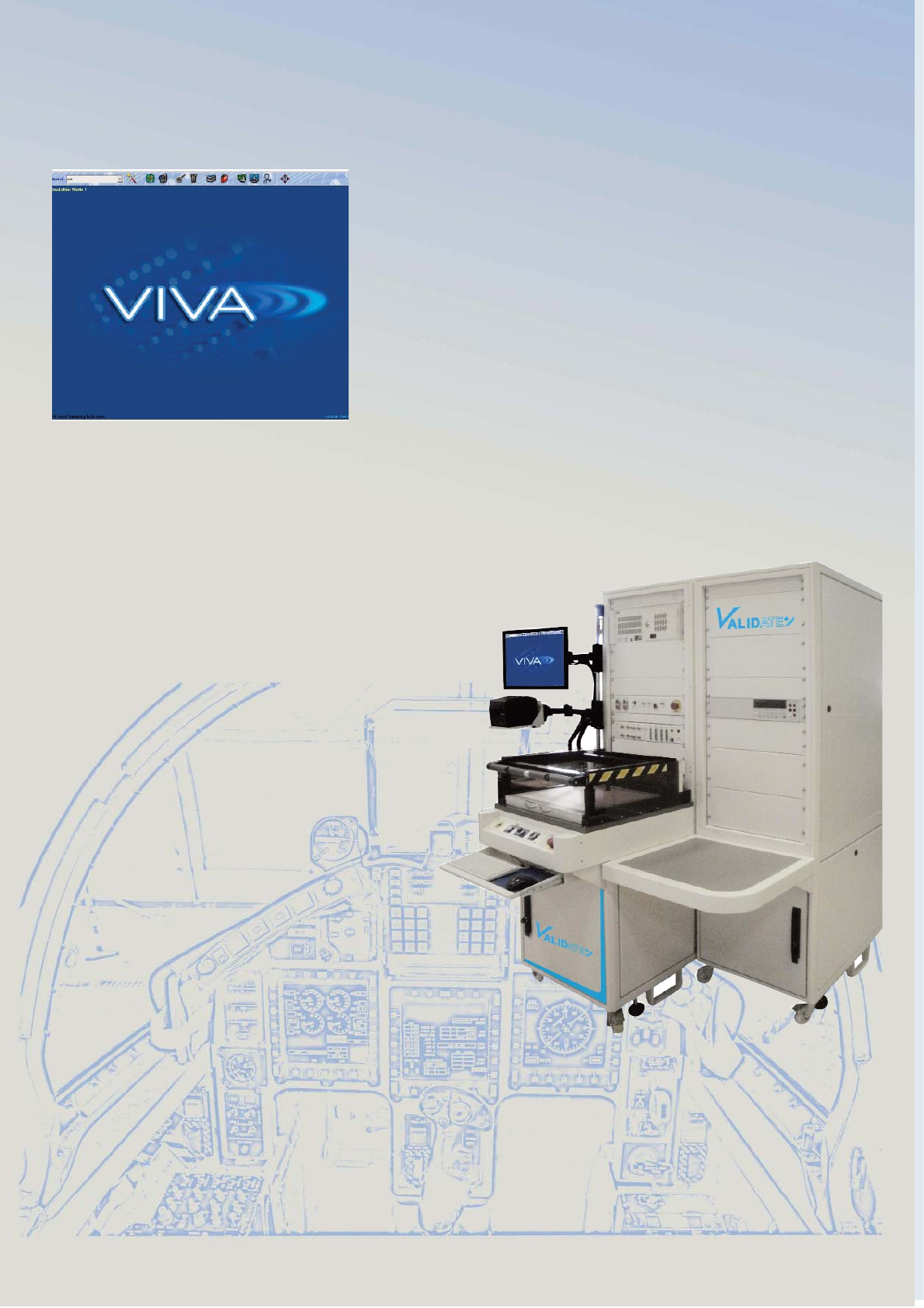
As are all Seica systems, the Valid Line is based on the powerful
VIVA software environment. CAD data can be directly imported
to create a comprehensive data base for test generation,
validation and diagnostics. The board schematic, layout and
nomenclature are dynamically linked and controllable by the
user.
Test steps and source code are also
synchronized during execution to ease debug.
VIVA also includes a number of tools specifically
oriented for functional test generation such as a
simulator for digital test, a Virtual Channel
encoder for 1149.2 cluster test, and a powerful,
hardware-independent test language (NVL). All
of these features enable the test engineer to
completely focus on achieving the desired
results, rather than on resolving limitations of the
software environment.
The complete software architecture of the Valid
Line is based around the Component Object
Model (COM) technology, which enables the
creation of re-usable software components, easily
linkable, to favour a powerful open system
environment. Thus, the Valid Line systems can be
delivered to operate in the environment which is
familiar to the customer, such as N.I. TestStand or
Agilent VEE. Through the use of COM
technology, either VIVA or N.I.
TestStand communicate directly with object
codes, passing events and data at test execution
time. Instrumentation and test sequences can be readily operated under COTS tools, such as Microsoft Visual C++ or
Visual Basic, N.I. LabWindows/CVI or LabView, and others.
Besides full access to the Virtual Instrument tools offered with COTS instruments, the Valid Line offers QuickTest, a
global Virtual Instrument environment, to access all Seica hardware. QuickTest allows the user to graphically interact in
real time’ with the tester hardware and the UUT to create test sequences that can be prepared off-line (hardware
emulation) or directly executed and viewed.
Results can be stored and become part of the overall test program. QuickTest allows technicians to use any part of the
powerful and complex platform of the Valid Line with the same ease that they use any familiar lab instrument, without
requiring knowledge of the system and time-consuming data base preparation.
POWERFUL TEST GENERATION,
VALIDATION, RUN-TIME ENVIRONMENT
COMPREHENSIVE
DIAGNOSTIC TOOLS
Level III test requirements demand precise fault
location in order to speed up operations, reduce
the cost of PCB repair and eliminate scrap. The
Valid Line fully supports guided probe
operations for digital and analog type of circuits
as well as fault dictionary based techniques.
Digital guided probe at speed can be driven by
simulated, or directly learned data. A fault
dictionary can also be used on line, in
conjunction with the guided probe, or off line. In
addition to the proprietary simulation tools, the
Valid Line can also directly post-process LASAR
simulation results.
Analog diagnostics extend the guided probe
algorithms to analog clusters, with analog DC
and AC measurements and automatic trace back
and isolation of the source of the fault.
Valid line
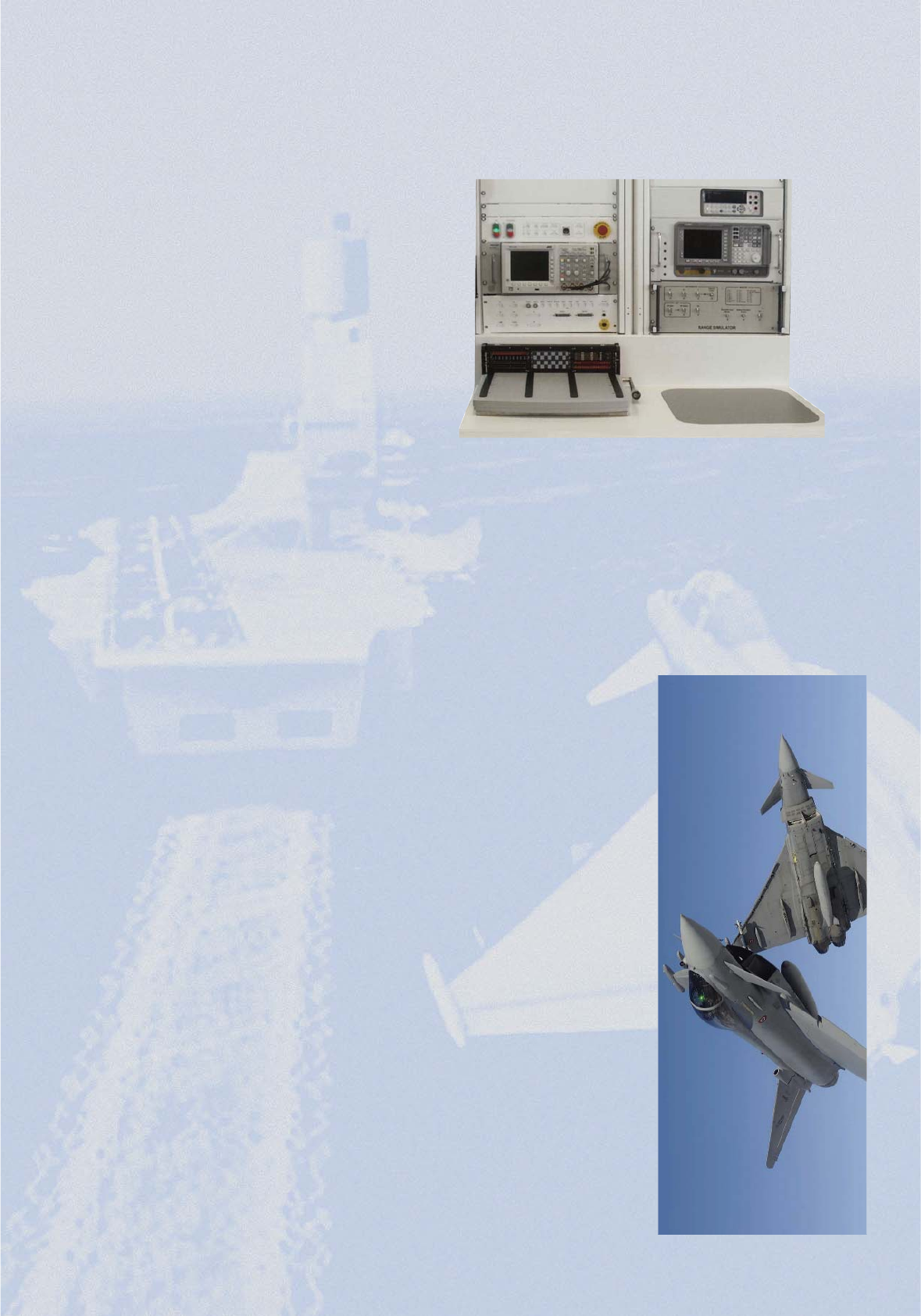
With the Valid Line you are not locked into a single system
configuration. The base system is offered on a vertical
architecture, combining a prestigious looking line with a
high degree of ergonomics essential for operator comfort.
The system includes an ample work/desk area and a flat,
adjustable LCD monitor. The main diagnostic instruments
(manual measurement probes, oscilloscopes, transducers)
are strategically located above the test adapter section.
The System bay can be supplied in the traditional Seica
extra-size, or with the standard 19” dimensions.
If the main utilisation of the system is with bed-of-nails
fixtures, a horizontal work-bench version is offered. In
both cases, expansions are easily accommodated by
adding a second or third bay to host additional
instrumentation.
Optimum scalability of the system is ensured by means of plug-in expansions and upgrades directly in the field.
A version of the Valid, hosted on the ATEC-MT series, is supplied through EADS Test and Services, in partnership with
Seica.
LOW COST MODULAR, COST EFFECTIVE
SYSTEM CONFIGURATION AND ERGONOMICS
Since its creation in 1986, Seica has gained recognition as a trusted supplier of test
equipment and services for defence and aerospace electronics manufacturers and
depots worldwide. All over the world Seica products and services help ensure cost-
controlled Legacy Replacement of obsolete ATE, mission readiness of critical
modules, manufacturing and logistics preparation for future advanced electronics.
Seica’s hardware, software and service approach has made the Valid Line the natural
choice to replace obsolete ATE at Thales, Dassault Aviation, Galileo Avionica, GE,
offering smooth migration and long-term support of existing TPS’s, and state-of-the-
art tools for future developments on avionics such as the Eurofighter Typhoon or the
Rafale.
Continuous technical innovation is driven concurrently by the large presence of
Seica’s solutions on the commercial market, such as the automotive industry, where
Seica has a prominent position, and Seica’s unique philosophy of using a “common”
hardware and software core for all of its products benefits all Seica customers.
The addition of new test technology for one industry is immediately available to
others: one example is Boundary Scan 1149.2 test generation and diagnostics,
which is now present in the Seica platform as a natural extension of functional test
executed on clusters combining physical and virtual access, and not only as a
separate, external tool.
Combining test experience and direct research and development investment with an
open hardware and software approach, Seica offers unconstrained but
comprehensive solutions to its customers. As an example of the appreciation of the
quality of Seica test environment, VIVA has been chosen by EADS North America to
provide comprehensive test development and execution software for their Talon
Instruments™ family of T964™ high-performance digital test instruments.
DECADES OF DEFENCE AND AEROSPACE TEST
EXPERIENCE