VALID-LINE-WEB - 第6页
THE V ALID LINE Designed around a common hardware and software architecture, the V alid Line is offered in several different configurations to address for the customer; ergonomics, test strategy , and deployment from boa…
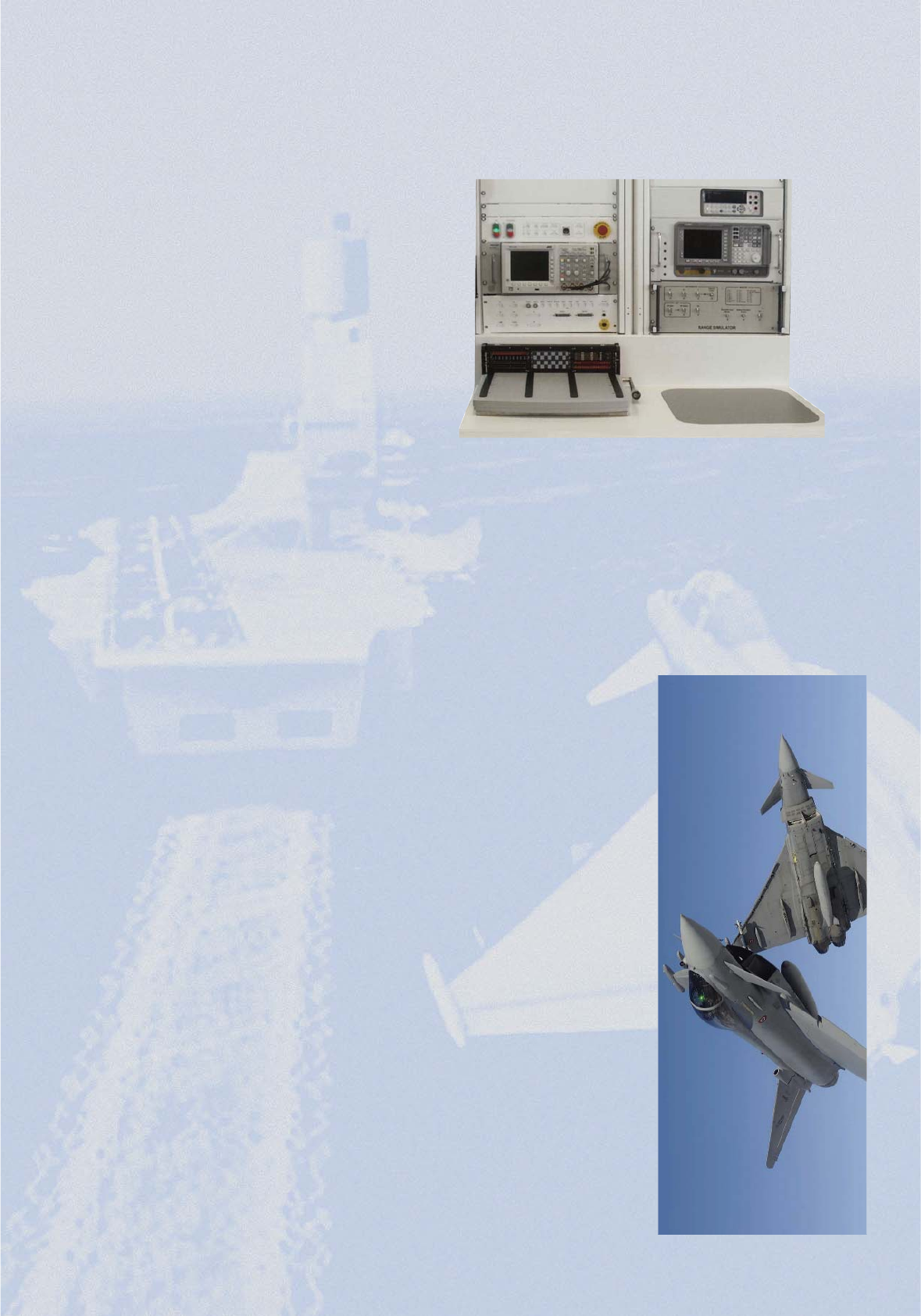
Valid line
With the Valid Line you are not locked into a single system
configuration. The base system is offered on a vertical
architecture, combining a prestigious looking line with a
high degree of ergonomics essential for operator comfort.
The system includes an ample work/desk area and a flat,
adjustable LCD monitor. The main diagnostic instruments
(manual measurement probes, oscilloscopes, transducers)
are strategically located above the test adapter section.
The System bay can be supplied in the traditional Seica
extra-size, or with the standard 19” dimensions.
If the main utilisation of the system is with bed-of-nails
fixtures, a horizontal work-bench version is offered. In
both cases, expansions are easily accommodated by
adding a second or third bay to host additional
instrumentation.
Optimum scalability of the system is ensured by means of plug-in expansions and upgrades directly in the field.
A version of the Valid, hosted on the ATEC-MT series, is supplied through EADS Test and Services, in partnership with
Seica.
LOW COST MODULAR, COST EFFECTIVE
SYSTEM CONFIGURATION AND ERGONOMICS
Since its creation in 1986, Seica has gained recognition as a trusted supplier of test
equipment and services for defence and aerospace electronics manufacturers and
depots worldwide. All over the world Seica products and services help ensure cost-
controlled Legacy Replacement of obsolete ATE, mission readiness of critical
modules, manufacturing and logistics preparation for future advanced electronics.
Seica’s hardware, software and service approach has made the Valid Line the natural
choice to replace obsolete ATE at Thales, Dassault Aviation, Galileo Avionica, GE,
offering smooth migration and long-term support of existing TPS’s, and state-of-the-
art tools for future developments on avionics such as the Eurofighter Typhoon or the
Rafale.
Continuous technical innovation is driven concurrently by the large presence of
Seica’s solutions on the commercial market, such as the automotive industry, where
Seica has a prominent position, and Seica’s unique philosophy of using a “common”
hardware and software core for all of its products benefits all Seica customers.
The addition of new test technology for one industry is immediately available to
others: one example is Boundary Scan 1149.2 test generation and diagnostics,
which is now present in the Seica platform as a natural extension of functional test
executed on clusters combining physical and virtual access, and not only as a
separate, external tool.
Combining test experience and direct research and development investment with an
open hardware and software approach, Seica offers unconstrained but
comprehensive solutions to its customers. As an example of the appreciation of the
quality of Seica test environment, VIVA has been chosen by EADS North America to
provide comprehensive test development and execution software for their Talon
Instruments™ family of T964™ high-performance digital test instruments.
DECADES OF DEFENCE AND AEROSPACE TEST
EXPERIENCE
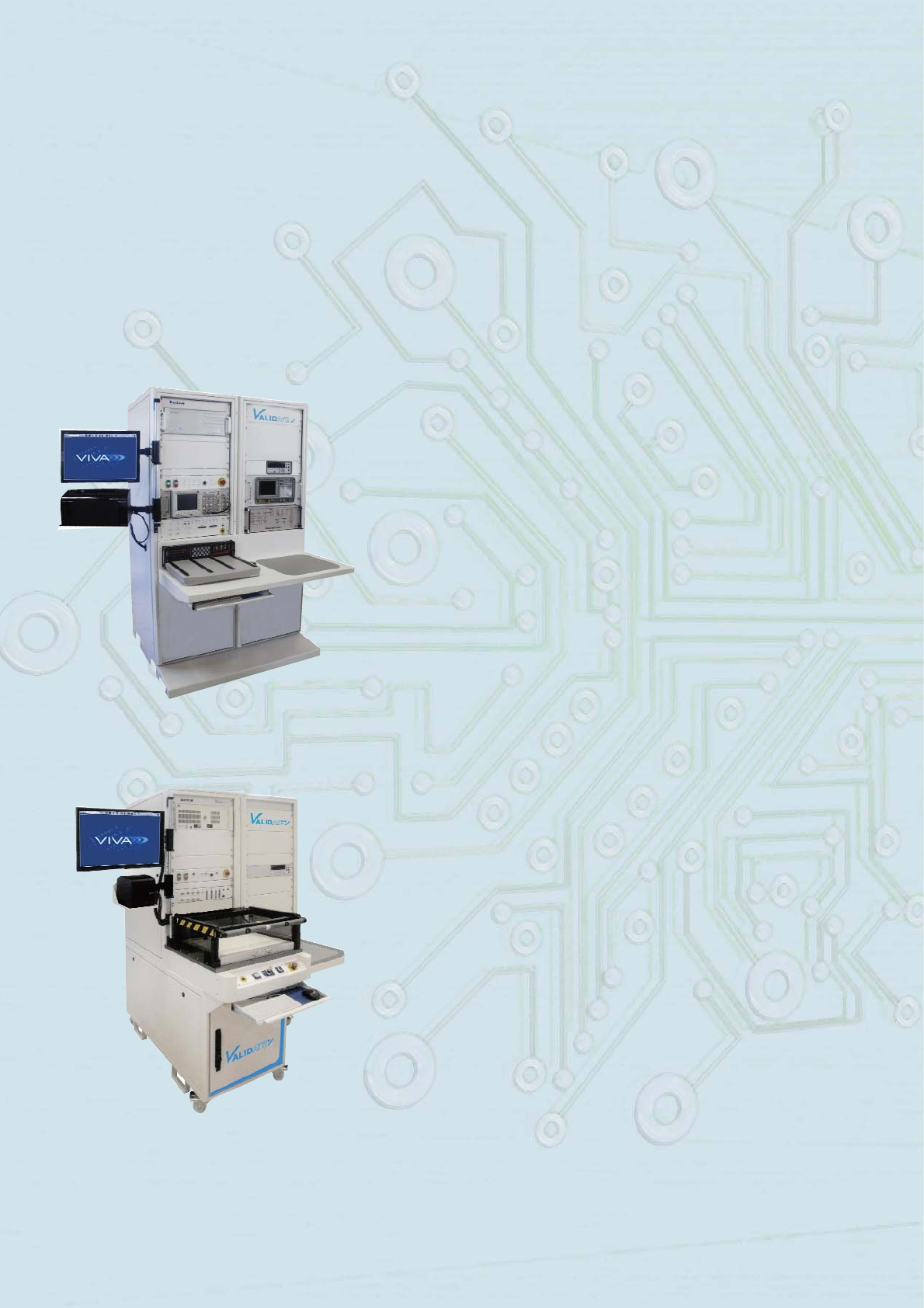
THE VALID LINE
Designed around a common hardware and software architecture, the Valid Line is offered in
several different configurations to address for the customer; ergonomics, test strategy, and
deployment from board depot to full production level test.
VALIDATE AND VALID PLUS BOARD TEST SYSTEMS
FOR LEVEL III
VALIDATE
ValidATE is the architectural implementation of the Valid Line for Level III
(Board Test) applications. The system bay measures 60x96x182 cm and hosts
28 card cage slots using a VIP Test Backplane for a capacity up to 768 digital
(or 384 full hybrids) high performance functional channels. Channel capacity
can be doubled by adding a second VIP Backplane; a larger version of the
system, hosting a 40 slot VIP Backplane(s) is also available. The system is
offered with a standard choice of two types of receivers, the Seica traditional
pin-bed and the ODU, which has a wide variety of extensions for ancillary
connections of high frequency signals, coax, fiber-optics, pneumatic, etc.
Custom receivers to accommodate specific requirements are also readily
engineered. The system can be expanded to accommodate one or two
additional bays for external instrumentation.
VALIDATE PLUS
ValidATE Plus is electrically the same as the ValidATE System. The
ergonomics are changed to best suit the requirements of combined in-circuit
and functional test, when a bed-of-nails fixture is more appropriate. Together
with the ability to thoroughly verify the functionality of digital, analog and
mixed-mode circuitry, the ValidATE Plus can extend its application to power-
off, structural and power-on in-circuit techniques. The system combines
best-in class solutions for board testing to meet performance, capacity and
fault location capabilities. The system takes advantage of all techniques to
reduce test generation cost, without affecting fault coverage or throughput.
Power-off structural tests, using both junction and capacitive techniques, are
first used to isolate simple manufacturing faults. Power-on in-circuit tests, both
analog and digital, including extensions to IEEE 1149 techniques, are then
deployed through the non-multiplexed hybrid channels of the system. Where
required, fast On Board Programming (OBP) operations can be performed.
Finally, the full power of functional test can certify operation of the UUT.
The ValidATE Plus base configuration is a single horizontal bay that
accommodates the system’s power distribution, UUT power supplies and the
test backplane to host various types of channel cards and instrumentation. The
ValidATE Plus is an ideal ergonomic solution to be used with bed-of-nails
fixtures, offering the operator full access control to the UUT, control panel, oscilloscope and system’s PC, as well as a
comfortable area for documentation, schematic and tools. The system can be expanded to accommodate one or two
additional bays for external instrumentation. Standard or custom fixtures are pneumatically (or alternatively vacuum) engaged
into a robust, high performance receiver, granting access through the signal bus of the test backplane to all resources of the
system.
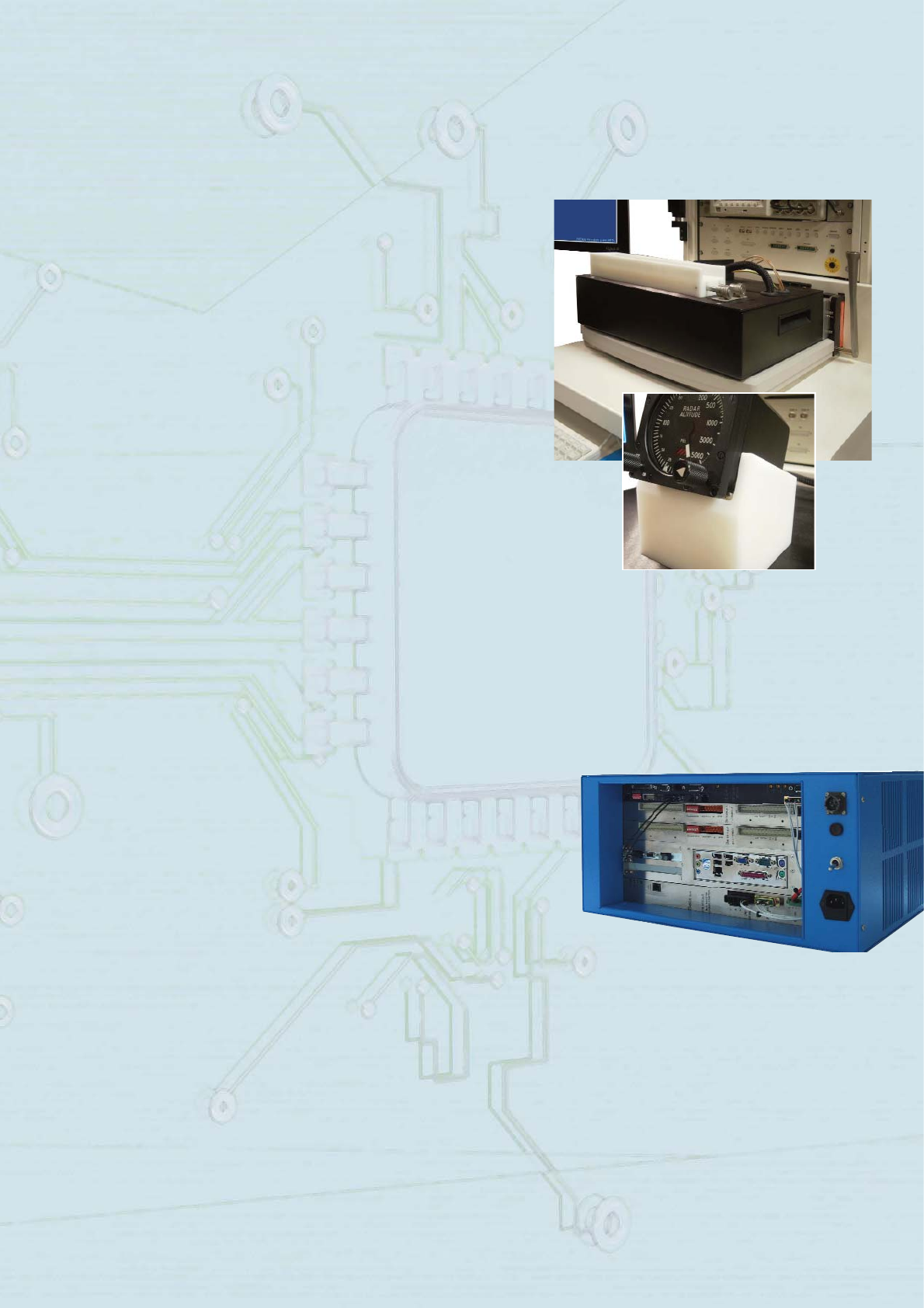
Valid line
LEVEL II: LOW COST MODULAR ARCHITECTURE
Special to Type Test System (STTE) integrators have justified their choice based on cost
advantages potentially offered by targeting the solution on the specific end product
requirements, as opposed to the more general but more expensive General Purpose
ATE (GPATE). In trying to accomodate the multiple requirements of hundreds of LRU
that can be part of a final system, from serial to parallel digital, from LF to RF, from
Optronics to Pneumatic, the cost of instrument, routing and interfacing often exceed
budget limitations. Furthermore, the need to respond to multiple logistic environments,
Factory, Depot or even sheltered in the field, adds to the complexity, hence to the initial
and long term cost of the GPATE solution. Leaner, more agile compact and cost
controlled solutions are therefore offered by STTE, with the added attractive of in-house
possible realisation. But this is at the expense of limited, unflexible architectures. This
also generates a proliferation of different ATE. And the overall cost, if measured on the
life of the product, adding documentation, support, adaptations and re-engineering,
obsolescence, ends up to be much more than what expected.
The purpose of Seica's Low Cost Modular ATE (LCMA) is to offer the capability,
performance and flexibility of GPATE with the agility, scalability and cost control that can
make it competitive to a wide range of STTE solutions.
The CORE of the Seica's LCMA is based on Valid LF and Digital stimuli/masurement instrumentation
and routing, offering high performance and large capacity to meet parallel LRU Test Requirements.
Proprietary hardware is combined with GPIB, VXI, PXI or PCI Plug-and-Play COTS instruments as
required, for digital serial and HF LRU requirements. Signal routing architectures provide a three
dimensional way to connect both internal and external instrumentation at a glance.
For best signal integrity stimuli and responses are connected to the fixture and then to the UUT using
highperformance receivers like Virginia Panel VP12.
The system offers the ability to be fully controlled under the powerful VIVA Test Environment, to elect instead for other COTS Test Environments
(like NI TestStand, or HP VEE) or to combine the best of the two under control of SuperVIVA.
The result is a system offering performance, flexibility and capacityty of GPATE, within a scalable architcture and overal cost of ownership
competitive with STTE products. LCMA allows to create, around a CORE of proved hardware and software, a proven solution to meet AUDIO,
VIDEO, RF, OPTRONICS or PNEUMATIC LRU test requirements.
VALID PTE
The PTE-100 Portable Test Equipment is a powerful, flexible and transportable
Intelligent Break Out Box designed to provide checkout, test and troubleshooting
for critical parts of transportation electronic systems. The PTE-100 offers test
personnel direct access to electrical signals for probing, voltage injection, isolation
checks, voltage/current and time/frequency measurements. It offers the ability to
analyze HOT and LOADED circuits, verifying missing, corrupted or valid signals.
Electrical verification activities become more efficient, repeatable and safe, thanks
to the introduction of software controlled test sequences that reduce human error
and guide diagnostic routines. Using the same advanced instrumentation of the
Valid Line, the PTE-100 can be configured to control up to 256 connections. The front panel, which can be customized to specific
applications, offers two lines of connectors (A and B) where the (normally connected) unit under test can be split and routed. The
PTE-100,inserted between the split parts, allows hot connection and disconnection operations, signal measurements and signal
injections. Each pin of the line A or B has access to an independent 4-line bus (8 lines when connected together) going to the
stimulus/measurement unit of the system (the ACL unit). Up to 256 channels can be configured, with 500V/2A carrying
voltage/current and 30VDC/200VAC/2A hot switching. Test generation and run time are controlled via the powerful QuickTest
environment, which is suited for two main modes of operation: as an instrument or as an automatic tester. The interactive display
of the stimulus/measurement/connection scenario offers menu-driven programming, direct execution, and oscilloscope
visualisation of each of the test operations. While in instrument mode, the user has full, immediate, direct control of each step by
step action; the automatic mode allows storage of the sequence of operations into a series of instructions, which can be modified
or enriched, and used for self-documentation or executed by non-skilled operators. Without limiting flexibility, the system includes
robust, customizable rules-driven procedures to avoid damaging the unit under test or the PTE-100 itself.
Housed in a 590x285x430mm chassis, and weighing approximately 20 kg,, makes it easy to transport in a carrying case. The PTE-
100 is ideally suited for Level 1 applications in commercial and military programs for avionics, ships and transportation.
LEVEL I