Autosite_Users_Manual.pdf - 第116页
Trans lati on Form ats B-18 AutoSite User Manual LOF Fiel ds The following fields are included in Data I/O’s implementation of the LOF for mat: * These fields are already define d as part of the JEDEC standard and will n…

Translation Formats
AutoSite User Manual B-17
LOF Format, Code 17
The Link Object Format (LOF) is an extension of the standard JEDEC data
translation format and is used to transfer fuse and test vector data between
the programmer and a host computer. LOF is designed to support the
Quicklogic QL8x12A family of FPGAs. An LOF data file is stored as an
imploded ZIP file, which yields data compression approaching 95%.
Note: The specification for the ZIP data compression algorithm allows for
multiple data files to be compressed into one ZIP file. In addition, the ZIP
data compression algorithm allows for multiple types of data compression.
The programmer's implementation of UNZIP supports only imploded
data files and will extract only the first file in a ZIP file. All remaining
files in the ZIP file will be ignored, as will all files not stored in the
imploded format.
The LOF format contains both a subset and a superset of the JEDEC
format described in this chapter. This section describes only the fields
that are extensions of the JEDEC standard or that are unique to the LOF
format. See the section explaining the JEDEC format for information on
the standard JEDEC fields. See page B-34 for information on obtaining a
copy of the JEDEC Standard 3A.
LOF Field Syntax
The LOF character set consists of all the characters that are permitted with
the JEDEC format: all printable ASCII characters and four control
characters. The four allowable control characters are STX, ETX, CR
(Return), and LF (line feed). Other control characters, such as Esc or Break,
should not be used.
Note: This is Data I/O Corporation's implementation of Quicklogic's Link
Object Format. Contact Quicklogic for a more in-depth explanation of the
format and its syntax.

Translation Formats
B-18 AutoSite User Manual
LOF Fields
The following fields are included in Data I/O’s implementation of the
LOF format:
* These fields are already defined as part of the JEDEC standard and will not be
defined in this section.
<STX> * Start of Data (ASCII Ctrl-B, 0x02 hex)
C * Fuse Checksum
K Fuse data, followed by control words and pulse
link cycles
N * Notes Field
QB Number of bits per word
QC Number of control words at the end of each K
field
QF Number of Fuses in Device (# of K fields)
QM Number of macro cells in the data file
QP * Number of Device Package Pins
QS Number of Hex-ASCII words in each K field
and each control word
QV * Maximum Number of Test Vectors
R Signature Analysis (reserved for future use)
SSpDE Checksum
T Signature Analysis (reserved for future use)
V * Test Vectors (reserved for future use)
X * Default Test Conditions (reserved for future
use)
<ETX> * End of Data (ASCII Ctrl-C, 0x03 hex)
Translation Formats
AutoSite User Manual B-19
ASCII Octal and Hex Formats, Codes 30-37 and 50-58
Each of these formats has a start and end code, and similar address and
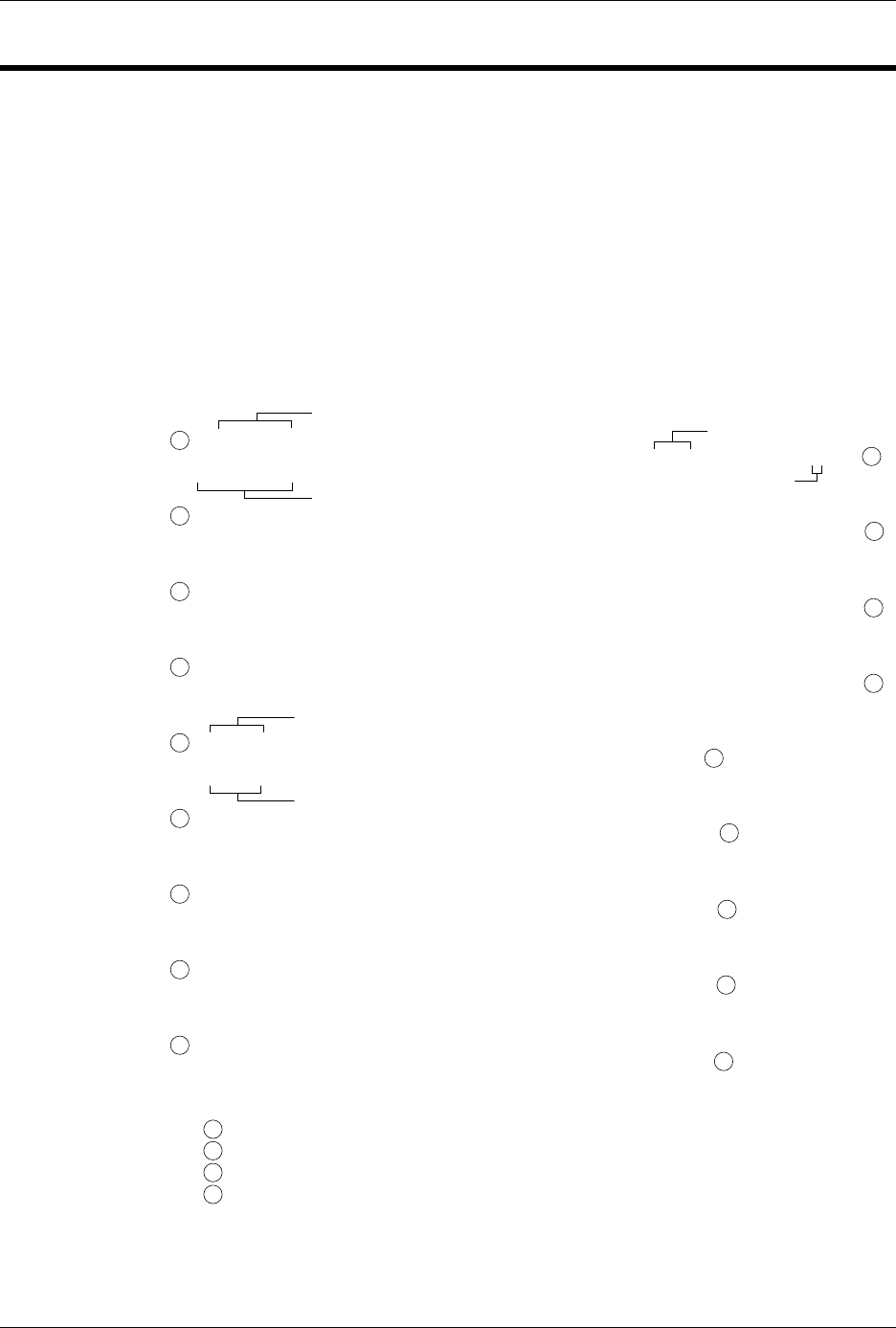
checksum specifications. Figure B-6 illustrates 4 data bytes coded in each
of the 9 ASCII Octal and Hexadecimal formats. Data in these formats are
organized into sequential bytes separated by the execute character (space,
percent, apostrophe, or comma). Characters immediately preceding the
execute character are interpreted as data. ASCII Octal and Hex formats
can express 8-bit data, by 3 octal or 2 hexadecimal characters. Line feeds,
carriage returns, and other characters may be included in the data stream
as long as a data byte directly precedes each execute character.
Figure B-6
An Example of ASCII Octal and Hex Formats
$A000000,
377 377 377 377 377 377 377 377 377 377 377 377 377 377 377 377
$S007760,
$A000000,
377%377%377%377%377%377%377%377%377%377%377%377%377%377%377%377%
$S007760,
$A000000,
377'377'377'377'377'377'377'377'377'377'377'377'377'377'377'377'
$S007760,
$A000000,
377'377'377'377'377'377'377'377'377'377'377'377'377'377'377'377'
$S007760,
$A0000,
FF%FF%FF%FF%FF%FF%FF%FF%FF%FF%FF%FF%FF%FF%FF%FF%
$S0FF0,
$A0000,
FF FF FF FF FF FF FF FF FF FF FF FF FF FF FF FF
$S0FF0,
$A0000,
FF'FF'FF'FF'FF'FF'FF'FF'FF'FF'FF'FF'FF'FF'FF'FF'
$S0FF0,
$A0000,
FF,FF,FF,FF,FF,FF,FF,FF,FF,FF,FF,FF,FF,FF,FF,FF,
$S0FF0,
$A0000,
FF'FF'FF'FF'FF'FF'FF'FF'FF'FF'FF'FF'FF'FF'FF'FF'
$S0FF0,
1
1
1
2
1
1
1
1
2
4
4
4
3
4
4
4
3
4
FORMAT 30 (OR 35)
FORMAT 31 (OR 36)
FORMAT 32
FORMAT 37
FORMAT 50 (OR 55)
FORMAT 51 (OR 56)
FORMAT 52
FORMAT 53 (OR 58)
FORMAT 57
Optional Octal Address Field (Typical)
Optional Octal Sumcheck Field (Typical)
Octal Data Byte (Typical)
Execute Character
Optional Hex Address Field
Optional Hex Sumcheck Field
LEGEND
Start Code is nonprintable STX - CTRL B (optionally SOH - CTRL A)
Start Code is nonprintable SOM - CTRL R
End Code is nonprintable EOM - CTRL T
End Code is nonprintable ETX - CTRL C
1
2
3
4
0078-2