00197467-01_SM_DLM3-4_Kunde_en.pdf - 第76页
Settings Vacuum Test 76 Service Manual SIPLACE Placement Heads DLM3/DLM4 Vacuum test with closed nozzle (example of SW60x shown) ► Start S ITEST and per form the first re ference run, if required. ► Select the gantry for…
Settings
Vacuum Test
Service Manual SIPLACE Placement Heads DLM3/DLM4 75
5.9
5.9 Vacuum Test
Vacuum Test
Damage to the valve plunger, silicone hose, the vacuum plate, in or on the nozzle can lead to leakage
which may then cause malfunctions during the placement process or which may reduce the vacuum val
-
ue in the holding circuit.
Parts, equipment and tools
Vacuum test
Equipment required
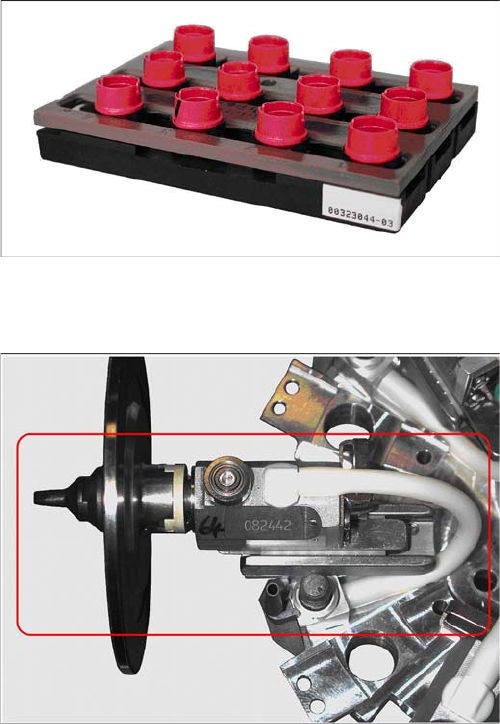
Closed nozzle tips are required for checking the complete
vacuum circuit.
The special nozzle use for this is marked red and does
not have a nozzle configuration on it:
▪ SOKO nozzle for vacuum test DLM [03067029
-
xx]
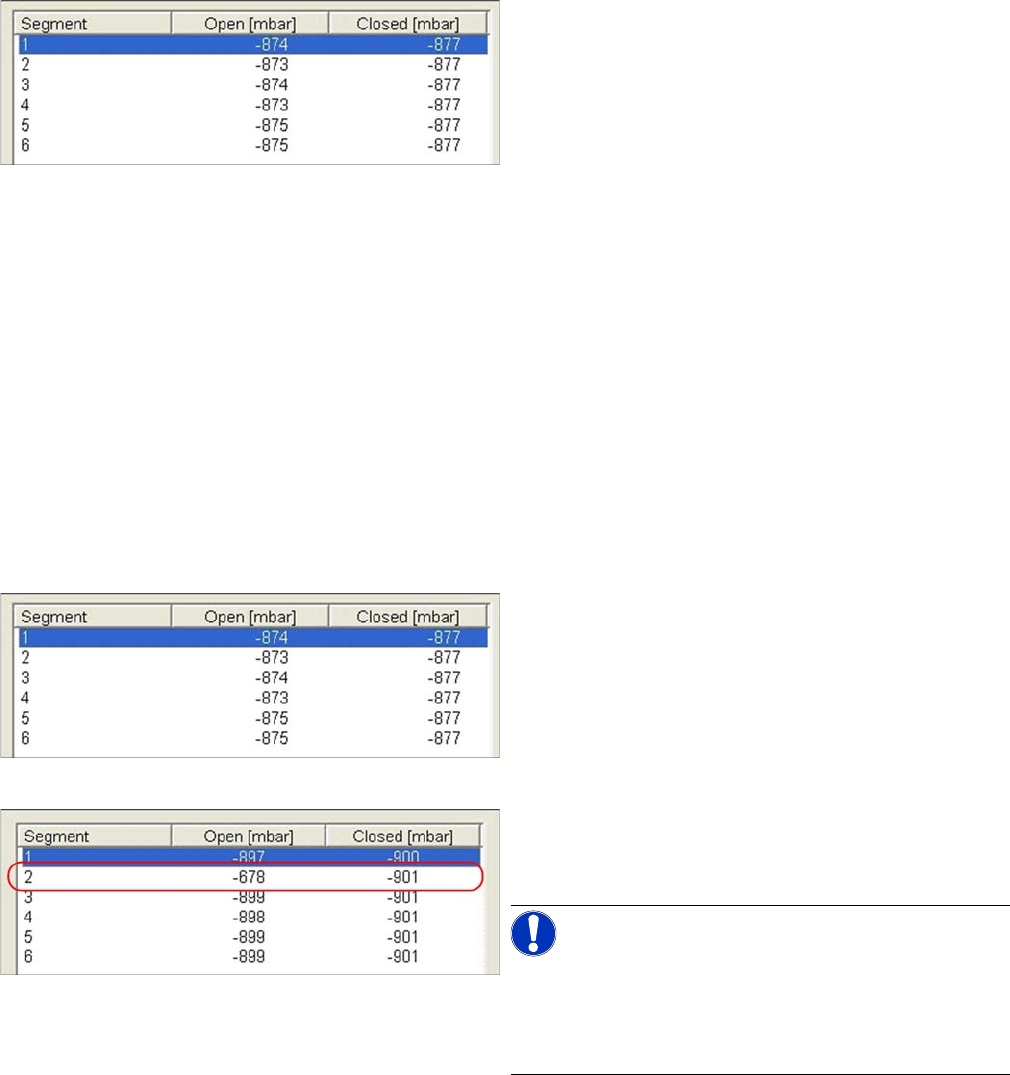
Vacuum test with normal nozzle configuration
▪ The vacuum tests in the station software only check
the area from the vacuum generator to the valve
plungers.
▪ The area visible here (red frame), from the valve
plunger housing via the silicone hose into the seg
-
ment housing and through the sleeve to the nozzle is
not covered by the normal vacuum test.
Settings
Vacuum Test
76 Service Manual SIPLACE Placement Heads DLM3/DLM4
Vacuum test with closed nozzle (example of SW60x
shown)
► Start SITEST and perform the first reference run, if
required.
► Select the gantry for the required vacuum test on the
C&P6/12.
► Place all the nozzles for the placement head in the
nozzle changer.
► Replace the full magazine at one magazine position
with the magazine holding the test nozzles
[03067029-xx].
► Go to the Nozzle on head for segment 1 menu and
select the nozzle type which was originally configured
for this magazine position.
► Activate the checkbox All segments as segment 1.
► Pick up the vacuum test nozzles with all segments.
► Select the vacuum test menu and perform a vacuum
test.
► The error message vacuum difference open too low
must be ignored here.
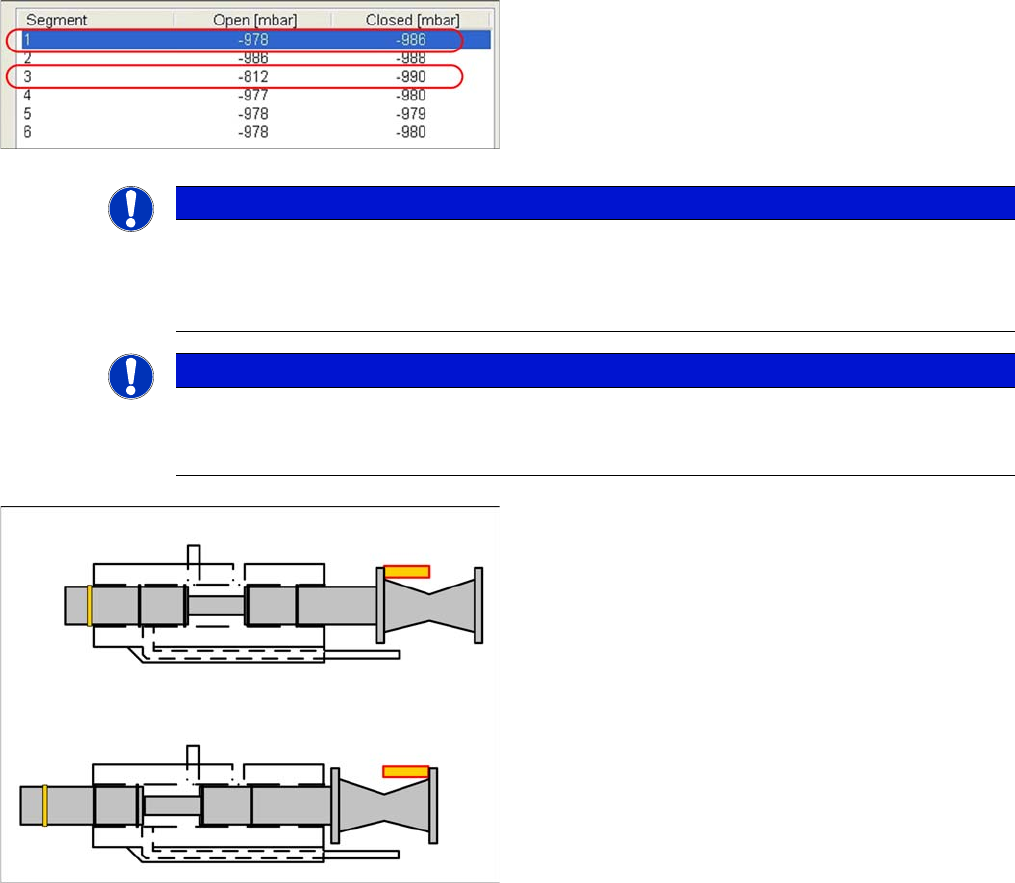
▪ The measurement values show that open values de
-
viates by up to 3 mbar from the closed values.
▪ However, this is within the tolerance of 5 mbar, in
which correct function can be reliably assumed.
► If this tolerance value is exceeded, check the valve
plunger and vacuum plate. Replace these a a precau
-
tion, if necessary.
Scenario 1
Example of faulty vacuum values, which indicate a dam
-
aged vacuum plate at segment 2 here.
NOTICE!
Irreparably damaged vacuum plate
If both measurements for a particular segment are
around 640mbar, this indicates that the vacuum plate is
irreparably damaged.
Settings
Vacuum Test
Service Manual SIPLACE Placement Heads DLM3/DLM4 77
Scenario 2
Example of defective vacuum values, which indicate a
damaged silicone hose on segment 1 and an open nozzle
at segment 3.
NOTICE
Silicone hose defect
Under certain circumstances, silicone hose defects might only be detected when the segments
are moved out. It could therefore be advisable to release the Z axis and to perform a vacuum
test of the segment in its lowered state (single measurement run).
NOTICE
Missing valve plunger
If both measurements for a particular segment are only around 210mbar, this indicates that the
valve plunger is missing.
Vacuum values and valve plunger positions
▪ If the valve plunger is in position "nozzle open" the
vacuum area is sealed by two seal rings against the
atmosphere.
▪ If the valve plunger is in position "nozzle closed" the
vacuum area is sealed by only one seal ring (at the
rear next to the motor).
If the "vacuum value closed" is too low, this indicates that
the seal is not sufficiently greased or that it is damaged.