Maintenance Reference(CP45FV) Eng.pdf - 第102页
Samsung Component Placer CP45FV Series Maintenance Guide T able 7-4. W arning List Warning Name Contents Overload Effective torque is exceedi ng setting torque. Regenerative overload Overload of regenerative resistor Loa…
Inspection of the Controller
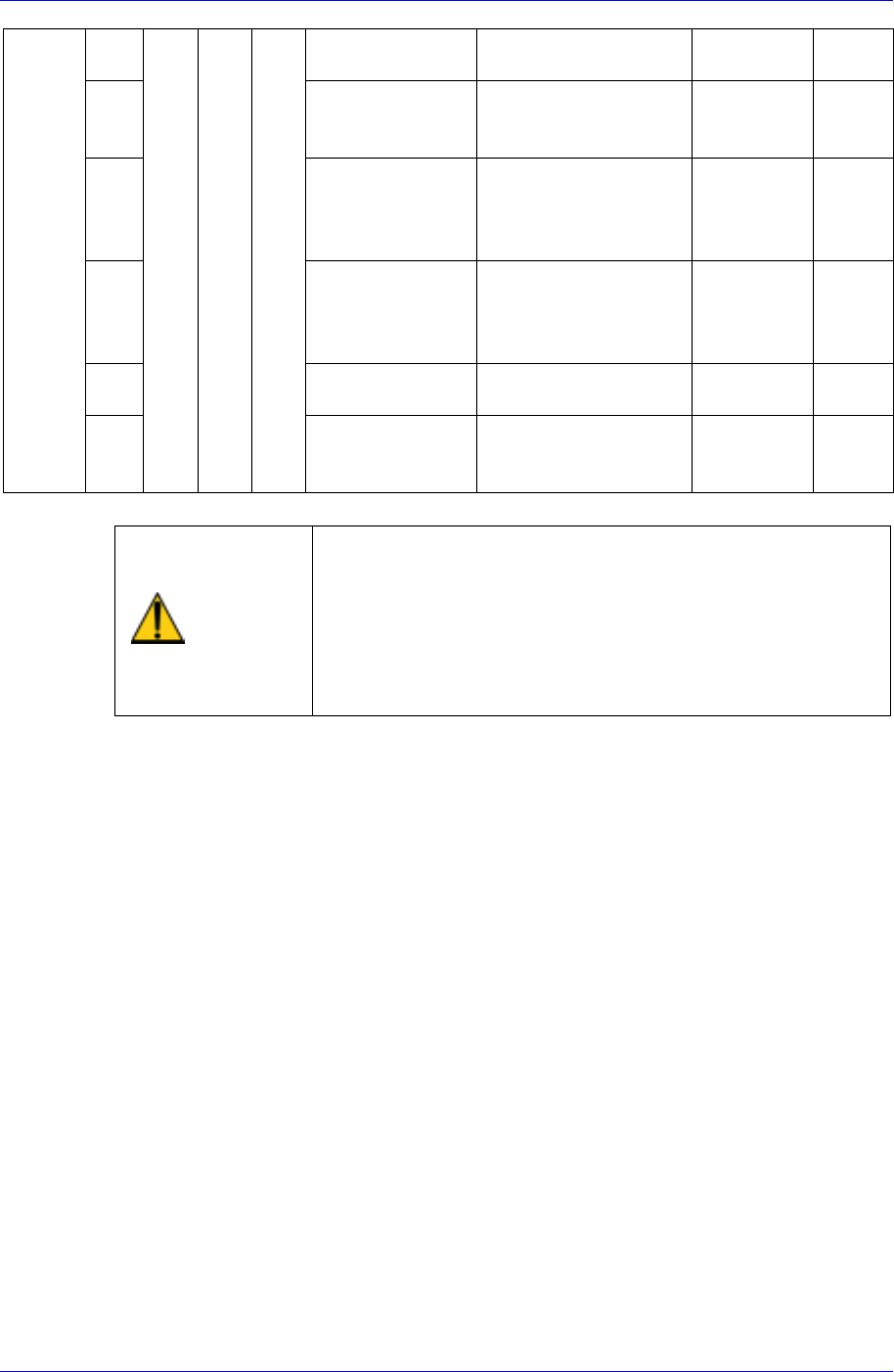
E3H
Internal RAM error The error of access to
RAM built in CPU
- No
E4H
Precess error
between CPU and
ASIC
The error of access
between CPU and ASIC
- No
E5H
Parameter error 1 Detect when designation
the amplifier, motor or
encoder code which is not
yet coped or defined.
- No
E6H
Parameter error 2 Faulty combration of
motor, encoder, and
amplifier code set in
system parameter
- No
F1H
Task process error Faulty CPU interruption
process
DB No
F2H
Initial time-out Detect when the initial
process does not finish
within the spected time.
- No
Caution
Note1
The alarm which is occurred at the time of the test mode
finish is not recorded in the alarm history.
Note2
When motor speed drops at the same tome as Servo ON,
disconnection of motor power line may not be detected.
7-31
Samsung Component Placer CP45FV Series Maintenance Guide
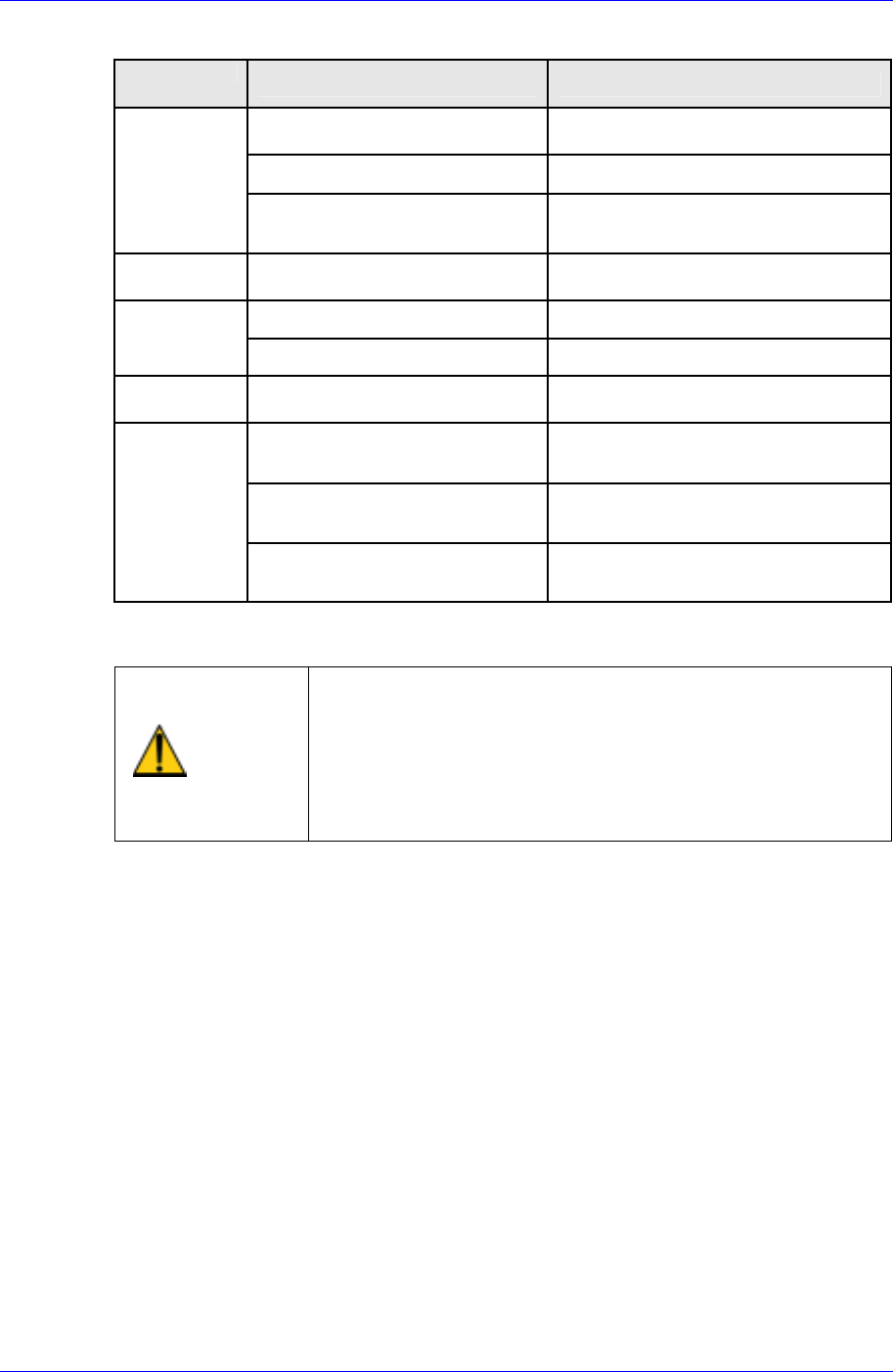
Table 7-4. Warning List
Warning Name Contents
Overload
Effective torque is exceeding setting
torque.
Regenerative overload Overload of regenerative resistor
Load
Amplifier overheat
Amplifier’s ambient temperature
exceeds the setting range.
Power
Supply
Main circuit charging
Main circuit voltage is 105VDC or
more
Forward over-travel Forward over-travel is being input.
External
Input
Backward over-travel Backward over-travel is being input.
Encoder
Absolute encoder battery
warning
Battery voltage is 3.0V or less.
Under torque command control
Torque command is being controlled
at torque limit value.
Under velocity command
control
Velocity command is being
controlled at velocity limit value.
Control
Position deviation exceeding
Position deviation warning setting
value is being exceeded.
Note)For warning display, see 8-4
Caution
While a warning is detected, the normal operation can be
held. However, if the condition is going on, the alarm may
occur. Review the operational condition before alarm
occurrence.
A warning is not latched at the time of detection. Without
warning, it is automatically released.
7-32
Inspection of the Controller
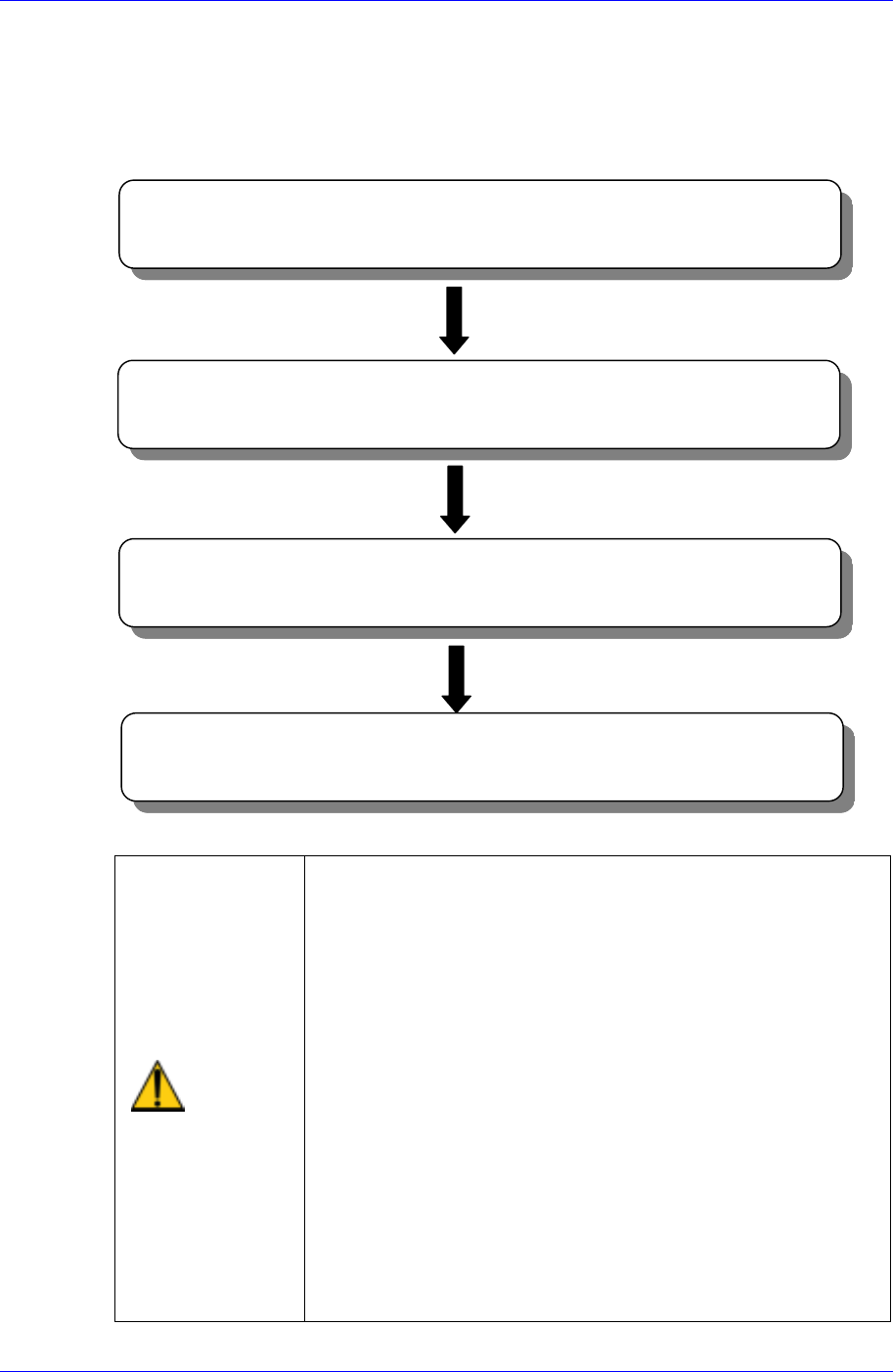
7.9.1.2. Troubleshooting in case of Alarm Occurrence
When an alarm occurs, take the corrective measures according to each alarm display in
the following procedure.
2. T
Caution
It is highly dangerous to proceed with an investigation into
the causes of a malfunction.
Without ensuring the safety of the servo amplifier, motors,
mechanical devices and the surrounding area.
Understanding the conditions prevailing at the time of a
malfunction will help to specify roughly those causes of the
malfunction and shorten the troubleshooting process.
Ensure that it is safe to do so before attempting to reenact
the malfunction, and pay close attention to the prevailing
conditions during the reenactment.
In replacing Servo Amplifier and Servomotor, confirm that
there should be no conditions causing any trouble in order
to prevent double faults.
Please consult your Sanyo Denki dealer should the
malfunction persist even after following the troubleshooting
procedures recommended in this guide. As for where to
make contact, refer to the back cover of this manual.
1. See the consensus status in the “Operating State when Alarm
Occurred” and find the “High” in the possible cause number.
ake the corrective measures in the “Corrective Measures”
corresponding to the number above (with “High”).
3. If the malfunction persists after the above process, take the
corrective measures of number with “Low”.
4. If the malfunction still persists after No.3 above, consult with us.
7-33