semi合集-English.pdf - 第1725页
SEMI E41-95 © SEM I 1995 8 9 P OSTE D Reporting disabled. NOT POSTED 10 not EXSTAT E Default entry into recovery concu rrent state at ini tial exceptio n conditio n creation. NOTRECOVERING 11 NOTRECOV ERING “EX Recover” …
SEMI E41-95 © SEMI 19957
the recovery action activities as quickly as possible.
The abort command terminates the recovery action.
8.2 Exception Condition State Model — The behavior
required for exception management is fully specified by
the exception agent (service-provider) behavior. This is
described by the exception agent exception condition
state model. All required decision authority (service-
user) behavior is inferred by this model.
Message flow diagrams presented in the previous
section are useful to show simple situations. The
exception condition state model presented in this
section provides the information necessary to
extrapolate the message flow diagrams for all situations
within the scope of this standard.
The exception condition provides for exception agent
reporting on an abnormal situation in the equipment and
management of a recovery action requested by the
decision authority to resolve the situation. Recovery is
requested in the context of a particular exception
condition so the recovery action behavior forms a part
of the exception condition behavior.
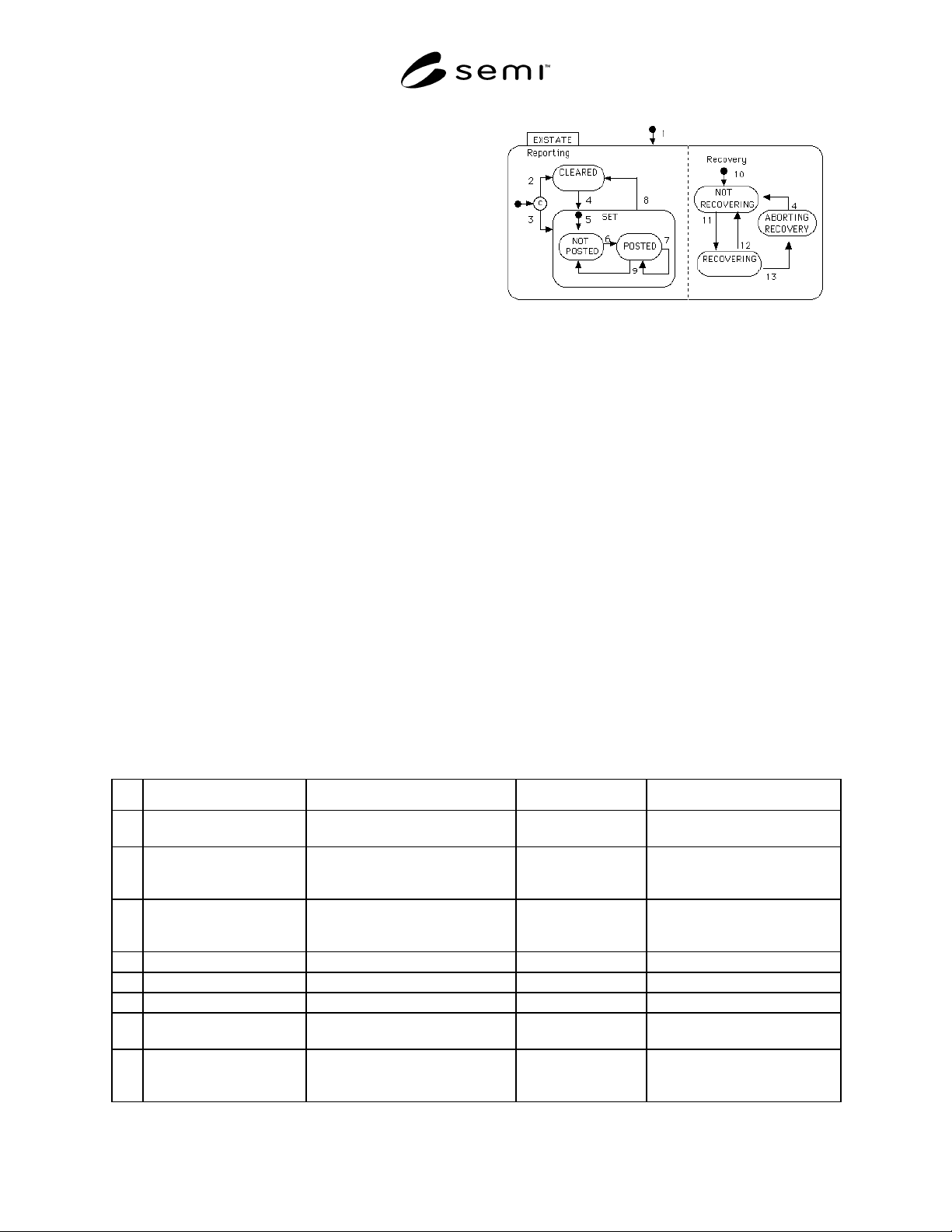
Figure 3 shows the state diagram for an exception
condition. The Harel state model notation used is
described in Conventions, Section 5.1. The
corresponding state transition table is shown in Table 1
on the following page.
Figure 3
Exception Condition State Model
The detailed state definitions follow:
EXSTATE — When created by the exception agent, an
exception condition enters the EXSTATE. It is in this
state as long as it is in existence, irrespective of
association to the decision authority. The exception
condition has two concurrent subsets, which together
fully describe its state. These subsets are Reporting and
Recovery.
The exception condition initializes to the SET state if
the abnormal situation related to the exception
condition is apparent and relevant; otherwise, it
initializes to the CLEARED state.
Reporting — Reporting is one concurrent subset of
EXSTATE. It includes the substates describing whether
the abnormal situation related to the exception
condition is apparent and relevant, and whether the
latest information on the situation has been reported.
Table 1 Exception Condition Transition Table
# Current State Trigger New State Action(s)
1 not EXSTATE The exception agent creates the
exception condition.
EXSTATE
2 not EXSTATE Initial creation and the abnormal
situation is either not apparent or
irrelevant.
CLEARED
3 not EXSTATE Initial creation and the abnormal
situation is both apparent and
relevant.
SET
4 CLEARED The abnormal situation is detected. SET
5 not SET Default entry into SET state. NOT POSTED
6 NOT POSTED Reporting enabled. POSTED Send “EX Post” message.
7 POSTED Change in the list of possible
recovery actions.
POSTED Send “EX Post” message.
8 SET The abnormal situation is either no
longer apparent or has become
irrelevant.
CLEARED Send “EX Cleared” message.

SEMI E41-95 © SEMI 1995 8
9 POSTED Reporting disabled. NOT POSTED
10 not EXSTATE Default entry into recovery
concurrent state at initial exception
condition creation.
NOTRECOVERING
11 NOTRECOVERING “EXRecover” message received
while in the SET state and accepted.
RECOVERING Initiate requested recovery action
and execute to completion.
12 RECOVERING Recovery action completed. NOTRECOVERING Send “EX Recovery Complete”
message.
13 RECOVERING “EXRecoveryAbort” message
received.
ABORTING-
RECOVERY
Perform the abort procedure to
terminate the recovery action in
progress.
14 ABORTING-RECOVERY Abort procedure is complete. NOTRECOVERING Send “EX Recovery Complete”
message.
CLEARED — The abnormal situation related to the exception condition is either not apparent or not relevant.
SET — The abnormal situation related to the exception condition is apparent and relevant.
The exception agent should generate a collection event each time an exception condition transitions from
CLEARED to SET and another from SET to CLEARED.
NOT POSTED — The latest information on the detected abnormal situation has not yet been reported by the
exception agent. This may be transient on entering the SET state or may be because reporting is disabled. NOT
POSTED is the default state when entering the SET state.
POSTED — The latest information on the detected abnormal situation has been reported by the exception agent to
the decision authority.
Recovery — Recovery is one concurrent subset of EXSTATE. It includes the substates describing the behavior in
relation to exception condition recovery actions.
NOTRECOVERING — In the NOTRECOVERING substate, there is no recovery action in progress directly related
to the exception condition. NOTRECOVERING is the default state when an exception condition is initially created.
Recovery actions may only be initiated when the exception condition is in the SET state.
RECOVERING — A recovery action related to the exception condition is in progress when in the RECOVERING
state.
ABORTINGRECOVERY — In the ABORTINGRECOVERY substate, the abort procedure is performed to
immediately terminate the recovery action. It is the responsibility of the exception agent to cease physical activity as
quickly as possible, having achieved a safe condition.
9 Object Definitions
Exception management defines one standard object, the Exception Condition.
9.1 Exception Condition Object Definition — The exception condition is a persistent object created by the
exception agent. It provides the decision authority with reporting on, access to, and the possibility to direct
resolution of an abnormal situation detected. It also tracks progress of a requested recovery action. The exception
condition is uniquely identified by the EXID attribute.
The object attribute notation used in Table 2 is described in Conventions, Section 5.2.
Table 2 Exception Condition Attributes
Attribute Name Definition Rqmt Access Form
ObjType The object type. Y RO Text:
“EXCEPTION”
ObjID Exception agent unique identifier for the
exception condition.
YROText:
Unique with respect to the exception agent.

SEMI E41-95 © SEMI 19959
EXType Identifies the type of exception condition. Y RO Enumerated:
AlarmError
EXMessage Text message describing the abnormal
situation monitored.
YROText
EXEnabled Indicates that reporting to the decision
authority on the exception condition is
enabled.
Y RW Boolean:
TRUE – Enabled
FALSE - Disabled
EXRecActList List of possible recovery actions. N RO List of:
Text
EXStateList All concurrent sub-states of the exception
condition according to the state model in
Figure 3.
Y RO List of:
Text
EXRecoveryAction Recovery action which may be requested to
resolve the abnormal situation.
NROText
EXState A unique sub-state of the exception
condition according to the state model in
Figure 3.
YROText:
EXSTATE/CLEARED
EXSTATE/SET/NOTPOSTED
EXSTATE/SET/POSTED
EXSTATE/NOTRECOVERING
EXSTATE/RECOVERING
EXSTATE/ABORTINGRECOVERY
10 Messaging Services Detai l
This section defines the messaging services required to implement the exception management concepts. The
messages were introduced in Section 8.1. These services are independent of the messaging protocol used. They may
be mapped to SECS-II (SEMI-E5) or to other comparable protocols.
These messaging services define the messages to be used, the nature of the parameters contained within the
messages, and data type of the parameters. Not defined here is the internal structure of the actual messages as
transferred, including order of the parameters and how various data structures and data types are represented.
The service message notation used in the tables below is described in Conventions, Section 5.3.
10.1 Service List — The messages shown in Table 3 are exchanged between service-provider and service-user for
the purpose of accomplishing exception management tasks.
Table 3 Service List
Message Name Type Description
EXPost N Notification by the exception agent that the abnormal situation related to the exception
condition has been detected or significant information has changed while the situation exists.
EXCleared N Notification by the exception agent that the abnormal situation related to the exception
condition is no longer apparent or relevant.
EXRecover R Decision authority request that a particular recovery action be performed.
EXRecoveryComplete N Notification by the exception agent that a recovery action has completed.
EXRecoveryAbort R Decision authority request that a recovery action be terminated immediately.