semi合集-English.pdf - 第2274页
SEMI E81-0600 © 1999, 2 000 11 6.4.12 A s Figure 5 shows , t he CIM F r a me work specifies MES interfaces enabling integration between MES components, that is integration within the MES. The CIM Framew or k does n ot di…
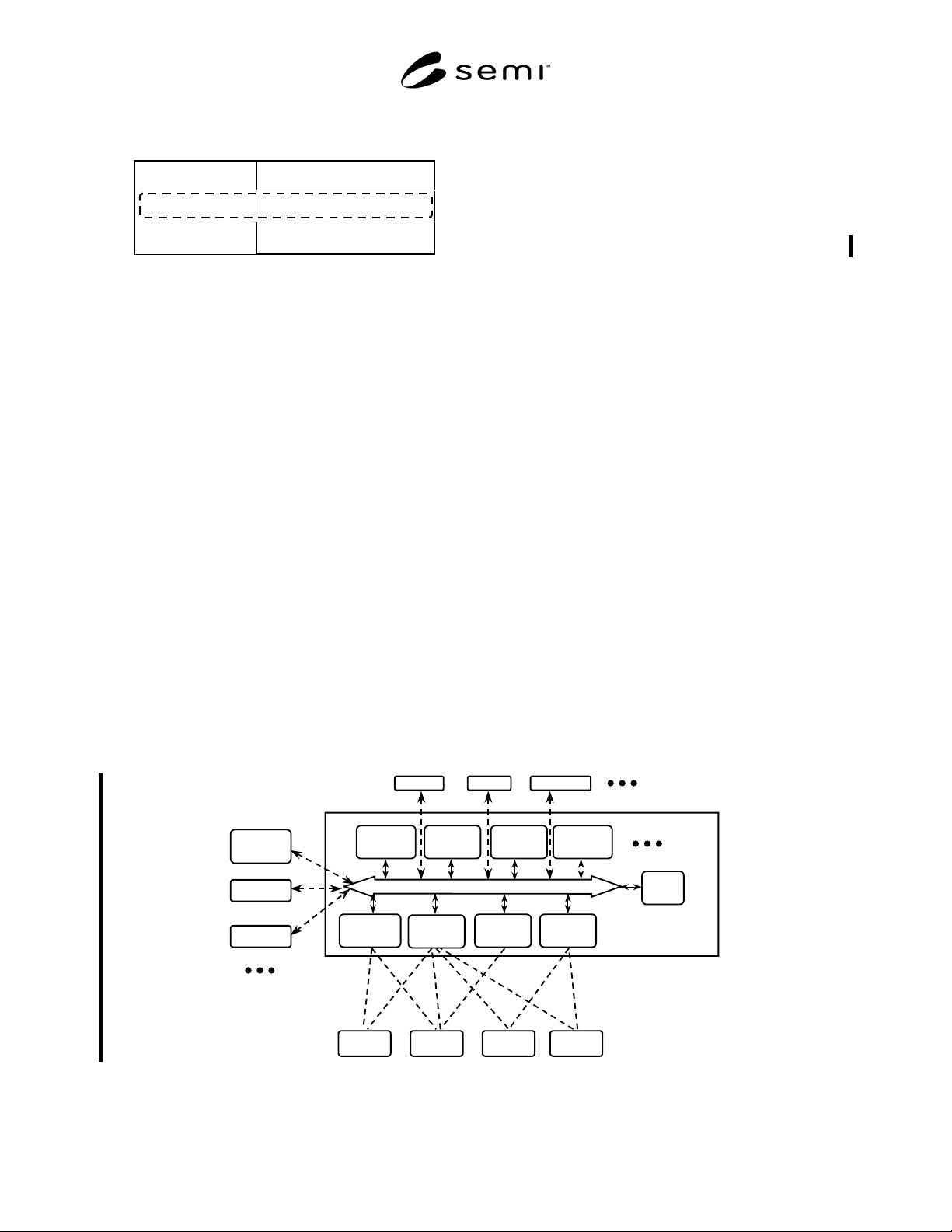
SEMI E81-0600 © 1999, 2000 10
Enterprise
Manufacturing Execution
Equipment
Modeling,
Configuration,
Simulation,
Analysis
Manufacturing
Operations
Manufacturing
System
Engineering
Figure 4
Boundaries of the CIM Framework: Manufacturing
Execution
6.4.9 The CIM Framework specifies the MES
functional responsibilities for semiconductor wafer
fabrication. It does not include responsibilities for
semiconductor packaging, assembly and test, but it was
designed to accommodate extensions into this phase of
semiconductor manufacturing.
6.4.10 Using the definition of component as found in
Section 6.3.3, the components of the CIM Framework
provide the following functionality found within MES
configuration and execution:
• Product Management: manages product material
and material groups.
• Durables Management: manages durable materials
such as reticles and material carriers.
• Consumables Management: manages consumable
materials such as gases and chemicals.
• Specification: manages product specifications and
process flows.
• Factory Operations: drives efficient use of factory
resources to manufacture products while meeting
overall factory objectives.
• Scheduling: supports factory operations and other
functions to optimize use of resources in manu-
facturing products and meeting factory objectives.
• Equipment Tracking and Maintenance: tracks
equipment state and usage and manages equipment
maintenance.
• Production Machine: manages execution of
manufacturing process steps on process and
metrology equipment.
• Recipe Management: provides factory-wide
management and use of processing recipes.
• Advanced Process Control: executes run-to-run
process control and fault detection strategies.
• Material Transport and Storage: moves and stores
material.
• Factory Labor: manages labor resources and
qualifications.
• Factory Services: provides support functions
common across components, such as access
security, document management/change control,
and history storage and retrieval.
6.4.11 Section 7 lists the functional responsibilities of
each of these components by MES configuration (called
build-time) and execution (called run-time). The
separation of the CIM Framework into components
reflects anticipated boundaries of MES products,
enabling integration of products from multiple suppliers
into a coherent, integrated MES.
Advanced
Process
Control
Production
Machine
Transport
and
Storage
Object Communications (CORBA or DCOM)
Factory
Services
Product
Management
Specification
Factory
Labor
Equipment
Tracking &
Maintenance
Factory
Operations
Planning Finance Distribution
Metrology
Equipment
Process
Equipment
Transport
Equipment
Storage
Equipment
Manufact.
System
Engineering
Process
Engineering
Device
Engineering
Manufacturing
Execution
Equipment
Enterprise
Engineering
SEMI equipment
integration standards
(SECS, GEM, ARAMS,
RMS, MMMS, etc.)
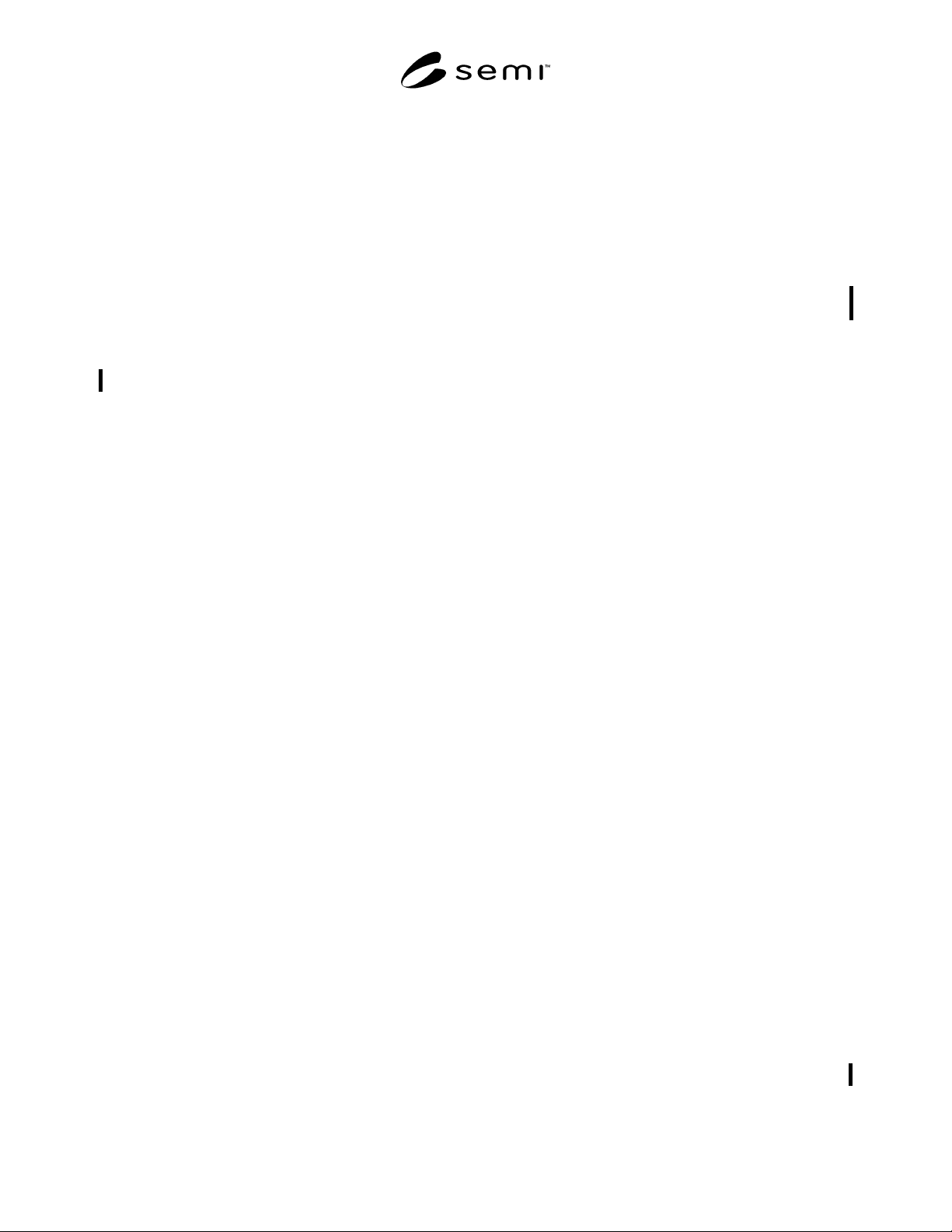
Figure 5
MES Component Integration
SEMI E81-0600 © 1999, 200011
6.4.12 As Figure 5 shows, the CIM Framework
specifies MES interfaces enabling integration between
MES components, that is integration within the MES.
The CIM Framework does not directly address
integration between the MES and external functions.
External functions, such as enterprise functions and
engineering functions, can interact with the MES using
the CIM Framework-specified intra-MES interfaces and
communications mechanisms. Interaction between MES
functions and manufacturing equipment can use
existing SEMI equipment integration standards such as
SECS II (SEMI E5), GEM (SEMI E30), ARAMS
(SEMI E58), RMS (SEMI E42), and MMMS (SEMI
E32). Equipment can also implement CIM Framework
components such as Production Machine and
Equipment Tracking and Maintenance within the
equipment, integrating with the MES (the equipment
host) through CIM Framework component interfaces.
6.4.13 The Object Management Group’s
Manufacturing Domain Task Force is adopting
standards for Enterprise, MES, Machine Control and
Engineering applications (MfgDTF). Other related
activity within the OMG includes its efforts regarding
workflow (Workflow) and component architectures.
SEMI tracks these through a liaison with the OMG.
6.4.14 The CIM Framework focuses on the common
software functions that serve to integrate MES. It
specifies components for factory resources, materials,
specifications and factory control, and it establishes a
functional and technical architecture so the components
can be assembled to meet many functional needs and
driven by company-specific business process,
workflows and operation rules. The CIM Framework
enables, but does not define, workflow and business
logic to drive component behavior, nor does it define
user interfaces (including decision support and
reporting). Workflow, business logic and user interface
are considered use-specific and thus outside an industry
consensus standard. In addition, the CIM Framework
specifies application interfaces to the MES functions,
but does not specify the implementation of those
functions.
6.4.15 What Is in the CIM Framework Specification
6.4.15.1 This section provides additional information
about the CIM Framework suite of documents. A brief
description of each document is given below.
6.4.15.2 Specification for CIM Framework Domain
Architecture (this document)
• Contains introductory information and an overview
of the CIM Framework specifications.
• Specifies the functional partitioning and functional
responsibilities of CIM Framework components.
• Specifies common architecture patterns that
functionally integrate CIM Framework
components.
• Provides graphical and textual specification
notation conventions for all CIM Framework
components.
• Provides citations for related specifications or
documents referenced within the CIM Framework.
6.4.15.3 SEMI E96, Guide for CIM Framework
Technical Architecture
• documents the CIM Framework component
interoperability architecture based on distributed
computing standards including OMG CORBA®
and Microsoft DCOM.
6.4.15.4 Additional documents detail the CIM
Framework specifications. The document structure will
reflect the functional partitioning of the domain
architecture. Except for reorganization, the details will
remain substantially the same as contained within the
CIM Framework Blue Ballots with some requested
extensions. The structure of these documents has been
influenced by SEMATECH’s CIM Framework
Specification [CIMFW]. These companion documents
represent the actual specification; whereas this
document serves primarily as their introduction.
7 Requirements
7.1 This section specifies the functional requirements
of CIM Framework components. It establishes a
functional partitioning of CIM Framework components
and it defines functional architectures for resource
tracking and maintenance and for factory control. It also
establishes the graphical and textual notations required
to specify the CIM Framework components. The list
below is a short overview of this section.
• Global and Abstract Definitions Group
• Factory Services Group
• Product Management Component
• Durables Management Component
• Consumables Management Component
• Specification Component
• Factory Operations Component
• Scheduling Component
• Equipment Tracking and Maintenance Component
• Production Machine Component
• Recipe Management Component

SEMI E81-0600 © 1999, 2000 12
• Advanced Process Control Component
• Material Transport and Storage Component
• Factory Labor Component
7.2 Functional Partitioning
7.2.1 This section overviews the functional
responsibilities of the CIM Framework domain
components. Details of the responsibilities are specified
in the individual CIM Framework domain component
specifications.
7.2.2 The domain component responsibilities cover
two types of functions:
• Build-time, or configuration aspect of
manufacturing systems engineering in Figure 4,
which defines and configures the specific entities
in the component, such as the specific machines
and their state models or the wafer carriers and
their initial locations.
• Run-time, or the execution aspect of manufacturing
operations in Figure 4, which executes the
component behaviors, maintains inter-component
relationships, maintains component state and
history and provides run-time access to component
state and behavior.
7.2.3 The initial CIM Framework domain standards do
not address the build-time functions of the components.
These will be added as the standards move from
provisional status to full standards. However, this
functional partitioning section does identify build-time
responsibilities, permitting these build-time functions to
be properly allocated to the correct component as the
CIM Framework evolves.
7.2.4 The components partition CIM Framework
functionality. The components are designed to be
exclusive: no functionality exists in more than one
component. The only exception is that there are some
cross-system functions that are used, specialized or
implemented by most or all of the other components.
These cross-component domain functions are in
separate groups, called Global and Abstract Definitions
Group and Factory Services Group.
7.2.5 The list of responsibilities for a complete MES
solution is far more than the responsibilities of the CIM
Framework components. The CIM Framework focuses
on those functions that serve to integrate applications.
Suppliers and users will provide functional
responsibilities in addition to the standard
responsibilities. The CIM Framework component
responsibilities are also limited by focusing the scope of
the CIM Framework on the run-time needs for wafer
fabrication MES but to not cover the full scope of CIM
solutions for the full semiconductor manufacturing
process.
7.2.6 Sections 7.2.7 through 7.2.20 present the
responsibilities for each of the CIM Framework
components and the groups. Example terminology
specific to semiconductor manufacturing is provided for
clarity. It does not preclude application specialization
for other industries.
7.2.7 Responsibilities of Global and Abstract
Definitions Group
7.2.7.1 The Global and Abstract Definitions group
(defined in SEMI E97) specifies the definitions of
abstract data types and abstract interfaces used
throughout the CIM Framework. These specifications
are separated into a distinct group to enable them to be
specified once and then logically included or inherited
wherever they are subsequently needed.
7.2.7.2 Global Definition Responsibilities
• Provide type definitions for common data
structures to ensure consistent representation.
These items include data types for common
concepts such as coordinates, priorities,
timestamps, and sequences of basic data types.
• Provide type definitions for representations of
historical occurrences.
• Provide definitions for common exceptions used
consistently throughout the CIM Framework.
7.2.7.3 Abstract Interface Responsibilities
• Material architecture: the functions common to
identifying, grouping, moving, locating and
tracking material in the factory. The architecture is
specialized for product material, durables and
consumables. See Section 7.3.2.
• Factory resource architecture: the functions
common to defining, organizing, tracking usage of
and maintaining factory resources including
equipment, sensors, durables, and people. See
Section 7.3.3.
• Job architecture: the functions common to creating,
executing and managing work in the factory. The
job architecture is specialized for material
processing jobs, material transport jobs, resource
maintenance jobs and factory jobs that drive
product material through their process flows. See
Section 7.3.4.
7.2.8 Responsibilities of Factory Services Group
7.2.8.1 The Factory Services group (which is not
actually a component) specifies domain facilities to
support all domain components. The components can