semi合集-English.pdf - 第2301页
SEMI E81-0600 © 1999, 2 000 38 Table 1 Object State Definitions and Q uery Table Example State Definition Query for St ate Via ENGINE RUNNING In this state, the automobile's engine is runnin g. bo olean isEngineRunn…
SEMI E81-0600 © 1999, 200037
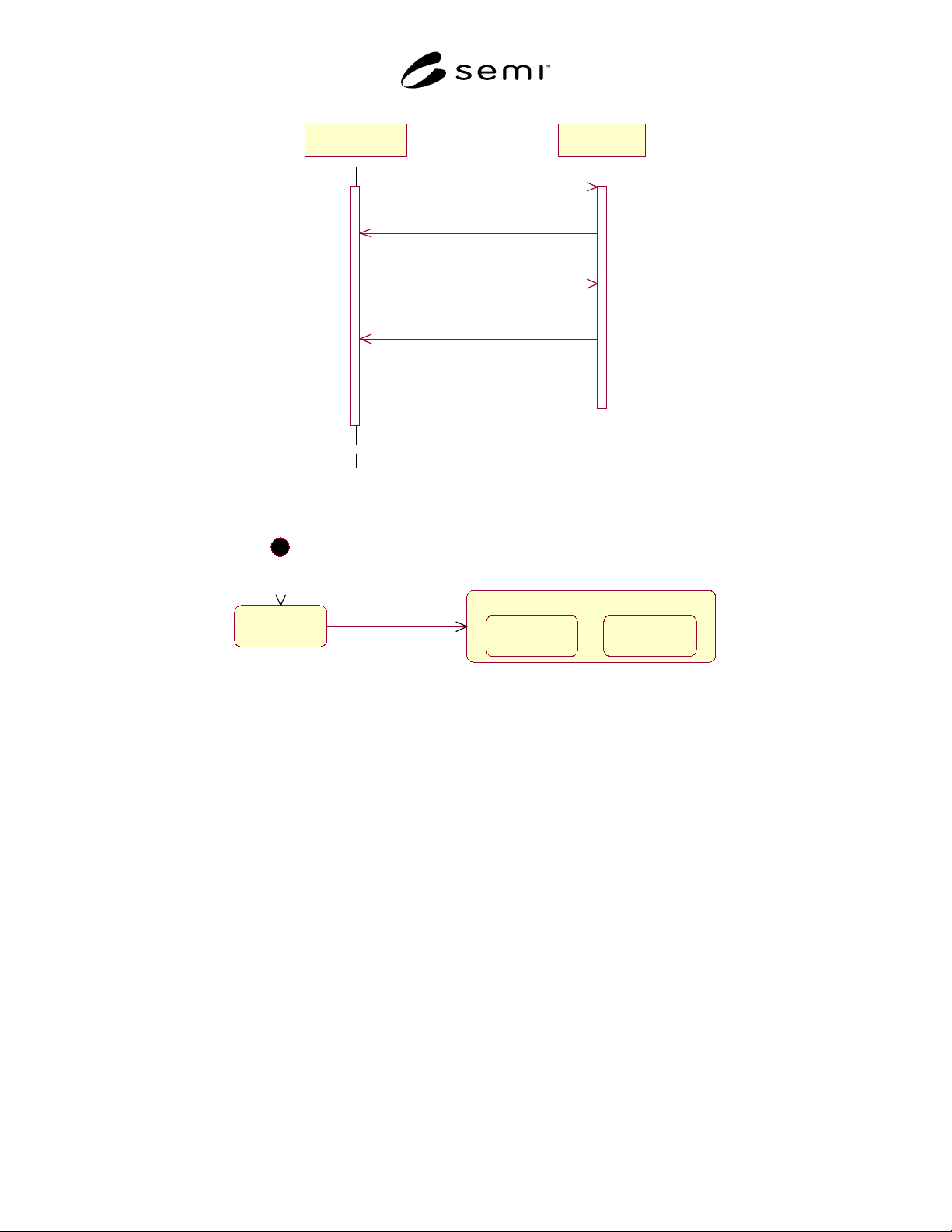
Bank Customer : B ATM : A
1: requestSession( )
2: requestIdentification( )
3: provideIdentification(idNum ber)
4: verifyIdentification( )
Figure 24
Component Interaction Model Example
State Name
Composite State
State 1 State 2State 1 State 2
s ta t e tr a n si ti on
entry point
Figure 25
State Diagram
7.4.3.5.3.2 Table 1 provides a detailed description of
each object state and identifies the query mechanism for
determining if the object is in that state. Given the
example provided in this section, an entry in the State
Definitions and Query Table would appear as shown.
7.4.3.5.4 Object State Transition Tables
7.4.3.5.4.1 Another supplement to the state model is
the Object State Transition Table (Table 2).
7.4.3.5.4.2 It lists the transition from the state diagram
identified by the starting and ending states, and the
event that causes the transition between these states.
7.4.3.5.4.3 Within the CIM Framework specification,
only those triggers and state changes relevant to
external interfacing are shown to help define how an
external entity (in this case a driver) interoperates with
an object (in this example an automobile).
7.4.3.5.4.4 While this table defines triggers for state
transitions, there is no guarantee that the transition will
take place in response to the trigger. In the above
example, if the car is out of gas the engine will not go
to the running state; if the light is burned out, it will not
transition to the on state; depressing the accelerator
pedal when the auto is in the off state will have no
effect, etc. In the CIM Framework, object state can be
queried to ensure successful transitioning in response to
a triggering message. Events are also used in some
cases to inform the client of a transition or change of
state.
SEMI E81-0600 © 1999, 2000 38
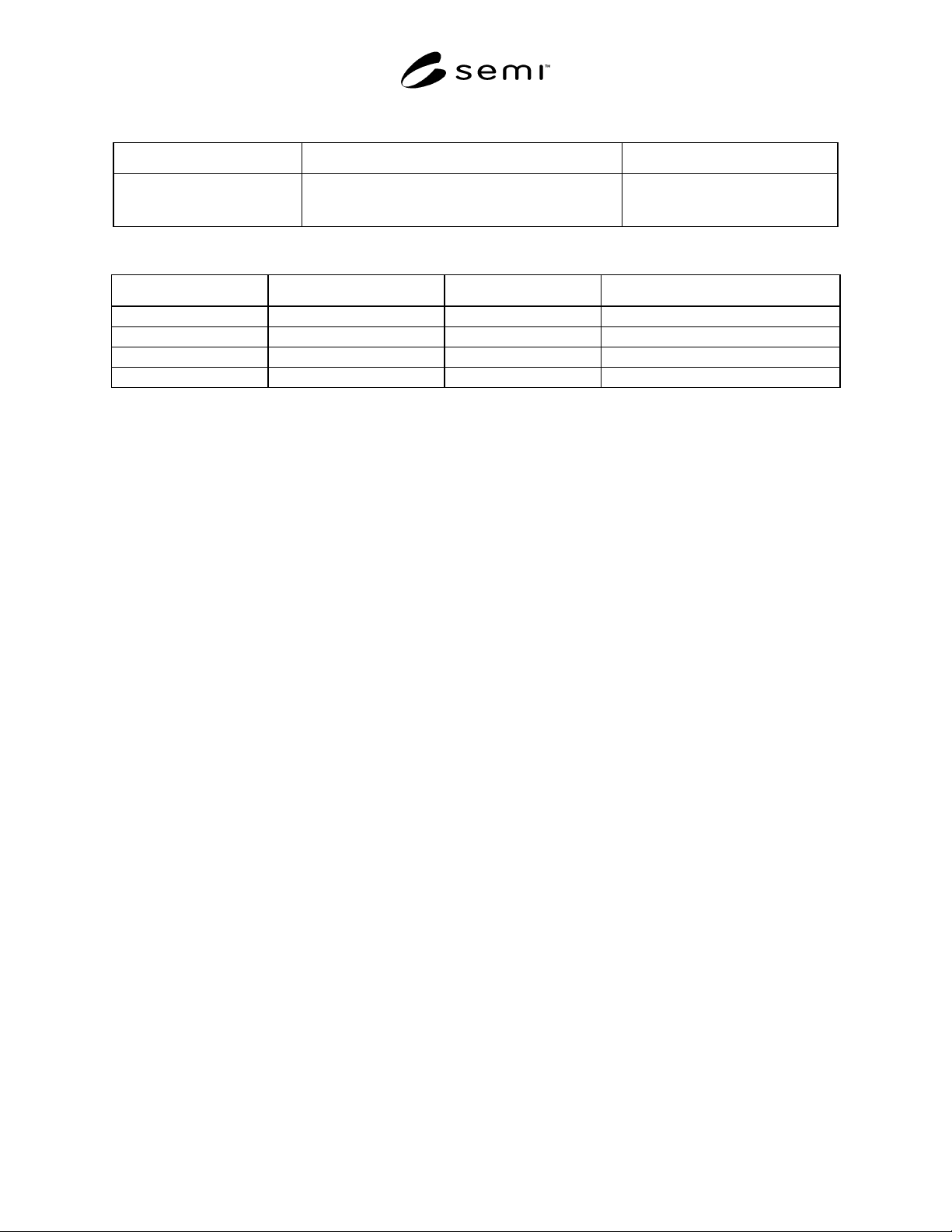
Table 1 Object State Definitions and Query Table Example
State Definition Query for State Via
ENGINE RUNNING In this state, the automobile's engine is running. boolean isEngineRunning ( );
sent to instance of Automobile.
Returns true.
Table 2 Object State Transition Table Example
Current State Trigger New State Action
ENGINE STOPPED turn ignition key to right ENGINE RUNNING tachometer indicates positive RPM
ENGINE RUNNING turn ignition key to left ENGINE STOPPED tachometer indicates zero RPM
LIGHTS OFF turn light switch on LIGHTS ON driving at night is enabled
LIGHTS ON turn light switch off LIGHTS OFF driving at night disabled
7.4.4 Textual Specification Language
7.4.4.1 The textual notations used to specify the
framework in this specification, include the following:
• Interface Definition Language (IDL).
• Interface Definition Format.
7.4.4.2 Interface Definition Language (IDL)
7.4.4.2.1 Specifications of CIM Framework
components are composed mainly of interfaces. The
specifics of each interface, while also represented in the
UML-based Component Information Model, are
rigorously specified using OMG IDL. The IDL for CIM
Framework interfaces shall be complete and consistent
as verified by automated IDL compilers. The IDL
portion of SEMI specifications will be available in a
text file format to facilitate such validation and use with
IDL compiler technologies.
7.4.4.2.2 This explanation of IDL is addressed to its
use as a rigorous specification tool. The considerations
of mapping the specifications to an implementation
infrastructure are addressed in SEMI E96.
7.4.4.2.3 Common Object Broker Architecture
(CORBA) [CORBA][CIMArch] defines the architecture
which enables and regulates interoperability between
objects and applications across heterogeneous
languages and computer boundaries. In all Object
Management Group (OMG) specifications, services are
defined as object interfaces expressed in the OMG's
IDL. CORBA standards define IDL and its mapping to
implementation languages (for example, C, C++,
Smalltalk, and Java).
7.4.4.2.4 IDL is a compilable language that describes
the operations that are specified for an interface. The
notation is independent of the language in which the
methods that implement an interface’s operations are
written. This goal is achieved by mapping between the
IDL syntax and whatever language is used to implement
client and server objects. Because IDL is designed
purely for interface specification, it omits the flow
control and operator constructs of an implementation
language. Object classes can implement an interface
differently as long as their behavior conforms to the
interface specification.
7.4.4.2.5 IDL obeys the same lexical rules as C, while
introducing a number of keywords specific to a
distributed system. As IDL is mapped to object-oriented
languages, new constructs will appear. A brief
discourse on some of the keywords and concepts used
in this specification follows. In the examples, words in
italics are user supplied, others are IDL-defined
keywords.
7.4.4.3 Interface Specification Format
7.4.4.3.1 The OMG defines an object’s interface as “a
listing of the operations and attributes that an object
provides. This includes the signatures of the operations,
and the types of the attributes. An interface
specification ideally includes the semantics as well”
[OMA]. The CIM Framework Specification builds
upon this definition to provide additional semantic
information for an interface. These semantics are
captured in an interface description. This section
describes the format of an interface. Each description of
an interface follows this format. The format includes
the following:
• Name — The capitalized noun following the word
“Interface:”
• Inherited Interface — The capitalized noun after
the words “Inherited Interface:”
• Description — A definition of the interface giving
its form and function.

SEMI E81-0600 © 1999, 200039
• Exceptions — An IDL specification for reporting
user-defined, framework-related error conditions.
• Published Events — The name of the event
structure that must be placed on an event channel.
The event structure identifies the event through a
subject field. The subject is composed of the
component and interface issuing the event and data
describing the event, and filterable and non-
filterable information. Events are defined at the
interface level; neither posting services nor
subscribers are identified. Thus, events are not tied
to specific services and may be the result of an
internal (to the component) computation.
• Provided Services — A list of publicly available
services provided by this interface. In other words,
a list of non-private, named operations. Each is
given by a description in comment form (i.e.,
/*....*/) followed by its representation in the IDL
syntax.
• Contracted Services — A table of framework
services provided by other interfaces that are being
used by public and/or private services in this
interface. These methods must be available in order
for the documented interface to provide its
described services. Changes to contracted services
may result in changes to the behavior of the
interface making use of these services.
• State Model — See Section 7.4.3.5 for details.
7.4.4.3.2 If no Provided Services are defined for a
particular category, then “No public interfaces” will
appear after the category identifier. If no Exceptions,
Published Events, Contracted Services, or Dynamic
Model are provided, then the word “None” will appear.
State Transition Tables occur only in conjunction with
Dynamic Models.
7.4.4.4 Interface Specification Example
7.4.4.4.1 Table 3 provides a complete illustration of
IDL and CIM Framework interface specification format
usage within this specification. Words in italics are
user-supplied, others are either IDL or CIM
Framework-defined keywords.
8 Conformance to CIM Fram ework Domain
Specifications
8.1 The objective of the CIM Framework is to speed
the creation, use and improvement of a manufacturing
execution system for a semiconductor wafer fabrication
factory by enabling the integration of disparate
components into a cohesive system. The CIM
Framework achieves this objective by specifying a
domain model for MES components. MES component
suppliers use the specification to help establish the
boundaries and interfaces of their components.
Component customers first use the specification to
assess the capabilities of individual components and
then to facilitate the integration of components into a
working system.
8.2 The CIM Framework increases the value of the
MES components by enhancing their qualities of
interoperability, substitutability and extensibility.
• Interoperability is the ability of components to
work together through compatible interfaces.
• Substitutability implies the option to swap one
component with another because they support the
same interfaces.
• Extensibility means the planned capability to add
functionality to a component, again by leveraging
the support for predefined interface specifications.
8.3 Given both the scope and objectives of the CIM
Framework, conformance to the Framework can not be
reduced to a simple “yes or no” proposition. Rather,
component customers must assess component
conformance on a case-by-case basis. Potential buyers
assess conformance in terms of how well a component
supplier demonstrates use of the CIM Framework
specification to enable rapid component integration.
8.4 With this background, here then are factors for
consumers to consider in assessing MES components
and for suppliers to comprehend when building
components. These factors form the basis for
communication between buyers and sellers of
components regarding conformance to the CIM
Framework specifications.