semi合集-English.pdf - 第2490页
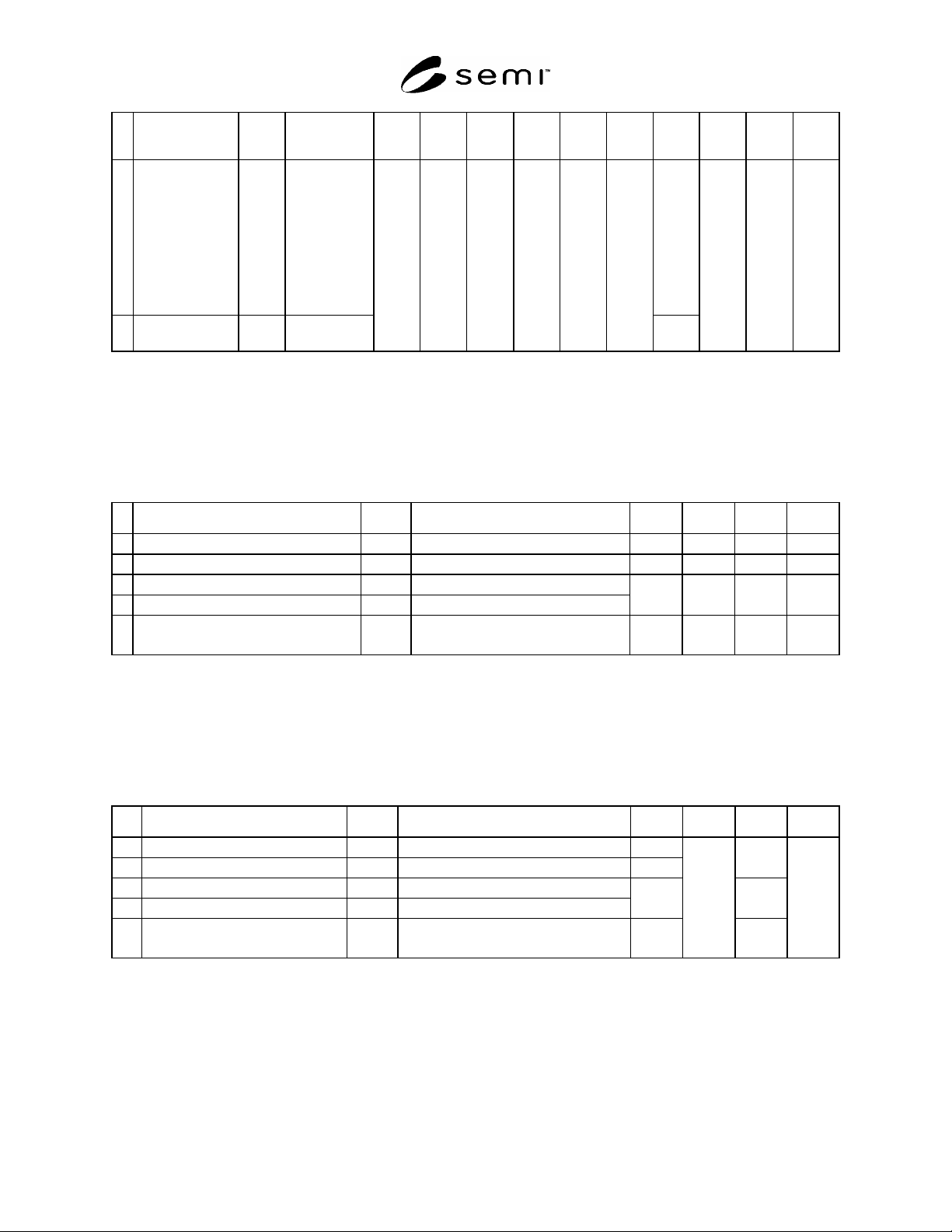
SEMI E87-0705 © SEMI 1999, 2005 59 Table R1-24 CarrierID Rea d Fail Scenario 3 # Comment Dir Message LTS LCAS CIDS CSMS 0 Initial condition. RTL 1 Carrier Arrives. E>H Transfer Blocked 2 ID read at tempt fails. E>H…
SEMI E87-0705 © SEMI 1999, 2005 58
# Comment Dir Message LTS1 LRS2 LCAS3 LTS2 LRS2 LCAS2 CIDSA CSMS
A
CIDS
B
CSMS
B
4 CarrierID read at
load port 2,
Equipment based
verification
indicates that a
correct carrier
was delivered to
the wrong load
port.
H<-E
H<-E
H<-E
LP1 NOT
ASSOCI-
ATED
Carrier B
object
destroyed
Alarm LP2
verification
failed
WFH
5 Host oks
processing.
H-> ProceedWith
Carrier
NR NA
IVO
(T) (T)
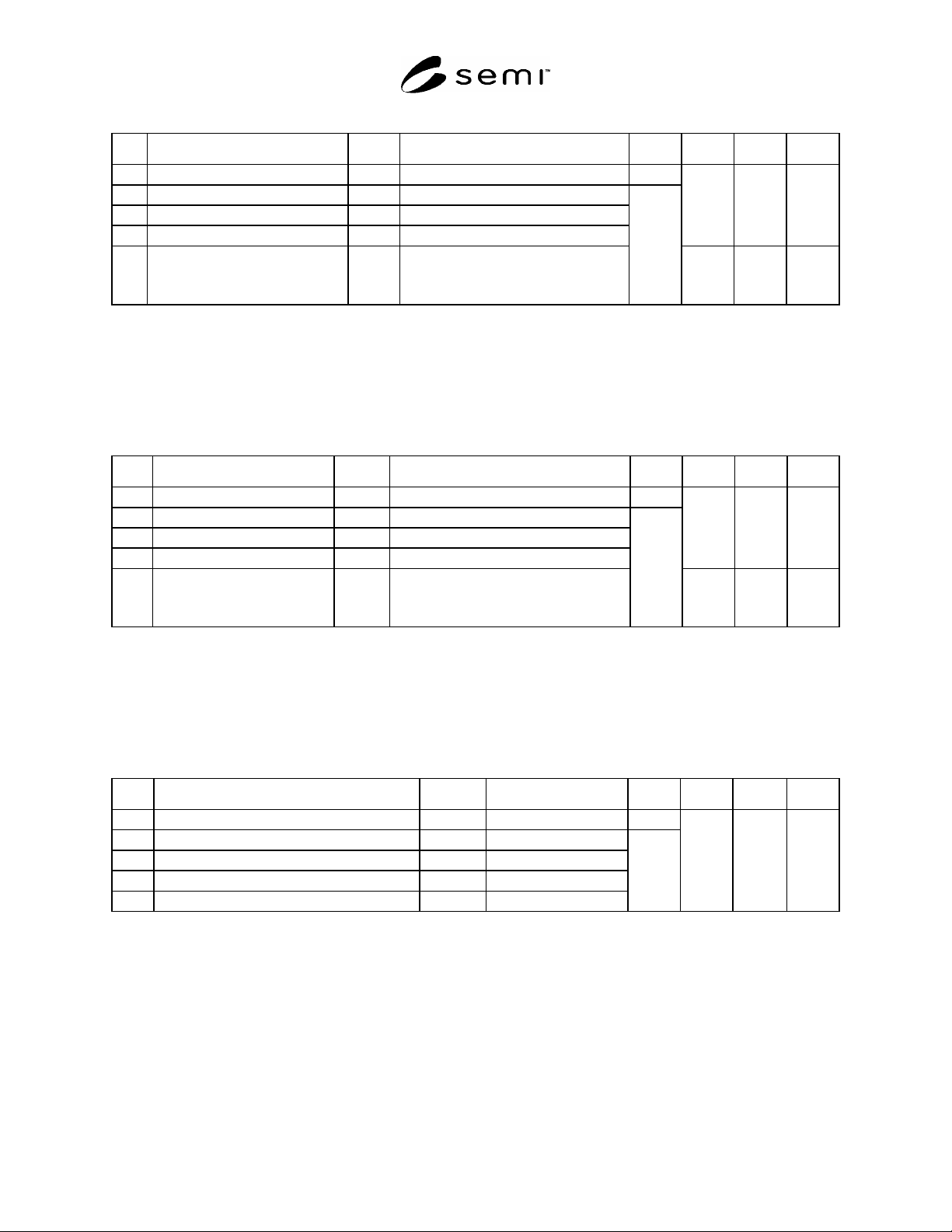
R1-2.22 CarrierID Read Fail Scenario 1
R1-2.22.1 Assumptions: Fixed buffer Equipment, Equipment based Verification, Bind service has been received.
R1-2.22.2 Indicated states: LTS = Load Port Transfer State, LCAS = Load Port/Carrier Association State, CIDS =
Carrier ID Status, CSMS = Carrier Slot Map Status.
Table R1-22 CarrierID Read Fail Scenario 1
# Comment Dir Message LTS LCAS CIDS CSMS
0 Initial condition. RTL A INR SNR
1 Carrier Arrives. E>H Transfer Blocked TB A INR SNR
2 ID read attempt fails. E>H State change to Waiting For Host
3 Decision to continue is made.
TB A WFH SNR
4 Host sends ProceedWithCarrier
service.
H>E
E>H
ProceedWithCarrier
State change to Id Verification OK
TB A IVO SNR
R1-2.23 CarrierID Read Fail Scenario 2
R1-2.23.1 Assumptions: Fixed buffer Equipment, Equipment based Verification, Bind service has been received.
R1-2.23.2 Indicated states: LTS = Load Port Transfer State, LCAS = Load Port/Carrier Association State, CIDS =
Carrier ID Status, CSMS = Carrier Slot Map Status.
Table R1-23 CarrierID Read Fail Scenario 2
# Comment Dir Message LTS LCAS CIDS CSMS
0 Initial condition. RTL
1 Carrier Arrives. E>H Transfer Blocked TB
INR
2 ID read attempt fails. E>H State change to Waiting For Host
3 Decision to stop is made.
TB WFH
4 Host sends CancelCarrier service. H>E
E>H
CancelCarrier
State change to Id Verification Failed
TB
A
IVF
SNR
R1-2.24 CarrierID Read Fail Scenario 3
R1-2.24.1 Assumptions: Fixed buffer Equipment, Host based Verification.
R1-2.24.2 Indicated states: LTS = Load Port Transfer State, LCAS = Load Port/Carrier Association State, CIDS =
Carrier ID Status, CSMS = Carrier Slot Map Status.
SEMI E87-0705 © SEMI 1999, 2005 59
Table R1-24 CarrierID Read Fail Scenario 3
# Comment Dir Message LTS LCAS CIDS CSMS
0 Initial condition. RTL
1 Carrier Arrives. E>H Transfer Blocked
2 ID read attempt fails. E>H ID read fail event
3 Decision to continue is made. H>E
NA (T) (T)
4 Host sends ProceedWithCarrier
service.
H>E
E>H
E>H
ProceedWithCarrier
State change to Id Verification OK
State change to Load Port Associated
TB
A IVO SNR
R1-2.25 CarrierID Read Fail Scenario 4
R1-2.25.1 Assumptions: Fixed buffer Equipment, Host based Verification.
R1-2.25.2 Indicated states: LTS = Load Port Transfer State, LCAS = Load Port/Carrier Association State, CIDS =
Carrier ID Status, CSMS = Carrier Slot Map Status.
Table R1-25 CarrierID Read Fail Scenario 4
# Comment Dir Message LTS LCAS CIDS CSMS
0 Initial condition. RTL
1 Carrier Arrives. E>H Transfer Blocked
2 ID read attempt fails. E>H ID read fail event
3 Decision to stop is made. H>E
NA (T) (T)
4 Host sends CancelCarrier. H>E
E>H
E>H
CancelCarrier
State change to Id Verification Failed
State change to Load Port Associated
TB
A IVF SNR
R1-2.26 CarrierID Read Fail Scenario 5
R1-2.26.1 Assumptions: Fixed buffer Equipment, Host based Verification.
R1-2.26.2 Indicated states: LTS = Load Port Transfer State, LCAS = Load Port/Carrier Association State, CIDS =
Carrier ID Status, CSMS = Carrier Slot Map Status.
Table R1-26 CarrierID Read Fail Scenario 5
# Comment Dir Message LTS LCAS CIDS CSMS
0 Initial condition. RTL
1 Carrier Arrives. E>H Transfer Blocked
2 ID read attempt fails. E>H ID read fail event
3 Decision to stop is made. H>E
4 Host sends CancelCarrierAtPort. H>E CancelCarrierAtPort
TB
NA (T) (T)
R1-3 Example Equipment Logic for Carrier Delivery
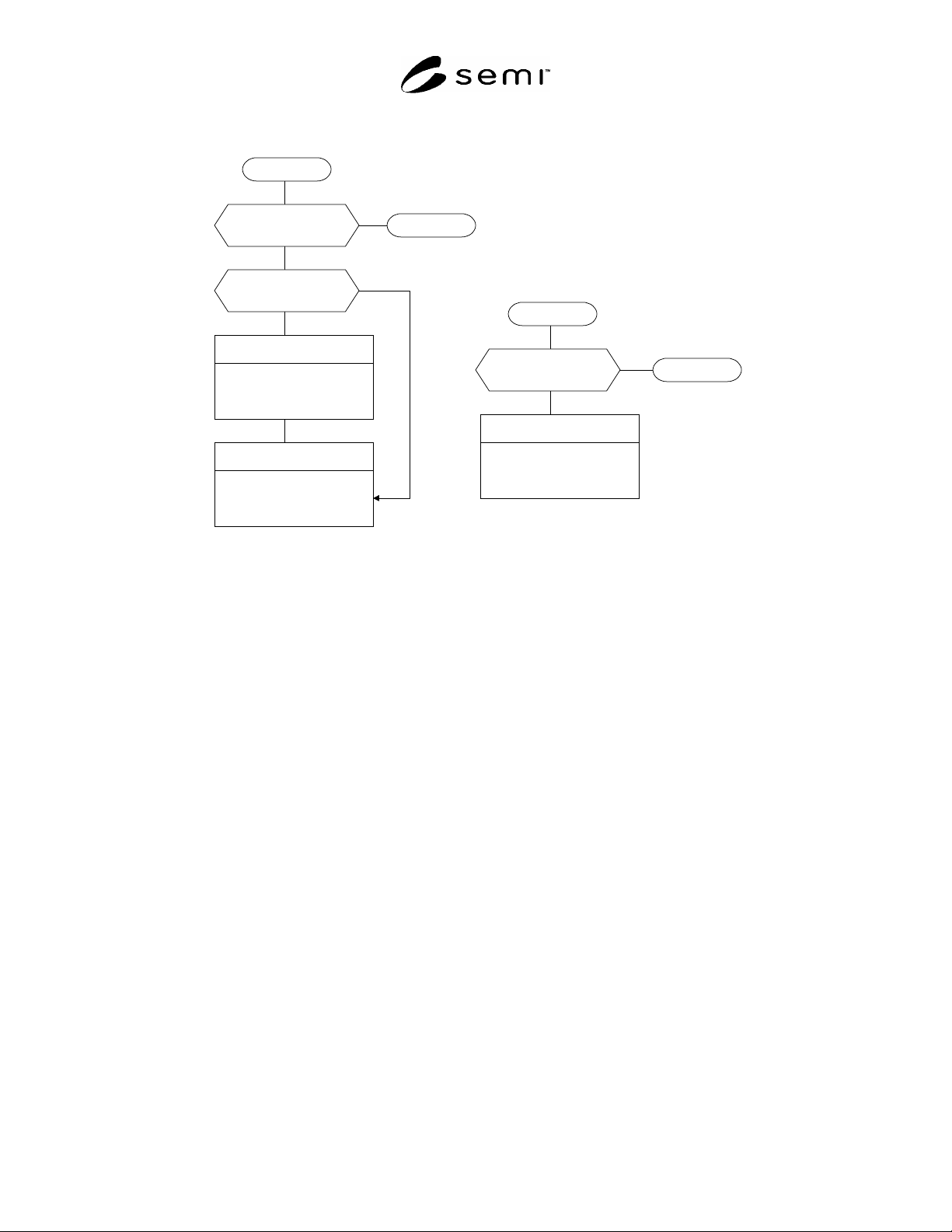
R1-3.1 To summarize the CMS carrier object behavior, following flow-charts are provided. The charts show the
example of an equipment logic for the CMS definitions.
SEMI E87-0705 © SEMI 1999, 2005 60
R1-3.2 Bind and Notify
BIND
Error
Has the loadport
been associated?
Has the object
been registered?
Create the carrier object
Carrier ID Not Read
Slot Map Not Read
Not Processed
Associate
Associate the object with
the loadport of carrier
delivered
YES
NO
YES
NO
NOTIFY
Error
Has the object
been registered?
Create the carrier object
Carrier ID Not Read
Slot Map Not Read
Not Processed
YES
NO
R1-3.2.1 Bind Service Request From the Host
R1-3.2.1.1 Verify no object has been associated with designated loadport. If it is associated the Bind service shall
be failed.
R1-3.2.1.2 Verify no object having the same ID specified in Bind service has been registered.
R1-3.2.1.2.1 If it is registered, the Bind service shall associate the object that is already registered with the
designated loadport.
R1-3.2.1.2.2 If it is not registered, then create the object and associate it to the loadport. The initial states of the
object are Carrier ID Not Read, Carrier Slot Map Not Read, Carrier Not Processed and Associated to the loadport.
R1-3.2.2 Notify service request from the host.
R1-3.2.2.1 Verify no object having the same ID specified in Notify service has been registered.
R1-3.2.2.1.1 If it is registered, the Notify service shall be failed.
R1-3.2.2.1.2 If it is not registered, then create the carrier object. The initial states of the object are Carrier ID Not
Read, Carrier Slot Map Not Read, Carrier Not Processed and Not Associated.