semi合集-English.pdf - 第2792页
SEMI E98.1-1102 © SEMI 2001, 2002 6 6.7 Equipment 6.7.1 Table 11 specifies the attributes o f the Equi pment object. Table 10 Equipment Object Attribute Specification Attribute Name Range/Value SECS-II Format “ObjType” “…
SEMI E98.1-1102 © SEMI 2001, 2002 5
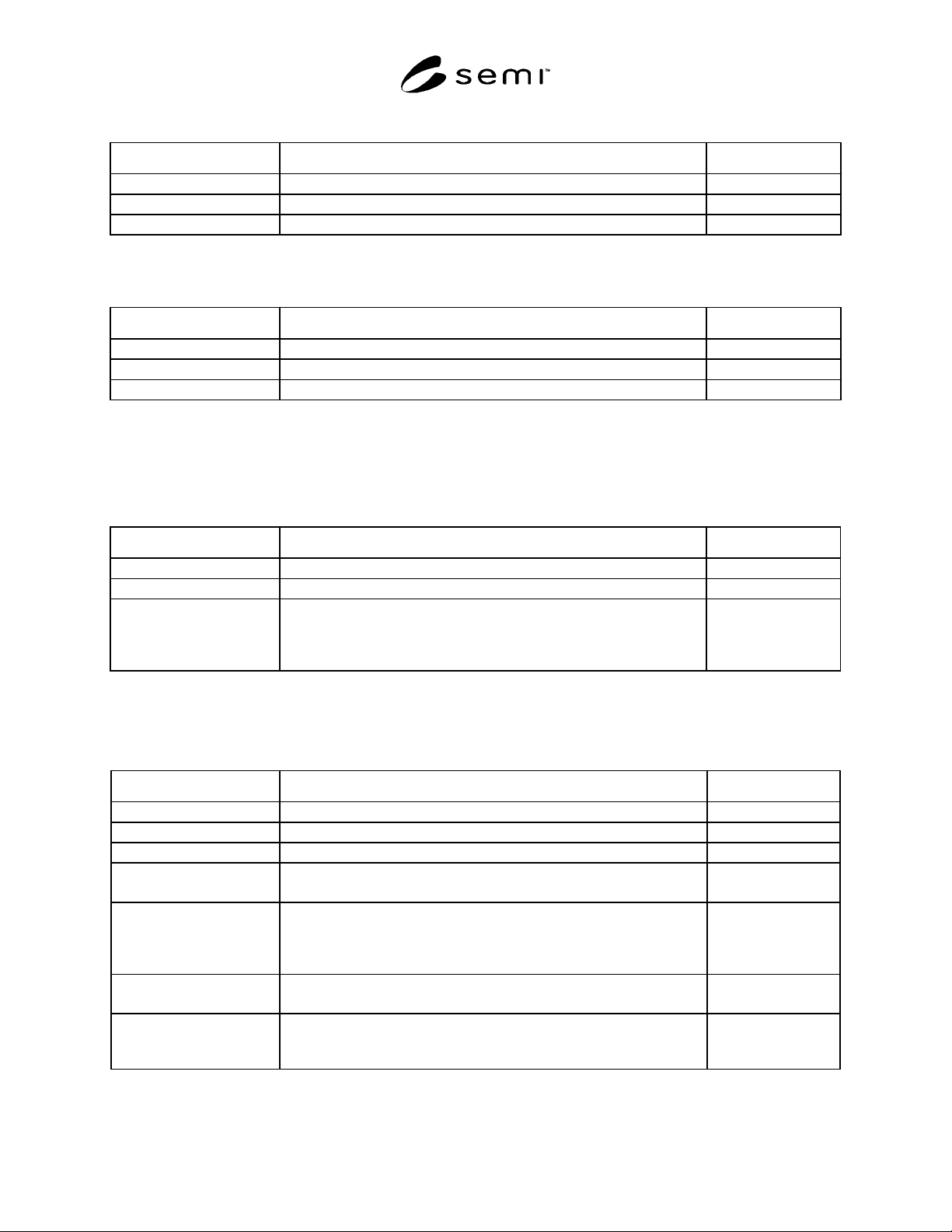
Table 6 AbstractEquipmentSubsystem Object Attribute Specification
Attribute Name Range/Value SECS-II Format
“ObjType” “AbstractEqpSubsystem” 20
“ObjID” Conforms to OBJID restrictions in SEMI E39.1, Section 6. 20
“MaterialSummary” Ordered list. See Table 8 for detail. 0
6.4.2 Table 8 specifies the elements of the MaterialSummary attribute.
Table 7 MaterialSummary Attribute Specification
Attribute Name Range/Value SECS-II Format
“MaterialCapacity” 0 or more 5()
“MaterialCount” 0 ≤ MaterialCount ≤ Material-Capacity 5()
“MaterialType” Conforms to SEMI E5, Section 9. 20
6.5 CarrierLocation Object
6.5.1 Note that the CarrierLocation inherits the attributes of the MaterialLocation.
6.5.2 Table 9 specifies the additional attributes of the CarrierLocation object. See Table 13.
Table 8 CarrierLocation Object Attribute Specification
Attribute Name Range/Value SECS-II Format
“ObjType” “CarrierLoc” 20
“ObjID” Conforms to OBJID restrictions in SEMI E39.1, Section 6. 20
LocationState Enumerated:
0 = Unoccupied
1 = Occupied
2 = Not Aligned
51
6.6 Clock
6.6.1 Table 10 specifies the attributes of the Clock object.
Table 9 Clock Object Attribute Specification
Attribute Name Range/Value SECS-II Format
“ObjType” “Clock” 20
“ObjID” Conforms to OBJID restrictions in SEMI E39.1, Section 6. 20
“DateTime” As specified by TimestampFormat. 20,30,34
“UseNet” FALSE = DISABLED
TRUE = ENABLED
11
“TimestampFormat” Enumerated: (see SEMI E54.1, Section 7.3.1.23)
0 = Text “yyyymmddhhmmsscc”
1 = Univeral Time Coordinated
2 = Standard Time and Date
51
“GMTDelta” -32,768 to +32767 (minutes)
*actual value in use at locale
32
“UseDelta” Boolean:
TRUE = use GMDelta
FALSE = do not use GMDelta
11
SEMI E98.1-1102 © SEMI 2001, 2002 6
6.7 Equipment
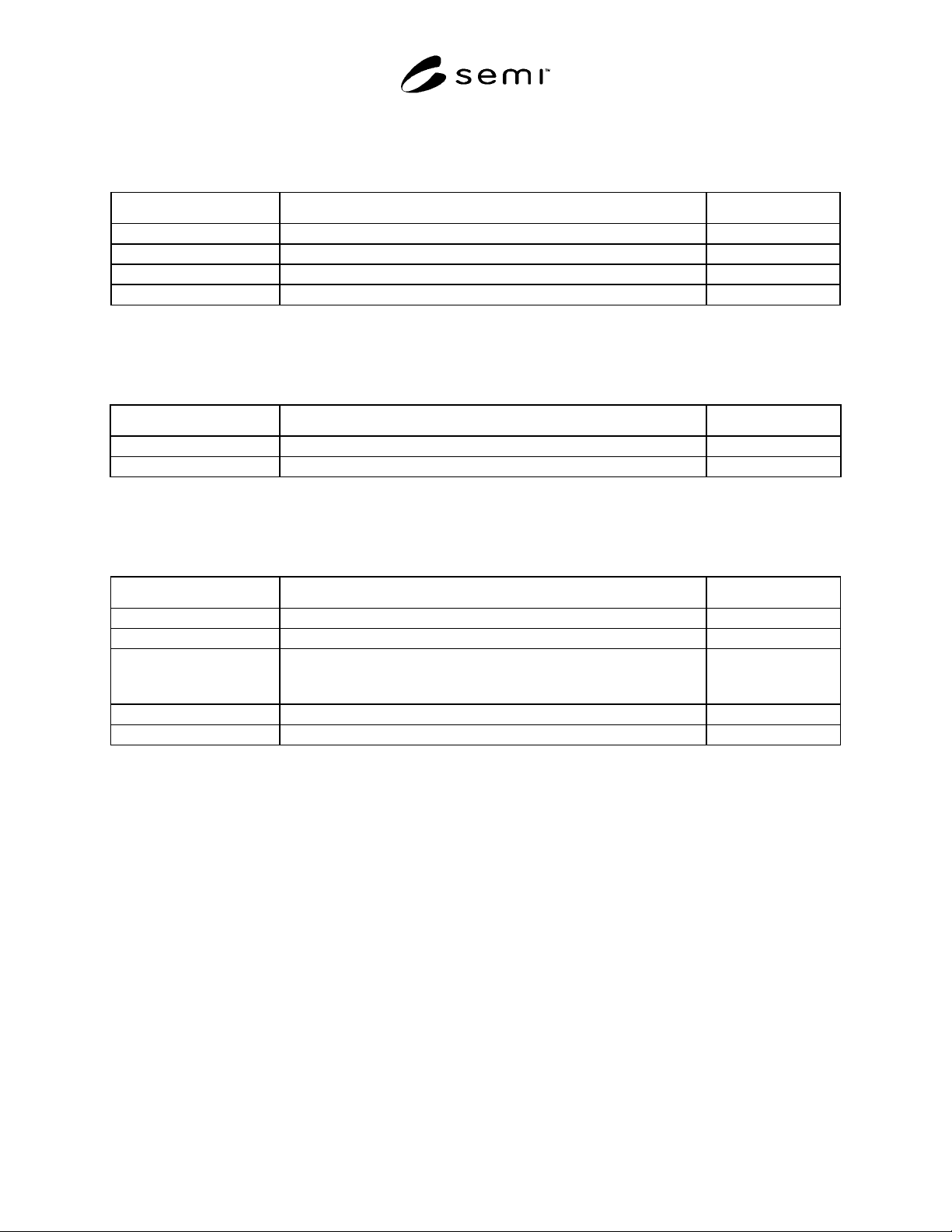
6.7.1 Table 11 specifies the attributes of the Equipment object.
Table 10 Equipment Object Attribute Specification
Attribute Name Range/Value SECS-II Format
“ObjType” “Equipment” 20
“ObjID” Conforms to OBJID restrictions in SEMI E39.1, Section 6. 20
“AssignedOperators” List. 0
“Nickname” Any. 20
6.8 EquipmentSubsystem
6.8.1 Table 12 specifies the attributes of the AbstractEquipmentSubsystem object.
Table 11 EquipmentSubsystem Object Attribute Specification
Attribute Name Range/Value SECS-II Format
“ObjType” “EqpSubsystem” 20
“ObjID” Conforms to OBJID restrictions in SEMI E39.1, Section 6. 20
6.9 Material Location
6.9.1 Table 13 specifies the attributes of the AbstractEquipmentSubsystem object.
Table 12 MaterialLocation Object Attribute Specification
Attribute Name Range/Value SECS-II Format
“ObjType” “MatlLoc” 20
“ObjID” Conforms to OBJID restrictions in SEMI E39.1, Section 6. 20
LocationState Enumerated:
0 = Unoccupied
1 = Occupied
51
MaterialType Conforms to SEMI E5, Section 9. 20
MaterialID Conforms to OBJID restrictions in SEMI E39.1, Section 6. 20
NOTICE: SEMI makes no warranties or representations as to the suitability of the standards set forth herein for any
particular application. The determination of the suitability of the standard is solely the responsibility of the user.
Users are cautioned to refer to manufacturer’s instructions, product labels, product data sheets, and other relevant
literature respecting any materials mentioned herein. These standards are subject to change without notice.
The user’s attention is called to the possibility that compliance with this standard may require use of copyrighted
material or of an invention covered by patent rights. By publication of this standard, SEMI takes no position
respecting the validity of any patent rights or copyrights asserted in connection with any item mentioned in this
standard. Users of this standard are expressly advised that determination of any such patent rights or copyrights, and
the risk of infringement of such rights, are entirely their own responsibility.
Copyright by SEMI® (Semiconductor Equipment and Materials
International), 3081 Zanker Road, San Jose, CA 95134. Reproduction o
f
the contents in whole or in part is forbidden without express written
consent of SEMI.

SEMI E102-0600 © SEMI 20001
SEMI E102-0600
PROVISIONAL SPECIFICATION FOR CIM FRAMEWORK MATERIAL
TRANSPORT AND STORAGE COMPONENT
This provisional specification was technically approved by the Global Information and Control Committee
and is the direct responsibility of the Japanese Information and Control Committee. Current edition approved
by the Japanese Regional Standards Committee on March 14, 2000 and by the North American Regional
Standards Committee on March 2, 2000. Initially available at www.semi.org March 2000; to be published
June 2000.
1 Purpose
1.1 Wafer fabrication factories will require the
baseline capabilities of stocker storage and interbay
transport. In addition to these baseline capabilities,
intrabay transport will be added as a result of
ergonomic and safety requirements brought about by
the increased size and weight of 300 mm wafer carriers.
These stocker, interbay transport, and intrabay transport
systems will be required to be fully integrated with each
other and the factory Manufacturing Execution System
(MES) in order to realize the full vision of cost
effective automated material transport to and from
production equipment.
1.2 A baseline requirement of Automated Material
Handling System (AMHS) equipment is efficient
integration with the factory MES. Therefore, the
purpose of this specification is to enable cost effective
integration of interoperable AMHS systems, as
illustrated in Figure 1. Manufacturers require a SEMI
standard which specifies the visible behavior of the
AMHS Integration system and its interface to the
factory MES. The purpose of this standard is to specify
these interfaces and the interactions between MES and
AMHS systems as a part of the CIM Framework. While
the term AMHS is commonly used to refer to a wide
range of equipment and systems that support automated
material handling, the CIM Framework specifies a
software component called “Material Transport and
Storage Component (MTSC)” which represents the
standard interface of the MES to the complete suite of
AMHS capabilities.
2 Scope
2.1 This specification provides the common interfaces
required by Manufacturing Execution Systems for
runtime interactions between the factory (as represented
by other CIM Framework components) and the
Material Tracking and Storage Component. Some
interfaces supporting configuration and tracking of the
material transport and storage equipment are the
responsibility of the Equipment Tracking and
Maintenance component of the CIM Framework. These
interfaces are complementary to the interfaces of
Transport Machines and Storage Machines presented in
this specification.
2.2 The responsibilities of the Material Transport and
Storage Component include interfaces that
• Support scheduling of material transport and
processing by predicting time for material delivery
to specific locations. NOTE: The interfaces for
delivery time prediction are deferred as one of the
deficiencies noted in this provisional specification.
• Execute and monitor transport jobs to move
material to specific locations.
• Validate that the job can be done: the material
is available, the destination is reachable and
has available storage or loadport capacity, and
there are sufficient material movement
resources (cars, storage space, etc.) to
implement the job.
• Request operations from AMHS equipment
controllers to enact internal material move-
ment and storage actions. Implementations of
the Material Transport and Storage Compo-
nent will use lower level standards such as
IBSEM and StockerSEM for communication
with equipment that performs the physical
movement and storage actions.
• Collect and record data on transport job
execution and history.
• Capture, record, interpret, and respond to
equipment events and fault detection.
• Generate MES-level job status events and
material location change events.
• Record and report on material locations and
material transport histories for material in the
system.
• Interact with machine and port interfaces for
material hand-off handshake protocols.
2.3 Automated Material Handling Systems (AMHS’s)
are an important part of any semiconductor factory and
have, typically, been implemented and integrated with a