semi合集-English.pdf - 第3002页
SEMI E120.1-0705 © SEMI 2004, 2005 16 Figure 13 SoftwareMod uleType 6.4 Added XML Constructs 6.4.1 In the process of translating t he UML model for CEM into a useful XM L schema, is was necessary to add certain types and…
SEMI E120.1-0705 © SEMI 2004, 2005 15
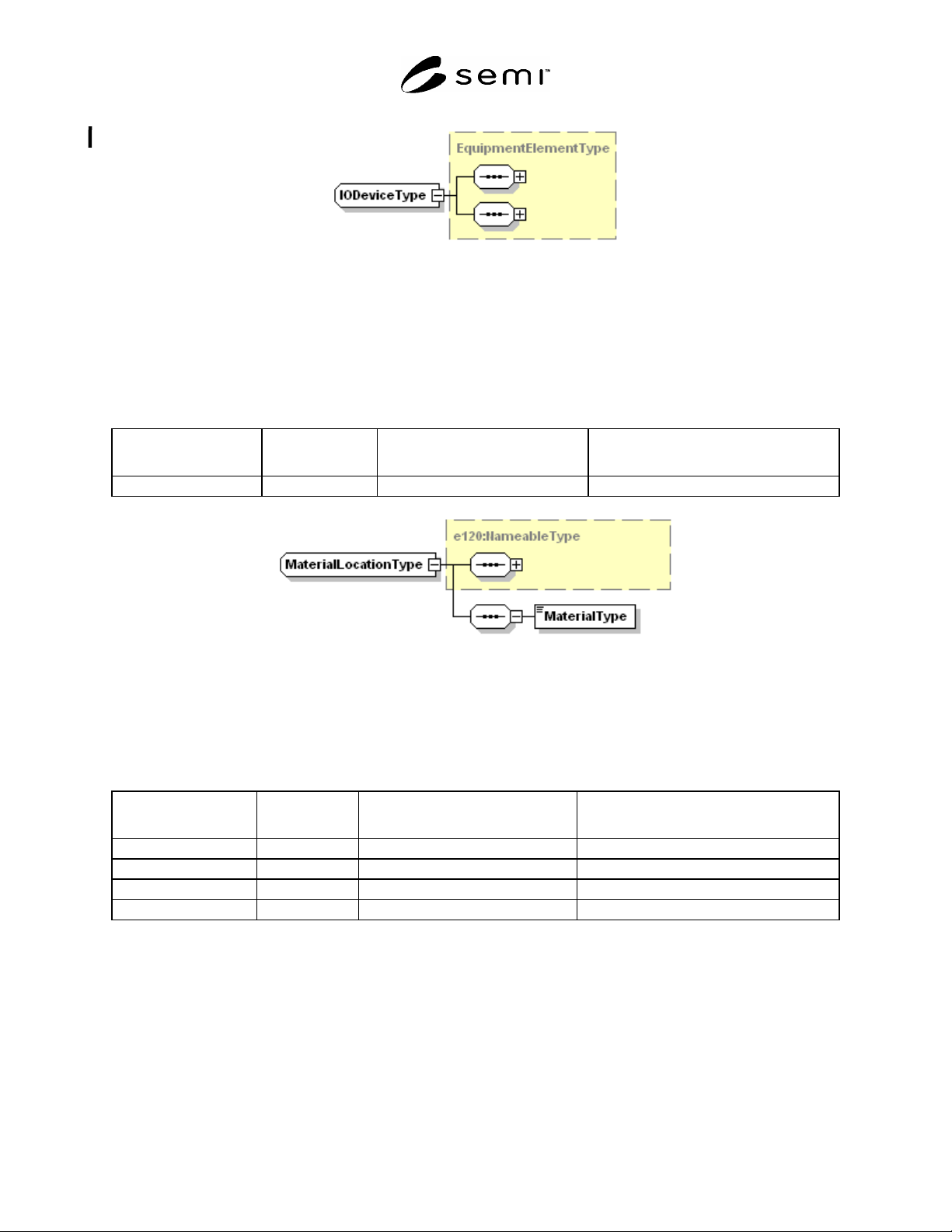
Figure 11
IODeviceType
6.3.9 MaterialLocation => MaterialLocationType
6.3.9.1 The MaterialLocation class is mapped to the XML MaterialLocationType. MaterialLocationType extends
NameableType (see Figure 12).
6.3.9.2 Table 11 shows how the attribute of the MaterialLocation class is mapped into XML.
Table 11 Translation Table For MaterialLocation
Attribute or Role Name UML Type
XML Element or Attribute
(or Reference)
XML Name/Type
materialType enumeration element MaterialType: MaterialTypeEnum
Figure 12
MaterialLocationType
6.3.10 SoftwareModule => SoftwareModuleType
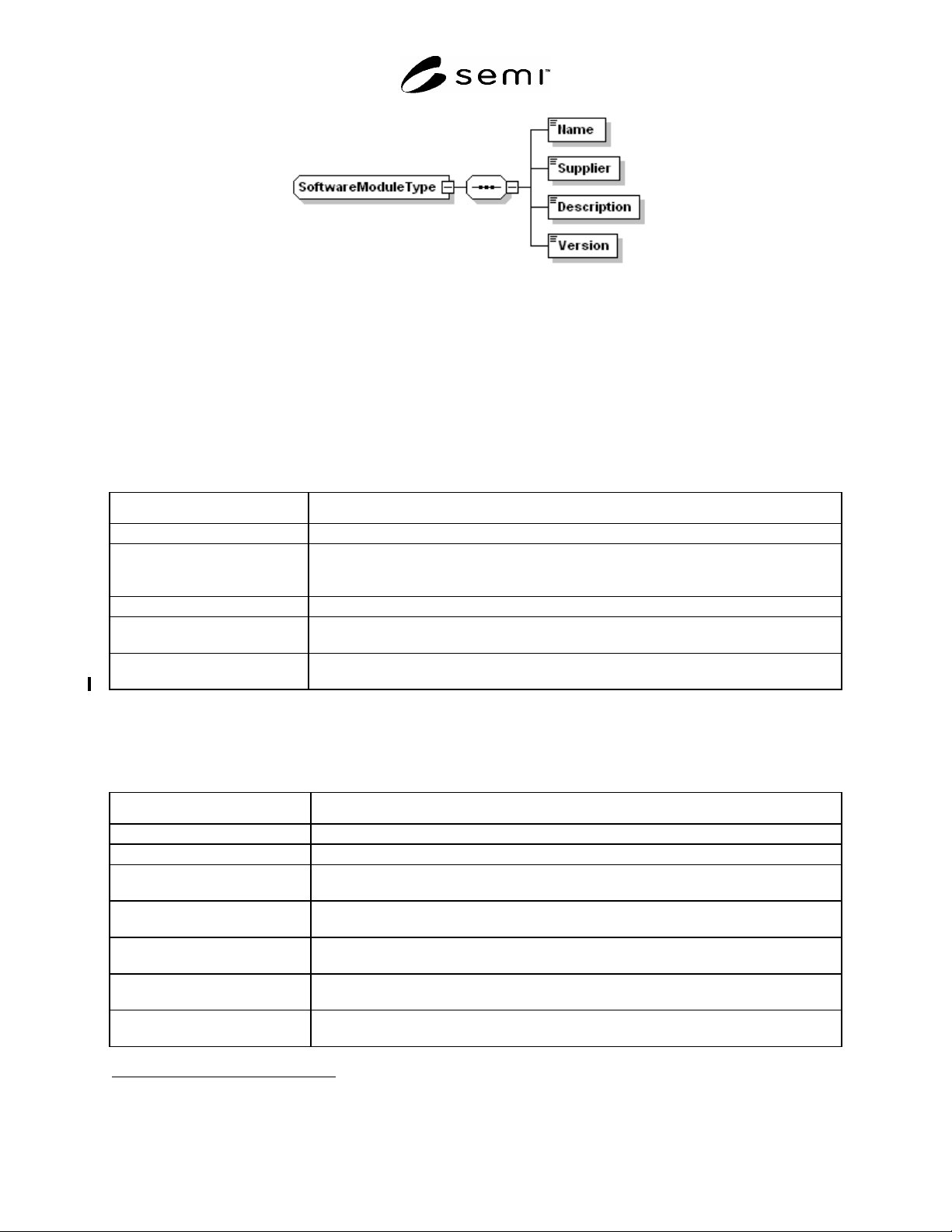
6.3.10.1 The SoftwareModule class is mapped to the XML SoftwareModuleType. Table 12 shows how the
attributes of SoftwareModule are mapped to XML. The resulting XML structure is illustrated in Figure 13.
Table 12 Translation Table For SoftwareModule
Attribute or Role Name UML Type
XML Element or Attribute
(or Reference)
XML Name/Type
name string element Name: xs:string
supplier string element Supplier: xs:string
description string element Description: xs:string
version string element Version: xs:string
SEMI E120.1-0705 © SEMI 2004, 2005 16
Figure 13
SoftwareModuleType
6.4 Added XML Constructs
6.4.1 In the process of translating the UML model for CEM into a useful XML schema, is was necessary to add
certain types and constructs to the schema. This section describes these XML constructs and explains the purpose of
each.
6.4.2 XML simpleTypes
6.4.2.1 Table 13 describes each simpleType
9
contained in the XML schema.
Table 13 simpleTypes In The CEM Schema
Type Description
UuidType Pattern for 36-character uuid string is defined.
LocatorType String pattern defined for the Locator value as defined in the Related Information section of
SEMI E120 This is included to promote common definition of Locator. Its use is not
required by SEMI E120 or this specification.
NameType String pattern is defined, limited to certain characters as defined in SEMI E120.
MaterialTypeEnum Defines possible values “Carrier”, “ProcessDurable”, and “Substrate” for
MaterialLocationType.
ProcessTypeEnum Defines possible values “Measurement”, “Process”, “Storage”, and “Transport” for
ExecutionElementType.
6.4.3 Added XML complexTypes
6.4.3.1 Table 14 describes each added complexType
10
contained in the XML schema that was not described above.
Table 14 complexTypes In The CEM Schema
Type Description
ExtensionArrayType Array of ExtensionType associated with NameableType.
SoftwareModuleArrayType Array of SoftwareModuleType aggregated by EquipmentElementType.
MaterialLocationArrayType Array of MaterialLocationType aggregated by EquipmentComponentsType,
ModuleComponentsType, and SubsystemComponentsType.
IODeviceArrayType Array of IODeviceType aggregated by EquipmentComponentsType,
ModuleComponentsType, and SubsystemComponentsType.
IODeviceRefArrayType Array of IODeviceRef (UuidType) aggregated by EquipmentComponentsType,
ModuleComponentsType, and SubsystemComponentsType.
SubsystemArrayType Array of SubsystemType aggregated by EquipmentComponentsType,
ModuleComponentsType, and SubsystemComponentsType.
SubsystemRefArrayType Array of SubsystemRef (UuidType) aggregated by EquipmentComponentsType,
ModuleComponentsType, and SubsystemComponentsType.
9 “simpleType” is an XML term (see also “xs:simpleType”).
10 “complexType” is an XML term (see also “xs:complexType”).
SEMI E120.1-0705 © SEMI 2004, 2005 17
6.4.4 Equipment Element
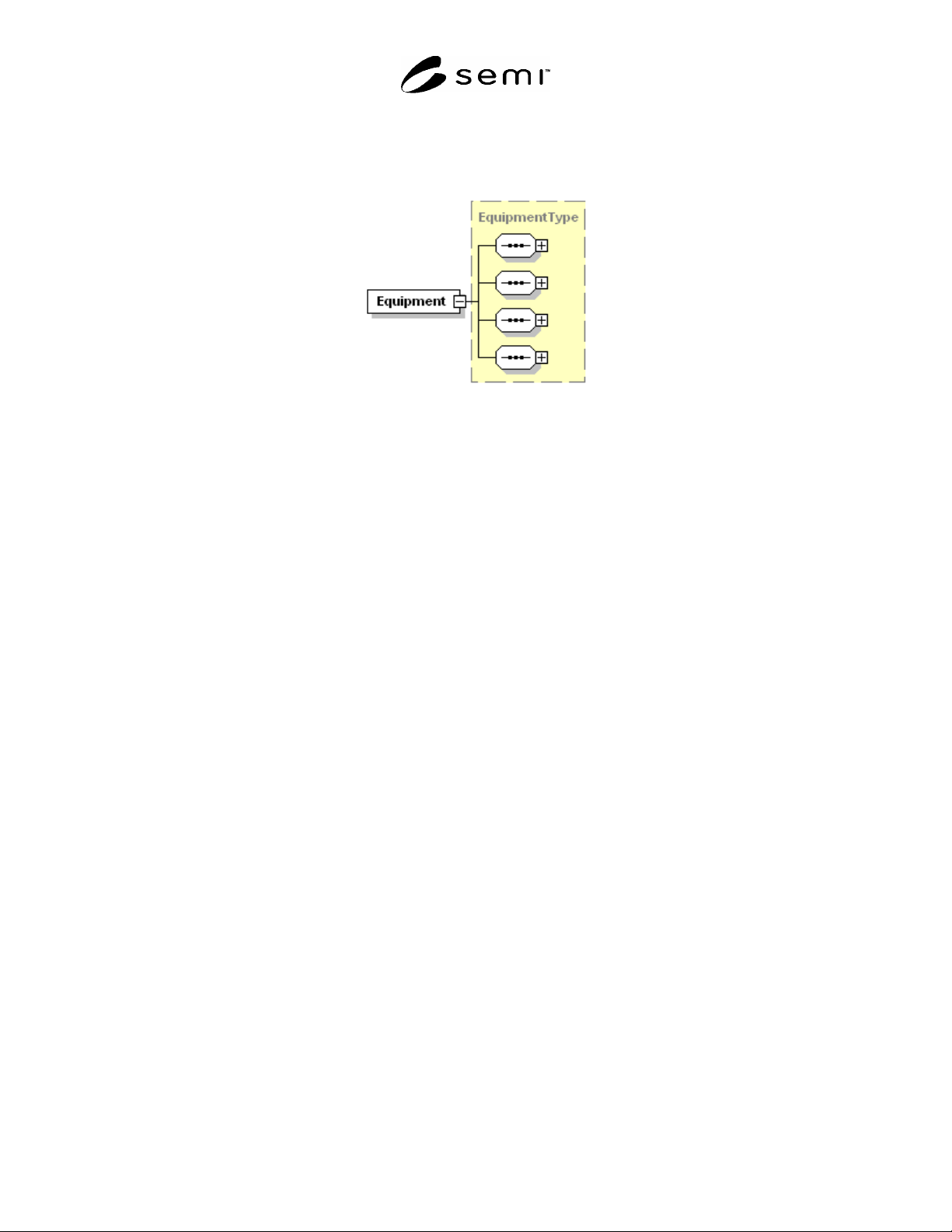
6.4.4.1 Equipment is an element of type EquipmentType (see Figure 14). The Equipment element is included in the
schema to provide for better type checking through the use of Keys and Keyrefs.
Figure 14
Equipment Element
6.4.4.2 The key and keyref constructs in the schema allow the enforcement the structure of the document. A key
defines an element that may be used to uniquely identify a structure in the document. To uniquely identify the
structure in the document, the key element must remain unique within the document. A document will fail
validation if an instance of the element is found that is not unique.
6.4.4.3 The keyref construct allows a reference to a specific key to be created. The keyref requires an instance of
the element exist with the same value as the reference. The key and keyref constructs allow the enforcement of the
Uid elements in the CEM schema. A key exists for all Uid elements in the document forcing each Uid defined in the
document to be unique and creates a table of them. This key is then used to enforce references to all objects base on
Nameable in the document. Additional keys and keyref fields are defined to enforce a reference to an IODevice,
Subsystem, or Module.
6.4.4.4 The unique construct is also used to enforce the structure of the document. The unique construct defines an
element that must be unique within a portion of the document. For the CEM schema, the unique construct enforces
the uniqueness of object names within an aggregation. The enforcement of names is limited to Nameable objects
defined directly within the aggregation. It does not enforce names of objects in references.
7 XML Schema
7.1 The XML schema defined by this specification is contained in a separate document named:
E120-1.V0704.CommonEquipmentModel.xsd
7.2 That schema document is a part of this specification and it should accompany this document.
7.3 The contents of the schema document constitute the core part of this specification. The information above
serves only to explain and describe the schema.
8 Related Documents
8.1 None