semi合集-English.pdf - 第3123页
SEMI E125-0305 © SEMI 2003, 2005 31 10.8.2.4 StateMachi ne Associati on Defini tion Table Table 52 StateMachine Association Definition Association Role Name Definition Comments top The top-level state for this s tate mod…
SEMI E125-0305 © SEMI 2003, 2005 30
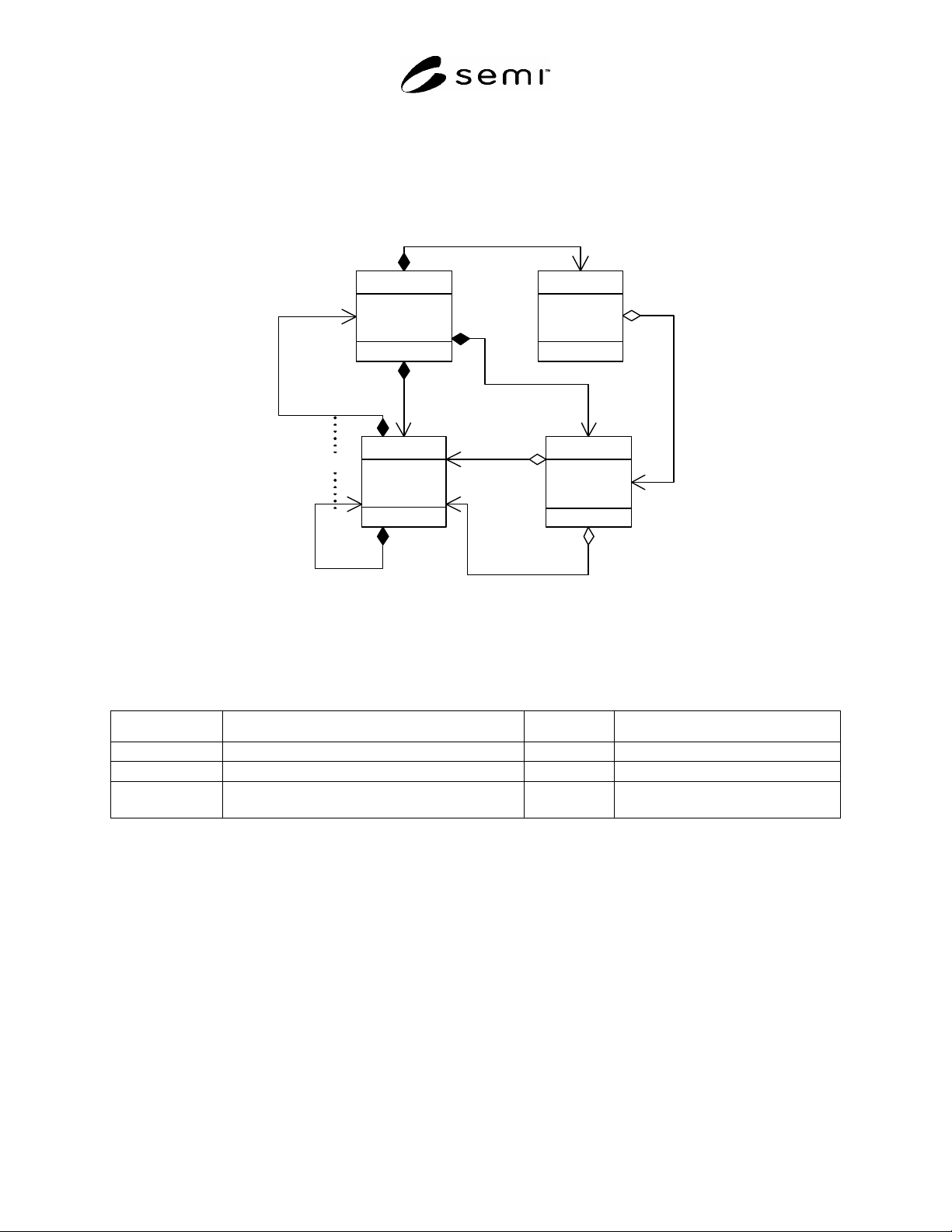
10.8.2.1 The top-level StateMachine instance in a complete state model description represents the state model as a
whole. When appearing as a member of the ‘stateMachines’ association of the State class, the StateMachine class
can be used to describe 2 or more concurrent state machines belonging to that State instance. For example, the
SEMI E87 Carrier state model defines three such concurrent state machines: Carrier ID Status, Carrier Slot Map
Status, and Carrier Accessing Status.
name
id
des cription
State
substates1
0..*
name
id
des cription
StateMachine
top1
1
stateMachines 1
0..*
name
id
description
Transition
transitions
1
1..*
source
0..*1
target0..*
1
name
id
desc ript ion
Event
events 1 0..*
transitions
0..1
1..*
{XOR}
Figure 19
Describing State Machines
10.8.2.2 StateMachine Attribute Definition Table
Table 51 StateMachine Attribute Definition
Attribute Name Definition Required Form
name A human-readable name for this StateMachine. Y Text.
id A unique identifier for this StateMachine. Y Text, unique across all state machines.
description A description of the meaning or purpose of this state
model.
Y Text.
10.8.2.3 SEMI Standard State Machines
10.8.2.3.1 name — If the StateMachine represents a SEMI standard state machine, the value of this attribute shall
be a URN of the form: “urn:semi-org:stateMachine:<standard id>:<state machine>”.
10.8.2.3.1.1 <standard id> shall be a string formatted according to the SEMI standard form for representing a
specific version of a standard document (for example, “E87-1101”), no spaces, upper-case alphanumeric characters
and hyphens only.
10.8.2.3.1.2 <state machine> shall be the name of the state machine as it appears in the standard, with each word in
the name concatenated. The state machine name shall use the camel case capitalization convention (that is, only the
first letter of each word in the state machine name is capitalized). For example, the state machine name for the
SEMI E87 LOAD PORT TRANSFER state machine would be “LoadPortTransfer”.
SEMI E125-0305 © SEMI 2003, 2005 31
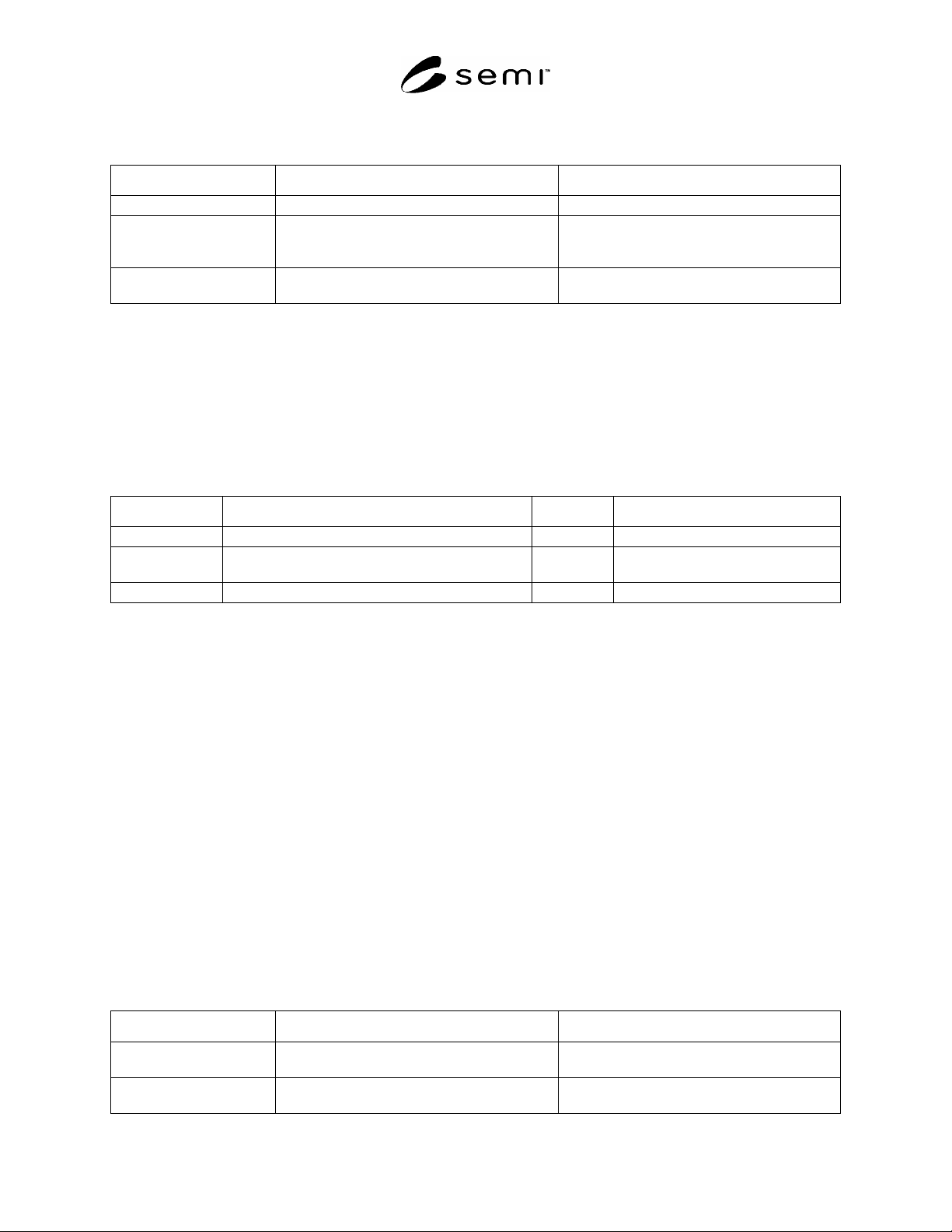
10.8.2.4 StateMachine Association Definition Table
Table 52 StateMachine Association Definition
Association Role Name Definition Comments
top The top-level state for this state model. One and only one element of type State.
transitions A list of zero or more transitions between the
states and substates that comprise this state
machine.
List of one or more elements of type Transition.
events The events that the equipment generates when a
transition between states occurs
List of zero or more elements of type Event.
10.8.3 State — This class represents a single state contained within a state machine. Each State can contain zero or
more substates, or zero or more StateMachines, but cannot contain both substates and StateMachines. A substate
represents a state-within-a-state. A StateMachine represents a state-machine-within-a-state. For example, if a given
state contained 2 concurrently executing state machines, each concurrent state machine would be represented as a
stateMachine within the containing state. Initial states shall have a name attribute equal to “Initial”, final states shall
have a name attribute equal to “Final”.
10.8.3.1 State Attribute Definition Table
Table 53 State Attribute Definition
Attribute Name Definition Required Form
name A human-readable name for this state. Y Text.
id A unique identifier for this state. Y Text, unique across all states in this
StateMachine.
description A description of the meaning or purpose of this state. Y Text.
10.8.3.2 SEMI Standard States
10.8.3.2.1 name — If the State represents a SEMI standard state, the value of this attribute shall be a URN of the
form: “urn:semi-org:state:<standard id>:<state machine>:<state path name>”.
10.8.3.2.1.1 <standard id> shall be a string formatted according to the SEMI standard form for representing a
specific version of a standard document (for example, “E87-1101”), no spaces, upper-case alphanumeric characters
and hyphens only.
10.8.3.2.1.2 <state machine> shall be the name of the state machine in which the transition is defined. This field
shall be equal to the state machine name as it appears in the standard, with each word in the name concatenated.
The state machine name shall use the camel case capitalization convention (that is, only the first letter of each word
in the state machine name is capitalized). For example, the state machine name for the SEMI E87 LOAD PORT
TRANSFER state machine would be “LoadPortTransfer”.
10.8.3.2.1.3 <state path name> shall be formed by concatenating the names of all states from the top level state in
the state machine to the state being described, including any substates in between. Each state name in the path shall
be separated by the ‘.’ character. State names shall have no spaces, use alphanumeric characters only, and use camel
case capitalization. For example, the E87 “SLOT MAP NOT READ” state of the Carrier state machine would have
a <state path name> equal to “Carrier.CarrierSlotMapStatus.SlotMapNotRead”.
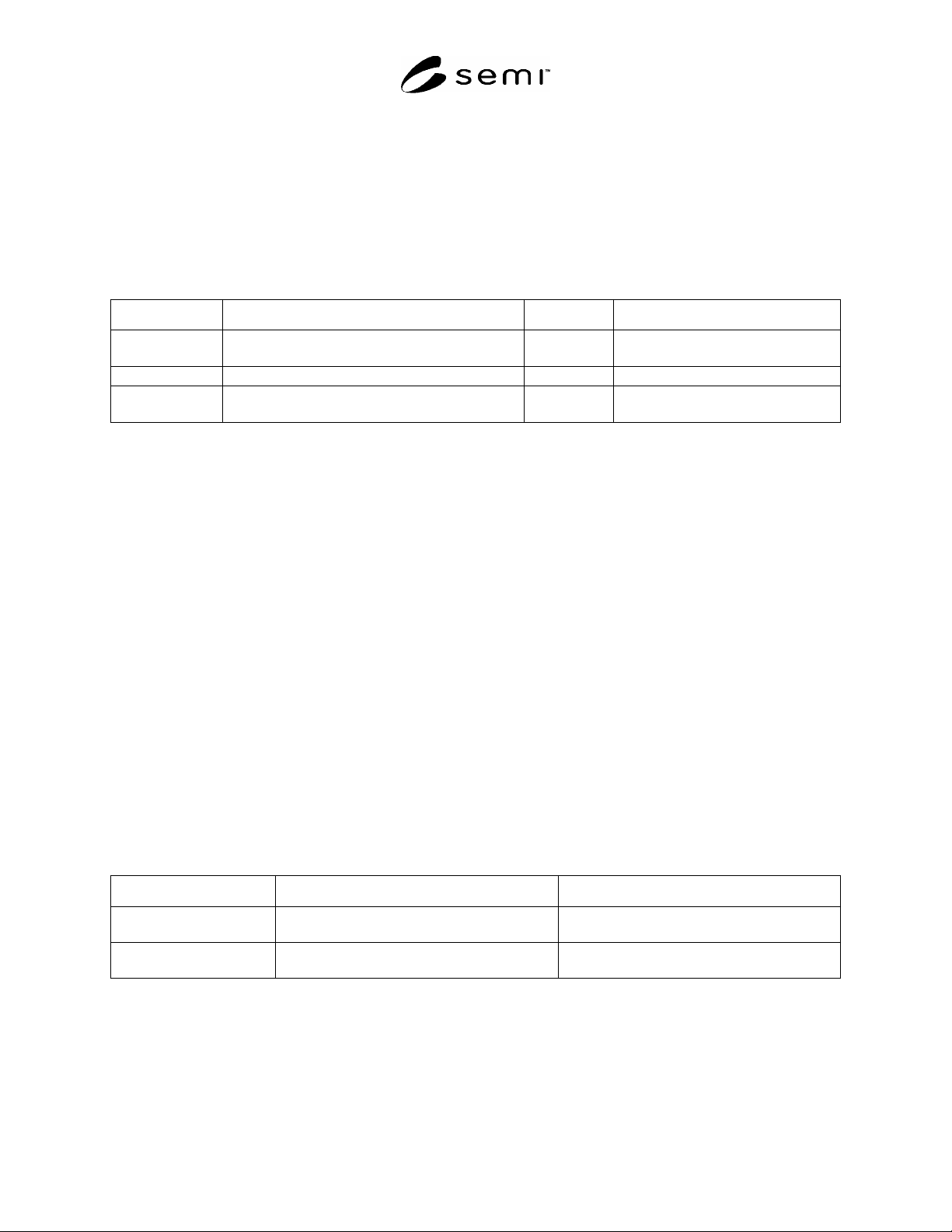
10.8.3.3 State Association Definition Table
Table 54 State Association Definition
Association Role Name Definition Comments
substates A list of zero or more substates that comprise this
state.
List of zero or more elements of type State.
stateMachines A list of zero or more concurrently-executing
state models that comprise this state.
List of zero or more elements of type
StateMachine.
SEMI E125-0305 © SEMI 2003, 2005 32
10.8.4 Transition — This class represents a transition between any two states contained within the same
StateMachine, including substates. Each transition references one “source”, or “from” state, and one “target”, or
“to” state, representing the originating and ending states. There must be one Transition defined for all possible state
transitions in the StateMachine instance. History or conditional transitions are described by providing as many
transitions as there are possible conditional or history-based outcomes. True Harel history transitions can be
accommodated by mapping all such transitions to a single event. The ‘description’ attribute can be used to provide a
human-readable description of the condition under which the transition takes place.
10.8.4.1 Transition Attribute Definition Table
Table 55 Transition Attribute Definition
Attribute Name Definition Required Form
id A unique identifier for this transition. Y Text, unique across all transitions in
this StateMachine.
name A human-readable name for this transition. N Text.
description A description of the meaning or purpose of this
transition.
Y Text.
10.8.4.2 SEMI Standard Transitions
10.8.4.2.1 name — If the Transition represents a SEMI standard transition, the value of this attribute shall be a
URN of the form: “urn:semi-org:transition:<standard id>:<state machine>:<transition number>:<transition name>”.
10.8.4.2.1.1 <standard id> shall be a string formatted according to the SEMI standard form for representing a
specific version of a standard document (for example, “E87-1101”), no spaces, upper-case alphanumeric characters
and hyphens only.
10.8.4.2.1.2 <state machine> shall be the name of the state machine in which the transition is defined. This field
shall be equal to the state machine name as it appears in the standard, with each word in the name concatenated.
The state machine name shall use the camel case capitalization convention (that is, only the first letter of each word
in the state machine name is capitalized). For example, the state machine name for the SEMI E87 LOAD PORT
TRANSFER state machine would be “LoadPortTransfer”.
10.8.4.2.1.3 <transition number> shall be a string representation of the transition number as it appears in the state
machine definition.
10.8.4.2.1.4 <transition name> shall be formed by concatenating the names of the source and target states for the
<transition number>, separated by a hyphen. The state names shall have no spaces, use alphanumeric characters
only, and use camel case capitalization. If either of these states is an “initial” or “final” state, the words “Initial” or
“Final”, respectively, shall be used for the state name. For example, the event name for the E87 load port transfer
history transition from the initial state to “OUT OF SERVICE” would be “Initial-OutOfService”.
10.8.4.3 Transition Association Definition Table
Table 56 Transition Association Definition
Association Role Name Definition Comments
source The state of origin for this transition. References one and only one state within this
StateMachine.
target The transitioned-to state. References one and only one state within this
StateMachine.