semi合集-English.pdf - 第4055页
SEMI F53-0600 © SEMI 2000 12 Table 2 Res ults of Electrom agnetic Susceptibility Testing A. Radi ated Sus cepti bility Data Points Freq. (Hz) F ield Strength (V/m) MFC Indi cated Flow (%FS), co rrected for zero Flow Stan…
SEMI F53-0600 © SEMI 200011
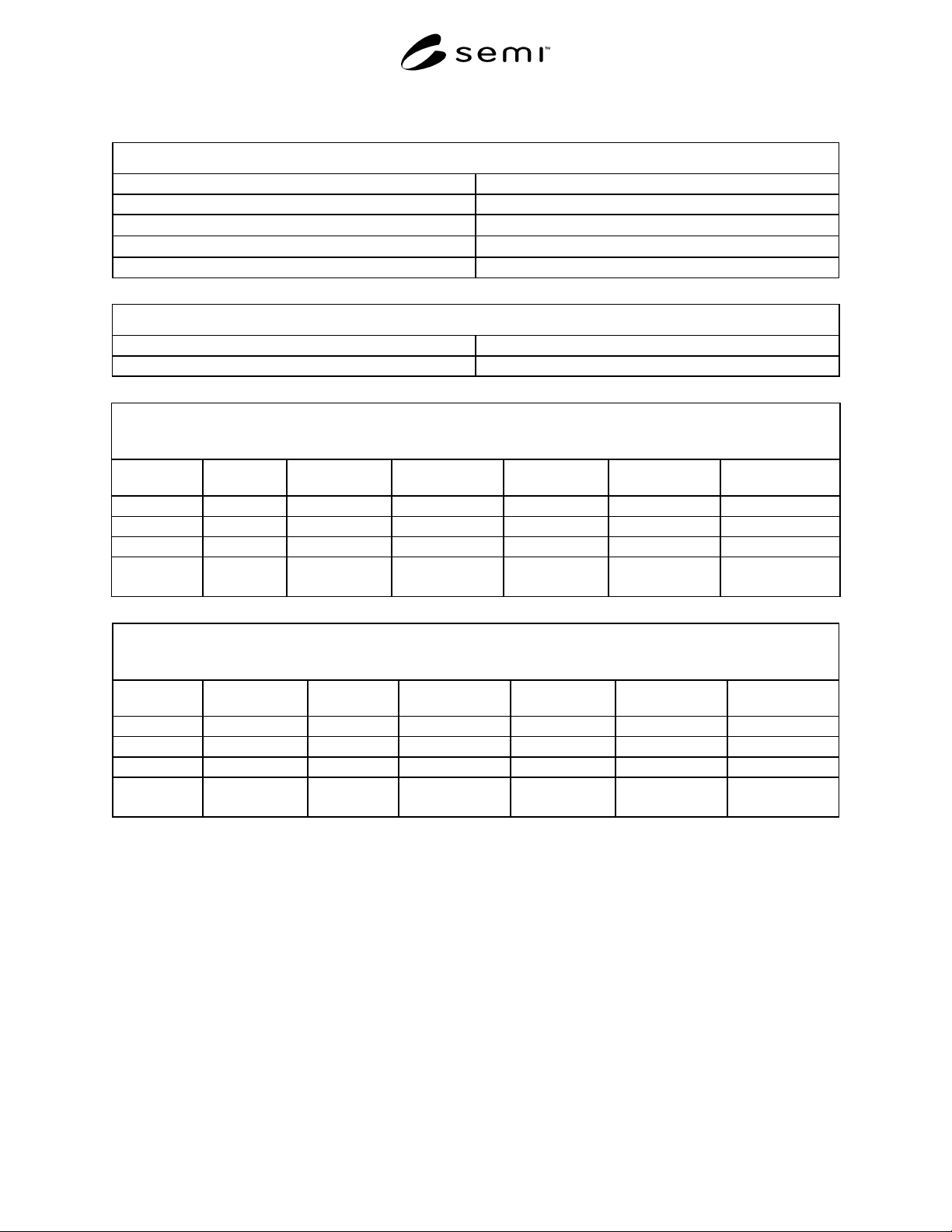
Table 1 Data Sheet for EM Susceptibility Testing
Initial Condition
MFC Indicated Output
Flow Standard Output
Ambient Temperature
°C
Gas Temperature
°C
Gas Pressure psig
MFC Cable Shielding and Connector
Cable Shielding
Type of MFC Connector
EM Susceptibility Testing
I. EM Field-Radiated
Data Points Frequency
(Hz)
Field Strength
(V/m)
MFC Indicated
Flow (V)
Flow Standard
Output
MFC Indicated
Flow (%FS)
Flow Standard
(%FS)
1
2
3
:
:
EM Susceptibility Testing
II. EM Field-Conducted
Data Points Spike
Amplitude (V)
Location of
Spike Input
MFC Indicated
Flow (V)
Flow Standard
Output
MFC Indicated
Flow (%FS)
Flow Standard
(%FS)
1
2
3
:
:
SEMI F53-0600 © SEMI 2000 12
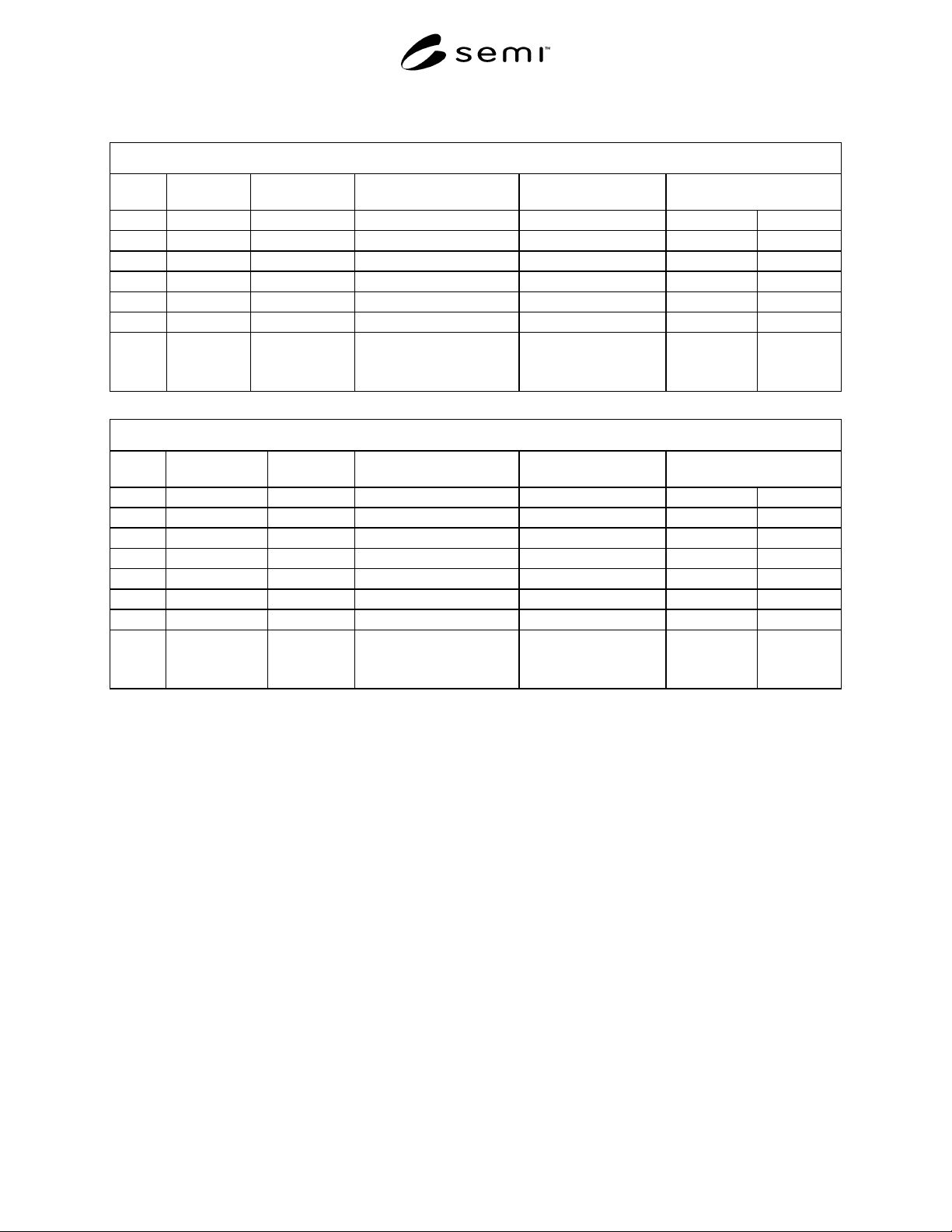
Table 2 Results of Electromagnetic Susceptibility Testing
A. Radiated Susceptibility
Data
Points
Freq. (Hz) Field Strength
(V/m)
MFC Indicated Flow
(%FS), corrected for zero
Flow Standard (FS%),
corrected for zero
Change in Flow from
Reference
MFC (%FS) Std. (%FS)
1
2
3
4
5
:
:
B. Conducted Susceptibility
Data
Points
Spike
Amplitude (V)
Location of
Spike Input
MFC Indicated Flow
(%FS), corrected for zero
Flow Standard (FS%),
corrected for zero
Change in Flow from
Reference
MFC (%FS) Std. (%FS)
1
2
3
4
5
6
:
:
NOTICE: SEMI makes no warranties or representations as to the suitability of the test method set forth herein for
any particular application. The determination of the suitability of the test method is solely the responsibility of the
user. Users are cautioned to refer to manufacturer’s instructions, product labels, product data sheets, and other rele-
vant literature respecting any materials mentioned herein. These test methods are subject to change without notice.
The user’s attention is called to the possibility that compliance with this test method may require use of copyrighted
material or of an invention covered by patent rights. By publication of this test method, SEMI takes no position
respecting the validity of any patent rights or copyrights asserted in connection with any item mentioned in this test
method. Users of this test method are expressly advised that determination of any such patent rights or copyrights,
and the risk of infringement of such rights, are entirely their own responsibility.
Copyright by SEMI® (Semiconductor Equipment and Materials
International), 3081 Zanker Road, San Jose, CA 95134. Reproduction o
f
the contents in whole or in part is forbidden without express written
consent of SEMI.

SEMI F54-1000 © SEMI 20001
SEMI F54-1000
TEST METHOD FOR MEASURING THE COUNTING EFFICIENCY OF
CONDENSATION NUCLEUS COUNTERS
This test method was technically approved by the Global Facilities Committee and is the direct responsibility
of the North American Facilities Committee. Current edition approved by the North American Regional
Standards Committee on July 13, 2000. Initially available on SEMI OnLine August 2000; to be published
October 2000. Previously published June 2000.
1 Purpose
1.1 Particle specifications for gases require the use of
condensation nucleus counters (CNCs) having specified
counting efficiencies. This document provides the test
method for determining the counting efficiencies of
CNCs.
2 Scope
2.1 This document provides the method for 1)
generating an aerosol standard consisting of sodium
chloride (NaCl) particles having sizes 0.01 micrometer
and larger suspended in air at atmospheric pressure (1 ×
10
5
Pa), 2) controlling the size and concentration of
particles in the aerosol, and 3) using the aerosol to
determine the counting efficiency of a CNC as a
function of particle size. This method is suitable for
CNCs having a lower size sensitivity of 0.01
micrometer or larger.
NOTE
1: Suitable test methods for calibrating optical particle
counters are contained in ASTM F328 and JIS B 9921.
2.2 This standard does not purport to address safety
issues, if any, associated with its use. It is the
responsibility of the users of this standard to establish
appropriate safety and health practices and determine
the applicability of regulatory limitations prior to use.
3 Limitations
3.1 This document does not provid e the method for
adjusting the CNC’s counting efficiency.
3.2 This document does not provid e the method for
determining the CNC
’s background noise level,
maximum concentration limit, or maximum detectable
particle size.
4 Referenced Standards
4.1 ASTM standards
1
ASTM D1193 — Standard Specification for Reagent
Water
1 American Society of Testing and Materials, 1916 Race Street,
Philadelphia, PA 19103, USA
ASTM F328 — Standard Practice for Calibration of an
Airborne Particle Counter Using Monodisperse
Spherical Particles
4.2 JIS standard
2
JIS B 9921 — Japanese Industrial Standard, Light
Scattering Automatic Particle Counter
NOTE 2: As listed or revised, all documents cited shall be the
latest publications of adopted standards.
5 Terminology
5.1 aerosol electrometer — an instrument that
converts the charge flow in an aerosol stream to an
electrical current signal.
5.2 aerosol standard — an aerosol containing particles
of a known size and concentration.
5.3 coincidence error — the inaccuracy in a measured
particle concentration caused by multiple particles in
the optical sensing volume of an instrument.
5.4 concentration limit — the maximum concentration
of particles in an aerosol to avoid a coincidence error of
10% or greater in an instrument.
5.5 counting efficiency — the ratio of the
concentration of particles reported by the CNC to that
reported simultaneously from the same aerosol by a
reference instrument.
5.6 lower size sensitivity — the particle size
corresponding to 50% counting efficiency for the CNC.
5.7 monodisperse aerosol — an ae rosol having a
narrow distribution of particle sizes. The maximum
band width of a monodisperse aerosol is defined in
Section 8.7.
5.8 particle concentration — the number of particles
per unit volume in a gas.
5.9 polydisperse aerosol — an aerosol having a wide
distribution of particle sizes.
NOTE 3: Additional terminology is contained in ASTM F328
and JIS B 9921.
2 Japanese Standards Association, 1-24, Akasaka 4-chome, Minato-
ku, Tokyo 107, Japan