semi合集-English.pdf - 第4671页
SEMI C3.56-06 00 © SEMI 2000 3 A P PENDIX 1 STA BILITY OF DIB ORA NE MIXTURES (F OR INFOR M A TION ONLY) NOT E: T he mate rial in this appendix is an off icial part of SEMI C3.56 and w as approve d by full lette r ballot…

SEMI C3.56-0600 © SEMI 2000 2
5.2 Instrument parameters
5.2.1 Cell path length
5.2.1.1 10 cm (mixtures 100 ppm to 10%)
5.2.1.2 10 m (mixtures up to 100 ppm)
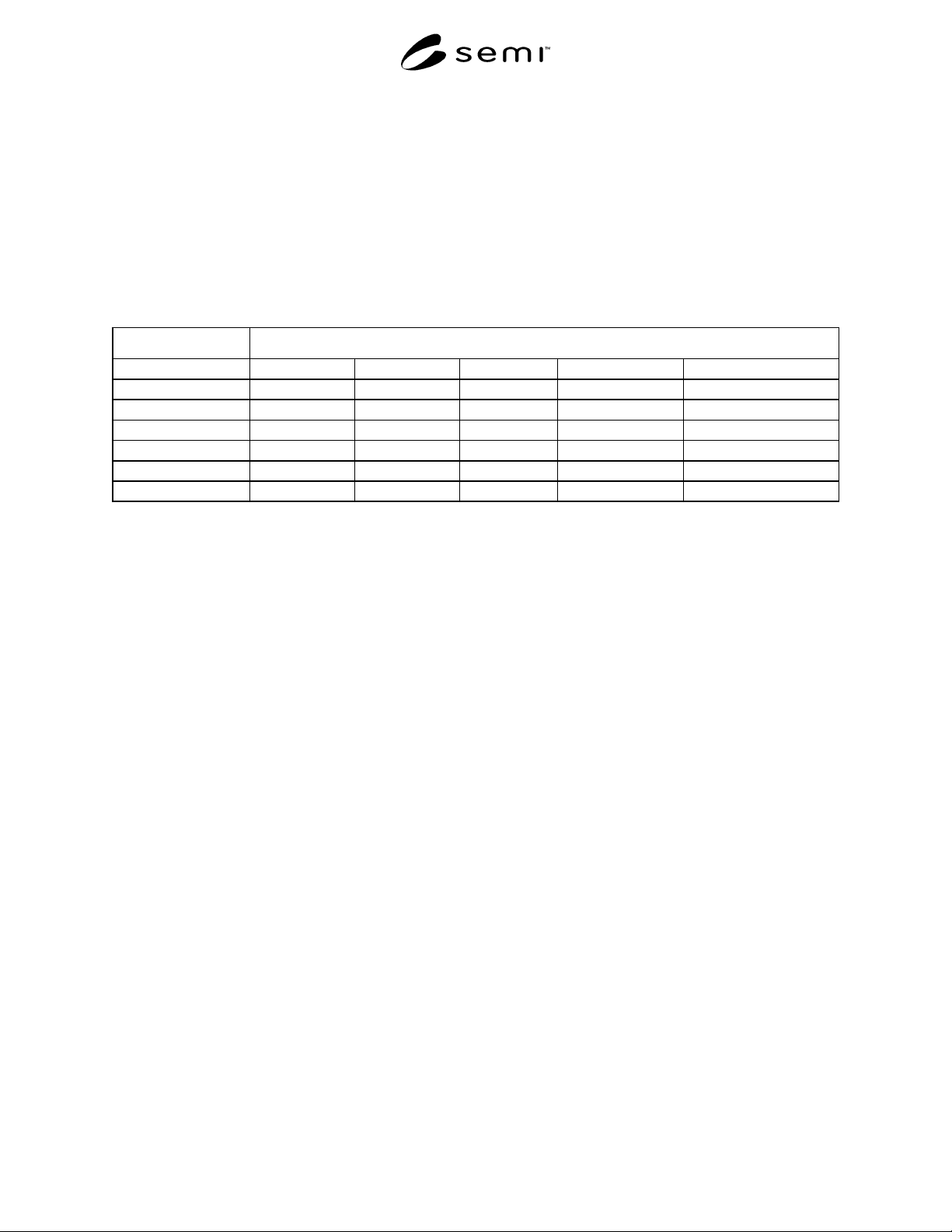
Wavenumber 2444–2739 cm
-1
Resolution 4 cm
-1
5.2.2 Sample Flow
5.2.2.1 20 l/h at 10 cm path length
5.2.2.2 40 l/h at 10 m path length
5.3 Calibration standard — diborane in hydrogen
NOTE 3: Depending on the concentration of diborane and the
storage temperature the standard can be unstable (Section 5).
It is recommended to use an appropriate standard with a
diborane concentration as low as possible and to store it at
low temperature. If there are doubts about the stability of the
standard the diborane concentration can be verified by wet
chemical methods. (See DIN 50457-1.)
5.4 Operating Procedures
5.4.1 Purge the sampling system leading to the cell
and the cell with dry nitrogen for 15 minutes and until a
zero absorbance is obtained between 2444–2739 cm
-1
.
Then purge the cell with the calibration standard and
record the absorption of diborane. When a steady
absorbance reading is obtained, after approximately 5–
10 minutes, the true concentration of the standard shall
be recorded. Record the pressure in the gas cell using a
calibrated pressure-measuring device.
5.4.2 To determine the concentration of diborane in
the mixture set the sample flow through the cell
following the same procedures as detailed above.
Record the absorption at the same wave number as the
calibration standard. Ensure that gas cell pressures are
equal during calibration and the determination.
Calculate the concentration of diborane. The result must
conform to the specification in Section 4 of this
standard.
SEMI C3.56-0600 © SEMI 20003
APPENDIX 1
STABILITY OF DIBORANE MIXTURES (FOR INFORMATION ONLY)
NOTE: The material in this appendix is an official part of SEMI C3.56 and was approved by full letter ballot procedures on April
4, 2000 by the European Regional Standards Committee.
A1-1 The stability of diborane mixtures in N
2
, Ar, or He depends on the concentration of diborane and on the
storage temperature. At ambient temperature best stability is found for mixtures of diborane in hydrogen. No
difference in stability could be found for different cylinder materials (steel, stainless steel, aluminum).
A1-2 The following values were measured for different concentrations of diborane at two different storage
temperatures:
Storage Temperature Diborane Concentration (%) in Nitrogen after
2 17 45 100 160 Days
8 °C 0.549 0.547 0.547 0.543 0.542
22 °C 0.549 0.544 0.539 0.530 0.526
8 °C 5.05 4.91 4.87 4.85 4.78
22 °C 5.05 4.92 4.83 4.72 4.49
8 °C 10.51 10.45 10.43 10.19 10.00
22 °C 10.59 10.30 10.08 9.44 8.85
A1-3 Based on these results it is recommended to keep mixtures at low temperature.
NOTICE: SEMI makes no warranties or representations as to the suitability of the specification set forth herein for
any particular application. The determination of the suitability of the specification is solely the responsibility of the
user. Users are cautioned to refer to manufacturer’s instructions, product labels, product data sheets, and other rele-
vant literature respecting any materials mentioned herein. These specifications are subject to change without notice.
The user’s attention is called to the possibility that compliance with this specification may require use of
copyrighted material or of an invention covered by patent rights. By publication of this specification, SEMI takes
no position respecting the validity of any patent rights or copyrights asserted in connection with any item mentioned
in this specification. Users of this specification are expressly advised that determination of any such patent rights or
copyrights, and the risk of infringement of such rights, are entirely their own responsibility.
Copyright by SEMI® (Semiconductor Equipment and Materials
International), 3081 Zanker Road, San Jose, CA 95134. Reproduction o
f
the contents in whole or in part is forbidden without express written
consent of SEMI.
SEMI C3.34-1102 © SEMI 1989, 2002 1
SEMI C3.34-1102
SPECIFICATION FOR DISILANE (Si
2
H
6
) IN CYLINDERS, 97% QUALITY
This specification was technically approved by the Global Gases Committee and is the direct responsibility of
the North American Gases Committee. Current edition approved by the North American Regional Standards
Committee on August 29, 2002. Initially available at www.semi.org September 2002; to be published
November 2002. Originally published in 1989; previously published in 1992.
1 Purpose
1.1 The purpose of this document is to provide a
specification for Disilane (Si
2
H
6
) used in the
semiconductor industry.
2 Scope
2.1 This document covers requirements for Disilane
(Si
2
H
6
) used in the semiconductor industry.
2.2 If analytical methods are not complete, the
requirements are presented as a guideline.
2.3 This standard does not purport to address safety
issues, if any, associated with its use. It is the
responsibility of the user of these standards to establish
appropriate safety and health practices and determine
the applicability of regulatory limitations prior to use.
3 Description
3.1 Disilane is a pyrophoric, highly flammable,
noncorrosive, colorless gas. It is toxic and a powerful
irritant.
4 Referenced Standards
4.1 SEMI Standards
SEMI C1 — Specifications for Reagents
SEMI C3 — Specifications for Gases
4.2 Other References
R.J. Bogaert, R.E. Rocheleau and B.N. Baron “Gas
Chromatographic Determination of Silanes” J. of
Chrom. Science Vol. 24, March 86.
NOTE 1: As listed or revised, all documents cited shall be the
latest publications of adopted standards.
5 Terminology
5.1 Terminology appropriate to this standard is defined
in SEMI C3.
6 Specifications
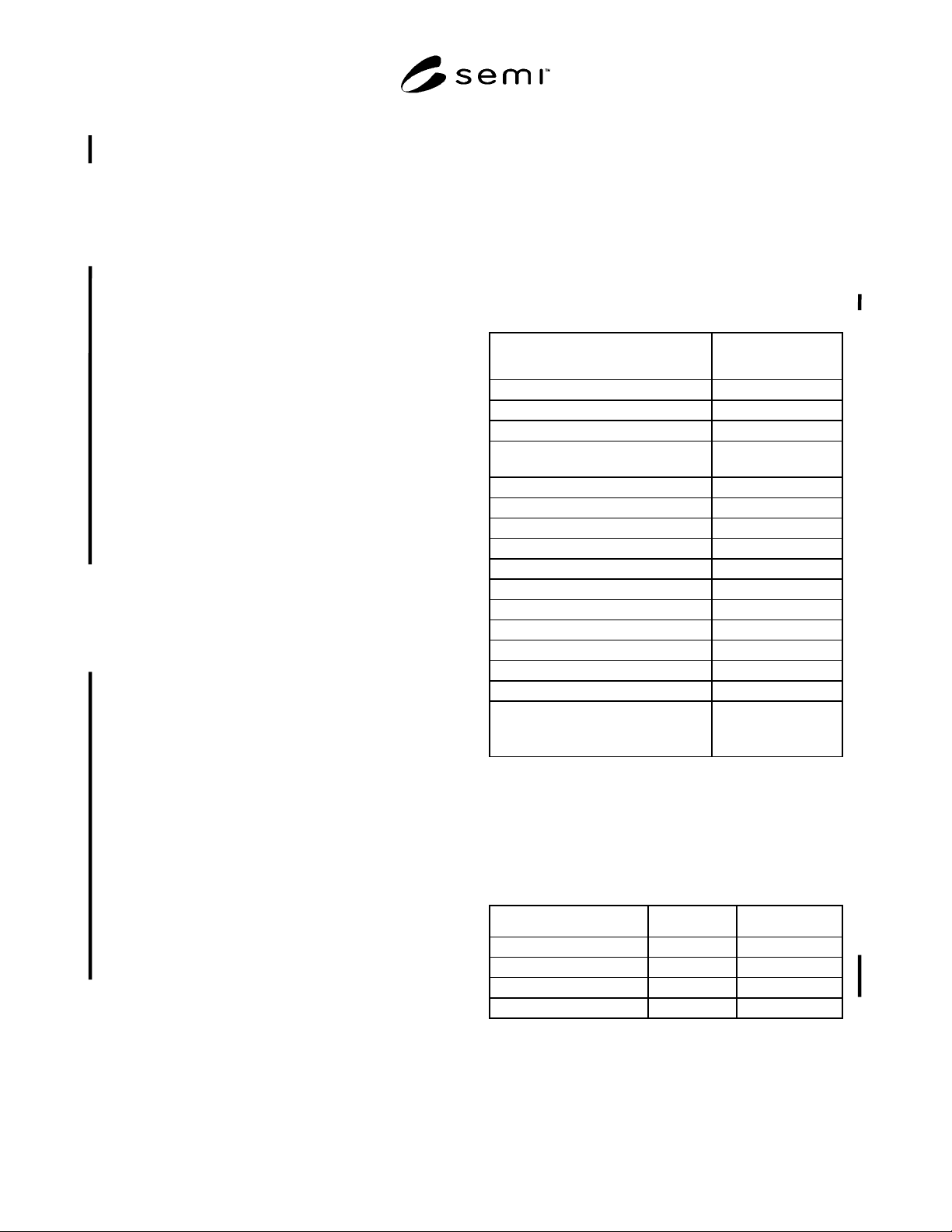
QUALITY: 97%
Impurities
Maximum Acceptable
Level (ppm)*
Argon (Ar) + Oxygen (O
2
) 1
Carbon dioxide (CO
2
) 1
Carbon monoxide (CO) 1
Chlorosilanes (Total hydrolizable
chlorides, reported as (Cl-))
5
Chromium (Cr) **
Disiloxane (H
3
SiOSiH
3
) 5
Hydrogen (H
2
) 500
Iron (Fe) **
Monoethylsilane 50
Nickel (Ni) **
Nitrogen (N
2
) 10
Silane (SiH
4
) 2.5%
Total methane, ethane, propane 10
Total trisilane and tetrasilane 500
Water (H
2
O) 1
TOTAL SPECIFIED IMPURITIES
(excluding chloride, chromium, iron
and nickel)
2.6082%
* An analysis of significant figures has not been considered. The
number of significant figures will be based on analytical accuracy and
the precision of the provided procedure.
** To be determined between supplier and user.
NOTE 2: This specification applies to the gas phase of the
cylinder as received.
7 Physical Constants (for information only)
Metric Units US Units
Molecular weight 62.22 62.22
Boiling point at 1 atm −14.8°C 5.4°F
Freezing point −132.5°C −206.5°F
Vapor density (air = 1) 2.38 2.38
8 Analytical Procedures
8.1 Carbon Monoxide and Carbon Dioxide — This
procedure is for the determination of carbon monoxide
and carbon dioxide in disilane using a gas