semi合集-English.pdf - 第6631页
AMMONIUM HYDROXIDE SEMI C21-0301 © SEMI 1978, 20 01 5 NOTE 8: Ea ch laborat ory is res ponsible for verify ing the validity of each me thod within its ow n operation. 11.1 N on-Metal Impurities 11.1.1 See Section 8, whic…

SEMI C21-0301 © SEMI 1978, 2001 AMMONIUM HYDROXIDE4
10.1.1 See Section 8, which contains procedures for
the following tests:
Assay
Color (APHA)
Carbon Dioxide
Substances Reducing Permanganate
10.2 Anions
10.2.1 The following method has given satisfactory
results in determining anion impurities at the values
specified for each of the following anions: chloride
(Cl), phosphate (PO
4
), and sulfate (SO
4
). Alternate
methods may be used as long as appropriate studies
demonstrate a recovery between 75–125% of a known
sample spike for half of the value of each specified
element.
10.2.2 Special Reagents
10.2.2.1 Eluent — Prepare an eluent solution that is
2.2 mM sodium carbonate (Na
2
CO
3
) and 0.75 mM
sodium bicarbonate (NaHCO
3
) in deionized water
meeting the criteria for Type E1.1 in ASTM D5127.
Store eluent under a helium gas blanket.
10.2.2.2 Regenerant — Prepare a 0.025 N sulfuric
acid (H
2
SO
4
) in deionized water meeting the criteria for
Type E1.1 in ASTM D5127.
10.2.2.3 Potassium Carbonate Solution — Prepare a
solution containing 500 mg of reagent grade potassium
carbonate (K
2
CO
3
) in 100 mL of water meeting the
criteria for Type E1.1 in ASTM D5127.
10.2.3 Sample Preparation
10.2.3.1 In a clean environment, place 40 g of sample
into a clean beaker. Add 1 mL of a 5 mg/mL potassium
carbonate solution and evaporate carefully (at 100°C) to
a volume of 0.5 mL. Dilute with water meeting the
criteria for Type E1.1 in ASTM D5127 to a final
volume of 20 mL.
10.2.4 Analysis
10.2.4.1 Using the prepared solutions and blanks,
analyze chloride, nitrate, phosphate, and sulfate by ion
chromatography. Run a reagent blank. Samples and
reagent blanks should be prepared and analyzed in
triplicate.
10.2.4.2 Columns — Precolumn should be AG4-A
(Dionex) or equivalent, and separation column should
be AS4-A (Dionex) or equivalent.
10.3 Trace Metals Analysis
10.3.1 The following method has given satisfactory
results in determining metal ion impurities at the values
specified for each of the following metals: aluminum
(Al), antimony (Sb), arsenic (As), boron (B), calcium
(Ca), chromium (Cr), copper (Cu), gold (Au), iron (Fe),
lead (Pb), magnesium (Mg), manganese (Mn), nickel
(Ni), potassium (K), sodium (Na), tin (Sn), titanium
(Ti), and zinc (Zn). Alternate methods may be used as
long as appropriate studies demonstrate a recovery
between 75–125% of a known sample spike for half of
the value of each specified element.
10.3.2 Special Reagents
10.3.2.1 Nitric Acid, Ultra Pure — Use nitric acid
specified for low metal ion content.
10.3.2.2 4% Nitric Acid Solution — Dilute 40 mL of
ultra pure nitric acid to 1 L using water meeting the
criteria for Type E1.1 in ASTM D5127.
10.3.2.3 Water — The water used for all the dilution,
calibration, and standards should meet, at a minimum,
the criteria for Type E1.1 in ASTM D5127 in regard to
cation analysis.
10.3.2.4 Indium Internal Standard — Make up an
indium internal standard solution to a concentration of
20 µg/mL (ppm) from an appropriate concentrated
indium standard solution.
10.3.3 Sample Preparation
10.3.3.1 In a clean environment, evaporate a 50.0 g
sample at low heat until approximately 20 g of the
sample remains. Carefully add 1 mL of the ultra pure
nitric acid and gently warm for several minutes. Cool to
room temperature, add 25 µL of the indium internal
standard, and dilute with Type E1.1 water to a final
weight of 25.0 g.
10.3.4 Analysis
10.3.4.1 Using the prepared solutions and blanks,
analyze sodium, potassium, calcium, and iron by
graphite furnace atomic absorption (GFAA) and the
remaining elements by inductively coupled plasma
mass spectrometry (ICP/MS). For calibration, the
standards are made up in 4% nitric acid solution with
final concentration of 20 ng/g of the indium internal
standard. Run a reagent blank.
11 Grade 4 Procedures
NOTE 7: The analytical procedures associated with this
standard are not intended to be the only acceptable procedure
or the best procedure available. The published procedures
have been found to meet the required criteria for acceptance
of an analytical procedure. Alternate procedures may be used
if they meet the same criteria as the published procedures.

AMMONIUM HYDROXIDE SEMI C21-0301 © SEMI 1978, 20015
NOTE 8: Each laboratory is responsible for verifying the
validity of each method within its own operation.
11.1 Non-Metal Impurities
11.1.1 See Section 8, which contains procedures for
the following tests:
Assay
Color (APHA)
Carbon Dioxide
Substances Reducing Permanganate
11.2 Anions
11.2.1 The following method has given satisfactory
results in determining anion impurities at the values
specified for each of the following anions: chloride
(Cl), phosphate (PO
4
), nitrate (NO
3
), and sulfate (SO
4
).
Alternate methods may be used as long as appropriate
studies demonstrate a recovery between 75–125% of a
known sample spike for half of the value of each
specified anion.
11.2.2 Reagents
11.2.2.1 Eluent — Prepare an eluent solution that is
2.2 mM sodium carbonate (Na
2
CO
3
) and 0.75 mM so-
dium bicarbonate (NaHCO
3
) in deionized water meet-
ing the criteria for Type E1.1 in ASTM D5127. Store
eluent under a helium gas blanket.
11.2.2.2 Regenerant — Prepare a 0.025 N sulfuric
acid (H
2
SO
4
) in deionized water meeting the criteria for
Type E1.1 in ASTM D5127.
11.2.2.3 Potassium Carbonate Solution — Prepare a
solution containing 500 mg of reagent grade potassium
carbonate (K
2
CO
3
) in 100 mL of water meeting the
criteria for Type E1.1 in ASTM D5127.
11.2.3 Sample Preparation
11.2.3.1 In a clean environment, place 200 g of sample
into a clean beaker. Add 1 mL of a 5 mg/mL potassium
carbonate solution and evaporate carefully (at 100°C) to
a volume of 0.5 mL. Dilute with water meeting the
criteria for Type E1.1 in ASTM D5127 to a final
volume of 20 mL.
11.2.4 Analysis
11.2.4.1 Using the prepared solutions and blanks,
analyze chloride, nitrate, phosphate, and sulfate by ion
chromatography. Run a reagent blank. Samples and
reagent blanks should be prepared and analyzed in
triplicate.
11.2.4.2 Columns — Precolumn should be AG4-A
(Dionex) or equivalent, and separation column should
be AS4-A (Dionex) or equivalent.
11.3 Trace Metals Analysis
11.3.1 The following method has given satisfactory
results in determining metal ion impurities at the values
specified for each of the following metals: aluminum
(Al), antimony (Sb), arsenic (As), boron (B), calcium
(Ca), chromium (Cr), copper (Cu), gold (Au), iron (Fe),
lead (Pb), magnesium (Mg), manganese (Mn), nickel
(Ni), potassium (K), sodium (Na), tin (Sn), titanium
(Ti), and zinc (Zn). Alternate methods may be used as
long as appropriate studies demonstrate a recovery
between 75–125% of a known sample spike for half of
the value of each specified element.
11.3.2 Special Reagents
11.3.2.1 Nitric Acid, Ultrapure — Use nitric acid of
low metal ion content.
11.3.2.2 2% Nitric Acid Solution — Dilute ultrapure
nitric acid with water meeting the criteria for Type E1.1
in ASTM D5127.
11.3.2.3 Water — The water used for dilution,
calibration, and standards should meet, at a minimum,
the criteria for Type E1.1 in ASTM D5127 in regard to
cation analysis.
11.3.2.4 Internal Standard Solution — Make up an
internal standard solution to a concentration of 1000
µg/mL from appropriate concentrated scandium, yttri-
um, indium, thulium, and thorium standard solutions.
11.3.3 Sample Preparation
11.3.3.1 In a clean environment, in a teflon bottle,
evaporate a 50.0 g sample at low heat until approxi-
mately 5 g of the sample remains. Cool to room temper-
ature, add 100 µL of the internal standard solution, and
dilute with 2% nitric acid to a final weight of 10.0 g.
11.3.4 Analysis
11.3.4.1 Using the prepared solutions and blanks,
calibrate the instrument and analyze calcium, iron,
sodium, and potassium by cool plasma inductively
coupled plasma mass spectrometry (ICP-MS) and the
remaining elements by normal plasma ICP-MS.
11.3.4.2 Calculations — All data were reported
relative to an appropriate 1.0 µg/L standard and
corresponding blank solution. Internal standard
corrections were applied to the data.
12 Grade 5 Procedures
12.1 This section does not apply to this chemical.
13 VLSI Grade Procedures
13.1 Specific procedures for this grade do not exist.
Refer to Sections 8 and 9 for available procedures.
SEMI C21-0301 © SEMI 1978, 2001 AMMONIUM HYDROXIDE6
14 Tier A Procedures
14.1 This section does not apply to this chemical.
15 Tier B Procedures
15.1 This section does not apply to this chemical.
16 Tier C Procedures
16.1 This section does not apply to this chemical.
17 Tier D Procedures
17.1 Standardized test methods are being developed
for all parameters at the purity levels indicated. The
Process Chemicals Committee considers a test method
to be valid if there is a documented recovery study
showing a recovery of 75–125%. Recovery is for a
known sample spike at 50% of the specified level.
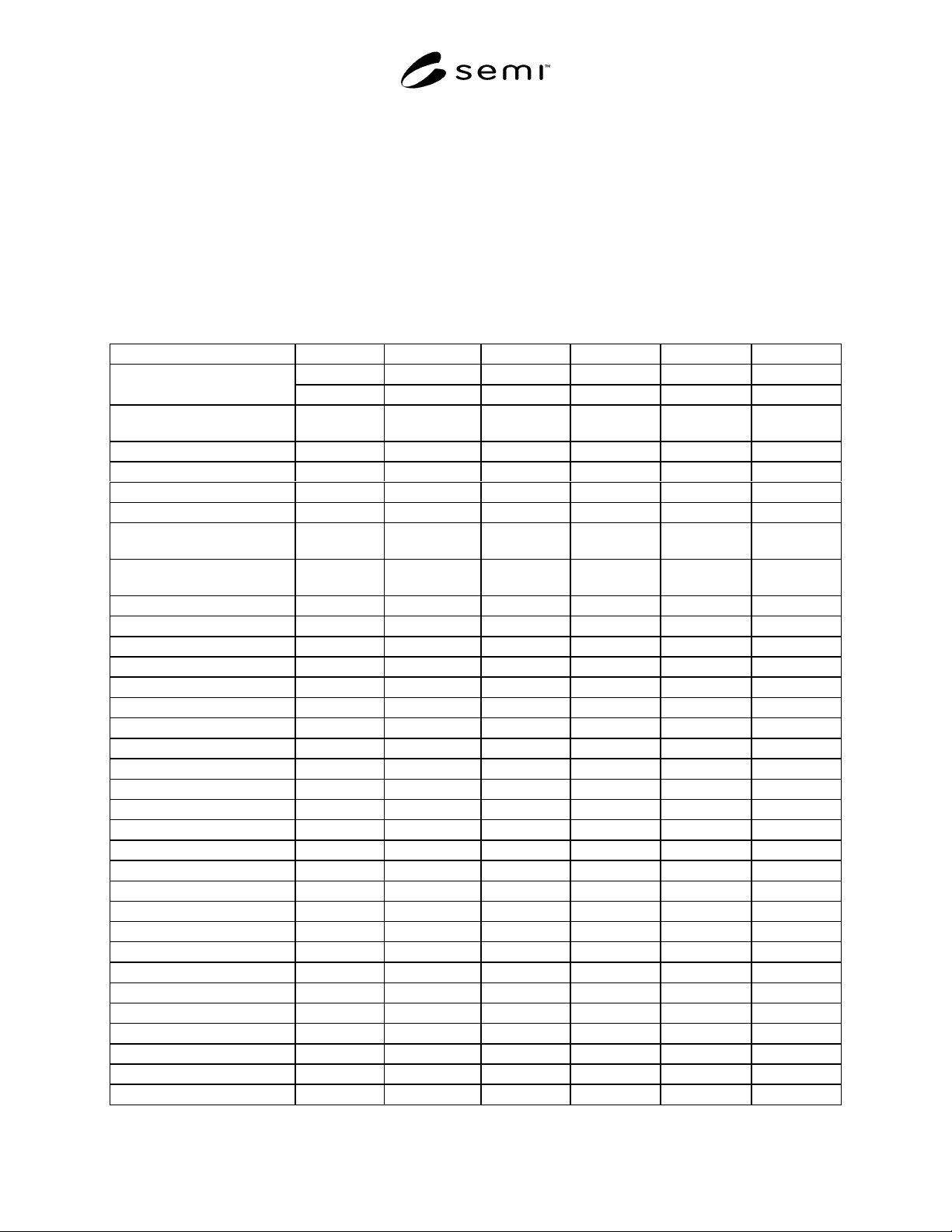
Table 1 Impurity Limits and Other Requirements for Ammonium Hydroxide
Previous SEMI Reference # C1.4-95 C7.1-96 C8.1-0298 C17.1-0298 C11.1-94 --
Grade 1 Grade 2 Grade 3 Grade 4 VLSI Grade Tier D
(Specification) (Specification) (Specification) (Specification) (Guideline) (Guideline)
Assay (as NH
3
) 28.0 - 30.0% 28.0 - 30.0% 28.0 - 30.0% 28.0 - 30.0% 25.0 - 27.0% o
r
28.0 - 30.0%
28.0 - 30.0%
Appearance To pass test -- -- -- -- --
Color (APHA) 10 max 10 max 10 max 10 max 10 max 10 max
Residue after Ignition -- -- -- -- 2 ppm max --
Residue after Evaporation -- -- -- -- 10 ppm max --
Substances Reducing KMnO
4
(as O)
-- -- -- -- 5 ppm max --
Substances Reducing
Permanganate
To pass test To pass test To pass test To pass test -- --
Carbon Dioxide (CO
2
) 20 ppm max 20,000 ppb max 20 ppm max 20 ppm max -- 20 ppm max
Carbonate (CO
2
) -- -- -- -- 10 ppm max --
Chloride (Cl) 0.5 ppm max 200 ppb max 100 ppb max 50 ppb max 0.5 ppm max 30 ppb max
Nitrate (NO
3
) -- 400 ppb max 100 ppb max 50 ppb max -- 30 ppb max
Phosphate (PO
4
) 0.5 ppm max 200 ppb max 100 ppb max 40 ppb max 0.2 ppm max 30 ppb max
Silica (SiO
2
) -- -- -- -- 0.2 ppm max --
Sulfide (S) -- -- -- -- 0.2 ppm max --
Sulfate (SO
4
) -- 200 ppb max 100 ppb max 50 ppb max 2 ppm max 30 ppb max
Total Sulfur (SO
4
) 1 ppm max -- -- -- -- --
Aluminum (Al) 0.3 ppm max 10 ppb max 1 ppb max 100 ppt max 0.05 ppm max 10 ppt max
Antimony (Sb) -- 5 ppb max 1 ppb max 100 ppt max -- 10 ppt max
Arsenic (As) -- 5 ppb max 1 ppb max 100 ppt max -- 10 ppt max
Arsenic and Antimony (as As) 0.05 ppm max -- -- -- 0.05 ppm max --
Barium (Ba) -- -- -- -- 0.01 ppm max 10 ppt max
Beryllium (Be) -- -- -- -- 0.01 ppm max --
Bismuth (Bi) -- -- -- -- 0.02 ppm max --
Boron (B) 0.1 ppm max 10 ppb max 1 ppb max 100 ppt max 0.01 ppm max 10 ppt max
Cadmium (Cd) -- -- -- -- 0.01 ppm max 10 ppt max
Calcium (Ca) 0.3 ppm max 10 ppb max 1 ppb max 100 ppt max 0.1 ppm max 10 ppt max
Chromium (Cr) 0.2 ppm max 10 ppb max 1 ppb max 100 ppt max 0.01 ppm max 10 ppt max
Cobalt (Co) -- -- -- -- 0.01 ppm max --
Copper (Cu) 0.1 ppm max 10 ppb max 1 ppb max 100 ppt max 0.01 ppm max 10 ppt max
Gallium (Ga) -- -- -- -- 0.01 ppm max --
Germanium (Ge) -- -- -- -- 0.05 ppm max --
Gold (Au) 0.3 ppm max 10 ppb max 1 ppb max 100 ppt max 0.02 ppm max --