semi合集-English.pdf - 第6636页
BUFFERED OXIDE ETCHANTS SEMI C23-0301 © SEMI 1981, 20 01 1 SEMI C23-0301 SPECIFICA TIONS FOR BUFFERED OXIDE ETCHANTS These specifications we r e technic ally approved by the Global Process Chem icals Committee a nd are t…
SEMI C22-0699 © SEMI 1994, 1999 2
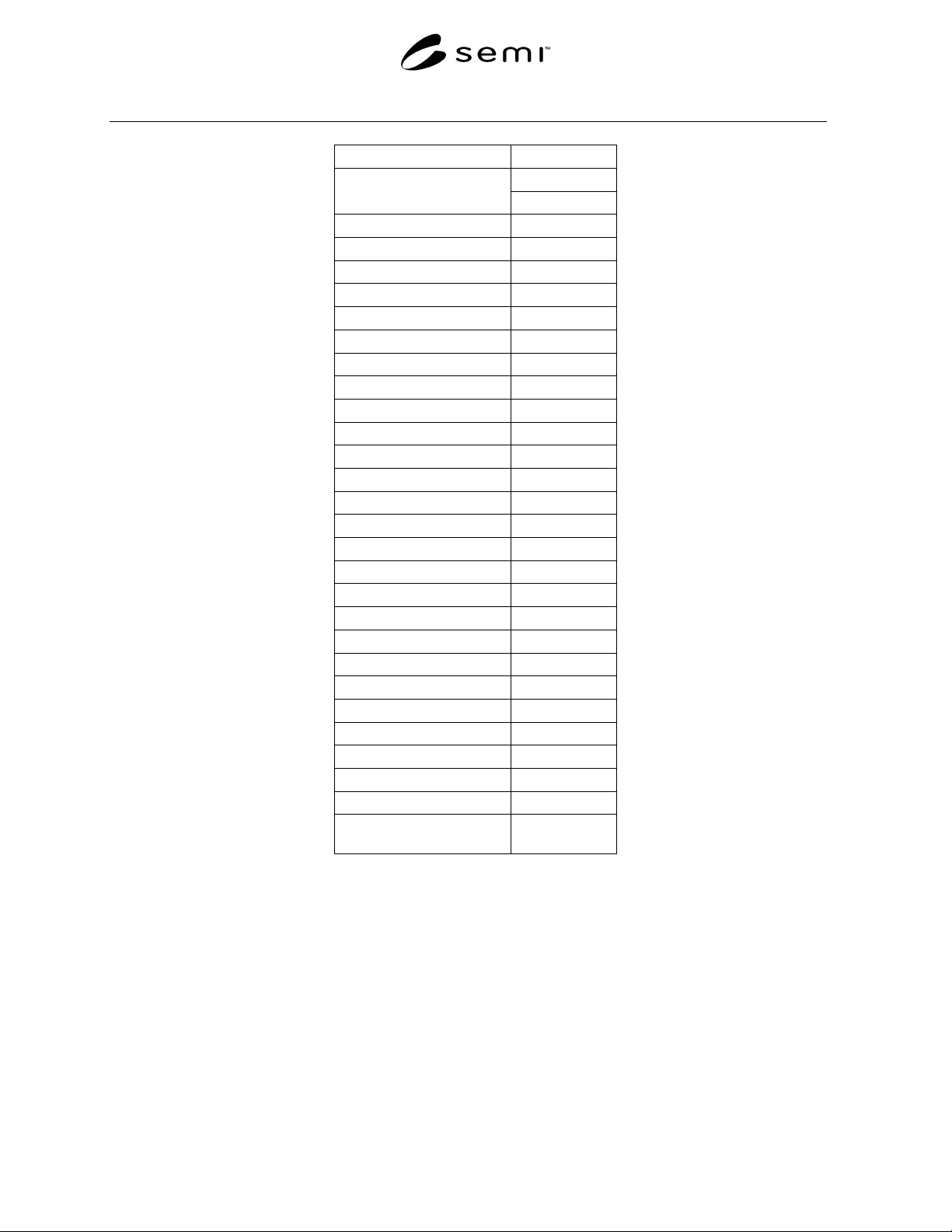
Table 1 Impurity Limits and Other Requirements for Boron Tribromide
Previous SEMI Reference # C7.17-94
Tier A
(Guideline)
Color (APHA) 60 max
Aluminum (Al) 5 ppb max
Antimony (Sb) 5 ppb max
Arsenic (As) 10 ppb max
Barium (Ba) 5 ppb max
Bismuth (Bi) 5 ppb max
Calcium (Ca) 10 ppb max
Chromium (Cr) 5 ppb max
Cobalt (Co) 5 ppb max
Copper (Cu) 5 ppb max
Gallium (Ga) 5 ppb max
Gold (Au) 5 ppb max
Iron (Fe) 10 ppb max
Lead (Pb) 5 ppb max
Lithium (Li) 5 ppb max
Magnesium (Mg) 10 ppb max
Manganese (Mn) 5 ppb max
Mercury (Hg) 10 ppb max
Nickel (Ni) 5 ppb max
Potassium (K) 5 ppb max
Silver (Ag) 5 ppb max
Sodium (Na) 5 ppb max
Strontium (Sr) 5 ppb max
Tin (Sn) 5 ppb max
Titanium (Ti) 5 ppb max
Zinc (Zn) 5 ppb max
Particles in bottles:
size, #/mL
≥0.5 µm, 25 max
NOTICE: These standards do not purport to address
safety issues, if any, associated with their use. It is the
responsibility of the user of these standards to establish
appropriate safety and health practices and determine
the applicability of regulatory limitations prior to use.
SEMI makes no warranties or representations as to the
suitability of the standards set forth herein for any
particular application. The determination of the
suitability of the standard is solely the responsibility of
the user. Users are cautioned to refer to manufacturer’s
instructions, product labels, product data sheets, and
other relevant literature respecting any materials
mentioned herein. These standards are subject to
change without notice.
The user’s attention is called to the possibility that
compliance with this standard may require use of
copyrighted material or of an invention covered by
patent rights. By publication of this standard, SEMI
takes no position respecting the validity of any patent
rights or copyrights asserted in connection with any
item mentioned in this standard. Users of this standard
are expressly advised that determination of any such
patent rights or copyrights, and the risk of infringement
of such rights, are entirely their own responsibility.
Copyright by SEMI® (Semiconductor Equipment and Materials
International), 3081 Zanker Road, San Jose, CA 95134. Reproduction o
f
the contents in whole or in part is forbidden without express written
consent of SEMI.
BUFFERED OXIDE ETCHANTS SEMI C23-0301 © SEMI 1981, 20011
SEMI C23-0301
SPECIFICATIONS FOR BUFFERED OXIDE ETCHANTS
These specifications were technically approved by the Global Process Chemicals Committee and are the
direct responsibility of the North American Process Chemicals Committee. Current edition approved by the
North American Regional Standards Committee on October 17, 1999. Initially available at www.semi.org
February 2001; to be published March 2001. This document replaces SEMI C2.2 and C7.23 in their entirety.
Originally published in 1981 and 1997 respectively; previously published June 1999.
1 Purpose
1.1 The purpose of this document is to standardize
requirements for buffered oxide etchants used in the
semiconductor industry and testing procedures to
support those standards. Test methods have been shown
to give statistically valid results. This document also
provides guidelines for grades of buffered oxide
etchants for which a need has been identified. In the
case of the guidelines, the test methods may not have
been statistically validated yet.
2 Scope
2.1 The scope of this document is all grades of
buffered oxide etchants used in the semiconductor
industry.
2.2 These standards do not purport to address safety
issues, if any, associated with their use. It is the
responsibility of the user of these standards to establish
appropriate safety and health practices and determine
the applicability of regulatory limitations prior to use.
3 Limitations
3.1 None.
4 Referenced Documents
4.1 SEMI Standards
SEMI C1 — Specifications for Reagents
4.2 ASTM Standards
1
ASTM D5127 — Standard Guide for Ultra Pure Water
Used in the Electronics and Semiconductor Industry
NOTE 1: As listed or revised, all documents cited shall be the
latest publications of adopted standards.
5 Terminology
5.1 buffered oxide etchant — any combination of
ammonium fluoride and hydrofluoric acid in which the
concentrations are expressed in terms of the equivalent
1 American Society for Testing and Materials, 100 Barr Harbor
Drive, West Conshohocken, Pennsylvania 19428-2959, USA.
Telephone: 610.832.9585, Fax: 610.832.9555. Website:
www.astm.org
relative volumes of 40% ammonium fluoride solution
and 49% hydrofluoric acid. In the expression, the
relative volumes shall be reduced to a ratio of the
smallest whole numbers which properly describes the
composition. For example, a 7:1 buffered oxide etchant
contains the equivalent of 7 volumes of 40.0%
ammonium fluoride and 1 volume of 49% hydrofluoric
acid.
NOTE 2: Density at temperature.
6 Composition
6.1 For analytical purposes, the absolute
concentrations of ammonium fluoride and hydrofluoric
acid corresponding to the above definition shall be
calculated according to the following equations.
Weight % NH
4
F=
volume
×
density
×
concentration
()
N
H
4
F
volume
×
density
()
N
H
4
F
+ volume
×
density
()
HF
Weight % HF =
volume
×
density
×
concentration()
HF
volume
×
density()
N
H
4
F
+ volume
×
density()
HF
where volume and density are expressed in consistent
units and concentration is in weight percent to three
significant figures.
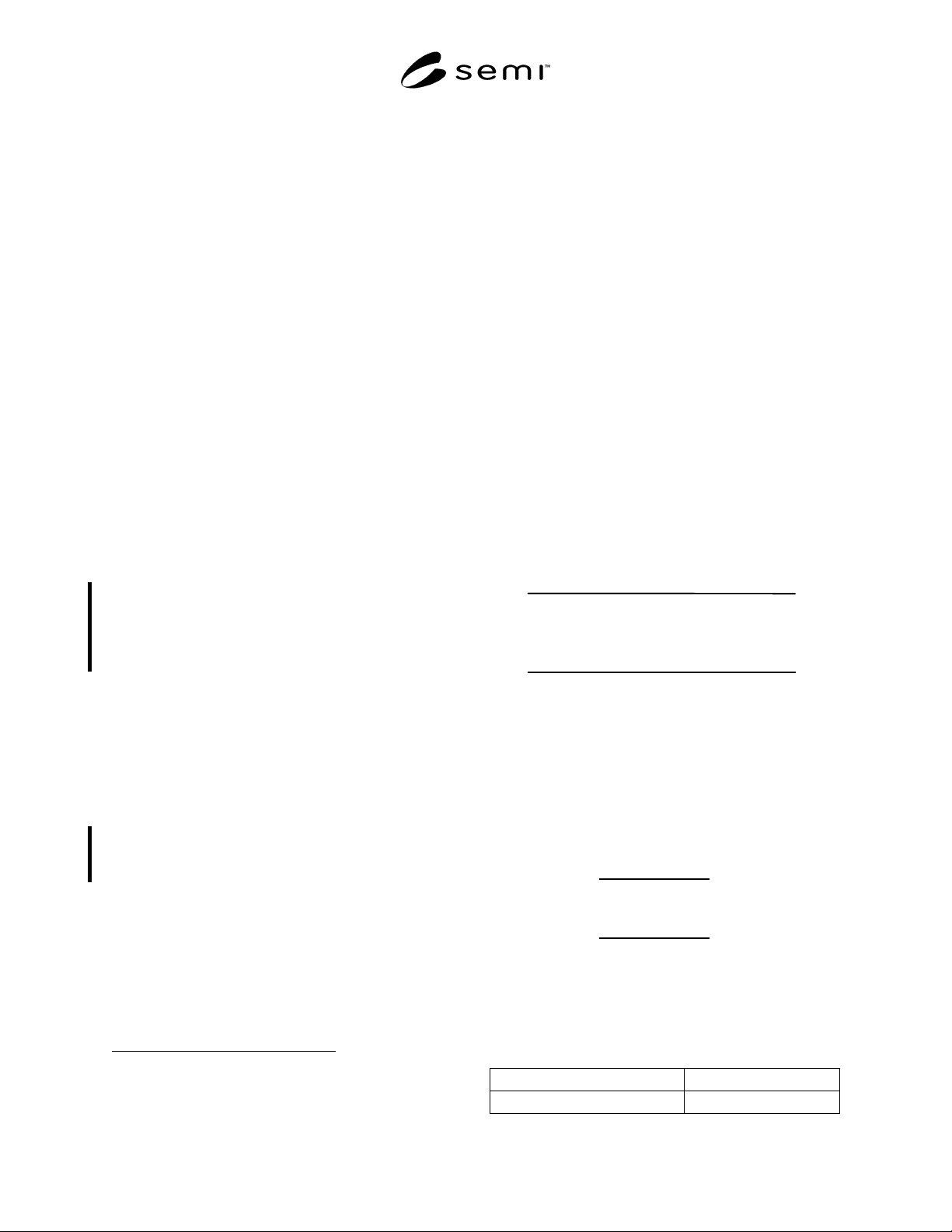
6.2 Sample calculation for 7:1 buffered oxide etchant
using 40.0% ammonium fluoride, density 1.111 g/mL,
and 49.0% hydrofluoric acid, density 1.153 g/mL. The
absolute percentage concentration of each component
follows:
Weight % NH
4
F=
7 ×
1
.
111
×
40
.
0
7×1.111+1 ×1.153
= 34.8
%
Weight % HF =
1×1.153× 49.0
7
×1
.
111+1 ×1
.
1
53
= 6.33
%
7 Tolerances
7.1 The tolerances allowed for the absolute percentage
of each of the components of a buffered oxide etchant
shall be:
Ammonium Fluoride: ± 0.5%
Hydrofluoric Acid: ± 0.15%
SEMI C23-0301 © SEMI 1981, 2001 BUFFERED OXIDE ETCHANTS2
7.2 For the example above, the permissible range of
concentration for ammonium fluoride shall be 34.8 ±
0.5% and for hydrofluoric acid 6.33 ± 0.15%.
8 Requirements
8.1 The requirements for buffered oxide etchants for
Grades 1 and 2 are listed in Table 1.
9 Grade 1 Procedures
9.1 Hydrofluoric Acid — Weigh accurately
approximately 4.0 grams of sample, transfer to a
polyethylene beaker, and dilute with water to about 100
mL. Titrate with standardized 1 N sodium hydroxide.
The endpoint may be detected colorimetrically by
adding 3 drops of methyl red indicator solution and
titrating to a definite yellow (no orange) endpoint. As
an alternate method, the endpoint may be detected
potentiometrically using an HF resistant pH electrode
previously standardized in pH 4 and pH 7 buffers.
Titrate to pH 6.5 with continuous stirring. Save the
solution for the determination of ammonium fluoride.
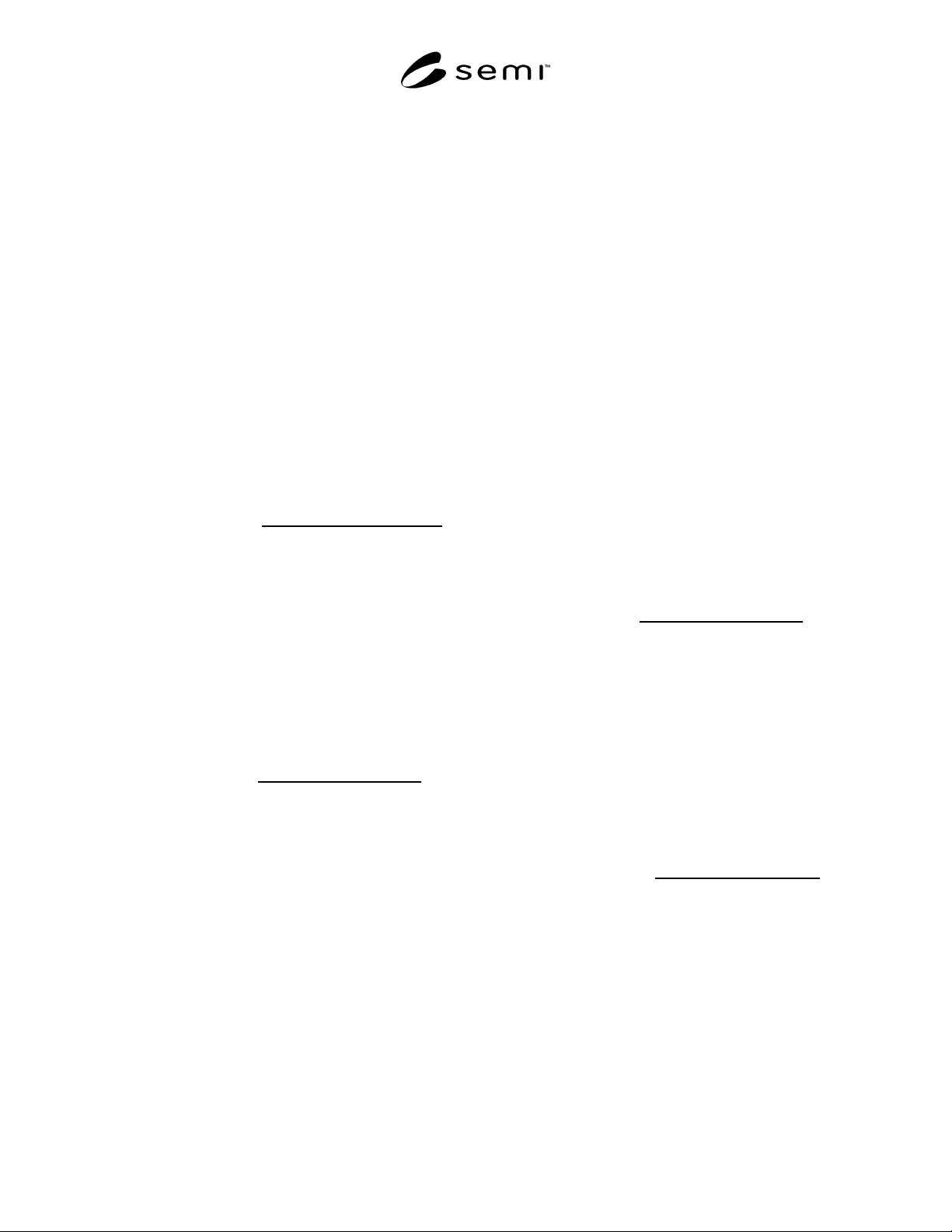
% Hydrofluoric Acid
=
mL
×
N
of
N
aOH
×
2.001
Weight of sample g
()
9.2 Ammonium Fluoride — Add 40 mL of neutralized
formaldehyde solution (see Section 9.2.1) to the
solution from the preceding test and stir magnetically
for 30 minutes. Titrate with standardized 1 N sodium
hydroxide. The endpoint may be detected
colorimetrically using 10 drops of phenolphthalein
indicator and titrating to a stable pink end point. As an
alternative method, the endpoint may be detected
potentiometrically using an HF resistant electrode
previously standardized in pH 7 and 9 buffers. Titrate
to pH 8.5 with continuous stirring.
%
Ammonium Fluoride
=
mL
×
N
of NaOH
×
3.704
Weight of sample g
()
9.2.1 Neutralized Formaldehyde Solution — Dilute 20
mL of 37% formaldehyde solution with 20 mL of water
and neutralize with 0.1 N sodium hydroxide solution to
the phenolphthalein endpoint.
9.3 Arsenic and Antimony (as As) — To 30 mL (33 g)
of sample in a polyfluorocarbon dish, add 20 mL of
nitric acid and 5 mL of hydrochloric acid and evaporate
in a sand bath in a hood to dryness. Completely
volatilize the ammonium fluoride, but do not bake. Add
10 mL of water and 5 mL of sulfuric acid and evaporate
to dense fumes of sulfur trioxide. Cool, cautiously add
10 mL of water, and reevaporate to dense fumes of
sulfur trioxide. Cool, and cautiously wash into a
generator flask with water to make a volume of 35 mL.
Proceed as described in the General Method for Arsenic
(and Antimony) under SEMI C1, Section 3.4.5, starting
with the sentence which begins, “Swirl the flask...” Any
red color in the silver diethyldithiocarbamate solution
of the sample should not exceed that in the standard
containing 0.001 mg of arsenic ion (As).
9.4 Trace Element Contents — Determine the levels
of specified trace elements and establish that they do
not exceed the specification limits using a suitable
emission spectrographic procedure (see SEMI C1,
Section 3.5, Guidelines for Determination of Trace
Elements by Emission Spectrography).
10 Grade 2 Procedures
NOTE 1: Each laboratory is responsible for verifying the
validity of the method within its own operation.
10.1 Hydrofluoric Acid — Weigh accurately
approximately 4.0 grams of sample, transfer to a
polyethylene beaker, and dilute with water to about 100
mL. Titrate with standardized 1 N sodium hydroxide.
The endpoint may be detected colorimetrically by
adding 3 drops of methyl red indicator solution and
titrating to a definite yellow (no orange) endpoint. As
an alternate method, the endpoint may be detected
potentiometrically using an HF resistant pH electrode
previously standardized in pH 4 and pH 7 buffers.
Titrate to pH 6.5 with continuous stirring. Save the
solution for the determination of ammonium fluoride.
% Hydrofluoric Acid =
mL
×
N
of
N
aOH
×
2.001
Weight of sample (g)
10.2 Ammonium Fluoride — Add 40 mL of
neutralized formaldehyde solution (see Section 10.2.1)
to the solution from the preceding test and stir
magnetically for 30 minutes. Titrate with standardized 1
N sodium hydroxide. The endpoint may be detected
colorimetrically using 10 drops of phenolphthalein
indicator and titrating to a stable pink endpoint. As an
alternative method, the endpoint may be detected
potentiometrically using an HF resistant electrode
previously standardized in pH 7 and 9 buffers. Titrate to
pH 8.5 with continuous stirring.
% Ammonium Fluoride =
mL
×
N
of
N
aOH
×
3.704
Weight of sample (g)
10.2.1 Neutralized Formaldehyde Solution — Dilute
20 mL of 37% formaldehyde solution with 20 mL of
water and neutralize with 0.1 N sodium hydroxide
solution to the phenolphthalein endpoint.
10.3 Chloride — Mix 2.2 mL (2.5 g) of sample with
20 mL of water containing 0.5 g of boric acid. Add 1
mL of nitric acid and 1 mL of silver nitrate reagent
solution, and allow to stand for 5 minutes. Any
turbidity produced should be no greater than that