semi合集-English.pdf - 第6669页
SEMI C30-1101 © SEMI 1978, 2001 HYDRO GEN PEROXIDE 6 appropriate grade of 18.2 Mohm -cm water that meets the crite ria for Ty pe E1.2 in A ST M D 5127. 11.2.2.2 1000 µ g/mL T OC Standard (pr epare fres h weekly) — Weigh …

HYDROGEN PEROXIDE SEMI C30-1101 © SEMI 1978, 20015
10.3.2 Special Reagents
10.3.2.1 Eluent — Prepare an eluent solution that is 2.2
mM sodium carbonate (Na
2
CO
3
) and 0.75 mM sodium
bicarbonate (NaHCO
3
) in deionized water meeting the
criteria for Type E1.1 in ASTM D 5127. Store eluent
under a helium gas blanket.
10.3.2.2 Regenerant — Prepare a 0.025 N sulfuric acid
(H
2
SO
4
) in deionized water meeting the criteria for
Type E1.1 in ASTM D 5127.
10.3.2.3 Potassium Carbonate Solution — Prepare a
solution containing 500 mg of reagent grade potassium
carbonate (K
2
CO
3
) in 100 mL of water meeting the
criteria for Type E1.1 in ASTM D 5127.
10.3.3 Sample Preparation
10.3.3.1 In a clean environment, place 40 g of sample
into a clean beaker. Add 1 mL of a 5 mg/mL potassium
carbonate solution and evaporate carefully (at 100°C) to
a volume of 0.5 mL. Dilute with water meeting the
criteria for Type E1.1 in ASTM D 5127 to a final
volume of 20 mL.
NOTE 8: For safety purposes, a decomposition aid such as a
platinum strip should be used.
10.3.4 Analysis
10.3.4.1 Using the prepared solutions and blanks,
analyze chloride, nitrate, phosphate, and sulfate by ion
chromatography. Run a reagent blank. Samples and
reagent blanks should be prepared and analyzed in
triplicate.
10.3.4.2 Columns — Precolumn should be AG4-A
(Dionex) or equivalent, and separation column should
be AS4-A (Dionex) or equivalent.
10.4 Trace Metals Analysis
10.4.1 The following method has given satisfactory
results in determining metal ion impurities at the values
specified for each of the following metals: aluminum
(Al), antimony (Sb), arsenic (As), boron (B), cadmium
(Cd), calcium (Ca), chromium (Cr), cobalt (Co), copper
(Cu), gold (Au), iron (Fe), lead (Pb), lithium (Li),
magnesium (Mg), manganese (Mn), molybdenum (Mo),
nickel (Ni), potassium (K), silver (Ag), sodium (Na),
strontium (Sr), tin (Sn), titanium (Ti), vanadium (V),
and zinc (Zn). Alternate methods may be used as long
as appropriate studies demonstrate a recovery between
75–125% of a known sample spike for half of the value
of each specified element.
10.4.2 Special Reagents
10.4.2.1 Nitric Acid, Ultra Pure — Use nitric acid
specified for low metal ion content.
10.4.2.2 1% Nitric Acid Solution — Dilute 10 mL of
ultrapure nitric acid to 1 L of water meeting the criteria
for Type E1.1 in ASTM D 5127.
10.4.2.3 Water — The water used for all the dilution,
calibration, and standards should meet, at a minimum,
the criteria for Type E1.1 in ASTM D 5127 in regard to
cation analysis.
10.4.2.4 Indium Internal Standard — Make up the
indium internal standard solution to a concentration of
20 µg/mL (ppm) from the appropriate concentrated
indium standard solution.
10.4.3 Sample Preparation
10.4.3.1 In a clean environment, place 20 g of sample
into a tared FEP bottle and add 20 µL of the indium
internal standard.
10.4.4 Analysis
10.4.4.1 Using the prepared solutions and blanks,
analyze sodium, potassium, calcium, and iron by
graphite furnace atomic absorption (GFAA) and the
remaining elements by inductively coupled plasma
mass spectrometry (ICP/MS). For calibration, the
standards are made up with the 1% nitric acid solution
and the indium internal standard such that the final
concentration is 20 ng/g of indium. Run a reagent
blank.
11 Grade 4 Procedures
NOTE 9: The analytical procedures associated with this
standard are not intended to be the only acceptable procedure
or the best procedure available. The published procedures
have been found to meet the required criteria for acceptance
of an analytical procedure. Alternate procedures may be used
if they meet the same criteria as the published procedures.
NOTE 10: Each laboratory is responsible for verifying the
validity of each method within its own operation.
11.1 Non-Metal Impurities
11.1.1 See Section 8, which contains procedures for the
following tests:
Assay
11.2 TOC
11.2.1 Equipment
11.2.1.1 TOC analyzer capable of analyzing total
oxidizable carbon in 31% H
2
O
2
. Validated
instrumentation includes TOC analyzer using a high
temperature platinum catalyst.
11.2.2 Special Reagents
11.2.2.1 Water — The water used for all of the
dilutions, calibrations, and standards should be the
SEMI C30-1101 © SEMI 1978, 2001 HYDROGEN PEROXIDE6
appropriate grade of 18.2 Mohm-cm water that meets
the criteria for Type E1.2 in ASTM D 5127.
11.2.2.2 1000 µg/mL TOC Standard (prepare fresh
weekly) — Weigh accurately 0.2128 g of potassium
acid phthalate into a 100 mL volumetric flask, add
water, shake to dissolve, dilute to volume, and mix
well. Lower standards (prepare fresh daily) can be
made by diluting an aliquot of the 1000 µg/mL to the
appropriate volume.
11.2.3 Analysis
11.2.3.1 Analyze TOC by directly injecting the 31%
H
2
O
2
into the total oxidizable carbon analyzer after the
instrument has been calibrated with 0, 5, 10, and 30
µg/mL of TOC standards.
11.3 Anions
11.3.1 The following method has given satisfactory
results in determining anion impurities at the values
specified for each of the following anions: chloride
(Cl), phosphate (PO
4
), nitrate (NO
3
), and sulfate (SO
4
).
Alternate methods may be used as long as validity is
demonstrated as defined in SEMI C1, Section 3.14
(Method Validation).
11.3.2 Special Reagents
11.3.2.1 Eluent — Prepare an eluent solution that is
100 mM potassium hydroxide (KOH) in deionized
water meeting the criteria for Type E1.2 in ASTM D
5127. Prepare second solution consisting of deionized
water only meeting the criteria for Type E1.2 in ASTM
D 5127. Store eluents under a helium gas blanket.
11.3.3 Sample Preparation
11.3.3.1 Prepare the following calibration standards by
spiking 31% H
2
O
2
with appropriate amounts of
individual anion standards: 0, 5, 15, 30 ppb.
11.3.4 Analysis
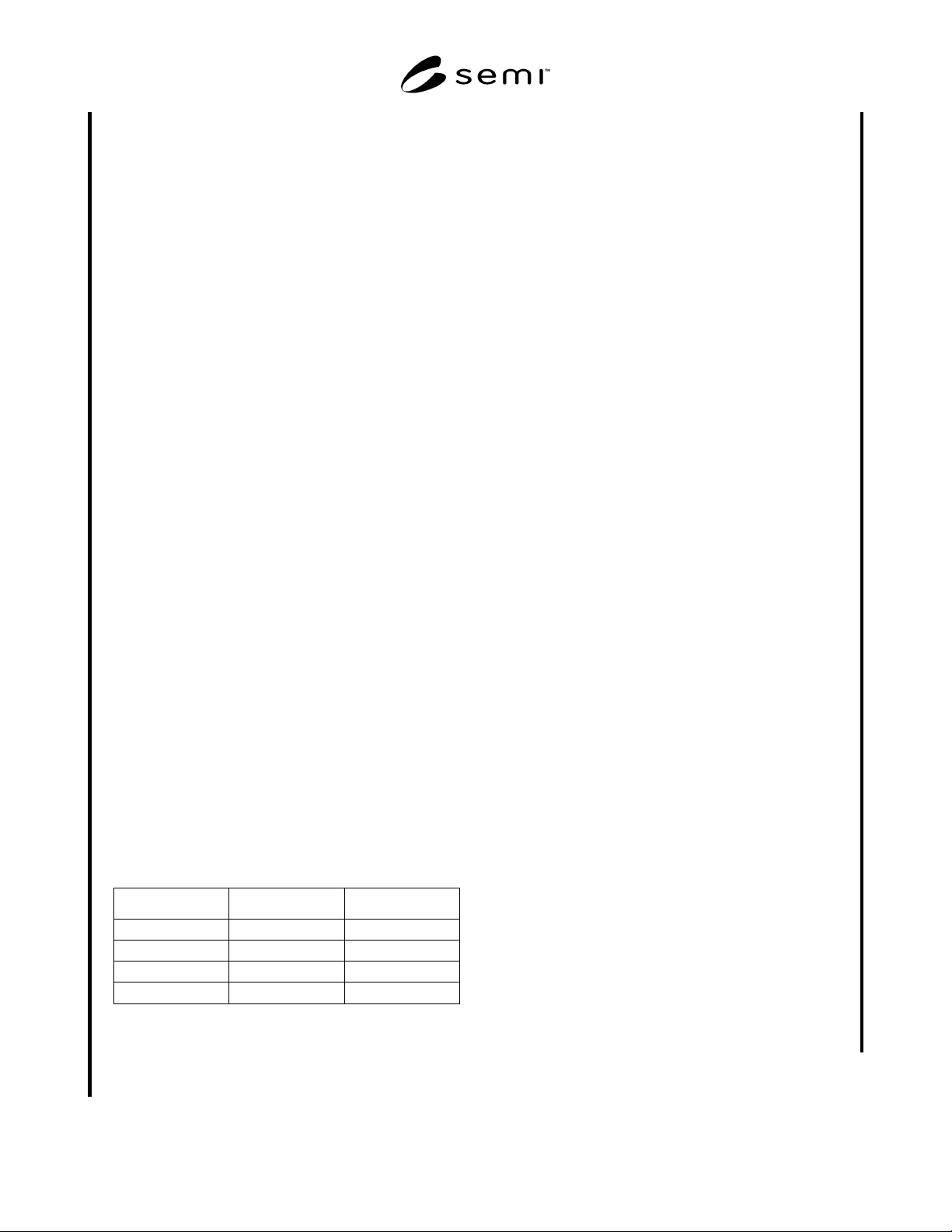
11.3.4.1 Gradient — Using the prepared eluent
solutions, design a gradient as follows, flow rate should
remain 2ml/min throughout analysis:
Pump Time (min) [mM KOH]
isocratic 0.0–2.5 1.0
isocratic 2.5–14 9.0
ramp 14–15 40.0
ramp 15–30 47.0
11.3.4.2 Columns — Precolumn should be AG15
(Dionex) or equivalent, separation column should be
AS15 (Dionex) or equivalent, concentrator column
should be TAC-LP1 (Dionex) or equivalent.
11.3.4.3 Load 5mL standard then 5mL deionized water
meeting the criteria for Type E1.2 in ASTM D 5127
onto concentrator column. Using the prepared solutions,
blanks, and prescribed eluent gradient analyze chloride,
nitrate, phosphate, and sulfate in neat 31% H
2
O
2
by ion
chromatography. Run a reagent blank. Samples and
reagent blanks should be prepared and analyzed in
triplicate.
11.4 Trace Metals Analysis
11.4.1 The following method has given satisfactory
results in determining metal ion impurities at the values
specified for each of the following metals: aluminum
(Al), antimony (Sb), arsenic (As), barium (Ba), boron
(B), cadmium (Cd), calcium (Ca), chromium (Cr),
copper (Cu), iron (Fe), lead (Pb), lithium (Li),
magnesium (Mg), manganese (Mn), nickel (Ni),
potassium (K), sodium (Na), tin (Sn), titanium (Ti),
vanadium (V), and zinc (Zn). Alternate methods may be
used as long as validity is demonstrated as defined in
SEMI C1, Section 3.14 (Method Validation).
11.4.2 Special Reagents
11.4.2.1 Nitric Acid, Ultra Pure — Use nitric acid
specified for low metal ion content.
11.4.2.2 1% Nitric Acid Solution — Dilute 10 mL of
ultrapure nitric acid to 1 L of water that meets the
criteria for Type E1.2 in ASTM D 5127.
11.4.2.3 Water — The water used for all of the
dilutions, calibrations, and standards should be the
appropriate grade of 18.2 Mohm-cm water meeting the
criteria for Type E1.2 in ASTM D 5127.
11.4.2.4 Indium Internal Standard — Make up the
indium internal standard solution to a concentration of
20 µg/mL (ppm) from the appropriate concentrated
indium standard solution.
11.4.3 Sample Preparation
11.4.3.1 In a clean environment, place 200 g of sample
into a tared FEP bottle and add 20 µL of the indium
internal standard.
11.4.4 Analysis
11.4.4.1 Using the prepared solutions and blanks,
analyze the aforementioned metals by GFAA and/or
inductively coupled plasma mass spectrometry (ICP-
MS). For calibration, the standards are made up with
the 1% nitric acid solution and the indium internal
standard such that the final concentration is 2 ng/g of
indium. Run a reagent blank.
HYDROGEN PEROXIDE SEMI C30-1101 © SEMI 1978, 20017
12 Grade 5 Procedures
NOTE 11: The analytical procedures associated with this
standard are not intended to be the only acceptable procedure
or the best procedure available. The published procedures
have been found to meet the required criteria for acceptance
of an analytical procedure. Alternate procedures may be used
if they meet the same criteria as the published procedures.
NOTE 12: Each laboratory is responsible for verifying the
validity of each method within its own operation.
12.1 Non-Metal Impurities
12.1.1 See Section 8, which contains procedures for the
following tests:
Assay
12.2 TOC
12.2.1 Equipment
12.2.1.1 TOC analyzer capable of analyzing total
oxidizable carbon in 31% H
2
O
2
. Validated
instrumentation includes TOC analyzer using a high
temperature platinum catalyst.
12.2.2 Special Reagents
12.2.2.1 Water — The water used for all of the
dilutions, calibrations, and standards should be the
appropriate grade of 18.2 Mohm-cm water that meets
the criteria for Type E1.2 in ASTM D 5127.
12.2.2.2 1000 µg/mL TOC Standard (prepare fresh
weekly) — Weigh accurately 0.2128 g of potassium
acid phthalate into a 100 mL volumetric flask, add
water, shake to dissolve, dilute to volume, and mix
well. Lower standards (prepare fresh daily) can be
made by diluting an aliquot of the 1000 µg/mL to the
appropriate volume.
12.2.3 Analysis
12.2.3.1 Analyze TOC by directly injecting the 31%
H
2
O
2
into the total oxidizable carbon analyzer after the
instrument has been calibrated with 0, 5, 10, and 30
µg/mL of TOC standards.
12.3 Anions
12.3.1 The following method has given satisfactory
results in determining anion impurities at the values
specified for each of the following anions: chloride
(Cl), phosphate (PO
4
), nitrate (NO
3
), and sulfate (SO
4
).
Alternate methods may be used as long as validity is
demonstrated as defined in SEMI C1, Section 3.14
(Method Validation).
12.3.2 Special Reagents
12.3.2.1 Eluent — Prepare an eluent solution that is
100 mM potassium hydroxide (KOH) in deionized
water meeting the criteria for Type E1.2 in ASTM D
5127. Prepare second solution consisting of deionized
water only meeting the criteria for Type E1.2 in ASTM
D 5127. Store eluents under a helium gas blanket.
12.3.3 Sample Preparation
12.3.3.1 Prepare the following calibration standards by
spiking 31% H
2
O
2
with appropriate amounts of
individual anion standards: 0, 5, 15, 30 ppb.
12.3.4 Analysis
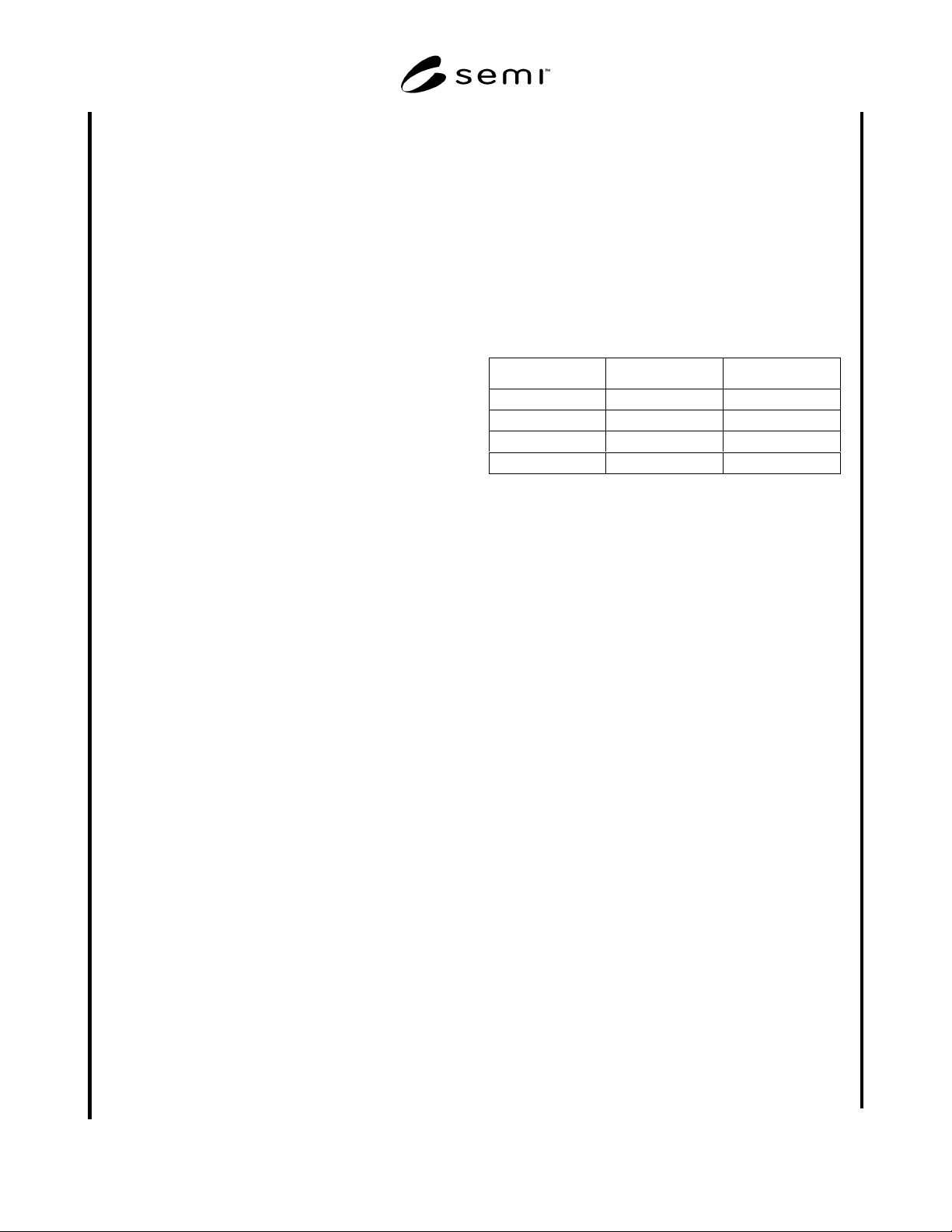
12.3.4.1 Gradient — Using the prepared eluent
solutions, design a gradient as follows, flow rate should
remain 2mL/min throughout analysis:
Pump Time (min) [mM KOH]
isocratic 0.0–2.5 1.0
isocratic 2.5–14 9.0
ramp 14–15 40.0
ramp 15–30 47.0
12.3.4.2 Columns — Precolumn should be AG15
(Dionex) or equivalent, separation column should be
AS15 (Dionex) or equivalent, concentrator column
should be TAC-LP1 (Dionex) or equivalent.
12.3.4.3 Load 5mL standard then 5mL deionized water
meeting the criteria for Type E1.2 in ASTM D 5127
onto concentrator column. Using the prepared solutions,
blanks, and prescribed eluent gradient analyze chloride,
nitrate, phosphate, and sulfate in neat 31% H
2
O
2
by ion
chromatography. Run a reagent blank. Samples and
reagent blanks should be prepared and analyzed in
triplicate.
12.4 Trace Metals Analysis
12.4.1 The following method has given satisfactory
results in determining metal ion impurities at the values
specified for each of the following metals: aluminum
(Al), antimony (Sb), arsenic (As), barium (Ba), boron
(B), cadmium (Cd), calcium (Ca), chromium (Cr),
copper (Cu), iron (Fe), lead (Pb), lithium (Li),
magnesium (Mg), manganese (Mn), nickel (Ni),
potassium (K), sodium (Na), tin (Sn), titanium (Ti),
vanadium (V), and zinc (Zn). Alternate methods may be
used as long as validity is demonstrated as defined in
SEMI C1, Specifications for Reagents; Section 3.14,
Method Validation.
12.4.2 Special Reagents
12.4.2.1 Nitric Acid, Ultra Pure — Use nitric acid
specified for low metal ion content.
12.4.2.2 1% Nitric Acid Solution — Dilute 10 mL of
ultrapure nitric acid to 1 L of water meeting the criteria
for Type E1.2 in ASTM D 5127.