semi合集-English.pdf - 第6699页
SEMI C36-0705 © SEMI 1981, 2005 7 10.5.1.1 Special Reage nts 10.5.1.1.1 Phosphoric Acid, Ultra Pure — Use phosphoric acid s pecified for ultra low metal ion content for preparation of matrix matc hed calibration st andar…

SEMI C36-0705 © SEMI 1981, 2005 6
10.3 Nitrate — Prepare the following solutions:
Sample Solution A: Add 3 mL (5 g) of sample to 2 mL of water.
Dilute to 50 mL with brucine sulfate reagent
solution, and mix.
Control Solution B: Add 3 mL (5 g) of sample to 0.025 mg of
nitrate ion (NO
3
) Dilute to 50 mL with
brucine sulfate reagent solution, and mix.
Blank Solution C: Use 50 mL of the brucine sulfate reagent
solution.
10.3.1 Heat the three solutions in a preheated (boiling water) bath for 10 minutes. Cool rapidly in an ice bath to
room temperature. Set a spectrophotometer at 410 nm and, using 1 cm cells, adjust the instrument to read zero
absorbance with Blank Solution C in the light path. Then determine the absorbance of Sample Solution A. Adjust
the instrument to read zero absorbance with Sample Solution A in the light path and determine the absorbance of
Control Solution B. The absorbance of Sample Solution A should not exceed that of Control Solution B.
10.4 Sulfate
10.4.1 The following inductively coupled plasma (ICP) method has given satisfactory results for the determination
of sulfate (SO
4
) by the analysis of sulfur (S) and subsequent calculation to determine the stoichiometric equivalent
of sulfate.
NOTE 3: While this method has been shown to accurately determine sulfate concentration in phosphoric acid, the ICP method
actually evaluates sulfur. Therefore, other sulfur species (organic, etc.) will also be determined by this method, and the
“calculated” sulfate value may be higher than the actual sulfate concentration in a given sample.
10.4.2 Special Reagents
10.4.2.1 Water — The water used for all dilution, calibration, and standards should meet, at a minimum, the criteria
for Type E1.1 in ASTM D5127.
10.4.2.2 Scandium Internal Standard — A scandium standard solution is utilized such that final diluted samples
will have a scandium concentration of 40 ppm.
10.4.3 Sample Preparation
10.4.3.1 Dilute 20 g of phosphoric acid to 100 mL with water. (An aliquot of the concentrated scandium standard
solution should also be added during the dilution process such that the final diluted sample will have a scandium
concentration of 40 ppm.)
10.4.4 Analysis
10.4.4.1 Using the prepared sample, analyze the sulfur content using inductively coupled plasma (ICP)
spectroscopy that has been standardized using appropriate sulfur standard solutions. A wavelength of 180.731 nm
has been shown to give satisfactory results.
10.4.5 Calculation
10.4.5.1 The associated sulfate (SO
4
) concentration is determined using the stiochiometric conversion
(SO
4
= 3 × S).
10.5 Trace Metal Analysis
10.5.1 The following method has given satisfactory results in determining trace metal impurities at the value
specified for each of the following trace metals: aluminum (Al), antimony (Sb), arsenic (As), barium (Ba), boron
(B), cadmium (Cd), calcium (Ca), chromium (Cr), cobalt (Co), copper (Cu), gold (Au), iron (Fe), lead (Pb), lithium
(Li), magnesium (Mg), manganese (Mn), nickel (Ni), potassium (K), silicon (Si), sodium (Na), strontium (Sr),
titanium (Ti), and zinc (Zn). Alternate methods may be used as long as they are validated for each trace metal
according to SEMI C1, ‘Method Validation’.
SEMI C36-0705 © SEMI 1981, 2005 7
10.5.1.1 Special Reagents
10.5.1.1.1 Phosphoric Acid, Ultra Pure — Use phosphoric acid specified for ultra low metal ion content for
preparation of matrix matched calibration standards.
10.5.1.1.2 Water — The water used for all dilution, calibration, and standards should meet, at a minimum, the
criteria for Type E1.1 in ASTM D5127.
10.5.1.1.3 Internal Standard Stock Solution — An internal standard stock solution containing beryllium (Be),
germanium (Ge), indium (In), and lutetium (Lu) is utilized such that final measured solutions will have
concentrations of Be - 10 ppb, Ge - 20 ppb, In - 5 ppb, and Lu - 5 ppb as internal standard elements.
10.5.1.1.4 External Standard Stock Solution — An external standard stock solution containing the elements in
¶10.5.1 is utilized such that final diluted external calibration standards will have appropriate concentrations for the
measurement of the sample elements.
10.5.2 Sample Preparation — In a clean environment, weigh 5.00 g of sample into a 10 mL polypropylene sample
tube. Add an aliquot of the internal standard stock solution such that the final diluted sample will have the
concentration of internal standard elements in ¶10.5.1.1.3. Dilute contents to 10 mL with Type E1.1 water.
10.5.2.1 Analysis — Analyze elements using inductively coupled plasma mass spectrometry (ICP - MS). Calibrate
the sample elements with matrix matched blank and external standards.
10.6 Trace Anion Analysis – see ¶8.6, which contains procedures for trace anions.
11 Grade 4 Procedures
11.1 This section does not apply to this chemical.
12 Grade 5 Procedures
12.1 This section does not apply to this chemical.
13 Tier A Procedures
13.1 This section does not apply to this chemical.
14 Tier B Procedures
14.1 This section does not apply to this chemical.
15 Tier C Procedures
15.1 This section does not apply to this chemical.
16 Tier D Procedures
16.1 This section does not apply to this chemical.
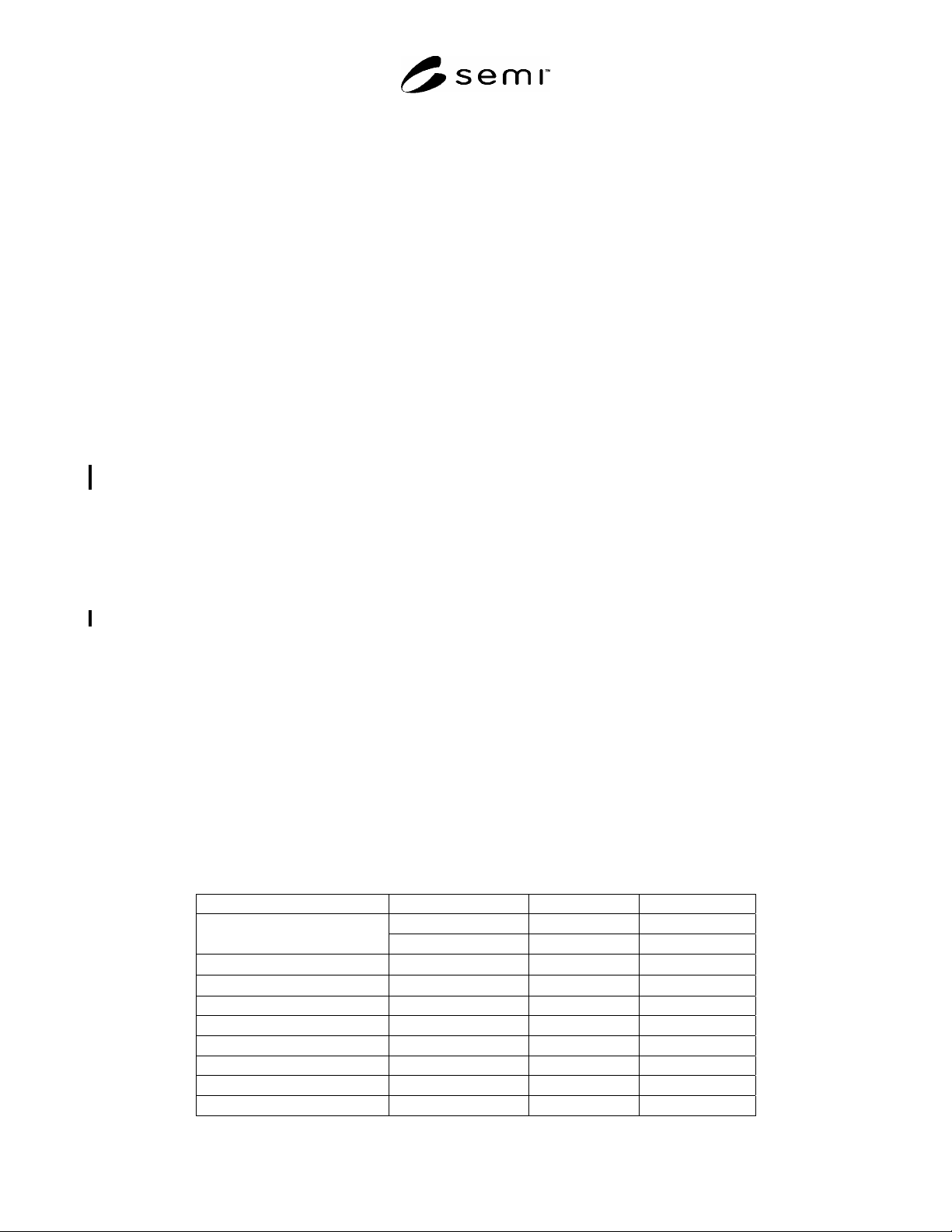
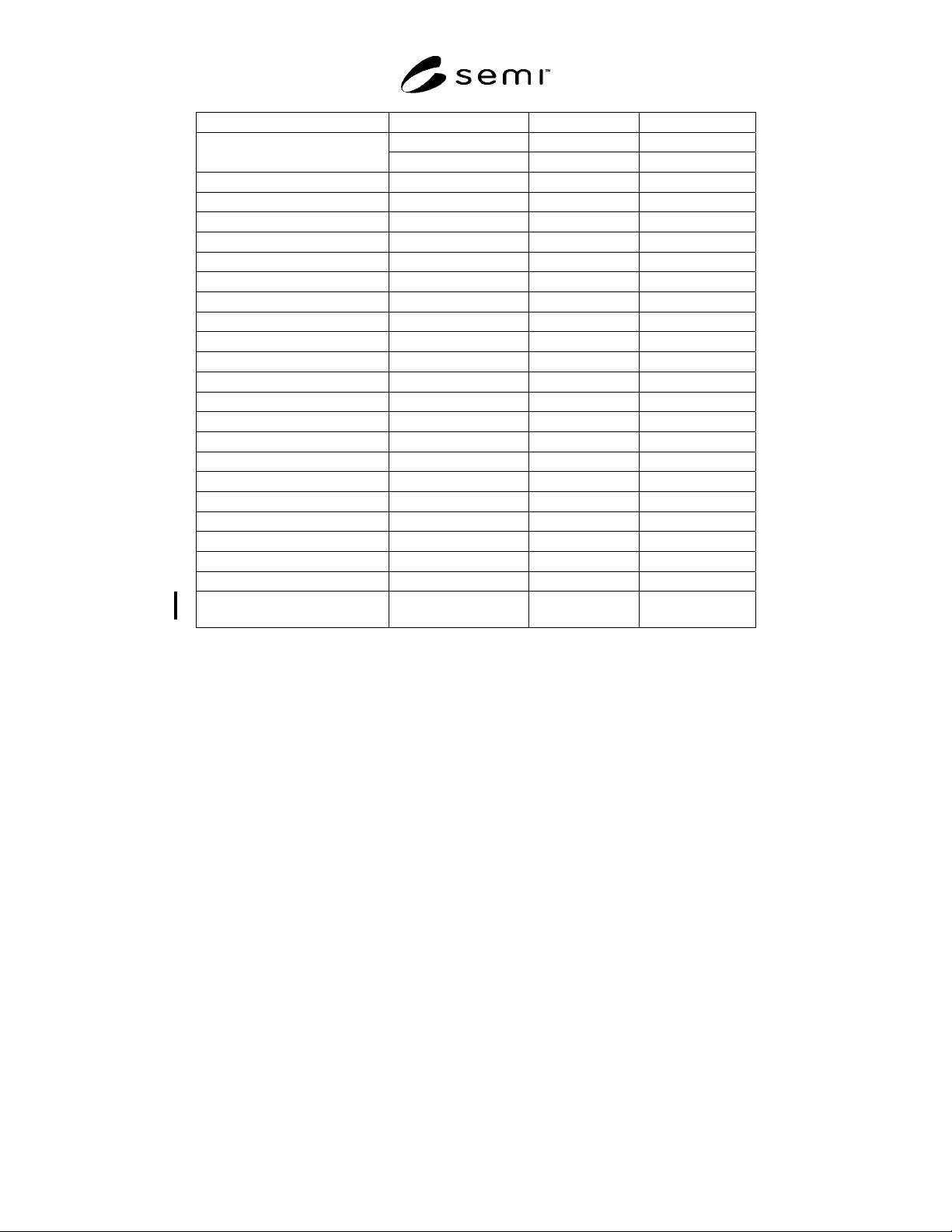
Table 1 Impurity Limits and Other Requirements for Phosphoric Acid
Previous SEMI Reference # C1.13-96, C1.27-96 C7.24-0697
Grade 1 Grade 2 Grade 3
(Specification) (Specification) (Specification)
Assay (H
3
PO
4
) (80%)
79.081.0% 79.081.0% 79.081.0%
Assay (H
3
PO
4
) (86%)
85.087.0% 85.087.0% 85.087.0%
Nitrate (NO
3
) 5 ppm max 5 ppm max 5 ppm max
Sulfate (SO
4
) -- 12 ppm max 12 ppm max
Total Sulfur (as SO
4
) 12 ppm max -- --
Chloride (Cl) 1 ppm max 1 ppm max 1 ppm max
Aluminum (Al) 0.5 ppm max 300 ppb max 50 ppb max
Antimony (Sb) 10 ppm max 3500 ppb max 1,000 ppb max
SEMI C36-0705 © SEMI 1981, 2005 8
Previous SEMI Reference # C1.13-96, C1.27-96 C7.24-0697
Grade 1 Grade 2 Grade 3
(Specification) (Specification) (Specification)
Arsenic (As) 0.05 ppm max 50 ppb max 50 ppb max
Barium (Ba) -- -- 50 ppb max
Boron (B) -- -- 50 ppb max
Cadmium (Cd) -- 450 ppb max 50 ppb max
Calcium (Ca) 1.5 ppm max 1100 ppb max 150 ppb max
Chromium (Cr) 0.2 ppm max 200 ppb max 50 ppb max
Cobalt (Co) 0.05 ppm max 50 ppb max 50 ppb max
Copper (Cu) 0.05 ppm max 50 ppb max 50 ppb max
Gold (Au) 0.3 ppm max 150 ppb max 50 ppb max
Iron (Fe) 2.0 ppm max 700 ppb max 100 ppb max
Lead (Pb) 0.3 ppm max 300 ppb max 50 ppb max
Lithium (Li) 0.1 ppm max 100 ppb max 10 ppb max
Magnesium (Mg) 0.2 ppm max 200 ppb max 50 ppb max
Manganese (Mn) 0.1 ppm max 100 ppb max 50 ppb max
Nickel (Ni) 0.2 ppm max 200 ppb max 50 ppb max
Potassium (K) 1.5 ppm max 450 ppb max 150 ppb max
Silicon (Si) -- -- 50 ppb max
Sodium (Na) 2.5 ppm max 500 ppb max 250 ppb max
Strontium (Sr) 0.1 ppm max 100 ppb max 10 ppb max
Titanium (Ti) 0.3 ppm max 300 ppb max 50 ppb max
Zinc (Zn) 2.0 ppm max 400 ppb max 50 ppb max
Particles in bottles:
size, #/mL
(See
#1
) (See
#1
) (See
#1
)
#1
Due to the limitations of current particle counters, particle size and number areto be agreed upon between supplier and user.
See SEMI C1, ‘Calibration and Measurement Method for Particles in Liquids’.
NOTICE: SEMI makes no warranties or representations as to the suitability of the standards set forth herein for any
particular application. The determination of the suitability of the standard is solely the responsibility of the user.
Users are cautioned to refer to manufacturer's instructions, product labels, product data sheets, and other relevant
literature, respecting any materials or equipment mentioned herein. These standards are subject to change without
notice.
By publication of this standard, Semiconductor Equipment and Materials International (SEMI) takes no position
respecting the validity of any patent rights or copyrights asserted in connection with any items mentioned in this
standard. Users of this standard are expressly advised that determination of any such patent rights or copyrights, and
the risk of infringement of such rights are entirely their own responsibility.
Copyright by SEMI® (Semiconductor Equipment and Materials
International), 3081 Zanker Road, San Jose, CA 95134. Reproduction of
the contents in whole or in part is forbidden without express written
consent of SEMI.