semi合集-English.pdf - 第6703页
PHOSPHORIC ETCHANTS SEM I C37-0699 © SEMI 1981, 1999 3 aspirating methyl is obut yl ketone. Then aspirat e the extract of the standard solution, s o lvent, and the extract of the sample solution . Record the absorbances.…

SEMI C37-0699 © SEMI 1981, 1999 PHOSPHORIC ETCHANTS2
SEMI C2, Section 3.2, Determination of Nitric Acid by
Ultraviolet Absorption Spectrophotometry).
%
Nitric Aci
d
=
grams of HNO
3
calibration curve
×
100
Weight of sample g
()
9.4 Acetic Acid — The acetic acid content is calcu-
lated by deducting the acidity found for each of the
other components from the value for the total acidity.
% Acetic Acid
=
A
−
%H
3
PO
4
4.900
−
%HNO
3
6.302
[
]
×
6.005
9.5 Heavy Metals (as Pb) — Dilute 6 g of sample to
30 mL with water. For the standard, add 0.02 mg of
lead ion (Pb) to a 5 mL aliquot of this solution and
dilute to 25 mL with water. For the sample, use the
remaining 25 mL portion. Adjust the pH to between 3
and 4 (using a pH meter) with 1 N acetic acid or dilute
ammonium hydroxide (10% NH
3
), dilute to 40 mL with
water, and mix. Add 10 mL of freshly prepared hydro-
gen sulfide water to each and mix. Any color in the
solution of the sample should not exceed that in the
standard.
9.6 Antimony — Dilute 20 mL (20 g) of stock solution
to volume with water in a 100 mL volumetric flask and
mix. For the standard, dilute 0.4 mg of antimony ion
(Sb) to volume with water in a second 100 mL
volumetric flask and mix. Following the manufacturer's
directions, ready an atomic absorption spectrometer,
use an air-acetylene flame, position the antimony
hollow cathode lamp, and set the monochromator to the
antimony resonance line of 217.6 nm. Employ
deuterium lamp correction. Aspirate water and set to
zero absorbance. Then aspirate, in succession, the
standard, water, and sample. The absorbance of the
sample should not exceed that of the standard. (see
SEMI C1, Section 3.6, Guidelines for Determination of
Trace Elements by Atomic Absorption Spectrometry.)
9.6.1 Stock Solution for Sections 9.6 through 9.9 —
To 200 g of sample in a 400 mL beaker, add 100 mL of
water. Heat to boiling on a hot plate in a hood, and boil
off approximately 100 mL. Cool slightly, add 100 mL
of water, and again boil off about 100 mL. Cool,
transfer to a 200 mL volumetric flask, and dilute to
volume with water. One mL contains 1 gram of sample.
9.7 Arsenic — To 10 mL (10 g) of stock solution in a
125 mL arsine generator flask, add 30 mL of water 10
mL of ferric ammonium sulfate reagent solution, and
then 2% potassium permanganate reagent solution
dropwise to a permanent pink color. Add 1.5 g of
sodium chloride and mix to dissolve. Heat nearly to
boiling, remove from heat, and add 1 mL of stannous
chloride reagent solution. Dilute to 60 mL and cool to
25°C ± 3°C. For the standard, add 20 mL of dilute
sulfuric acid (1 + 4) to 0.005 mg of arsenic ion (As) in a
second arsine generator flask and treat as above.
Assemble the arsenic test apparatus (see SEMI C1,
Section 3.4.2). Pack each scrubber tube with two
pledgets of lead acetate-impregnated glass wool
previously moistened with lead acetate solution, freed
from excess solution by squeezing, and dried in a
vacuum. Allow a small space between the two pledgets.
Place 3.0 mL of silver diethyldithiocarbamate solution
in each absorber tube and 10 g of zinc (granular) in
each generator flask. Immediately connect the scrubber
absorber assemblies to the sample and standard
generator flasks. Place the flasks in a water bath
maintained at 25°C ± 3°C. Swirl each flask
occasionally. After 30 minutes disconnect the tubing
from the generator flasks and transfer the silver
diethyldithiocarbamate solutions to separate 1 cm
photometer cells. Measure both sample and standard
absorbances at 540 nm using the silver diethyldithio-
carbamate solution as a blank. The absorbance of the
sample should not exceed that of the standard.
9.8 Manganese — Add 25 mL (25 g) of stock solution
to 100 mL of dilute sulfuric acid (1 + 9). For the
standard, add 5 mL (5 g) of stock solution and 0.01 mg
of manganese ion (Mn) to 100 mL of dilute sulfuric
acid (1 + 9). To each solution, add 20 mL of nitric acid,
heat to boiling, and continue boiling gently for 5 min-
utes. Cool slightly, add 0.25 g of potassium periodate,
and again boil for 5 minutes. Any pink color in the
sample solution should not exceed that in the standard.
9.9 Copper, Iron, and Nickel — Dilute 1 mL (1 g) of
stock solution with 50 mL of water in a 100 mL beaker.
Add 0.5 mL of ammonium hydroxide and cool. For the
three-element standard, add 0.002 mg of copper ion
(Cu), 0.01 mg of iron ion (Fe), and 0.003 mg of nickel
ion (Ni) to 50 mL of water in a second 100 mL beaker.
9.9.1 Treat each solution as follows: Adjust the pH to
2.5 (using a pH meter) with dilute ammonium hy-
droxide (10% NH
3
) or 10% hydrochloric acid. Transfer
to a polyfluorocarbon-stoppered 250 mL separatory
funnel. Rinse the beaker with water adjusted to pH 2.5
and add the rinsings to the funnel (the final volume
should not exceed 100 mL). Add 10 mL of freshly
prepared 1% ammonium 1-pyrrolidinecarbodithiolate
solution and mix thoroughly. Add 10.0 mL of water-
saturated methyl isobutyl ketone (that is, 4-methyl-2-
pentanone), stopper, and shake vigorously for 3
minutes. Allow the layers to separate. Drain and discard
the lower, aqueous layer; save the upper, organic layer.
9.9.2 Following the manufacturer's directions, ready
the atomic absorption spectrometer for measurements in
the absorbance mode and with the air-acetylene flame
adjusted for aspiration of an organic solvent. For
copper, align the copper hollow cathode lamp, set the
wavelength to 324.7 nm, and zero the absorbance while
PHOSPHORIC ETCHANTS SEMI C37-0699 © SEMI 1981, 19993
aspirating methyl isobutyl ketone. Then aspirate the
extract of the standard solution, solvent, and the extract
of the sample solution. Record the absorbances.
Proceed similarly for iron and nickel with measure-
ments at 248.3 and 232.0 nm, respectively. For each of
the three elements the absorbance of the sample extract
should not exceed that of the standard extract (see
SEMI C1, Section 3.6, Guidelines for Determination of
Trace Elements by Atomic Absorption Spectrometry).
9.10 Sodium, Lithium, Potassium, Calcium, Strontium,
and Magnesium
9.10.1 Sample Solutions for the Determination of
Sodium, Lithium, Potassium, Calcium, Strontium, and
Magnesium by Atomic Absorption Spectrometry —
Thoroughly clean four 100 mL volumetric flasks and
label them 1, 2, 3, 4, respectively. Transfer 20 mL (20
g) samples of stock solution into the four volumetric
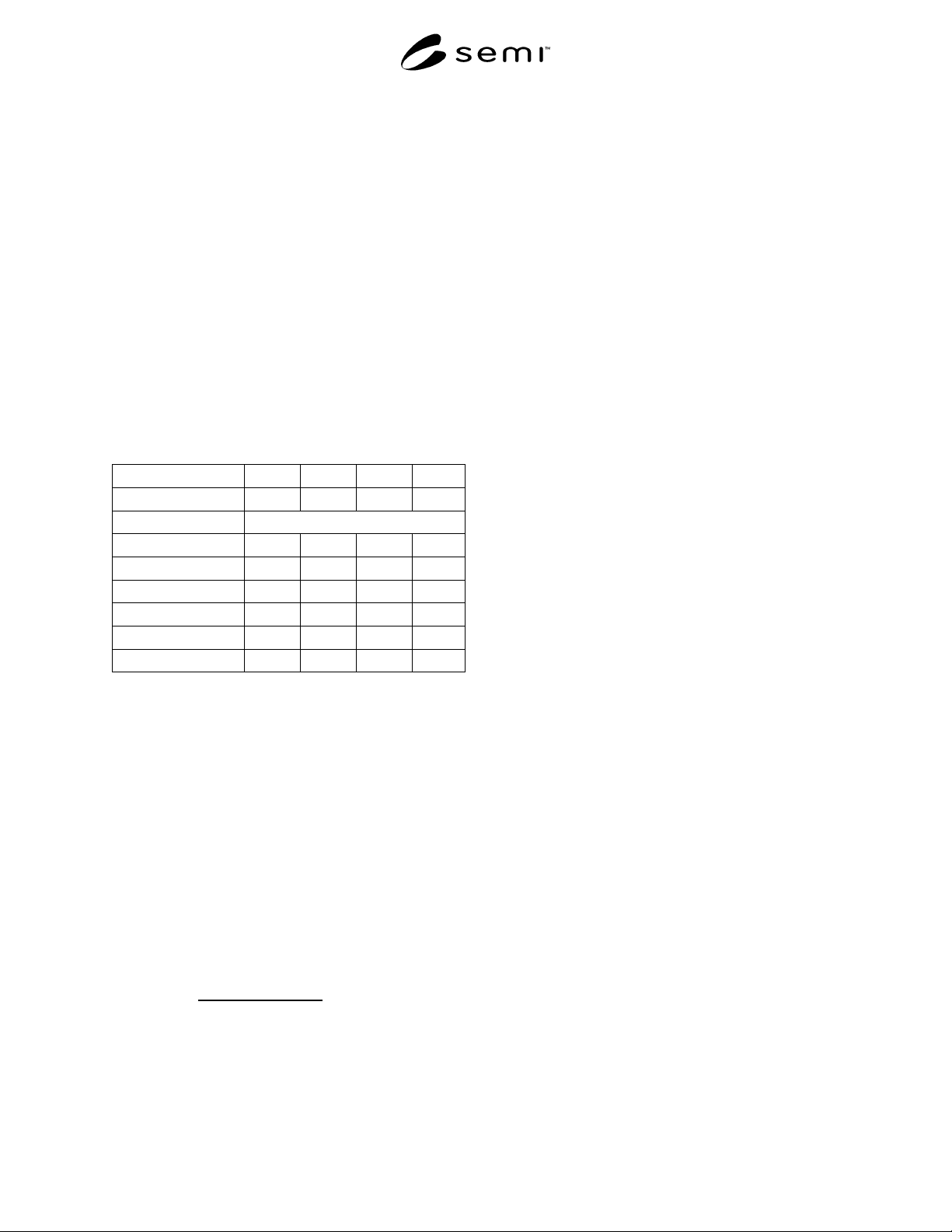
flasks. Add the quantities of cations as listed as follows:
CATION FLASK FLASK FLASK FLASK
1234
Milligrams of Cation
Sodium Ion (Na) 0.00 0.15 0.30 0.60
Lithium Ion (Li) 0.00 0.01 0.02 0.04
Potassium Ion (K) 0.00 0.10 0.20 0.40
Calcium Ion (Ca) 0.00 0.20 0.40 0.80
Strontium Ion (Sr) 0.00 0.05 0.10 0.20
Magnesium Ion (Mg) 0.00 0.05 0.10 0.20
9.10.2 General Instructions — Dilute each solution to
volume with water and mix thoroughly. Following the
manufacturer's directions, ready the atomic absorption
spectrometer for measurements in the absorbance mode
(see SEMI C1, Section 3.6, Guidelines for
Determination of Trace Elements by Atomic
Absorption Spectrometry). Determine each of the
elements, using the conditions specified in Sections
9.10.3 through 9.10.8.
9.10.2.1 For each element plot on linear coordinate
paper the absorbance versus the added quantity in
milligrams of the cation added. Draw a straight line
through the four points and extrapolate to zero
absorbance. This intercept corresponds to the absolute
amount, in milligrams, of the element being determined
in Solution 1.
ppm element
=
mg foun
d
×
1000
Weight of Sample g
()
9.10.3 Sodium — Using an air-acetylene flame and a
sodium hollow cathode lamp, set the wavelength to
589.0 nm and zero the absorbance with water. Aspirate,
and record the absorbances of each of the solutions,
zeroing the absorbance with water between aspiration
of the solutions. Calculate the amount of the sodium ion
(Na) in Solution 1; this should not exceed 0.30 mg.
9.10.4 Potassium — Using an air-acetylene flame and
a potassium hollow cathode lamp, set the wavelength to
766.5 nm and zero the absorbance using water.
Aspirate, and record the absorbances of each of the four
solutions, zeroing the absorbance with water between
aspiration of the solutions. Calculate the amount of
potassium ion (K) in Solution 1; this should not exceed
0.20 mg.
9.10.5 Lithium — Using an air-acetylene flame and a
lithium hollow cathod lamp, set the wavelength to
670.8 and zero the absorbance with water. Aspirate and
record the absorbances of each of the four solutions,
zeroing the absorbance with water between aspiration
of the solutions. Calculate the amount of lithium ion
(Li) in sample Solution 1; this should not exceed 0.02
mg.
9.10.6 Strontium — Using a nitrous oxide-acetylene
flame and a strontium cathode lamp, set the wavelength
to 460.7 nm and zero the absorbance with water.
Aspirate, and record the absorbances of each of the four
solutions, zeroing the absorbance with water between
aspiration of the solutions. Calculate the amount of
strontium ion (Sr) in Solution 1; this should not exceed
0.10 mg.
9.10.7 Calcium — Using a nitrous oxide-acetylene
flame and a calcium hollow lamp, set the wavelength to
422.7 nm and zero the absorbance with water. Aspirate,
and record the absorbances of each of the four solu-
tions, zeroing the absorbance with water between aspir-
ation of the solutions. Calculate the amount of calcium
ion (Ca) in Solution 1; this should not exceed 0.40 mg.
9.10.8 Magnesium — Thoroughly clean four 50 mL
volumetric flasks and label them 1a, 2a, 3a, and 4a.
Transfer 20 mL (4 g) from each of the four 100 mL vol-
umetric flasks into the corresponding 50 mL flasks. Di-
lute each to volume and mix thoroughly. Using an air-
acetylene flame, background corrections, and a magnes-
ium hollow lamp, set the wavelength to 285.2 nm and
zero the absorbance with water. Aspirate, and record
the absorbances of each of the four solutions, zeroing
the absorbance with water between aspiration of the
solutions. Calculate the amount of magnesium ion (Mg)
in Solution 1a; this should not exceed 0.02 mg.
10 Grade 2 Procedures
10.1 This section does not apply to this chemical.
SEMI C37-0699 © SEMI 1981, 1999 4
11 Grade 3 Procedures
11.1 This section does not apply to this chemical.
12 Grade 4 Procedures
12.1 This section does not apply to this chemical.
13 Grade 5 Procedures
13.1 This section does not apply to this chemical.
14 VLSI Grade Procedures
14.1 This section does not apply to this chemical.
15 Tier A Procedures
15.1 This section does not apply to this chemical.
16 Tier B Procedures
16.1 This section does not apply to this chemical.
17 Tier C Procedures
17.1 This section does not apply to this chemical.
18 Tier D Procedures
18.1 This section does not apply to this chemical.
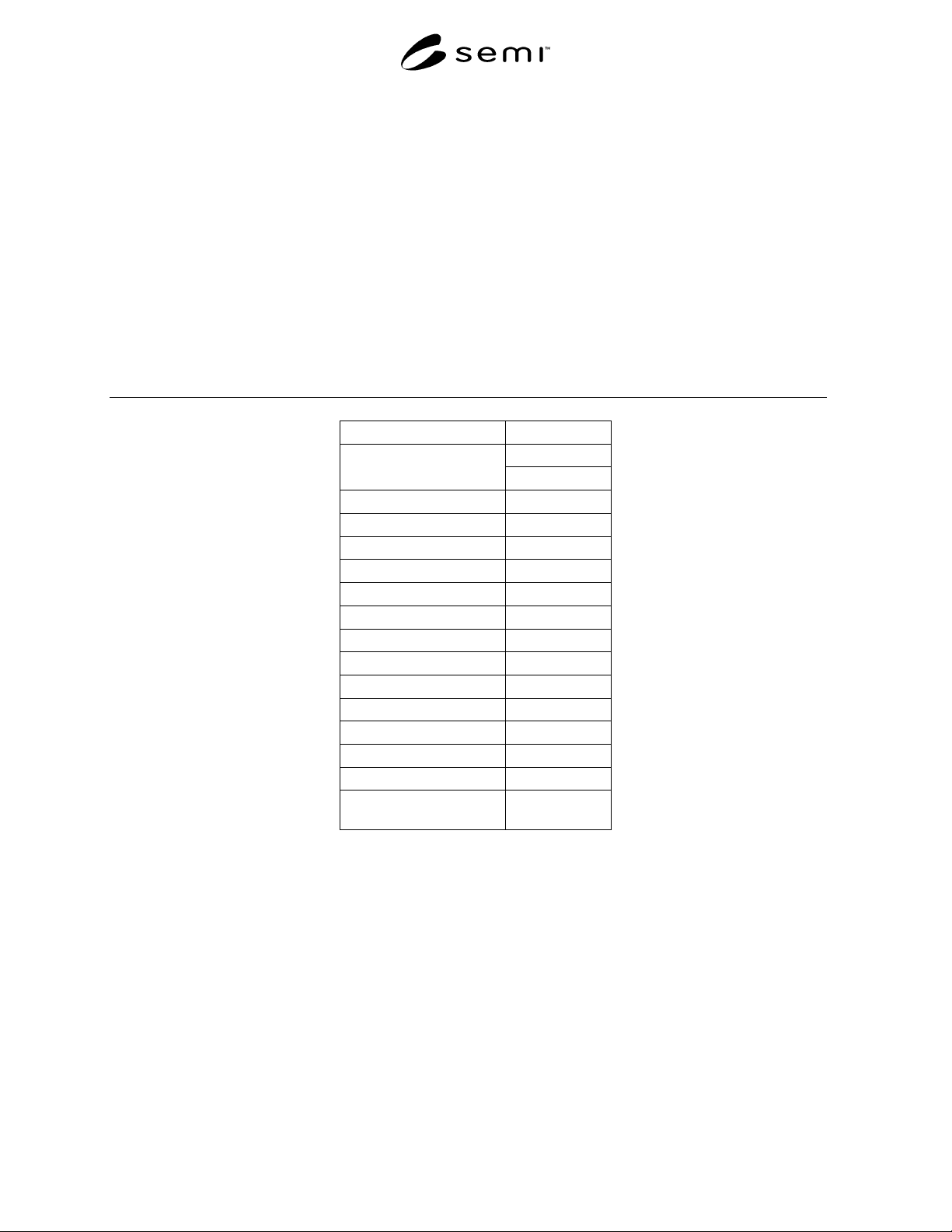
Table 1 Impurity Limits and Other Requirements for Phosphoric Etchants
Previous SEMI Reference # C2.3-95
Grade 1
(Specification)
Heavy Metals (as Pb) 5 ppm max
Antimony (Sb) 15 ppm max
Arsenic (As) 0.2 ppm max
Calcium (Ca) 15 ppm max
Copper (Cu) 1.2 ppm max
Iron (Fe) 6 ppm max
Lithium (Li) 0.3 ppm max
Magnesium (Mg) 2 ppm max
Manganese (Mn) 0.2 ppm max
Nickel (Ni) 1 ppm max
Potassium (K) 6 ppm max
Sodium (Na) 10 ppm max
Strontium (Sr) 2 ppm max
Particles in bottles:
size, #/mL
≥1.0 µm, 25 max
NOTICE: These standards do not purport to address
safety issues, if any, associated with their use. It is the
responsibility of the user of these standards to establish
appropriate safety and health practices and determine
the applicability of regulatory limitations prior to use.
SEMI makes no warranties or representations as to the
suitability of the standards set forth herein for any
particular application. The determination of the
suitability of the standard is solely the responsibility of
the user. Users are cautioned to refer to manufacturer’s
instructions, product labels, product data sheets, and
other relevant literature respecting any materials
mentioned herein. These standards are subject to
change without notice.
The user’s attention is called to the possibility that
compliance with this standard may require use of
copyrighted material or of an invention covered by
patent rights. By publication of this standard, SEMI
takes no position respecting the validity of any patent
rights or copyrights asserted in connection with any
item mentioned in this standard. Users of this standard
are expressly advised that determination of any such
patent rights or copyrights, and the risk of infringement
of such rights, are entirely their own responsibility.
Copyright by SEMI® (Semiconductor Equipment and Materials
International), 3081 Zanker Road, San Jose, CA 95134. Reproduction o
f
the contents in whole or in part is forbidden without express written
consent of SEMI.