semi合集-English.pdf - 第6719页
SEMI C41-0705 © SEMI 1978, 2005 6 temperature, d ilute to 50 m L with 1% nit ric acid, add a n appropriate volum e of indium internal standar d and m ix well. Prepare a reagent blank. 9.3.4 Analysis 9.3.4.1 Using the pre…
SEMI C41-0705 © SEMI 1978, 2005 5
9 Grade 3 Procedures
NOTE 5: Each laboratory is responsible for verifying the validity of the method within its own operation.
9.1 See §7, which contains procedures for the following tests:
Assay
Color (APHA)
Residue after Evaporation
Water (H
2
O)
9.2 Analysis of Anions
9.2.1 Ion chromatography has been used successfully for the determination of anion impurities at the values
specified for each of the following: chloride (Cl), nitrate (NO
3
), phosphate (PO
4
) and sulfate (SO
4
). Alternate
methods may be used as long as they are validated for each anion according to SEMI C1, ‘Method Validation’.
9.2.2 The ion chromatography columns used were as follows
2
: ASRS-ULTRA Suppressor (2 mm), IonPac AG9-HC
Concentrator (4 mm), IonPac AG9-HC Guard (2 mm), IonPac AS9-HC Analytical (2 mm), IonPac ATC-1 Anion
Trap (4 mm).
9.2.3 The following ion chromatography conditions were used:
Eluent 8.0 mM sodium carbonate/1.5mM sodium hydroxide
Eluent Flow Rate 0.25 mL/min
Rinsing Flow Rate 2.0 mL/min
Sample Volume 5 mL
Detection Suppressed Conductivity
Suppressor ASRS, Autosuppression External Water Mode
Current Setting 100 mA
Sample 2-propanol (high purity)
Anion Spike Level 5 ppb
9.3 Trace Metals Analysis
9.3.1 ICP-MS has been used successfully for the determination of trace metal impurities at the values specified for
each of the following: aluminium (Al), arsenic (As), antimony (Sb), barium (Ba), boron (B), cadmium (Cd), calcium
(Ca), chromium (Cr), coppper (Cu), iron (Fe), lead (Pb), lithium (Li), magnesium (Mg), manganese (Mn), nickel
(Ni), potassium (K), sodium (Na), tin (Sn), titanium (Ti), Vanadium (V) and zinc (Zn). Alternate methods may be
used as long as method validation according to SEMI C1 can be demonstrated.
9.3.2 Special Reagents
9.3.2.1 Nitric Acid, Ultrapure — Use nitric acid specified for low metal content.
9.3.2.2 Water — The water used for all dilution, calibration and standards should meet, at a minimum, the criteria
for Type E1.2 in ASTM D5127 in regard to trace metal analysis.
9.3.2.3 1% Nitric Acid Solution — Dilute 10 mL of nitric acid with water to 1 L.
9.3.2.4 Indium Internal Standard — Make up an indium internal standard solution in 1% nitric acid to a
concentration of 20 mg/mL from an appropriate indium standard solution.
9.3.3 Sample Preparation for Trace Metals
9.3.3.1 All Elements — In a clean environment, place 200 g of sample into a PTFE dish. Add 100 mL of 1% nitric
acid solution. Slowly evaporate avoiding loss of sample by effervescence or spattering until 1 to 2 mL remain. Add
5 mL 1% nitric acid solution, heat at a low temperature for several minutes to ensure dissolution. Cool to room
2 Dionex, Sunnyvale, CA, (
www.dionex.com) or equivalent

SEMI C41-0705 © SEMI 1978, 2005 6
temperature, dilute to 50 mL with 1% nitric acid, add an appropriate volume of indium internal standard and mix
well. Prepare a reagent blank.
9.3.4 Analysis
9.3.4.1 Using the prepared solutions and reagent blank, analyze all trace metals by ICP-MS using analytical
conditions optimized for each element. Calibration standards are made in 1% nitric acid solution with the same
concentration of indium internal standard as in ¶9.3.3.1.
10 Grade 4 Procedures
NOTE 6: Each laboratory is responsible for verifying the validity of the method within its own operation.
10.1 See §7, which contains procedures for the following tests:
Assay
Color (APHA)
Residue after Evaporation
Water (H
2
O)
10.2 See §9, which contains procedures for the following tests:
Assay of Anions
Assay of Trace Metals
11 Grade 5 Procedures
11.1 This section does not apply to this chemical.
12 VLSI Grade Procedures
12.1 Specific procedures for this grade do not exist. Refer to §7 and §8 for available procedures.
13 Tier A Procedures
13.1 This section does not apply to this chemical.
14 Tier B Procedures
14.1 This section does not apply to this chemical.
15 Tier C Procedures
15.1 This section does not apply to this chemical.
16 Tier D Procedures
16.1 This section does not apply to this chemical.
SEMI C41-0705 © SEMI 1978, 2005 7
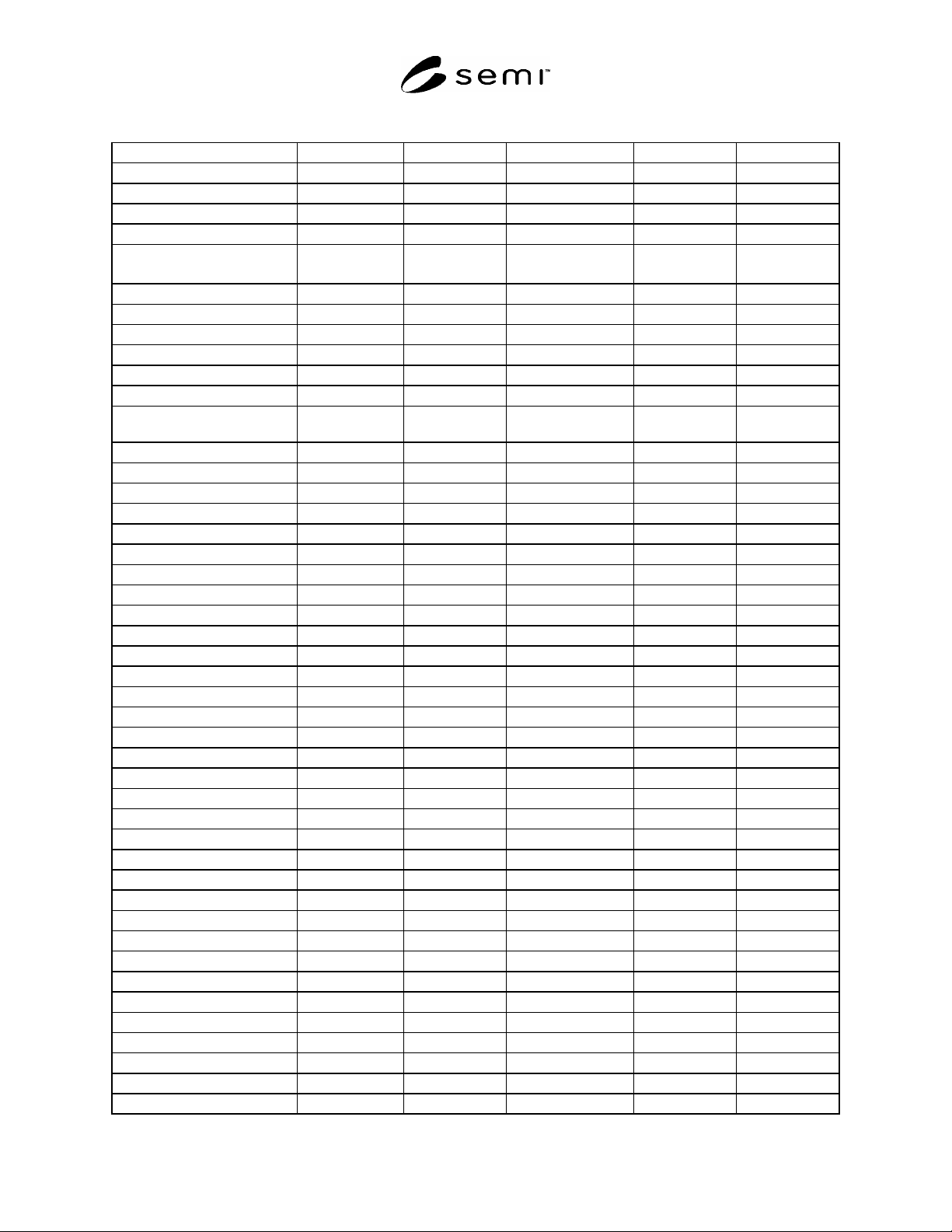
Table 1 Impurity Limits and Other Requirements for 2-Propanol
Previous SEMI Reference # C1.15-96 C7.7-93 C11.7-0698 C8.7-92 -
Grade 1 Grade 2 VLSI Grade Grade 3 Grade 4
(Specification) (Specification) (Guideline) (Specification) (Specification)
Assay (CH
3
CHOHCH
3
) 99.5% min 99.8% min 99.7% min 99.8% min 99.8% min
Color (APHA) 10 max 10 max 10 max 10 max 10 max
Residue after Evaporation 5 ppm max 5 ppm max
5 ppm max 5 ppm max
5 ppm max
Resistivity - - 15 MegOhm cm min - -
Solubility in Water To pass test - - - -
Chloride (Cl) 0.2 ppm max 200 ppb max 0.2 ppm max 50 ppb max 50 ppb max
Nitrate (NO
3
) - - - 50 ppb max 50 ppb max
Phosphate (PO
4
) 0.5 ppm max 500 ppb max 0.5 ppm max 50 ppb max 50 ppb max
Sulfate (SO
4
) - - 1 ppm max 50 ppb max 50 ppb max
Aldehydes and Ketones (as
CH
3
COCH
3
)
- - 100 ppm max - -
Water (H
2
O) 0.05% max 0.05% max 0.05% max 0.05% max 0.05% max
Acidity 0.2 µeq/g max - 0.2 µeq/g max - -
Alkalinity 0.1 µeq/g max - 0.1 µeq/g max - -
Aluminum (Al) 0.1 ppm max 10 ppb max 0.05 ppm max 1 ppb max 100 ppt max
Antimony (Sb) - - 0.01 ppm max 1 ppb max 100 ppt max
Arsenic (As) - - 0.01 ppm max 1 ppb max 100 ppt max
Arsenic and Antimony (as As) 0.01 ppm max 10 ppb max - - -
Barium (Ba) - 10 ppb max 0.02 ppm max 1 ppb max 100 ppt max
Beryllium (Be) - 10 ppb max 0.01 ppm max - -
Bismuth (Bi) - 10 ppb max 0.02 ppm max - -
Boron (B) 0.01 ppm max 10 ppb max 0.01 ppm max 1 ppb max 100 ppt max
Cadmium (Cd) - 10 ppb max 0.01 ppm max 1 ppb max 100 ppt max
Calcium (Ca) 0.1 ppm max 10 ppb max 0.01 ppm max 1 ppb max 100 ppt max
Chromium (Cr) 0.1 ppm max 10 ppb max 0.01 ppm max 1 ppb max 100 ppt max
Cobalt (Co) - 10 ppb max 0.01 ppm max - -
Copper (Cu) 0.1 ppm max 10 ppb max 0.01 ppm max 1 ppb max 100 ppt max
Gallium (Ga) - 10 ppb max 0.01 ppm max - -
Germanium (Ge) - 10 ppb max - - -
Gold (Au) 0.1 ppm max 5 ppb max 0.02 ppm max - -
Indium (In) - - 0.01 ppm max - -
Iron (Fe) 0.1 ppm max 5 ppb max 0.01 ppm max 1 ppb max 100 ppt max
Lead (Pb) 0.1 ppm max 10 ppb max 0.01 ppm max 1 ppb max 100 ppt max
Lithium (Li) - 10 ppb max 0.01 ppm max 1 ppb max 100 ppt max
Magnesium (Mg) 0.1 ppm max 10 ppb max 0.01 ppm max 1 ppb max 100 ppt max
Manganese (Mn) 0.1 ppm max 10 ppb max 0.01 ppm max 1 ppb max 100 ppt max
Molybdenum (Mo) - 10 ppb max 0.01 ppm max - -
Nickel (Ni) 0.1 ppm max 10 ppb max 0.01 ppm max 1 ppb max 100 ppt max
Niobium (Nb) - 10 ppb max - - -
Platinum (Pt) - - 0.02 ppm max - -
Potassium (K) 0.1 ppm max 10 ppb max 0.01 ppm max 1 ppb max 100 ppt max
Silicon (Si) - - - - -
Silver (Ag) - 5 ppb max 0.01 ppm max - -
Sodium (Na) 0.1 ppm max 10 ppb max 0.1 ppm max 1 ppb max 100 ppt max