semi合集-English.pdf - 第6956页
SEMI S8-0705 © SEMI 1995, 2005 53 Section 8: Display Location Section Indicator Figure 8.1.3 Height of infrequently used vide o displa y terminal (viewed briefly less often than once per hour) measur ed to top line of mo…
SEMI S8-0705 © SEMI 1995, 2005 52
Section 7: Maintainability and Serviceability
Section Indicator Figure
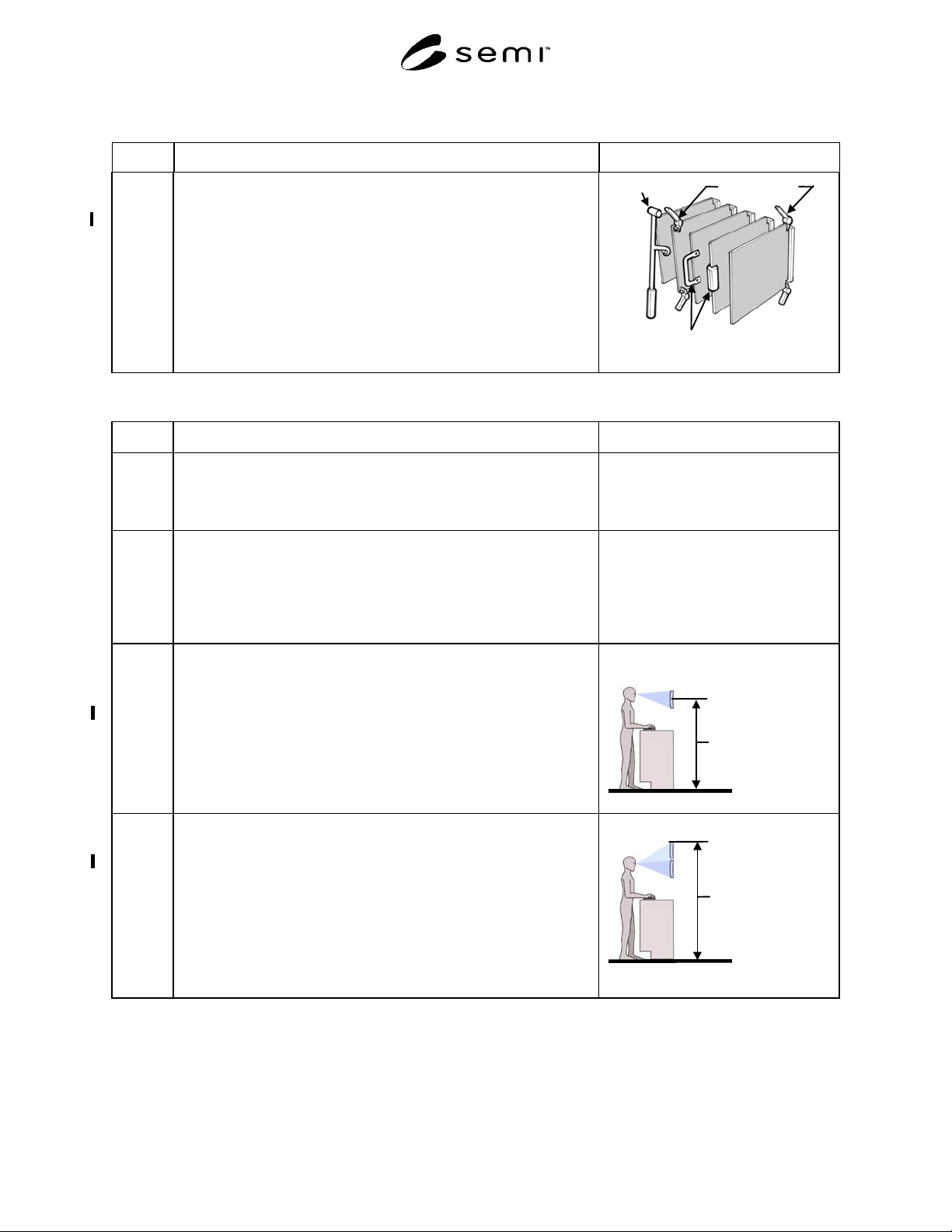
7.5.5 Circuit boards mounted in a card cage configuration should have gripping
or ejecting aids for mounting and removal.
Acceptance criterion: finger access, gripping, or ejecting aids available
Hand tool
E
j
ect levers
Handgrips
Circuit board removal device examples
Section 8: Display Location
Section Indicator Figure
8.0 Display Location
NOTE: Angle-adjustable displays allow the user optimize the
viewing angle to control glare and maximize comfort.
8.1 Location for operator primary interface, standing station.
NOTE: A standing station is one where the operator can assume a
standing posture or use a tall stool or chair which places the
operator at approximately the same height as a standing
posture.
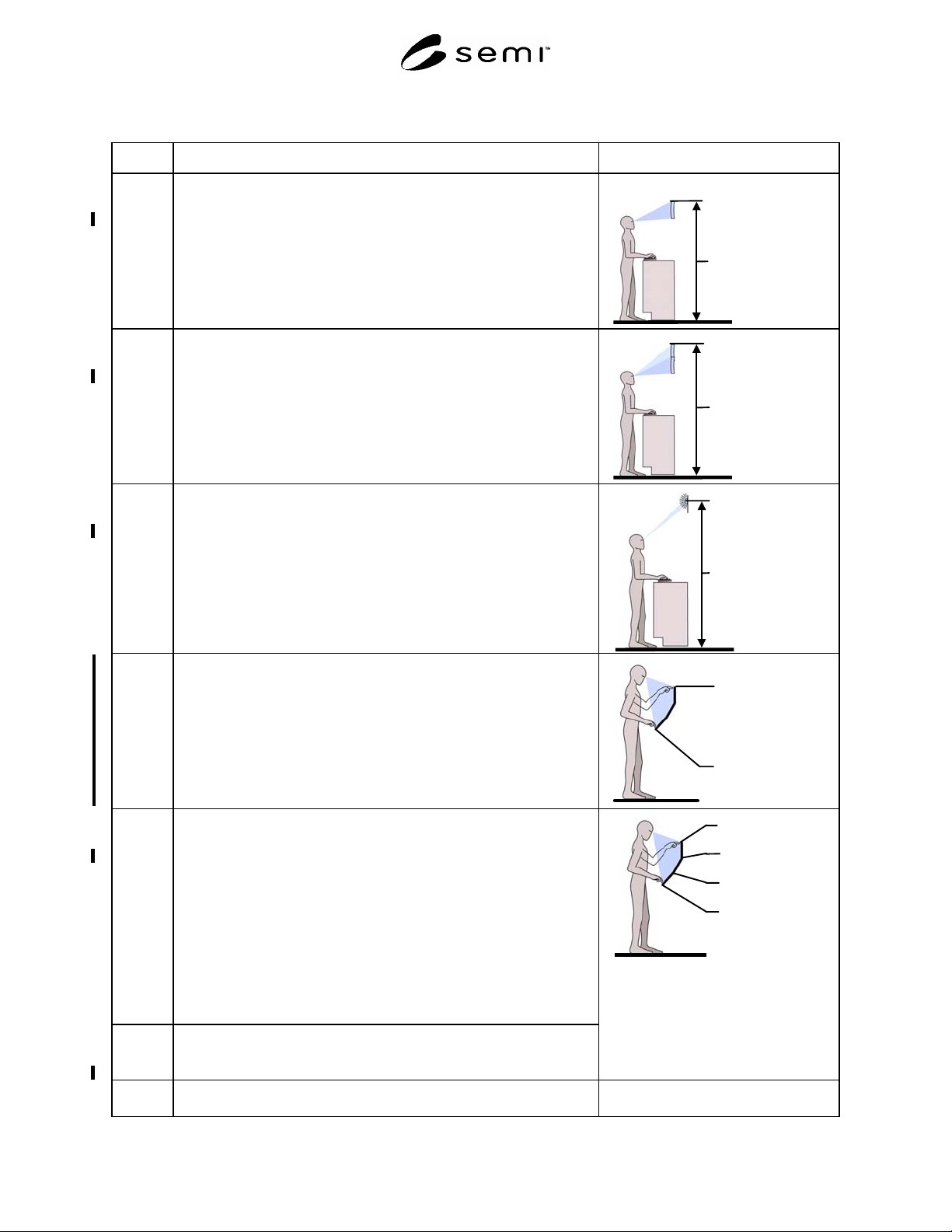
8.1.1 Height of video display terminal (single monitor). Does not include
touchscreens, measured from floor to center of screen.
Acceptance criteria: maximum 1470 mm (58 in.)
minimum 1320 mm (52 in.)
NOTE: The display user should be able to view a display while
maintaining a near-neutral posture.
Single monitor
Maximum 1470
mm
(58 in.)
Minimum 1320
mm
(52 in.)
8.1.2 Height of video display terminal (stacked monitors). Does not include
touchscreens, measured from floor to top line of the top monitor.
Acceptance criterion: maximum 1680 mm (66 in.)
The primary monitor in a stacked configuration is the bottom monitor.
Top stacked
monitor
Maximum 1680 mm
(66 in.)
SEMI S8-0705 © SEMI 1995, 2005 53
Section 8: Display Location
Section Indicator Figure
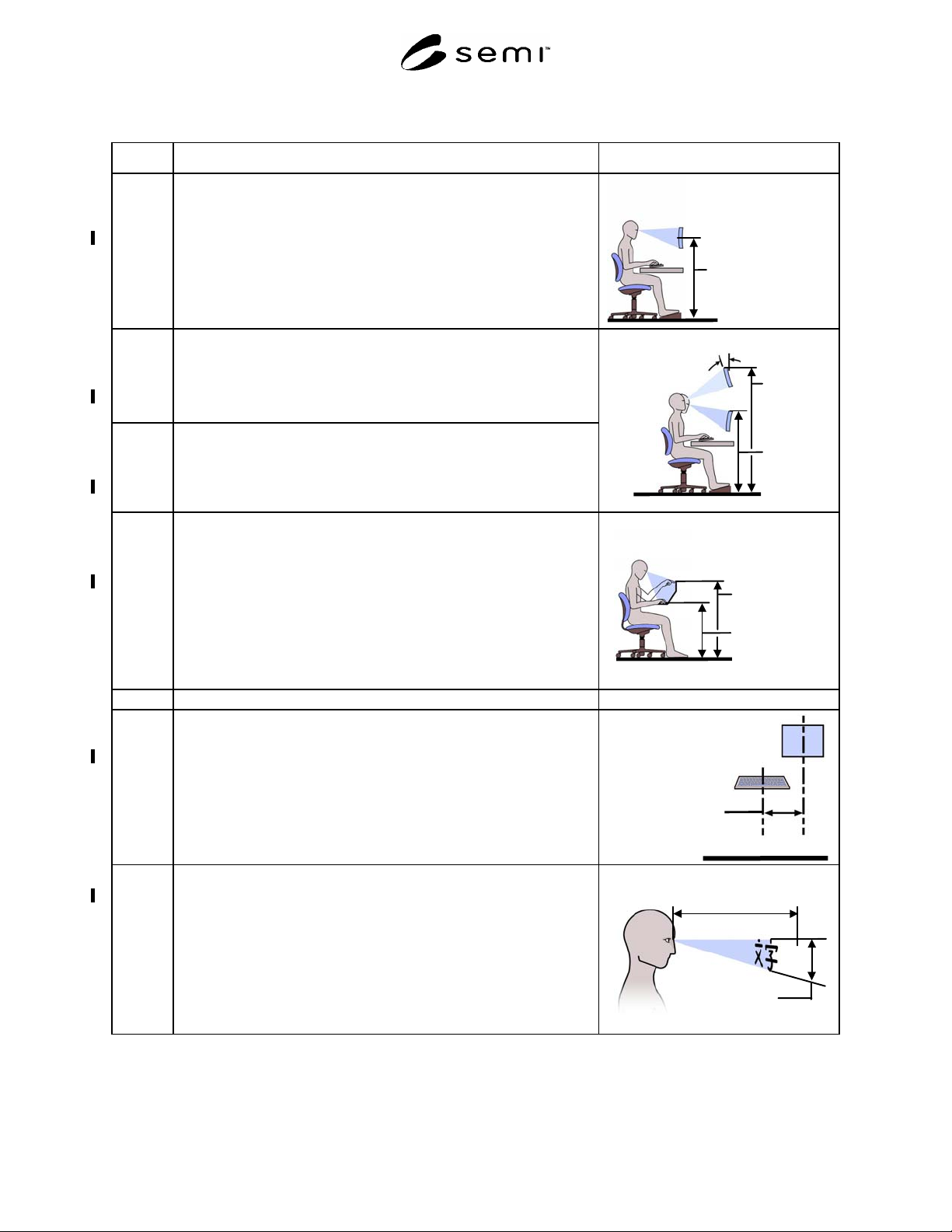
8.1.3 Height of infrequently used video display terminal (viewed briefly less
often than once per hour) measured to top line of monitor.
Acceptance criterion: maximum 1680 mm (66 in.)
Infrequently used
monitor
Maximum 1680 mm
(66 in.)
8.1.4 Height of very infrequently used video display terminal (viewed briefly
less often than once per day) measured to top line of monitor.
Acceptance criterion: maximum 1880 mm (74 in.)
Very infrequently
used monitor
Maximum 1880
mm
(74 in.)
8.1.5 Height of infrequently viewed visual signal measured to the top of the
signal. This guideline does not apply to light towers.
Acceptance criterion: maximum 2130 mm (84 in.)
Visual signal height
Maximum 2130 mm
(
84 in.
)
8.1.6 Height of touch screen monitor.
Acceptance criteria: maximum 1470 mm (58 in.), measured from floor
to uppermost active pad on screen
minimum 910 mm (36 in.), measured from floor to
lowest active pad on the screen.
See §9 for horizontal reach criteria.
NOTE: Touch screen design recommendations also apply to light pen
operated systems.
Top of active area
Maximum height
1470 mm (58.0”)
Bottom of active
area
Minimum height
910 mm (36.0”)
8.1.7 Tilt angle of touch screen monitor between 41 and 48 inches in height to
top of screen.
Acceptance criterion: upward minimum 30 degrees
NOTE A: Angle adjustment is recommended to accommodate users of
varying heights and to reduce glare under different lighting
conditions.
NOTE B: The angle of visibility for flat panel display touch screens
varies depending upon which display technology is used
(e.g., passive vs. active matrix) so providing angle
adjustment will allow users to set the display angle for
maximum visibility and comfort.
8.1.8 Tilt angle of touch screen monitor less than 41 inches in height to top of
screen.
Acceptance criterion: upward minimum 45 degrees
0
0
30
0
45
0
1
3
7
0
mm
(
54.0”
)
1220 mm
(48.0”)
1042 cm
(41.0”)
910 mm
(36.0”)
8.2 Location for operator primary interface, seated station (Note: A seated
station where a short cylinder office-style chair is used.)
SEMI S8-0705 © SEMI 1995, 2005 54
Section 8: Display Location
Section Indicator Figure
8.2.1 Height of video display terminal (single monitor). Does not include
touchscreens, measured from floor to centerline of monitor.
Acceptance criteria: maximum 1190 mm (47 in.)
minimum 940 mm (37 in.)
NOTE A: The display user should be able to view a display while
maintaining a near-neutral posture.
Display height
Maximum 1190 mm
(47 in.)
Minimum 940 mm
(37 in.)
8.2.2 Height of video display terminal (stacked monitors), does not include
touchscreens, measured from floor to top line of top monitor.
Acceptance criteria: maximum 1400 mm (55 in.)
minimum 940 mm (37 in.)
The primary monitor in a stacked configuration is the bottom monitor.
8.2.3 Tilt angle of video display terminal greater than 55 inches in height to top
of screen. This line item becomes significant in the event that the
maximum height criteria cannot be met.
Acceptance criterion: downward minimum 15 degrees
Minimum
height
940 mm
(37 in.)
Maximum
height
1400 mm
(55 in.)
Downward tilt of
top monitor
Minimum 15
0
8.2.4 Height of touch screen monitor
Acceptance criteria: maximum 1070 mm (42 in.) measured from floor to
highest active pad on the screen
minimum 760 mm (30 in.) measured from floor to
lowest active pad on the screen
See §9 for horizontal reach criteria.
NOTE: Touch screen design recommendations also apply to light
pen operated systems.
Active touch
pad area
Minimum 760
mm
(30 in.)
Maximum 1070
mm
(42 in.)
8.3 Display characteristics
8.3.1 Lateral distance from the centerline of the display to the centerline of the
input device(s).
Acceptance criterion: maximum 320 mm (12.6 in.)
NOTE: If several input devices are used (i.e. keyboard and mouse)
the centerline of the input device farthest from the display
should be measured.
Lateral distance
between monitor
and input device
Maximum 320 mm
(12.6 in.)
8.3.2 Character height (Specific to Chinese, Korean and Japanese characters.)
Acceptance criterion: character height is greater than or equal to the
viewing distance divided by 143
Recommended viewing distance is between 457 mm (18 in.) and 762 mm
(30 in.).
Viewing distance 457-
762 mm
(18-30 in.)
Character height =
viewing distance
divided by 143