semi合集-English.pdf - 第6978页
SEMI S10-1103 © SEMI 1996, 2003 8 RELATED INFORMATION 1 HAZARD IDENTIFICATION CHECKLIST NOTICE: This rel ated infor mation is not an offici al part of SEM I S10 and was derived from EN 1050. Figure 1 from BS EN 1050: 199…
SEMI S10-1103 © SEMI 1996, 2003 7
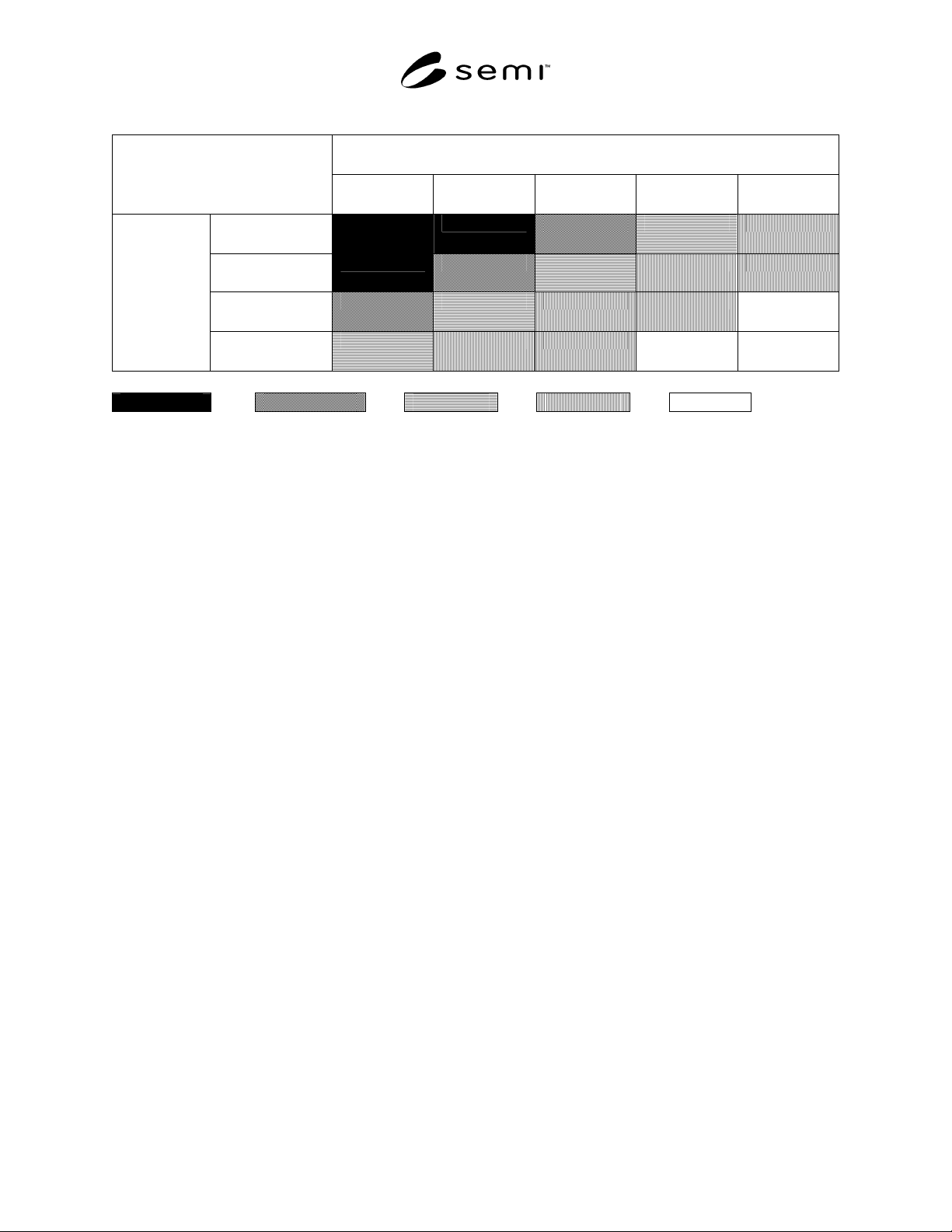
Table A1-3 Risk Ranking Matrix
LIKELIHOOD
RISK
RANKING
MATRIX
FREQUENT
A
LIKELY
B
POSSIBLE
C
RARE
D
UNLIKELY
E
CATASTROPHIC
1
SEVERE
2
MODERATE
3
S
E
V
E
R
I
T
Y
MINOR
4
Overall Risk Ranking Categories:
VERY HIGH HIGH MEDIUM LOW VERY
LOW
NOTE A1-6: The Risk Categories of “Very High” and “Very Low” correspond identically with the Risk Categories,
used in previous SEMI documents (e.g., S10-12-96, S2, and S14) of “Critical” and “Slight”. The terms were
changed to facilitate translation from English.
NOTICE: SEMI makes no warranties or representations as to the suitability of the guidelines set forth herein for
any particular application. The determination of the suitability of the standard is solely the responsibility of the user.
Users are cautioned to refer to manufacturer' s instructions, product labels, product data sheets, and other relevant
literature, respecting any materials or equipment mentioned herein. These standards are subject to change without
notice.
By publication of this guideline, Semiconductor Equipment and Materials International (SEMI) takes no position
respecting the validity of any patent rights or copyrights asserted in connection with any item mentioned in this
guideline. Users of this guideline are expressly advised that determination of any such patent rights or copyrights,
and the risk of infringement of such rights are entirely their own responsibility.
SEMI S10-1103 © SEMI 1996, 2003 8
RELATED INFORMATION 1
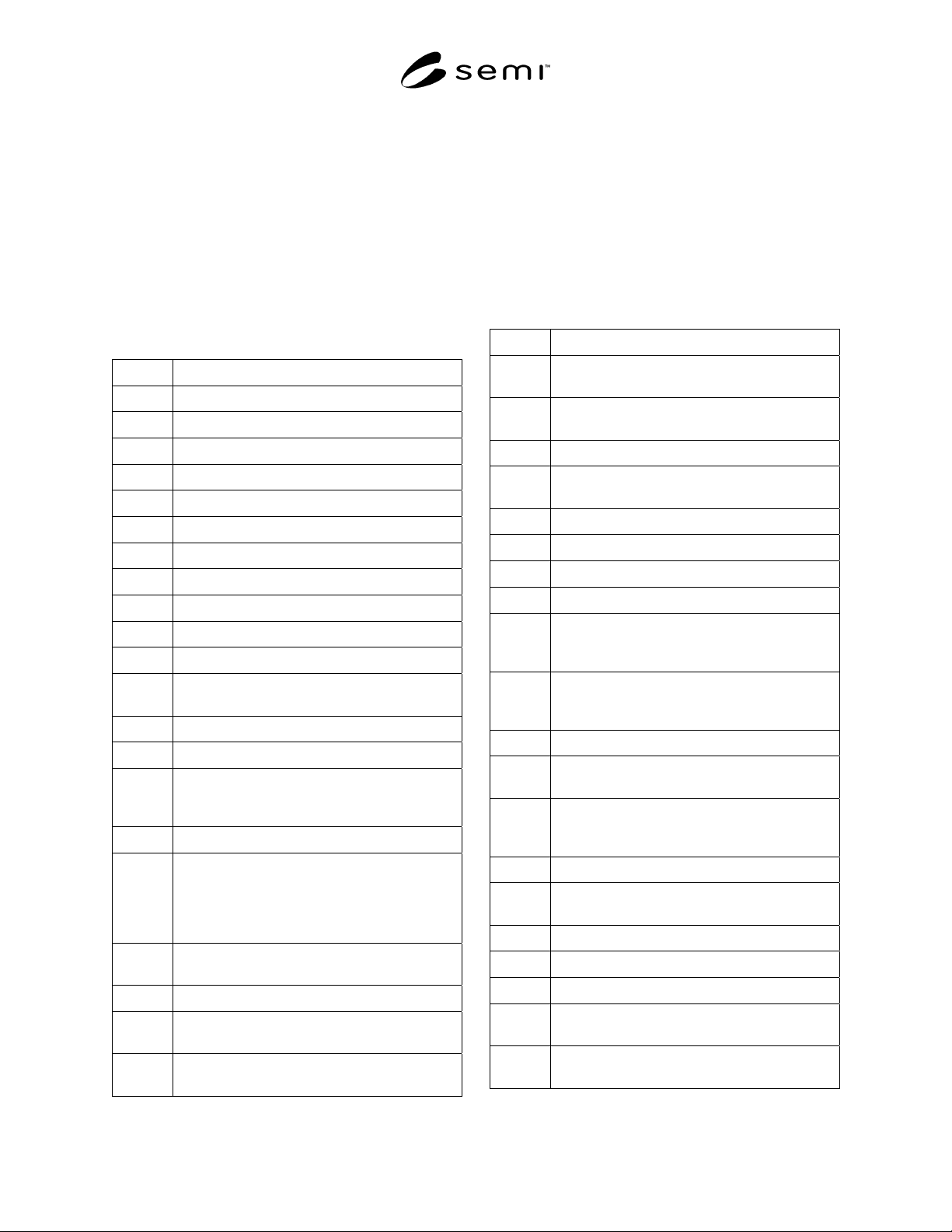
HAZARD IDENTIFICATION CHECKLIST
NOTICE: This related information is not an official part of SEMI S10 and was derived from EN 1050. Figure 1
from BS EN 1050: 1997 is reproduced with the permission of BSI under license number 2003DH0150. British
Standards can be obtained from reproduced with the permission of BSI Customer Services, 389 Chiswick High
Road, London, W4 4AL, United Kingdom, Tel + 44 (0)20 8996 9001.
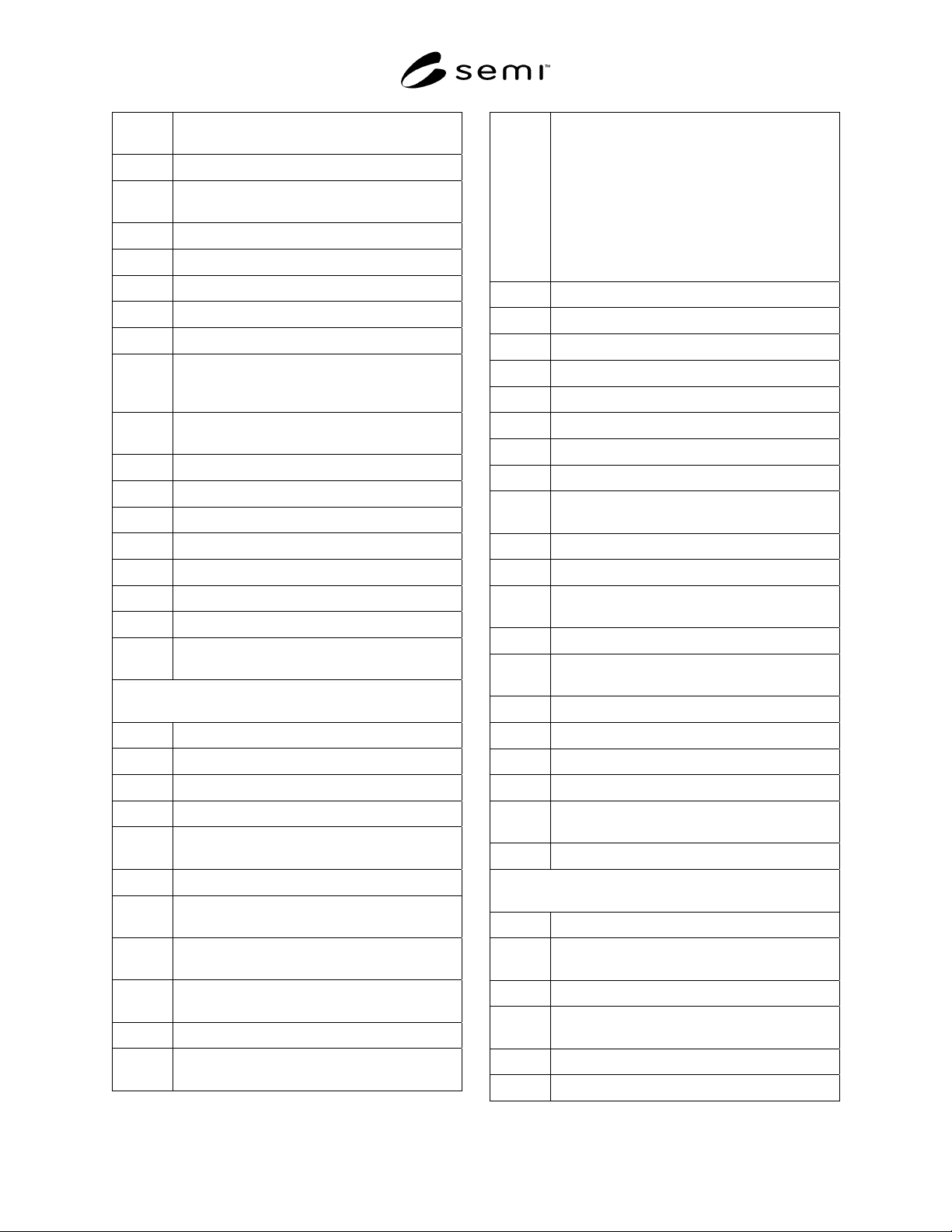
R1-1 Hazard Identification Checklist
R1-1.1 This checklist is produced to assist the assessor in identifying potential hazards. Other SEMI safety
guidelines may also be used.
Table R1-1 List of Hazards (copied from EN 1050)
1 Mechanical hazards
1.1 Crushing hazard
1.2 Shearing hazard
1.3 Cutting or severing hazard
1.4 Entanglement hazard
1.5 Drawing-in or trapping hazard
1.6 Impact hazard
1.7 Stabbing or puncture hazard
1.8 Friction or abrasion hazard
1.9 High pressure fluid injection or ejection hazard
2 Electrical hazards
2.1 Contact of persons with live parts (direct contact)
2.2 Contact of persons with parts which have become
live under faulty conditions (indirect contact
2.3 Approach to live parts under high voltage
2.4 Electrostatic phenomena
2.5 Thermal radiation or other phenomena such as the
p
rojection of molten particles and chemical effects
from short circuits, overloads, etc.
3 Thermal hazards, resulting in:
3.1 Burns, scalds and other injuries by a possible
contact of persons with objects or materials with
an extreme high or low temperature, by flames or
explosions and also by the radiation of heat
sources
3.2 Damage to health by hot or cold working
environment
4 Hazards generated by noise, resulting in:
4.1 Hearing loss (deafness), other physiological
disorders (e.g., loss of balance, loss of awareness)
4.2 Interference with speech communication, acoustic
signals, etc.
5 Hazards generated by vibration
5.1 Use of hand-held machines resulting in a variety
of neurological and vascular disorders
5.2 Whole body vibration, particularly when
combined with poor postures
6 Hazards generated by radiation
6.1 Low frequency, radio frequency radiation, micro
waves
6.2 Infrared, visible and ultraviolet light
6.3 X and gamma rays
6.4 Alpha, beta rays, electron or ion beams, neutrons
6.5 Lasers
7 Hazards generated by materials and substances
(and their constituent elements) processed or used
by the machinery
7.1 Hazards from contact with or inhalation/ ingestion
and subcutaneous injection of harmful fluids,
gases, mists, fumes, and dusts
7.2 Fire or explosion hazard
7.3 Biological or microbiological (viral or bacterial)
hazards
8 Hazards generated by neglecting ergonomic
principles in machinery design as, e.g., hazards
from:
8.1 Unhealthy postures or excessive effort
8.2 Inadequate consideration of hand-arm or foot-leg
anatomy
8.3 Neglected use of personal protection equipment
8.4 Inadequate local lighting
8.5 Mental overload and underload, stress
8.6 Human error, human behavior (e.g.:due to
improper training, selection, …)
8.7 Inadequate design, location or identification of
manual controls
SEMI S10-1103 © SEMI 1996, 2003 9
8.8 Inadequate design or location of visual display
units
9 Combination of Hazards
10 Unexpected start-up unexpected over-run/over-
speed (or any similar malfunction) from:
10.1 Failure/disorder of the control system
10.2 Restoration of energy supply after an interruption
10.3 External influences on electrical equipment
10.4 Other external influences (gravity, wind, etc.)
10.5 Errors in the software
10.6 Errors made by the operator (due to mismatch of
machinery with human characteristics and
abilities, see 8.6)
11 Impossibility of stopping the machine in the best
possible conditions
12 Variations in the rotational speed of tools
13 Failure of the power supply
14 Failure of the control circuits
15 Errors of fitting
16 Break-up during operation
17 Falling or ejected objects or fluids
18 Loss of stability / overturning of machinery
19 Slip, trip and fall of persons (related to
machinery)
Additional hazards, hazardous situation and hazardous events
due to mobility
20 Relating to the traveling function
20.1 Movement when starting the engine
20.2 Movement without a driver at the driving position
20.3 Movement without all parts in safe position
20.4 Excessive speed of pedestrian controlled
machinery
20.5 Excessive oscillations when moving
20.6 Insufficient ability of machinery to be slowed
down, stopped and immobilized
21 Linked to the work position (including driving
station) on the machine
21.1 Fall of persons during access to (or at/from) the
work position
21.2 Exhaust gases/lack of oxygen at the work position
21.3 Fire (flammability of the cab, lack of
extinguishing means)
21.4 Mechanical hazards at the work position:
contact with the wheels
rollover
fall of objects, penetration by objects
break-up of parts rotating at high speed
contact of persons with machine parts or tools
(pedestrian controlled machines)
21.5 Insufficient visibility from the work positions
21.6 Inadequate lighting
21.7 Inadequate seating
21.8 Noise at the work position
21.9 Vibration at the work position
21.10 Insufficient means for evacuation/emergency exit)
22 Due to the control system
22.1 Inadequate location of manual controls
22.2 Inadequate design of manual controls and their
mode of operation
22.3 Inadequate explanation of the use of the controls
23 From handling the machine (lack of stability)
24 Due to the power source and to the transmission
of power
24.1 Hazards from the engine and the batteries
24.2 Hazards from transmission of power between
machines
24.3 Hazards from coupling and towing
25 From/to third persons
25.1 Unauthorized start-up/use
25.2 Drift of a part away from its stopping position
25.3 Lack or inadequacy of visual or acoustic warning
means
26 Insufficient instructions for the driver/operator
Additional hazards, hazardous situations and hazardous
events due to lifting
27 Mechanical hazards and hazardous events
27.1 from load falls, collisions, machine topping
caused by:
27.1.1 lack of stability
27.1.2 uncontrolled loading – overloading – overturning
moments exceeded
27.1.3 uncontrolled amplitude of movements
27.1.4 unexpected/unintended movement of loads