semi合集-English.pdf - 第6987页
SEMI S10-1103 © SEMI 1996, 2003 17 NOTICE: SEMI makes no warranties or representations as to th e suitability of th e guidelines set forth herein for any particular application. The determinatio n of the suita bility of …
SEMI S10-1103 © SEMI 1996, 2003 16
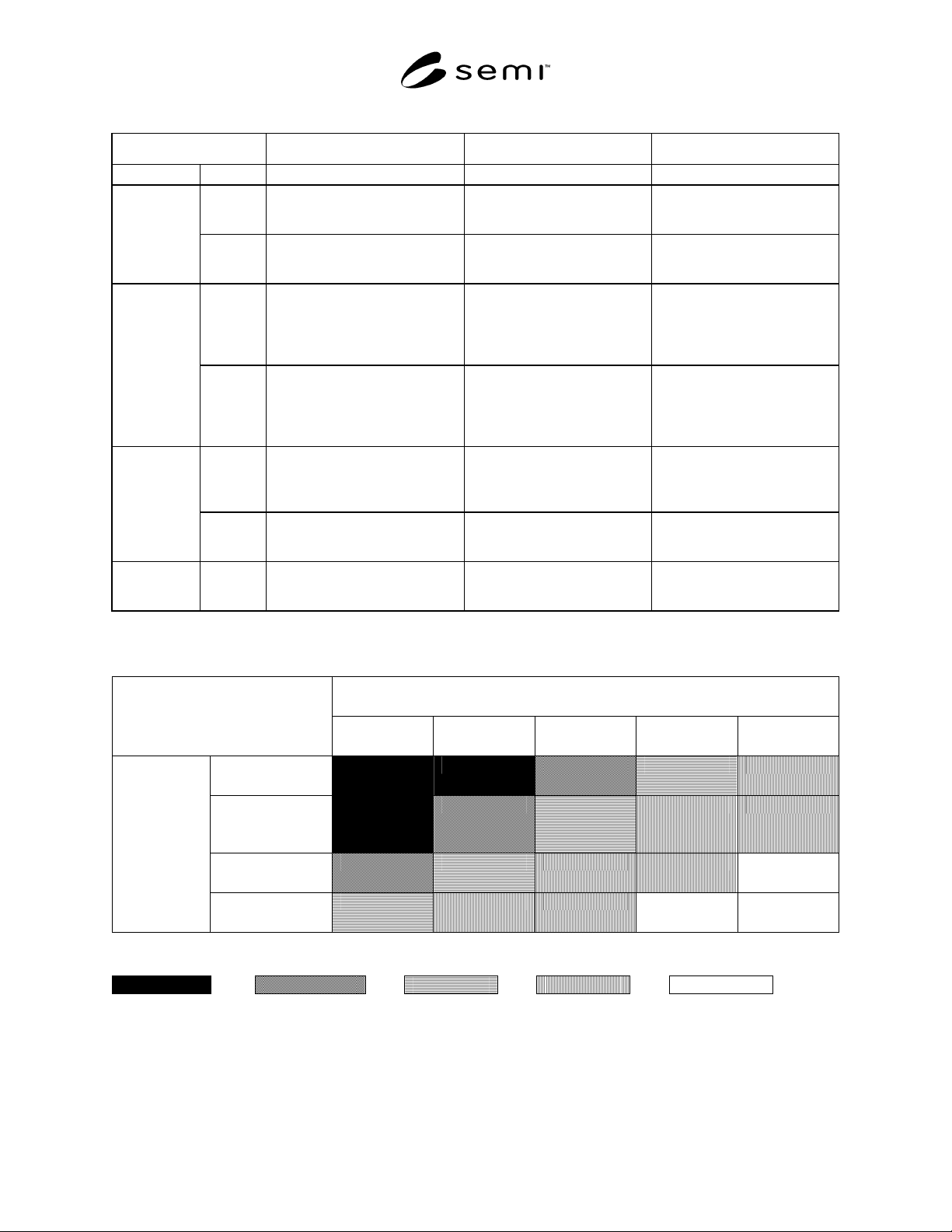
Table R4-3 Severity numbers (more quantitative)
Severity number People (See Note R4-1)
Equipment/Facility Property
0 No injury No damage No damage
1
(minor)
Scratch/bruise Non-serious equipment (< 1
hour) or facility damage.
Minor Chemical release
requiring only routine cleanup
without reporting.
Minor
2 First aid only. Non-serious equipment (< 8
hour)
Facility damage (< 1 hour).
Chemical release requiring
only routine cleanup without
reporting.
4 Minor Medical treatment or
restricted work activity (OSHA
recordable) (< 1 week)
Beginning Repetitive strain
injury.
Minor subsystem loss (< 1 day)
Facility damage (< 1 shift).
Chemical release triggering
external reporting
requirements.
Moderate
8 Medical treatment or restricted
work activity (OSHA
recordable). Repetitive strain
injury (intensive treatment
required).
Subsystem loss (< 1 month)
Facility damage (< 1 shift).
16 Disabling injury/illness.
Repetitive strain injury
(permanent restricted work
activity).
Major-system loss (between 1
month and 1 Year)
Facility damage (1-4 Weeks).
Chemical release with
temporary environmental or
public health impact.
Severe
32 Disabling injury/illness. (Loss of
Limbs/ serious illness)
Total System loss; (> 1 Year)
Facility loss (between 1 month
and 1 Year).
Catastrophic
64 One or more fatalities. Total Facility loss (> 1 year). Chemical release with lasting
environmental or public health
impact.
Note R4-1: This number is if 1-2 people are exposed to the risk. The number must be doubled when there are 3 or more people involved.
Table R4-4 Table R4-1 to Table R4-3 related to Appendix 1 Table A3
LIKELIHOOD
RISK
ASSESSMENT
MATRIX
FREQUENT
(X >5)
LIKELY
(1 < X < 5)
POSSIBLE
(0.2 < X < 1)
RARE
(0.1 < X < 0.2)
UNLIKELY
(0 < X < 0.1)
CATASTROPHIC
(≥ 64)
SEVERE
(8 ≤ x < 64)
MODERATE
(4 ≤ x < 8)
S
E
V
E
R
I
T
Y
MINOR
(1 ≤ x < 4)
Overall Risk Ranking Categories:
VERY HIGH HIGH MEDIUM LOW VERY LOW
NOTE 1: The Risk Categories of “Very High” and “Very Low” correspond identically with the Risk Categories, used in
previous SEMI documents (e.g., S10-12-96, S2, and S14) of “Critical” and “Slight”. The terms were changed to facilitate
translation from English.

SEMI S10-1103 © SEMI 1996, 2003 17
NOTICE: SEMI makes no warranties or representations as to the suitability of the guidelines set forth herein for
any particular application. The determination of the suitability of the guideline is solely the responsibility of the
user. Users are cautioned to refer to manufacturer’s instructions, product labels, product data sheets, and other
relevant literature respecting any materials or equipment mentioned herein. These guidelines are subject to change
without notice.
The user’s attention is called to the possibility that compliance with this guideline may require use of copyrighted
material or of an invention covered by patent rights. By publication of this guideline, SEMI takes no position
respecting the validity of any patent rights or copyrights asserted in connection with any item mentioned in this
guideline. Users of this guideline are expressly advised that determination of any such patent rights or copyrights,
and the risk of infringement of such rights, are entirely their own responsibility.
Copyright by SEMI® (Semiconductor Equipment and Materials
International), 3081 Zanker Road, San Jose, CA 95134. Reproduction o
f
the contents in whole or in part is forbidden without express written
consent of SEMI.

SEMI S11-1296 © SEMI 19961
SEMI S11-1296
ENVIRONMENTAL, SAFETY, AND HEALTH GUIDELINES FOR
SEMICONDUCTOR MANUFACTURING EQUIPMENT
MINIENVIRONMENTS
1 Purpose
1.1 These guidelines are intended as a minimum set of
performance-based environmental, health, and safety
considerations for minienvironments used in
semiconductor manufacturing.
1.2 These guidelines are intended to be a supplement
to SEMI S2 (see Section 3.1).
2 Scope
2.1 These guidelines apply to minienvironments used
in the manufacturing, metrology, assembly, and testing
of semiconductor products.
2.2 Equipment enclosed by, or used in conjunction
with, the minienvironments is addressed separately by
SEMI S2 (see Section 3.1). Examples are process tools
and exhaust emissions abatement devices.
2.3 For “integrated minienvironments,” only the
minienvironment enclosure portion is addressed by
these guidelines.
3 Referenced Documents
NOTE: Documents as listed or referenced shall be the latest
available.
3.1 SEMI Documents
SEMI S2 — Safety Guidelines for Semiconductor
Manufacturing Equipment
SEMI S8 — Safety Guidelines for Ergonomics/Human
Factors Engineering of Semiconductor Manufacturing
Equipment
3.2 NFPA Documents
1
NFPA 255 — Standard Method of Test of Surface
Burning Characteristics of Building Materials
NFPA 318 — Standard for the Protection of
Cleanrooms
3.3 Other Documents
ACGIH — Industrial Ventilation - A Manual of
Recommended Practice
2
1 National Fire Protection Association, 1 Batterymarch Park, Quincy,
MA 02269-9101
UL 181 — Standard for Safety Factory-Made Air Ducts
and Air Connectors
3
4 Terminology
4.1 closed loop air supply — A system in which air is
recirculated from the minienvironment and returned to
the minienvironment with minimal make-up air.
4.2 emergency off (EMO) — Control circuit which
when activated, places the equipment into a safe shut
down condition.
4.3 integrated minienvironment — The
minienvironment that is an integral part of the tool.
4.4 minienvironment — A localized environment
created by an enclosure to isolate the product from
contamination and people.
4.5 minienvironment end user — The facility which
uses a minienvironment for semiconductor fabrication.
4.6 minienvironment supplier — The party that builds,
sells, or otherwise provides minienvironment
enclosures.
4.7 tool supplier — The party that builds, sells, or
otherwise provides the tools that are used together with
the minienvironments.
5 General Requirements
5.1 Safety and Health Design Requirements —
Minienvironment manufacturers should consider site-
specific design requirements but must not compromise
compliance with applicable regulatory requirements.
The requirements covered in these guidelines are not
all-inclusive. The minienvironment supplier should
employ any additional applicable regulatory and
industry standards that govern associated components.
It is the minienvironment supplier’s responsibility to
work with the user and tool supplier to understand the
local codes and variances.
2 American Conference of Governmental Industrial Hygienists, 6500
Glenway, Building D-7, Cincinnati, OH 45211-4438
3 Underwriters Laboratories Inc., 33 Pfingsten Road, North Brook, IL
60062