semi合集-English.pdf - 第7165页
SEMI S22-1103a © SEMI 2003, 2005 50 Table A1-15 Ov er Current Protection For Transforme rs with Thermal Protection Transformer Impedance Maxi mum Primary Protection Percent Of Ratin g (See Note 1) Maximum Secondary Prote…
SEMI S22-1103a © SEMI 2003, 2005 49
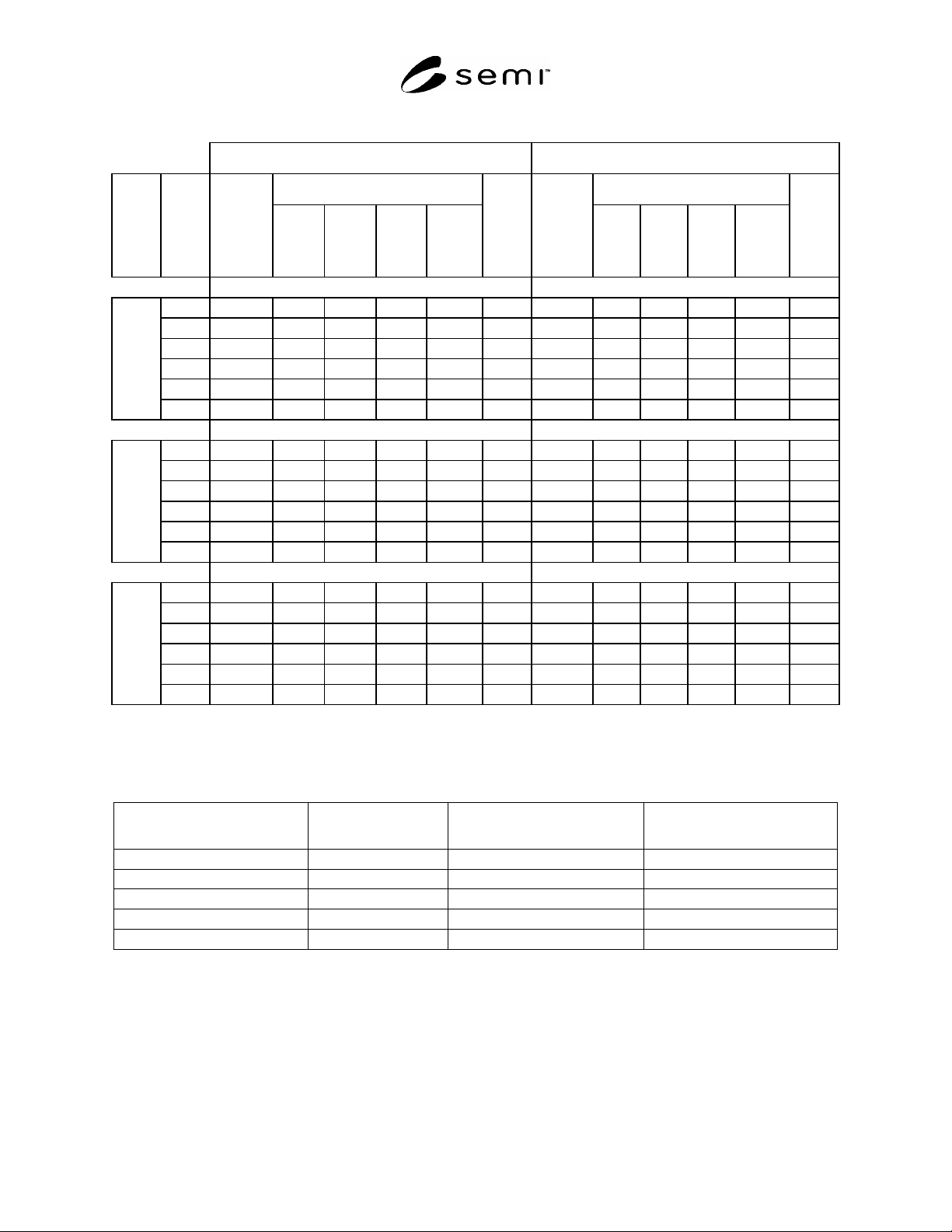
Table A1-13 Creepage and Clearance in greater than Class 1000 Cleanroom
Basic or Supplementary Insulation Double or Reinforced Insulation
Creepage Distance Creepage Distance
Installation
Category
Working Voltage
Clearance
Distance
CTI >
600
CTI >
400
CTI >
100
Printed
Wiring
Board
CTI > 175
Test
Voltage,
rms
1
Clearance
Distance
CTI >
600
CTI >
400
CTI >
100
Printed
Wiring
Board
CTI > 175
Test
Voltage,
rms
1
50 0.2 0.6 0.85 1.2 0.20 230 0.2 1.2 1.7 2.4 0.4 400
100 0.2 0.7 1.00 1.4 0.20 350 0.2 1.4 2.0 2.8 0.4 510
150 0.2 0.8 1.10 1.6 0.35 490 0.4 1.6 2.2 3.2 0.7 740
300 0.5 1.5 2.10 3.0 1.40 820 1.6 3.0 4.2 6.0 2.8 1400
600 1.5 3.0 4.30 6.0 3.00 1350 3.3 6.0 8.5 12.0 6.0 2300
Category 1
1000 3.0 5.0 7.00 7.0 5.00 2200 6.5 10.0 14.0 20.0 10.0 3700
50 0.2 0.6 0.85 1.2 0.2 350 0.2 1.2 1.7 2.4 0.4 510
100 0.2 0.7 1.00 1.4 0.2 490 0.2 1.4 2.0 2.8 0.4 740
150 0.5 0.8 1.10 1.6 0.5 820 1.6 1.6 2.2 3.2 1.6 1950
300 1.5 1.5 2.10 3.0 1.5 1350 3.3 3.3 4.2 6.0 3.3 3250
600 3.0 3.0 4.30 6.0 3.0 2200 6.5 6.5 8.5 12.0 6.5 5250
Category 2
1000 5.5 5.5 7.00 10.0 5.5 3250 11.5 11.5 14.0 24.0 11.5 7850
50 0.2 0.6 0.85 1.2 0.2 490 0.4 1.2 1.7 2.4 0.4 740
100 0.5 0.7 1.00 1.4 0.5 820 1.6 1.6 2.0 2.8 1.6 1950
150 1.5 1.5 1.50 1.6 1.5 1350 3.3 3.3 3.3 3.3 3.3 3250
300 3.0 3.0 3.00 3.0 3.0 2200 6.5 6.5 6.5 6.5 6.5 5250
600 5.5 5.5 5.50 6.0 5.5 3250 11.5 11.5 11.5 12.0 11.5 7850
Category 3
1000 8.0 8.0 8.00 10.0 8.0 4350 16.0 16.0 16.0 20.0 16.0 10450
#1
If necessary to test using DC voltage, increase specified test voltage by 42 percent.
#2
Cleanroom Class greater than 1000 is pollution degree 2, however the pollution degree in a particular area in a given piece of equipment may
exceed pollution degree 2, even if the equipment is installed in a cleanroom greater than 1000.
Table A1-14 Over Currrent Protection For Transformers without Thermal Protection
Transformer Primary Rating Transformer Secondary
Rating
Maximum Primary Protection
Percent Of Rating (See Note 1)
Maximum Secondary Protection
Percent Of Rating
#1
Any Rating 9 amperes or more 250 125
Any Rating Less than 9 amperes 250 167
9A or more Any Rating 125 Not Required
Less than 9A and more than 2A Any Rating 167 Not Required
2A or less Any Rating 300 Not Required
#1
Where the rating does not match a standard overcurrent device rating, the next standard size is permitted.

SEMI S22-1103a © SEMI 2003, 2005 50
Table A1-15 Over Current Protection For Transformers with Thermal Protection
Transformer Impedance Maximum Primary Protection
Percent Of Rating (See Note 1)
Maximum Secondary Protection
Percent Of Rating
#1
6 percent or Less 600 125
More than 6 percent and Less Than
10 percent
400 125
#1
Where the rating does not match a standard overcurrent device rating, the next standard size is permitted.
NOTICE: SEMI makes no warranties or representations as to the suitability of the safety guidelines set forth herein
for any particular application. The determination of the suitability of the safety guidelines is solely the
responsibility of the user. Users are cautioned to refer to manufacturer's instructions, product labels, product data
sheets, and other relevant literature, respecting any materials or equipment mentioned herein. These safety
guidelines are subject to change without notice.
By publication of this safety guideline, Semiconductor Equipment and Materials International (SEMI) takes no
position respecting the validity of any patent rights or copyrights asserted in connection with any item mentioned in
this safety guideline. Users of this guideline are expressly advised that determination of any such patent rights or
copyrights, and the risk of infringement of such rights are entirely their own responsibility.

SEMI S22-1103a © SEMI 2003, 2005 51
DELAYED REVISION SECTION 1 (Effective July 1, 2006)
MODIFICATION TO SEMI S22
NOTICE: This Delayed Revision Section contains material that has been balloted and approved by the SEMI
Environmental Health and Safety Committee, but is not immediately effective. The provisions of this
material are not an authoritative part of the document until their effective date. The main body of SEMI
S22-1103a remains the authoritative version. Some or all of the provisions of revisions not yet in effect may
be optionally applied prior to the effective date, providing they do not conflict with portions of the
authoritative version other than those that are to be revised or replaced as part of the deferred revision, and
are labeled accordingly.
NOTICE: Unless otherwise noted, all material to be added shall be underlined
, and all material to be deleted shall
be struck through
.
D1-1 Revisions to Section 13 (Safety Circuits) — OPTIONAL Before Effective Date
D1-1.1 Make the following changes to ¶13.7.3 and ¶13.7.3.1:
13.7.3 Safety Interlock Design Electromechanical devices and components are preferred.
, but solid state
devices and non
-programmable solid state components may be used provided that the safety interlock system or
relevant parts of the system are evaluated for suitability for use in accordance with appropriate standard(s). The
evaluation for suitability should take into consideration abnormal conditions such as overvoltage, undervoltage,
power supply interruption, transient overvoltage, ramp voltage, electromagnetic susceptibility, electrostatic
discharge, thermal cycling, humidity, dust, vibration, jarring, or interfacing to a network.
EXCEPTION: Where the severity of a reasonably foreseeable mishap is deemed to be minor per SEMI S10, a
software-based safety interlock may be considered suitable.
13.7.3.1 FECS may be used in conjunction with electromechanical or solid state devices and components provided
the programmable safety control system conforms to an appropriate standard for electronic safety systems.
Components of the FECS should be tested and certified according to the requirements of the standard used.
Examples of recognized electronic safety systems standards include IEC 61508, ISO 13849-1, (EN 954-1),
ANSI/ISA SP84.01, DIN/V/VDE-0801.
EXCEPTION: Where the severity of
a reasonably foreseeable mishap is deemed to be minor per SEMI S10, a
software-based safety interlock may be considered suitable.