semi合集-English.pdf - 第7739页
SEMI T12-0305 © SEMI 2004, 2005 18 9.13.2.1.3.3 INUSE — One of s ubstates of USING state. Attachm ent (Secondment) is used for s uch intension as process or maintenance right now. It doesn’t matter where it is on equipme…
SEMI T12-0305 © SEMI 2004, 2005 17
Unit
Transition
ID
SOURCE STATE
Transition
Fragment
numbers
TRIGGER
DESTINATION
STATE
COMMENTS/CONDITION
6 VACANT 4 At least one attachment
is placed.
FULL Location was fully occupied.
7 5 VACANT
8
FULL
6
Location is partially occupied.
9 VACANT 6
At least one attachment
is removed.
UNOCCUPIED
No attachment is there.
9.13 Secondment — Secondment represents an Attachment on equipment. This has subset information of the
original Attachment’s.
9.13.1 Secondment Object — Secondment object represents such supporting resource as Jig or Implement on
equipment logically. Secondment object is an instance of Secondment class defined later. This object is created at
the time delivered physical attachment has been verified successfully. If the equipment doesn’t have verification
capability, this object is created at the time an Attachment arrived and it is identified. This is removed when
physical Attachment has been taken away from the equipment. Attachment object identifies corresponding physical
attachment on equipment and its information. This object is abbreviated as “Secondment” in this document and
often ‘object’ is omitted.
Secondment
showId
showName
changeName
showType
showState
destruct
Figure 17
Secondment Class
9.13.2 Secondment Class — Secondment Class defines its inherent data, behavior and services. This class
generalizes Jig and Implement registered on equipment. This class is illustrated as above for reference.
9.13.2.1 Responsibility of Secondment — This class is responsible for holding and organizing such information as
history for a Jig or Implement on equipment.
9.13.2.1.1 To complete the responsibility it accepts requests and inquiries. Also it checks events, exceptions and
expiration by itself and stimulates such collaborative objects as HistoryBuffer and Exception. They are defined as
services of Secondment in this specification. Service names may be different from above capabilities.
9.13.2.1.2 Inherent data is used to complete the responsibility. The data is also referred to as attributes and they
have to be defined in some way. This document doesn’t define attributes directly with attribute definition table
shown in some SEMI standard documents but defines them indirectly as service parameters.
9.13.2.1.3 Behavior is also defined to complete the responsibility. Behavior is often represented by collaboration
with outside of this class and state model. Collaboration reflects a part of associations of this class with others.
Collaboration works by asking services defined on accompanying object which is the other end of association on
class diagram. State model is representation of the other part of behavior of this class. Because this class has
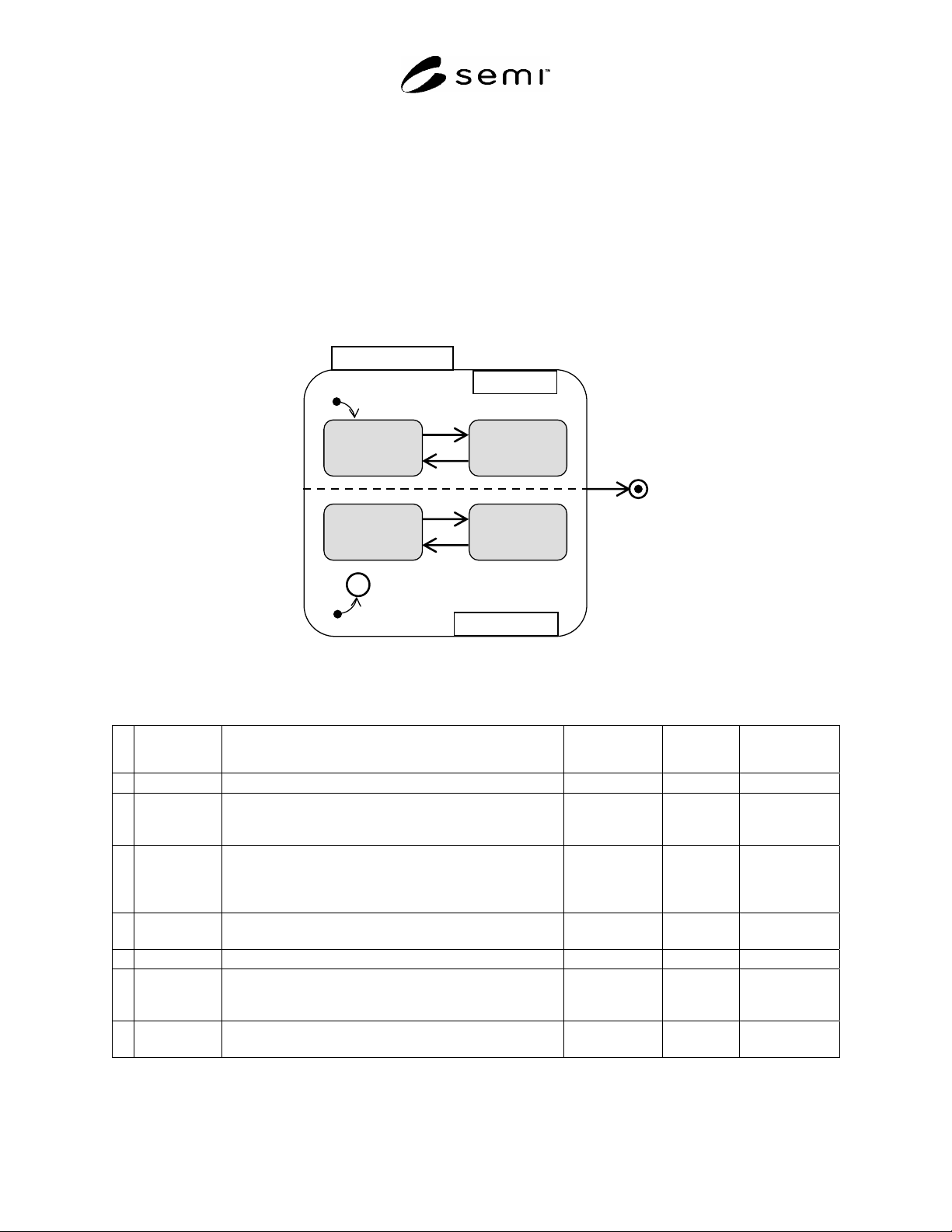
explicit state, it defines following states and state model by state chart and transition definition table. This class has
a couple of parallel substates: USING and EXPIRATION.
9.13.2.1.3.1 USING — This substate specifies use of Secondment whether it is in-use or not.
9.13.2.1.3.2 NOTUSED — One of substates of USING state. Attachment (Secondment) is located somewhere on
equipment but it is not used for such intension as process or maintenance.
SEMI T12-0305 © SEMI 2004, 2005 18
9.13.2.1.3.3 INUSE — One of substates of USING state. Attachment (Secondment) is used for such intension as
process or maintenance right now. It doesn’t matter where it is on equipment but
9.13.2.1.3.4 EXPIRATION — This substate specifies effectiveness of Secondment whether it is expired or not. If
there are more than one expiration condition, more than one EXPIRATION substates could be paralleled but it’s out
of specification of this document. If all the conditions doesn’t fit, it must be EFFEVTIVE and if one of the
conditions fired, it must be EXPIRED.
9.13.2.1.3.5 EFFECTIVE — One of substates of EXPIRATION state. This substate represents that Attachment
(actually Secondment) is not expired and it is no problem to keep using.
9.13.2.1.3.6 NOTUSED — One of substates of EXPIRATION state. This substate represents that Attachment
(actually Secondment) has been expired and it is not recommended to use.
NOTUSED
INUSE
USING
1
2
7
3
EFFECTIVE
EXPIRED
5
6
EXPIRATION
SECONDMENT
4
C
Figure 18
Secondment State
Table 7 Transition Definition Table for JitMachine
#
PREVIOUS
STATE
TRIGGER NEW STATE ACTIONS COMMENTS
1 (No state) Secondment has been created. NOTUSED
2
NOTUSED Secondment has been loaded to certain position for such
intension as process or maintenance, or equipment runs for
above intension with the Secondment.
INUSE
3
INUSE Secondment has been unloaded from certain position for
such intension as process or maintenance, and equipment
stops running for above intension with the Secondment or
still runs but it is not related to the Secondment.
NOTUSED
4
(No state) Secondment has been created. EFFECTIVE
[or] EXPIRED
5 EFFECTIVE One of expiration condition has met. EXPIRED
6
EXPIRED Hitting expiration condition is reconsidered / withdrawn
(destructed), or corresponding Attachment has been
maintained or repaired on site.
EFFECTIVE
7
(any state of
Secondment)
Secondment has been removed. (No state)
SEMI T12-0305 © SEMI 2004, 2005 19
10 Services for Attachment Tracking
10.1 Services — This section defines content of service messages provided by classes in this document.
10.1.1 Format and Protocol — The message format and communication protocol may not be defined here because
they are dependent to specific implementation.
10.1.2 Public Interface — Service definition is a part of definition of public interface. Implementation of services
may not be always required if a set of the message communication between objects or from outside of this system
are not the boarder of deployment unite provided by different suppliers.
10.1.3 Component Based Deployment — However even if they are not, implementing it may help component base
deployment. If it is component based, it is easy to replace, update or improve system by component or such
subcomponent as class.
10.2 Service Definition — Service definitions are given for each class.
10.2.1 Attachment — Following tables defines services of Attachment class.
10.2.1.1 Service List — Attachment class has following services.
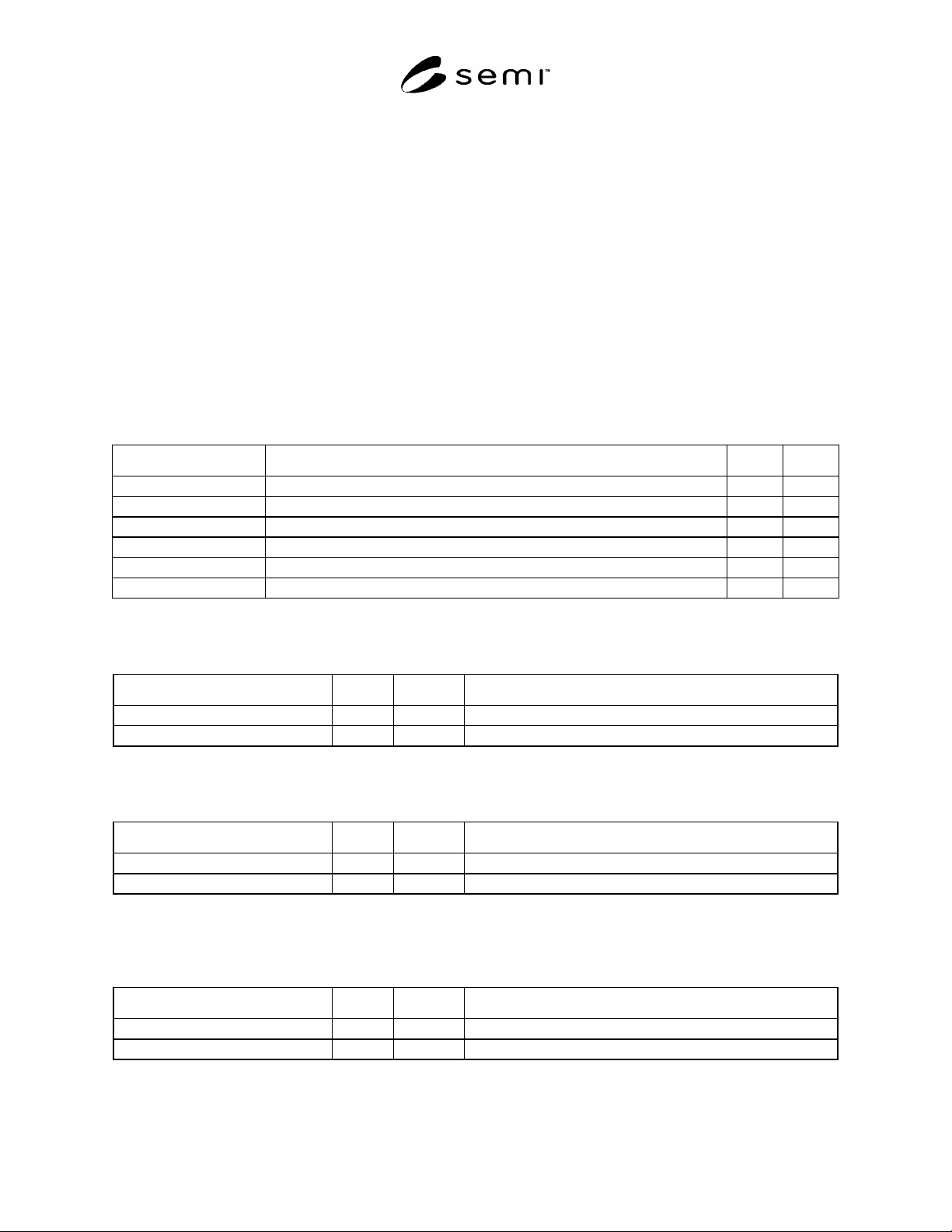
Table 8
Operation Description Type Reqd
showId Inquires identification of Attachment. R Y
showName Inquires name of Attachment. R N
changeName Changes name of Attachment. R N
showType Inquires specific type of Attachment. R Y
showHistory Inquires all or a part of Attachment’s history. R Y
updateHistory Adds recent history of Attachment. R Y
10.2.1.2 showId — This service is used to inquire Attachment’s ID. Following table defines its parameters.
Table 9
Parameter Req/Ind Rsp/Conf Description
AttachmentId - M Identification of Attachment.
ServiceStatus - M Result of service request.
10.2.1.3 showName — This service is used to inquire Attachment’s name. Following table defines its parameters.
Table 10
Parameter Req/Ind Rsp/Conf Description
AttachmentName - M Name of Attachment.
ServiceStatus - M Result of service request.
10.2.1.4 changeName — This service is used to change Attachment’s Name. Following table defines its
parameters.
Table 11
Parameter Req/Ind Rsp/Conf Description
AttachmentName M C Name of Attachment.
ServiceStatus - M Result of service request.