semi合集-English.pdf - 第7761页
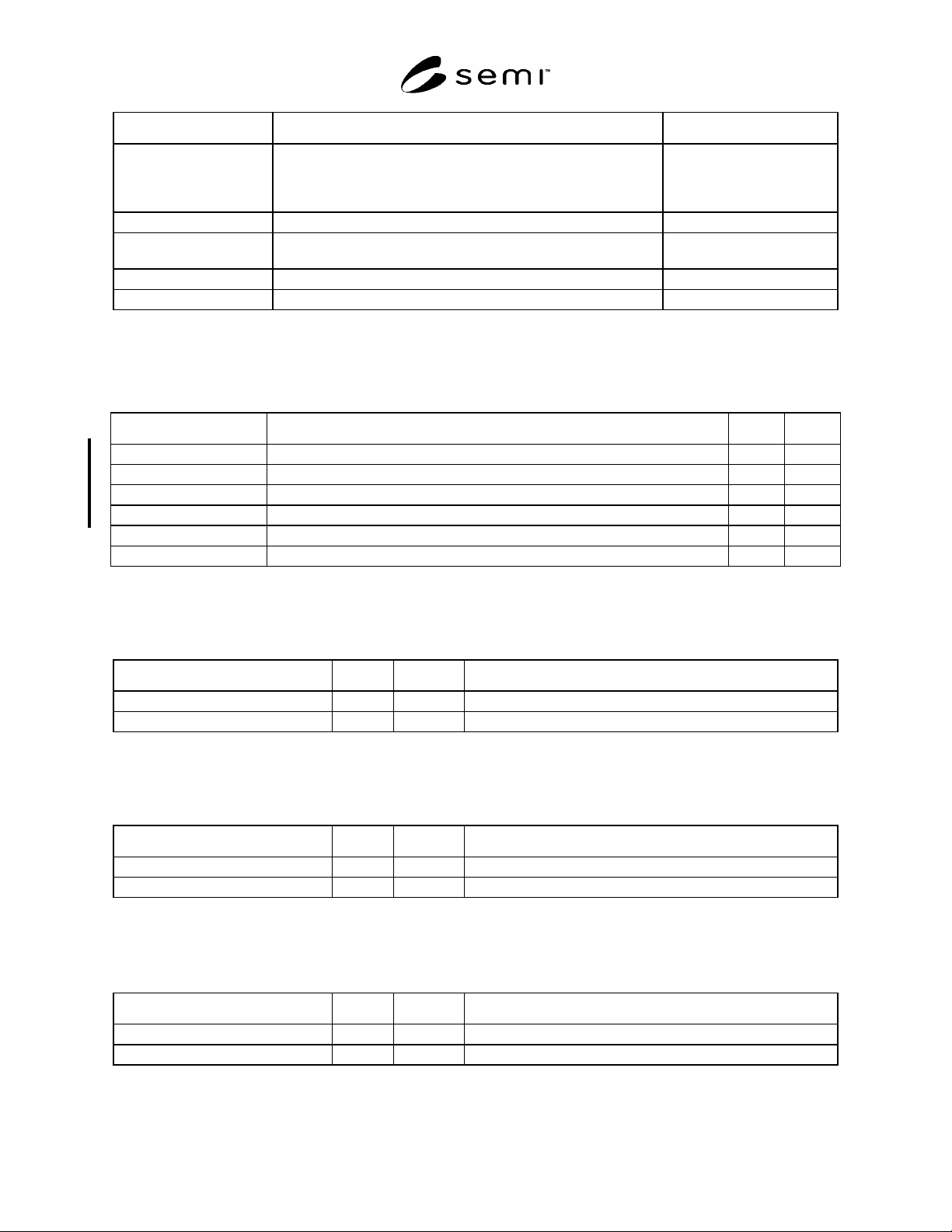
SEMI T12-0305 © SEMI 2004, 2005 40 10.2.11.5 showType — This service is used to inquire type of Secondment. Following table defines its parameters. Table 104 Parameter Req/Ind Rsp/Conf Description AttachmentType - M Ty p…
SEMI T12-0305 © SEMI 2004, 2005 39
Parameter Definition Form
LocationType Type of PublicLocation. At lease it is classified into ‘Stock’ and
‘Equipment’. If stock has logical or physical partitions, their types
may different LocationTypes. If a piece of equipment has more than
one locations, they may be different LocatuinTypes.
Text.
Space Number of available free position for possible Attachment. Value.
Occupancy Fluctuation number of occupants for PublicLocation: positive for
increment and negative for decrement.
Value.
ServiceStatus Result of service to show successful or reason of failure. Text.
State Occupancy state of PublicLocation object. Text.
10.2.11 Secondment — Following tables defines services of Secondment class.
10.2.11.1 Service List — Secondment class has following services.
Table 100
Operation Description Type Reqd
ShowId Inquires secondment’s identification. R Y
showName Inquires secondment’s name. R Y
changeName Substitutes secondment’s name. R Y
showType Inquires type of the secondment. R Y
showState Inquires state information. R Y
Destruct Destruct a Secondment object. R Y
10.2.11.2 showId — This service is used to inquire Secondment’s identification. Following table defines its
parameters.
Table 101
Parameter Req/Ind Rsp/Conf Description
AttachmentId - M Identification of Secondment.
ServiceStatus - M Result of service request.
10.2.11.3 showName — This service is used to inquire human friendly name of Secondment. Following table
defines its parameters.
Table 102
Parameter Req/Ind Rsp/Conf Description
AttachmentName - M Given human friendly name of Secondment.
ServiceStatus - M Result of service request.
10.2.11.4 changeName — This service is used to replace human friendly name of Secondment. Following table
defines its parameters.
Table 103
Parameter Req/Ind Rsp/Conf Description
AttachmentName M - New name of Secondment.
ServiceStatus - M Result of service request.
SEMI T12-0305 © SEMI 2004, 2005 40
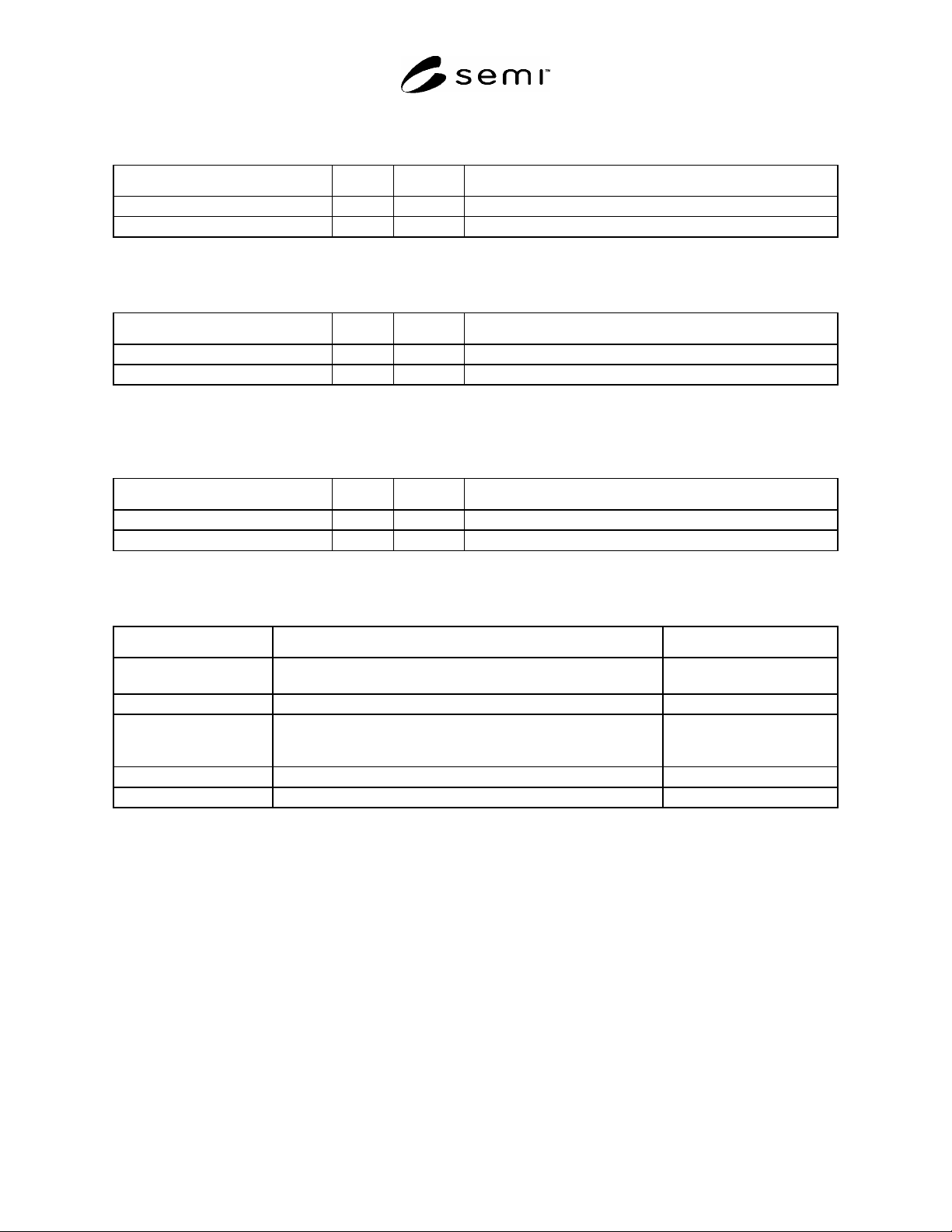
10.2.11.5 showType — This service is used to inquire type of Secondment. Following table defines its parameters.
Table 104
Parameter Req/Ind Rsp/Conf Description
AttachmentType - M Type of Secondment.
ServiceStatus - M Result of service request.
10.2.11.6 showState — This service is used to inquire state of Secondment. Following table defines its parameters.
Table 105
Parameter Req/Ind Rsp/Conf Description
State - M State of Secondment.
ServiceStatus - M Result of service request.
10.2.11.7 destruct — This service is used to remove Secondment object. This service is typically used when an
attachment is removed from equipment. Following table defines its parameters.
Table 106
Parameter Req/Ind Rsp/Conf Description
State - M Immediate state just before removed.
ServiceStatus - M Result of service request.
10.2.11.8 Parameter List — Above services use following parameters.
Table 107
Parameter Definition Form
AttachmentId Identification of Attachment: usually equivalent to physical ID
maybe tagged on physical attachment.
Text.
AttachmentName Human friendly name assigned on an Attachment. Text.
AttachmentType Type of Attachment: at least jig or implement, and based on
attachments’ compatibility. Further classification is dependent on
manufacturer, attachment, equipment or strategy of its user.
Enumerated.
ServiceStatus Result of service to show successful or reason of failure. Text.
State Occupancy state of PublicLocation object. Text.
SEMI T12-0305 © SEMI 2004, 2005 41
RELATED INFORMATION 1
USE CASE OF TRACKING JIGS AND IMPLEMENTS
NOTICE: This related information is not an official part of SEMI T12 and was derived from the work of the
originating task force. This related information was approved for publication by full letter ballot procedures on
January 9, 2004.
R1-1 Use Case Diagram
R1-1.1 Use Case diagram is one of good start point to understand and analyze problem domain. It is often used
before modeling a system.
R1-1.2 Use Case diagram consists of Actors and Use Cases. A use case defines something expected to a system
related to an actor or between actors. All use cases build up whole system.
R1-2 Use Case Diagram of Attachment Tracking
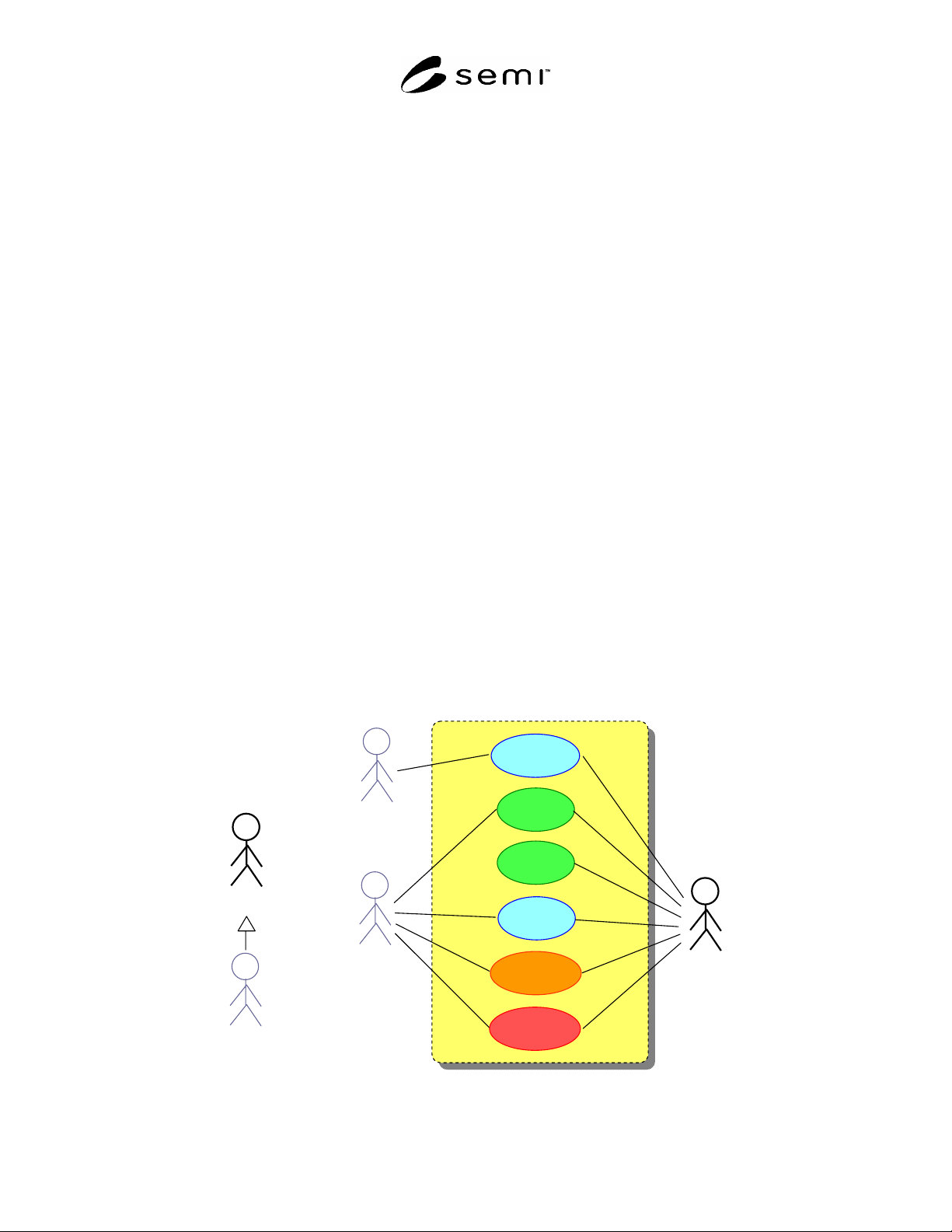
R1-2.1 Figure R1-1 is for use cases of Jigs and Implements.
R1-2.2 Update Inventory — Jig Handler updates when it takes jig to or brings from equipment. Tool updates when
jig has arrived (and verified) and removed.
R1-2.3 Update or Check History — Tool reports when it uses some amount of cycle or such things as maintenance,
inspection or problem happens. Superintendent checks history of a jig. Provided information is based on data in
database with inquiry about current delta on equipment.
R1-2.4 Manage Exception — Tool reports when some exception happens. Superintendent instructs something.
Tool replies.
R1-2.5 Invoice — Superintendent send invoice to let tool know which jig is delivered. Tool asks whether received
jig is right one or not. If something is wrong, an exception process is required.
R1-2.6 Manage Expiration — When Jig is used repeatedly and it use-time or cycles reaches preset value, tool has to
make some expected action to avoid unexpected processing.
R1-2.7 Manage Exception — Superintendent configures effective period or cycle of a Jig. Tool stop using the Jig
or notify the event when it is expired.
Update
History
Superinten
dent
Too l
(
Ji
g
User
)
Check
History
Invoice
Manage
Expiration
Update
Inventory
Jig
Handler
Superinten
dent
Too l
(
Ji
g
User
)
Manage
Exception
Figure R1-1