semi合集-English.pdf - 第912页
SEMI E118-1104 E © SEMI 2002, 2004 6 8.3.2 In the case of multiple heads, it must be possib le to distinguish between the attrib utes of different heads. Table 2 Reader Head Attribute Definitions Attribute Name Descripti…
SEMI E118-1104
E
© SEMI 2002, 2004 5
command is sent to one head, the host can send additional commands such as a read command and a status
confirmation command to another head before the first head sends the response to the first command.
7.3 Upstream Controller
7.3.1 The WIDR provides certain services when requested by the upstream controller. The upstream controller
sends a message requesting the specified service, and the WIDR sends a message with the response.
7.3.2 This standard assumes that an upstream controller initiates each service message to the WIDR, and the WIDR
sends its response to the upstream controller. The upstream controller must watch the response time to monitor the
communication timeout. This standard will define the recommended method for handling exceptions caused by
timeouts.
7.3.3 In addition, some WIDR may provide asynchronous notification to the upstream controller. Examples of this
include, but are not limited to, the detection of a fault condition resulting in an alarm. Asynchronous notification is
not required for compliance to this standard.
8 Attributes
8.1 An attribute is an item of information about an entity that is maintained and is available by request. There is
certain information concerning the WIDR that is of potential interest to the upstream controller, including the
manufacturer, the model, and the serial number of the device. This information is considered as attributes of the
WIDR and is available on request.
8.2 WIDR Attribute Definition Table
8.2.1 Table 1 defines the attributes of the WIDR subsystem.
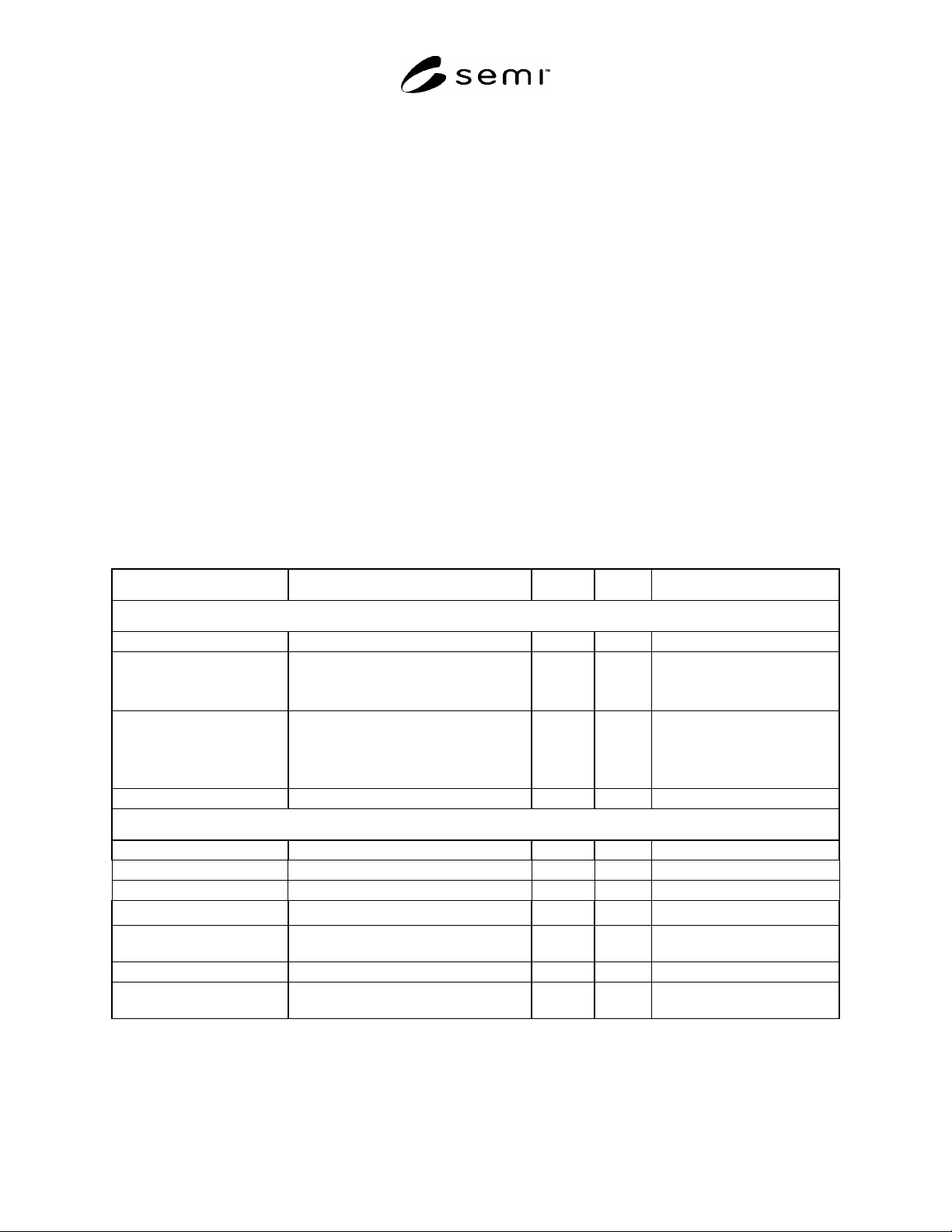
Table 1 WIDR Attribute Definitions
Attribute Name Description Access Reqd Form
Fundamental
Configuration Number of heads. RO Y Text
AlarmStatus Current WIDR substate of ALARM
STATUS.
RO Y Enumerated:
0 = NO ALARMS
1 = ALARMS
OperationalStatus Current WIDR substate of
OPERATIONAL.
RO
Y Enumerated:
IDLE
BUSY
MAINTENANCE
SoftwareRevisionLevel Revision (version) of software. RO Y Text
Optional
DateInstalled Date the subsystem was installed. RO N Protocol dependent.
DeviceType Identifiers subsystem as a WIDR. RO N WIDR (Text)
HardwareRevisionLevel Revision number of the hardware. RO N Text
MaintenanceData Supplier dependent. RO N Text
Manufacturer The name or identifier of the
manufacturer.
RO N Protocol dependent.
ModelNumber The manufacturers model designation. RO N Text
SerialNumber Subsystem serial number assigned by
manufacturer.
RO N Protocol dependent.
8.3 Reader Head Attributes
8.3.1 Table 2 defines the attributes for the Reader Head.
NOTE 2: In the case of an integrated single head, the attributes in Table 2 are regarded as an extension of Table 1.
SEMI E118-1104
E
© SEMI 2002, 2004 6
8.3.2 In the case of multiple heads, it must be possible to distinguish between the attributes of different heads.
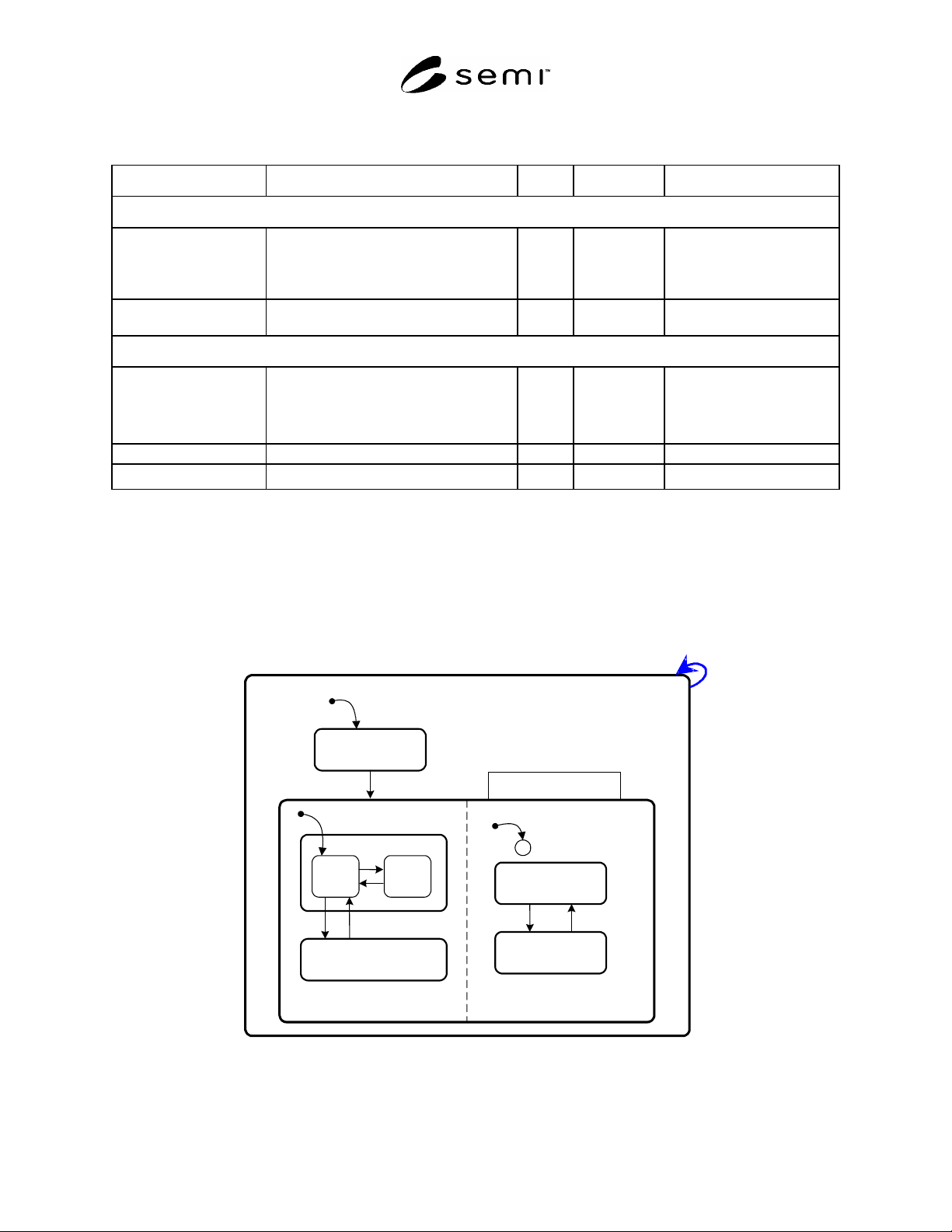
Table 2 Reader Head Attribute Definitions
Attribute Name Description Access Reqd Form
Fundamental
HeadStatus The current state. RO Y Enumerated:
IDLE
BUSY
NOT OPERATING
HeadID Head number 0–31. RO Y if
multi-head
Text. 2 digits.
Optional
HeadCondition The current Maintenance status. RO N Enumerated:
No alarms
Needs Maintenance
Read fault
HeadDateInstalled Date this head was installed. RO N Protocol dependent.
HeadMaintenance-Data Supplier dependent. RO N Text
9 State Models
9.1 To facilitate independent control of the individual heads, this section defines two separate state models, one for
WIDR subsystem and one to be applied to each of the individual heads.
9.2 WIDR State Model
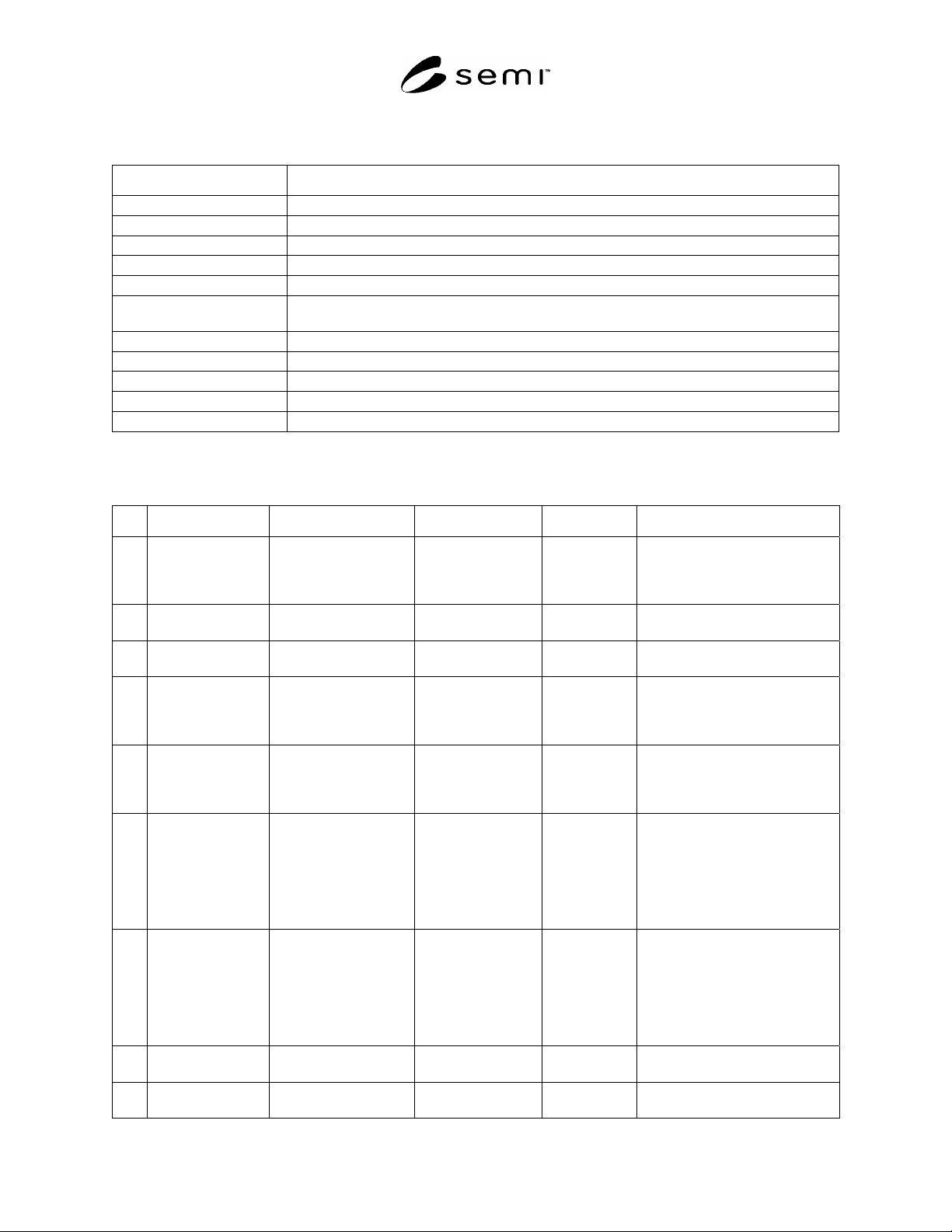
9.2.1 This section defines the state model for the WIDR subsystem. Figure 1 shows the diagram for this model.
1
WIDR
INITIALIZING
OPERATING
3
2
NO ALARMS
A
LARMS
C
MAINTENANCE
4
5
9 10
A
LARM STATUS
OPERATIONAL STATUS
RUNNING
11
IDLE
7
8
6
BUSY
Figure 1
WIDR State Model Diagram
SEMI E118-1104
E
© SEMI 2002, 2004 7
9.2.2 Table 3 defines the states of the WIDR. Definitions are in alphabetical order.
Table 3 WIDR Subsystem State Definitions
State Definition
ALARM STATUS Shows the presence or absence of alarms.
ALARMS An alarm condition exists.
BUSY A service is being performed that affects the state of the hardware.
WIDR Superstate of WIDR State Model. Always active when WIDR powered on.
IDLE No service is being performed. All heads are idle.
INITIALIZING WIDR is performing initialization and self diagnostics. Presence or absence of alarms is
initially determined in this state.
NO ALARMS No alarm conditions exist.
OPERATING Normal operational states where reading operations can be performed.
OPERATIONAL STATUS The WIDR is fully capable of performing all services that it supports.
RUNNING The WIDR is operational and able to communicate.
MAINTENANCE Internal setup and maintenance activities.
9.2.3 Table 4 defines the transitions of the WIDR State Model.
Table 4 WIDR State Transitions
# Previous State Trigger New State Actions Comments
1 (Any) Power-up or reset. INITIALIZING Initialize
hardware
and software
components.
Default entry on power-up.
2 INITIALIZING Initialization is
complete.
RUNNING None The WIDR is now able to
communicate.
3 INITIALIZING Default entry into
OPERATING.
IDLE None Internal
4 IDLE A service request to
read or perform
diagnostics is
received.
BUSY None
5 BUSY All service requests
that affect the state of
the hardware are
completed.
IDLE None
6 IDLE A user selects the
MAINTENANCE
state and all heads are
idle.
MAINTENANCE None The upstream controller may
send a request or the operator
may set a switch to select the
OPERATING or the
MAINTENANCE state.
Maintenance and setup activities
may now be performed.
7 MAINTENANCE A user selects the
OPERATING state
and all heads are idle.
IDLE None The upstream controller may
send a request or the operator
may set a switch to select the
OPERATING or the
MAINTENANCE state. Normal
operating activities may now be
performed.
8 INITIALIZING Default entry into
ALARM STATUS.
ALARMS or NO
ALARMS
None
9 NO ALARMS An alarm condition is
detected.
ALARMS None