MIL- STD-883F 2004 TEST METHOD STANDARD MICROCIRCUITS.pdf - 第125页
MIL-STD-883F METHOD 1019.6 7 March 2003 9 3.14 Test report . As a mi nimum, the r eport s hall i nclude t he device type number , ser ial number , the manufac turer , package t ype, cont roll ing spec ifi cati on, date c…
MIL-STD-883F
METHOD 1019.6
7 March 2003
8
3.13 Test procedure for Bipolar and BiCMOS linear or mixed signal circuits with agreed to dose rates of less than 50
rad(Si)/s. Many bipolar linear parts exhibit ELDRS, which cannot be simulated with a room temperature 50-300 rad(Si)/s
irradiation plus elevated temperature anneal, such as that used for MOS parts (see ASTM-F1892 for more technical details).
Parts that exhibit ELDRS shall be tested either at the agreed to dose rate, at a prescribed low dose rate to an overtest
radiation level, or with an elevated temperature irradiation test that includes a parameter delta design margin.
Need to perform low dose rate testing
.
a. The low dose rate tests described in 3.13 may be omitted if:
1. circuits are known not to contain bipolar transistors by design, or
2. circuits are known not to contain any linear circuit functions by design.
3. the device type and IC technology have been demonstrated via characterization testing not to exhibit
ELDRS in device parameters greater than experimental error (or greater than an otherwise specified
upper limit) and the variables that affect ELDRS response are demonstrated to be under control for the
specific vendor processes.
3.13.1 Low dose rate or elevated temperature irradiation test for bipolar or BiCMOS linear or mixed-signal circuits
. All
circuits that do not meet the exception of 3.13.a shall be tested using one of the following test conditions.
Note: The test procedures in paragraphs b. and c. below represent a compromise between the desire for a conservative,
worst-case test and the constraints of test cost, schedule and facilities. For this reason, the test procedures may
result in a non-conservative test for some kinds of circuits.
a. Test at the agreed to dose rate
. Irradiate each test device at the dose rate described in 3.6.3 Condition C using
the standard test conditions (3.1 through 3.10).
b. Test at a prescribed low dose rate
. Irradiate each test device at the close rate described in 3.6.4 Condition D
using the standard test conditions (3.1 through 3.10) with the following additional requirements:
1. If the dose rate is <
10 mrad(Si)/s, an overtest factor of 1.5 shall be applied to the radiation test level, i.e.
the part must pass at a radiation level of 1.5 times the specification dose to be acceptable.
2. If the dose rate is greater than 10 mrad(Si)/s, an overtest factor of 2.0 shall be applied to the radiation
test level, i.e. the part must pass at a radiation level of 2.0 times the specification dose to be acceptable.
c. Test at an elevated temperature
. Irradiate each test device at the dose rate described in 3.6.5 Condition E using
the standard test conditions (3.1 through 3.10) with the following additional requirements:
1. The irradiation temperature shall be 100°C ± 5°C using an irradiation test chamber as described in
paragraph 2.8. Every effort shall be made to minimize the time at temperature.
2. The elevated temperature irradiation test shall only be used for parts with a specification dose of 50
krad(Si) or less.
3. All pre and post irradiation electrical measurements shall be made at a temperature of 24°C ±6°C.
4. A parameter design margin of 3 shall be applied at the specification dose to all critical electrical
parameters in the following manner. The change in each electrical parameter shall be calculated for
each sample at the specification dose. This change in the parameter shall be multiplied by 3 and added
(or subtracted) to the post irradiation parameter value for each sample. This value shall be compared to
the allowable degraded value of the parameter to determine whether the sample passes or fails the test.

MIL-STD-883F
METHOD 1019.6
7 March 2003
9
3.14 Test report
. As a minimum, the report shall include the device type number, serial number, the manufacturer,
package type, controlling specification, date code, and any other identifying numbers given by the manufacturer. The bias
circuit, parameter measurement circuits, the layout of the test apparatus with details of distances and materials used, and
electrical noise and current leakage of the electrical measurement system for in-flux testing shall be reported using drawings
or diagrams as appropriate. Each data sheet shall include the test date, the radiation source used, the bias conditions
during irradiation, the ambient temperature around the devices during irradiation and electrical testing, the duration of each
irradiation, the time between irradiation and the start of the electrical measurements, the duration of the electrical
measurements and the time to the next irradiation when step irradiations are used, the irradiation dose rate, electrical test
conditions, dosimetry system and procedures and the radiation test levels. The pre- and post-irradiation data shall be
recorded for each part and retained with the parent population data in accordance with the requirements of MIL-PRF-38535
or MIL-PRF-38534. Any anomalous incidents during the test shall be fully documented and reported. The accelerated
annealing procedure, if used, shall be described. Any other radiation test procedures or test data required for the delivery
shall be specified in the device specification, drawing or purchase order.
4. SUMMARY
. The following details shall be specified in the applicable acquisition document as required:
a. Device-type number(s), quantity, and governing specifications (see 3.1).
b. Radiation dosimetry requirements (see 3.3).
c. Radiation test levels including dose and dose rate (see 3.5 and 3.6).
d. Irradiation, electrical test and transport temperatures if other than as specified in 3.7.
e. Electrical parameters to be measured and device operating conditions during measurement (see 3.8).
f. Test conditions, i.e., in-flux or not-in-flux type tests (see 3.9).
g. Bias conditions for devices during irradiation (see 3.9.3).
h. Time intervals of the post-irradiation measurements (see 3.10).
i. Requirement for extended room temperature anneal test, if required (see 3.11).
j. Requirement for accelerated annealing test, if required (see 3.12).
k. Documentation required to be delivered with devices (see 3.14).
MIL-STD-883F
METHOD 1019.6
7 March 2003
10
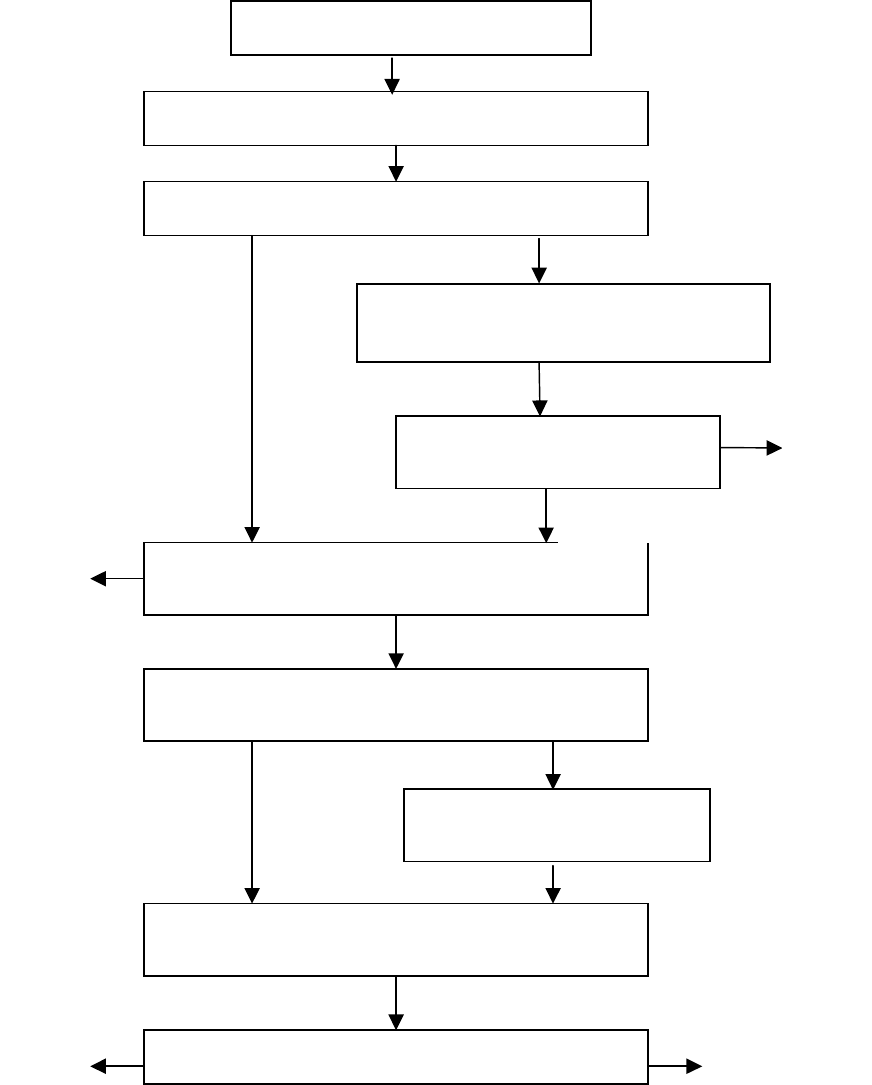
FIGURE 1019-1. Flow diagram for ionizing radiation test
procedure for MOS and digital bipolar circuits.
NO YES
SELECT DOSE RATE
SEE PARA. 3.6
IRRADIATE TO SPECIFIED DOSE
SEE PARA. 3.9
PERFORM SPECIFIED ELECTRICAL TESTS
SEE PARA. 3.8
DETERMINE IF EXTENDED ROOM TEMPER-
ATURE ANNEAL TEST IS REQUIRED
SEE PARA. 3.11.1
PERFORM SPECIFIED
ELECTRICAL TESTS
S
EE PARA. 3.8
DETERMINE IF ACCELERATED
ANNEALING TEST IS REQUIRED
SEE PARA.
3.12.1
DETERMINE IF 0.5X OVERTEST
IS REQUIRED
SEE PARA.
3.12.2.a.2
IRRADIATE AN ADDITIONAL 0.5 X
SPECIFIED DOSE
SEE PARA.
3.12.2.a
PERFORM ONE OF THREE ACCELERATED
ANNEALING PROCEDURES
SEE PARA.
3.12.2.b
PERFORM SPECIFIED ELECTRICAL TESTS
SEE PARA. 3.8
PASS
FAIL
FAIL
PASS
PASS
NO
YES
PASS FAIL