MIL- STD-883F 2004 TEST METHOD STANDARD MICROCIRCUITS.pdf - 第208页
MIL-STD-883F METHOD 2009.9 19 August 1994 6 FIGURE 2009-7a. Surfac e bubbles . FIGURE 2009-7b. Subs urfac e bubbles . e. Surfac e bubbles t hat exceed the f ollowing: 1. Open bubbles in the gl ass s eal that exceed 5 mil…
MIL-STD-883F
METHOD 2009.9
19 August 1994
5
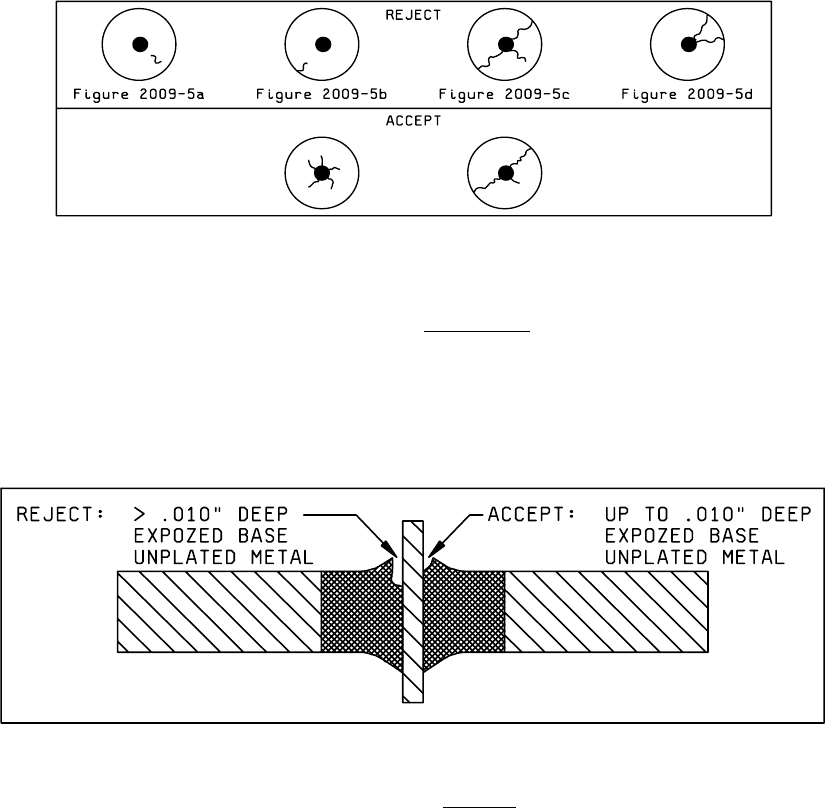
c. Radial cracks that exhibit the following:
1. Cracks that do not originate at the lead (see figures 2009-5a and 2009-5b).
2. Three or more cracks that extend beyond the midpoints of distance from the lead to the case (see figure
2009-5c).
3. Two cracks that extend beyond the midpoint of the distance from the lead to the case and that lie within the same
quadrant (see figure 2009-5d).
FIGURE 2009-5. Radial Cracks
.
d. Any chip-out that penetrates the sealing glass deeper than the glass meniscus plane. The glass meniscus is
defined as that area of glass that wicks up the lead or terminal. Exposed base metal as a result of meniscus chip
outs is acceptable, provided that the exposed area is no deeper than 0.010 inch (see figure 2009-6).
FIGURE 2009-6. Chip-outs
.
MIL-STD-883F
METHOD 2009.9
19 August 1994
6
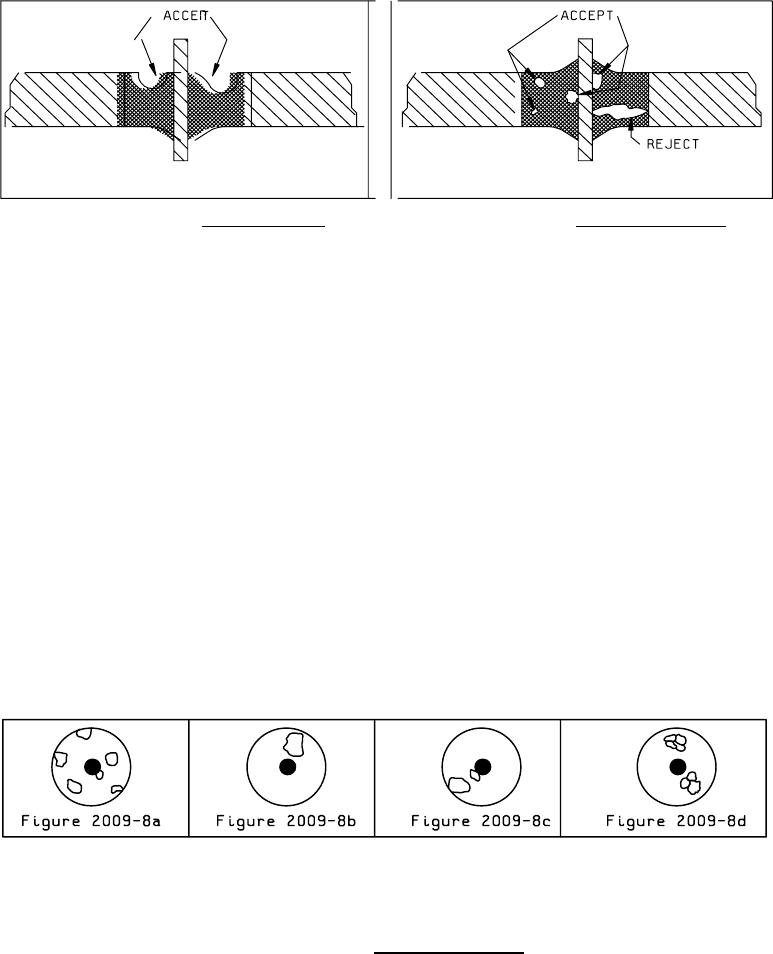
FIGURE 2009-7a. Surface bubbles
. FIGURE 2009-7b. Subsurface bubbles.
e. Surface bubbles that exceed the following:
1. Open bubbles in the glass seal that exceed 5 mils in diameter (see Figure 2009-7a). For packages with a glass-
filled header (i.e., TO-5), open bubbles that exceed 10 mils diameter, or an open bubble that exceeds 5 mils
diameter situated closer than 10 mils to a lead.
2. Open bubbles in strings or clusters that exceed 2/3 of the distance between the lead and the package wall.
f. Subsurface bubbles that exceed the following:
1. Large bubbles or voids that exceed 1/3 of the glass sealing area (see Figure 2009-8a).
2. Single bubble or void that is larger than 2/3 of the distance between the lead and the package wall at the site of
inclusion (see Figures 2009-7b and 2009-8b).
3. Two bubbles in a line totaling more than 2/3 distance from pin to case (see Figure 2009-8c).
4. Interconnecting bubbles greater than 2/3 the distance between pin and case (see Figure 2009-8d).
FIGURE 2009-8. Subsurface bubbles
.
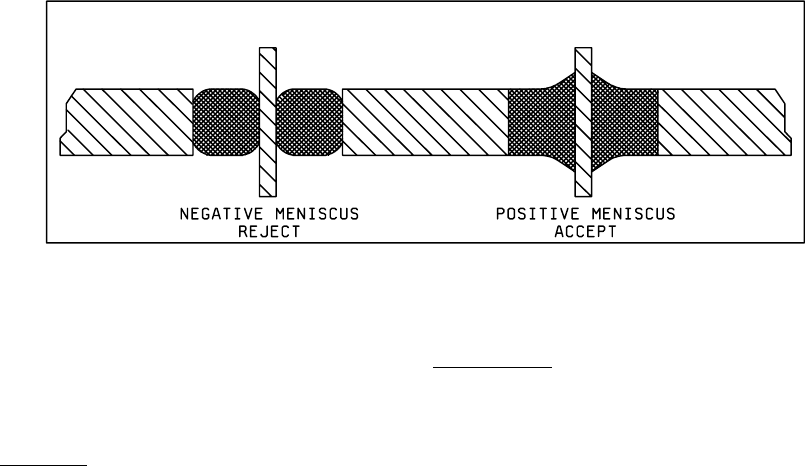
g. Reentrant seals that exhibit non-uniform wicking (i.e., negative meniscus) at the lead and/or body interface (see
Figure 2009-9).
MIL-STD-883F
METHOD 2009.9
19 August 1994
7
FIGURE 2009-9. Reentrant seals
.
4. SUMMARY
. The following details shall be specified in the applicable acquisition document:
a. Requirements for markings and the lead (terminal), or pin identification.
b. Any additional detailed requirements for materials, design, construction, and workmanship.