MIL- STD-883F 2004 TEST METHOD STANDARD MICROCIRCUITS.pdf - 第209页
MIL-STD-883F METHOD 2009.9 19 August 1994 7 FIGURE 2009-9. Reentrant s eals . 4. SUMMARY . The fol lowing detai ls s hall be s pecif ied in t he applic able acqui sit ion document : a. Requirement s for marki ngs and the…
MIL-STD-883F
METHOD 2009.9
19 August 1994
6
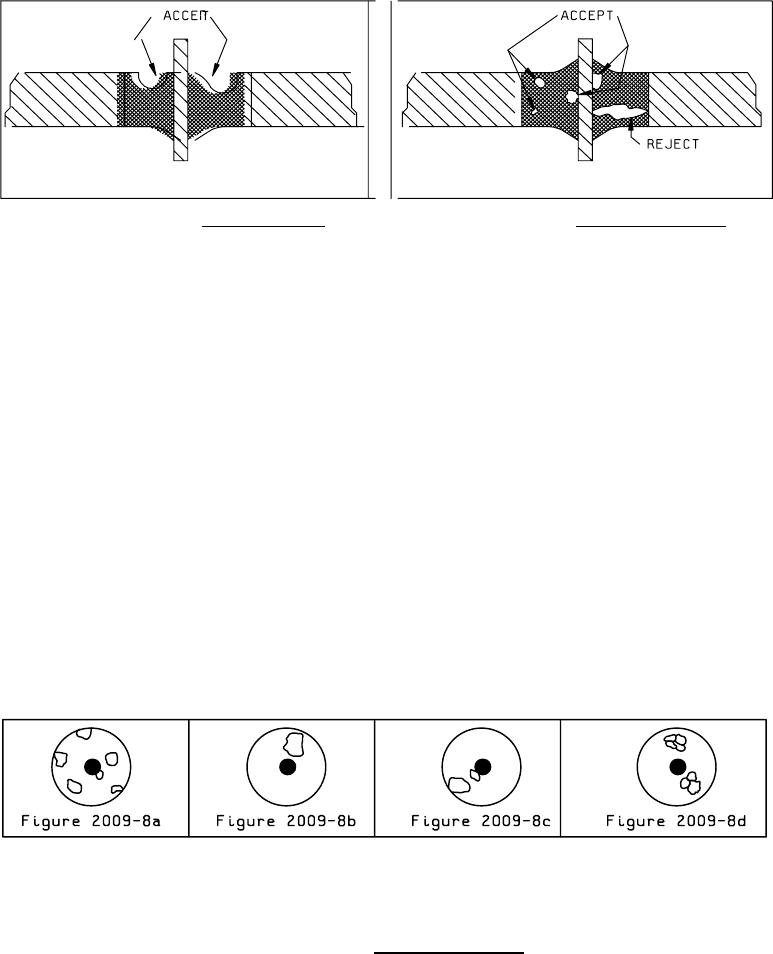
FIGURE 2009-7a. Surface bubbles
. FIGURE 2009-7b. Subsurface bubbles.
e. Surface bubbles that exceed the following:
1. Open bubbles in the glass seal that exceed 5 mils in diameter (see Figure 2009-7a). For packages with a glass-
filled header (i.e., TO-5), open bubbles that exceed 10 mils diameter, or an open bubble that exceeds 5 mils
diameter situated closer than 10 mils to a lead.
2. Open bubbles in strings or clusters that exceed 2/3 of the distance between the lead and the package wall.
f. Subsurface bubbles that exceed the following:
1. Large bubbles or voids that exceed 1/3 of the glass sealing area (see Figure 2009-8a).
2. Single bubble or void that is larger than 2/3 of the distance between the lead and the package wall at the site of
inclusion (see Figures 2009-7b and 2009-8b).
3. Two bubbles in a line totaling more than 2/3 distance from pin to case (see Figure 2009-8c).
4. Interconnecting bubbles greater than 2/3 the distance between pin and case (see Figure 2009-8d).
FIGURE 2009-8. Subsurface bubbles
.
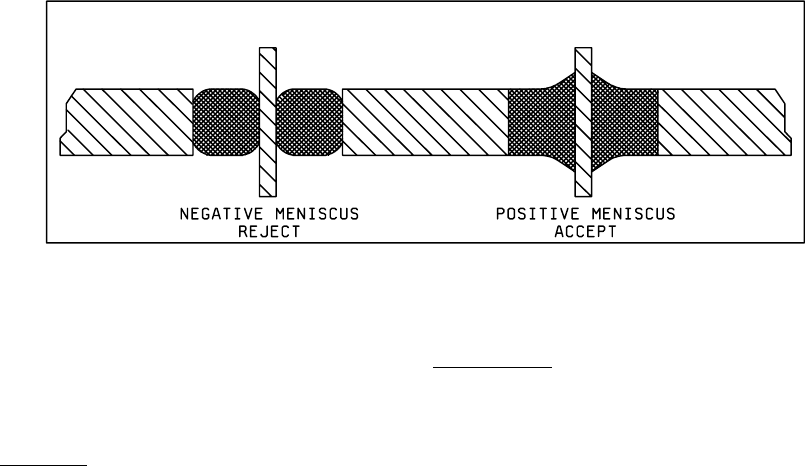
g. Reentrant seals that exhibit non-uniform wicking (i.e., negative meniscus) at the lead and/or body interface (see
Figure 2009-9).
MIL-STD-883F
METHOD 2009.9
19 August 1994
7
FIGURE 2009-9. Reentrant seals
.
4. SUMMARY
. The following details shall be specified in the applicable acquisition document:
a. Requirements for markings and the lead (terminal), or pin identification.
b. Any additional detailed requirements for materials, design, construction, and workmanship.
MIL-STD-883F
METHOD 2009.9
19 August 1994
8
This page intentionally left blank